


Period Oak Side Stool
A period oak side stool brings honest historic craft into a modern room, offering sturdy utility and timeless rustic character.
Period Oak Side Stool
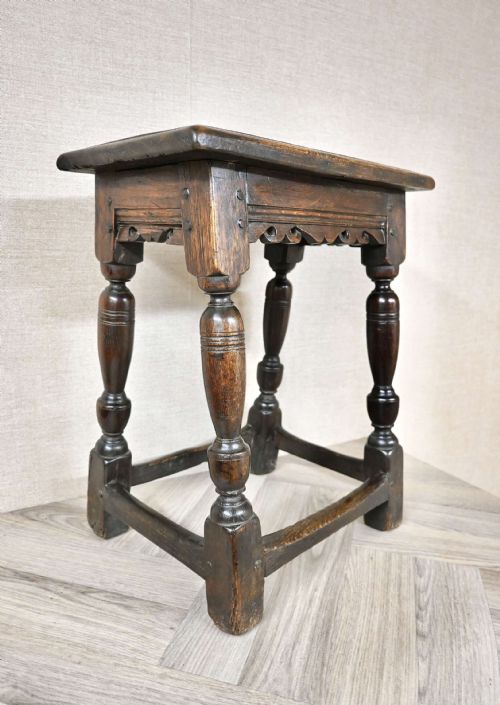
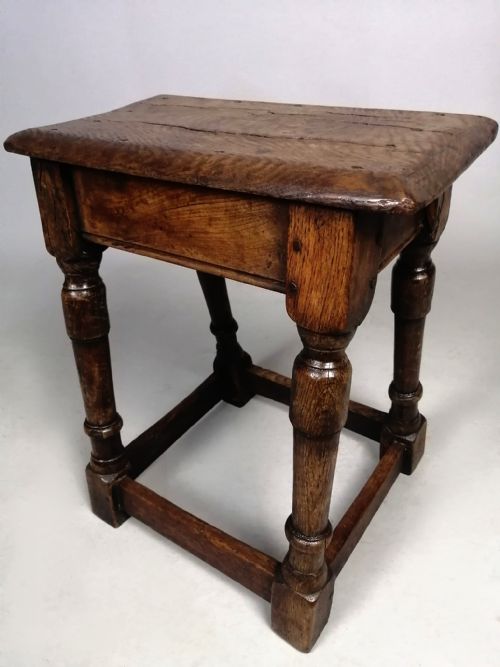
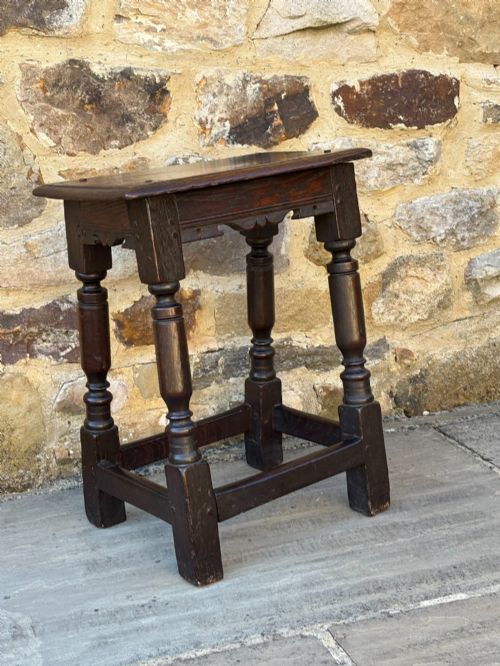
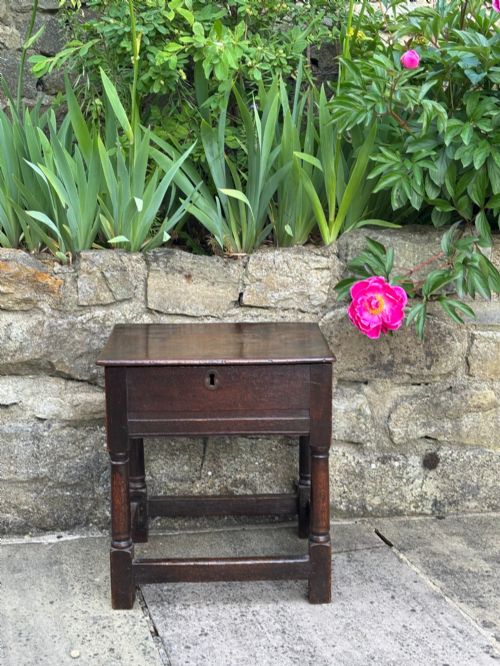
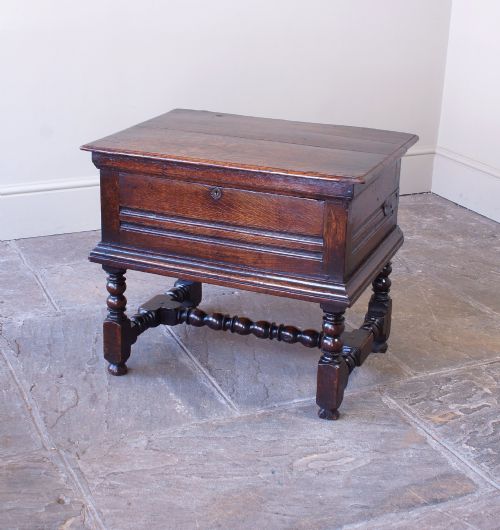
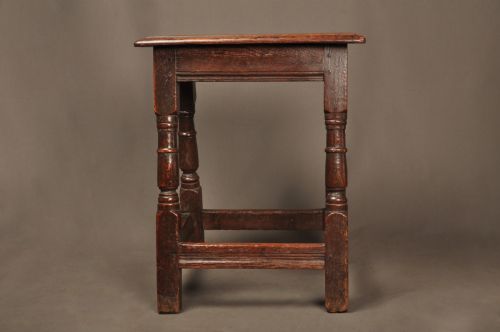
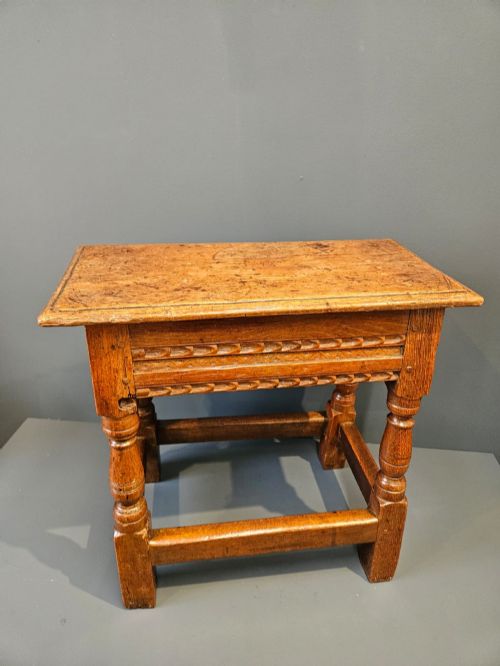
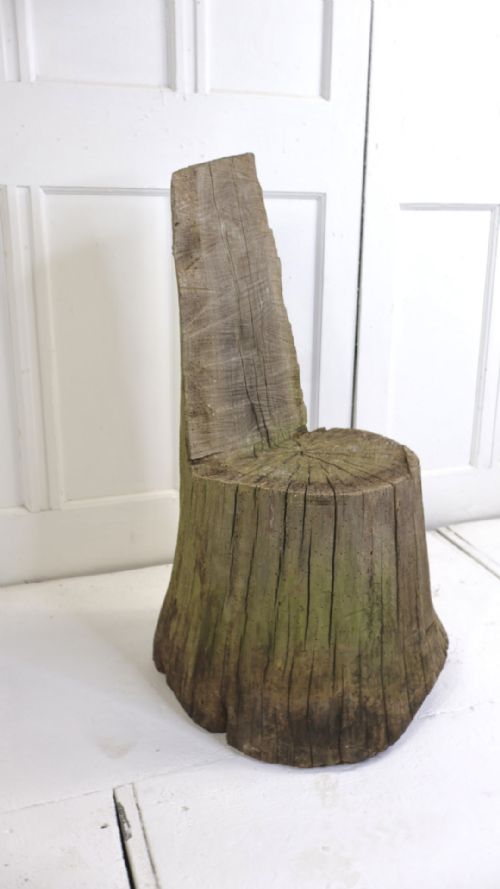
A period oak side stool is a solid wooden seat built for domestic tasks in centuries past. These items include joint stools, box stools, and back stools designed to withstand heavy daily use.
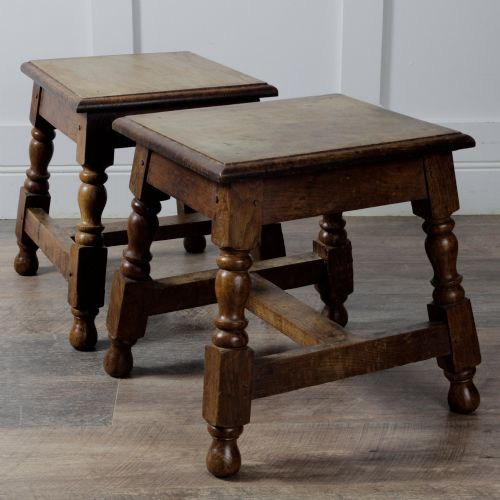
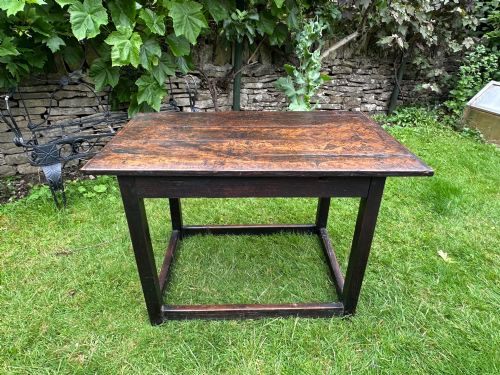
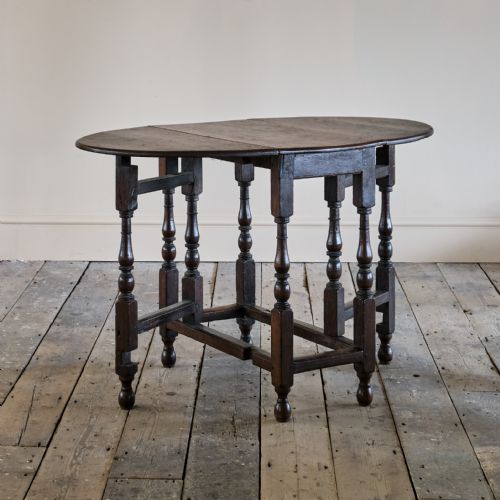
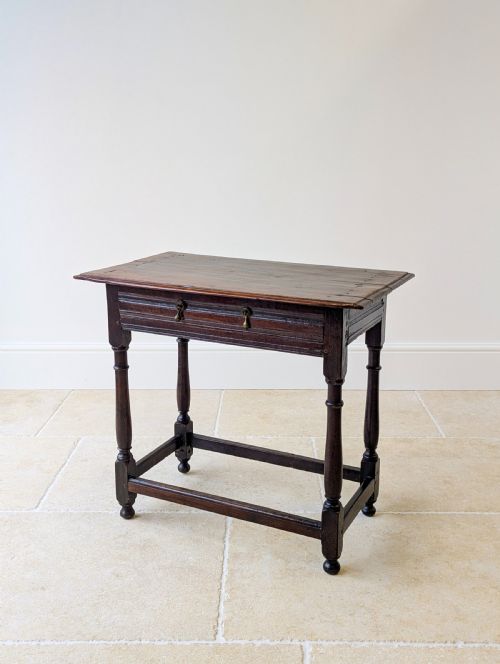
Most examples found here date from the seventeenth century or draw upon seventeenth-century Jacobean styles through later nineteenth-century and early twentieth-century revivals. They frequently double as small side tables or stands.
The form remains simple and functional, relying on four vertical legs connected by stretchers. Buyers encounter authentic period survivals alongside later interpretations made with the same traditional architectural layout.
How they were made
Joinery defines the construction of these items, utilising pegged mortise and tenon joints rather than metal nails or modern adhesives. Carpenters shaped solid timber using hand tools to create rigid frames that endure for centuries.
Oak forms the primary material, occasionally paired with elm for seats or panels, reflecting local timber supplies. Some variants incorporate brass fixtures, iron elements, or tapestry upholstery to provide additional support and decoration.
Listings combine seventeenth-century survivals with nineteenth-century and Edwardian revivals, uniting oak, elm, and tapestry upholstery.
What varies in quality
The degree of original surface survival separates standard pieces from exceptional ones. Timber that retains untouched patination and tool marks holds greater architectural integrity than heavily restored surfaces.
Proportion and structural honesty dictate the merit of each design. Tighter pegging, balanced stretcher placement, and minimal replacement timber distinguish superior examples from heavily altered variants.
The Period Oak Side Stool Glossary
- Joint stool
- A sturdy wooden seat constructed using pegged mortise and tenon joinery rather than simple nailing. These items were built to support heavy domestic labour.
- Box stool
- A seat featuring a hollow compartment beneath the top board for storage. These versatile items functioned as small containers and resting places.
- Back stool
- An early form of chair featuring an upright backrest attached to a stool frame. They provide firmer posture than armchairs of the same era.
- Stretcher
- A horizontal wooden rod connecting the legs of a stool to increase stability. They often show wear where feet rested over generations.
- Jacobean
- A design style spanning the late sixteenth and seventeenth centuries, characterised by geometric carving and sturdy proportions. Revivals of this aesthetic appeared during the nineteenth century.
Period Oak Side Stool: Frequently Asked Questions
How were joint stools used historically?
Joint stools served multiple purposes in early households, functioning primarily as seating at dining tables or as portable platforms for reaching high shelves.
People also utilised them as small side tables or stands for household objects when extra surface space was required.
Are these stools comfortable for daily seating?
Solid wooden seats offer firm support rather than cushioned lounging, making them suitable for brief periods of sitting at a desk or table.
Upholstered variants provide softer padding, though most traditional examples prioritize rigid durability over plush comfort.
How do I distinguish a seventeenth-century piece from a later revival?
Examination of the timber patination, tool marks, and wear patterns reveals the age of the construction and the methods used by the carpenter.
Later nineteenth-century and early twentieth-century revivals often display machine-cut elements or different pegging techniques compared to authentic period originals.
Can I use an antique stool as a side table?
Flat timber tops make these sturdy objects ideal for holding books, lamps, or decorative items beside a chair or sofa.
Their compact footprint allows them to fit easily into smaller rooms while adding historical texture to the interior.