
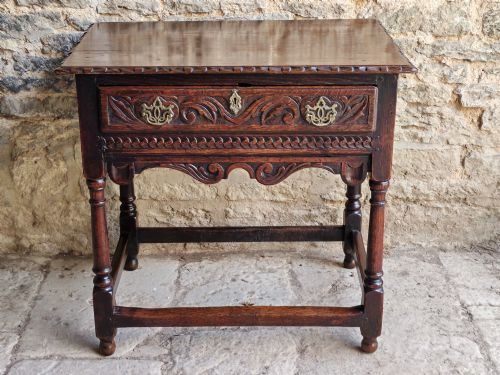
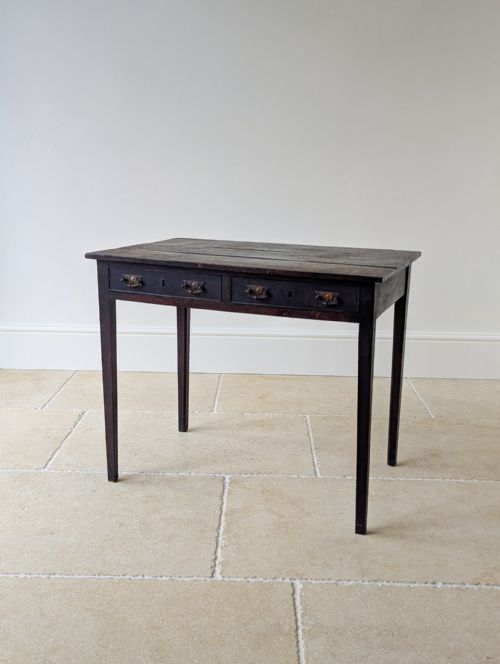


Period Oak Lamp Table
These period oak lamp tables combine sturdy vernacular construction with compact proportions, providing a stable surface for lighting and everyday use.
Period Oak Lamp Table
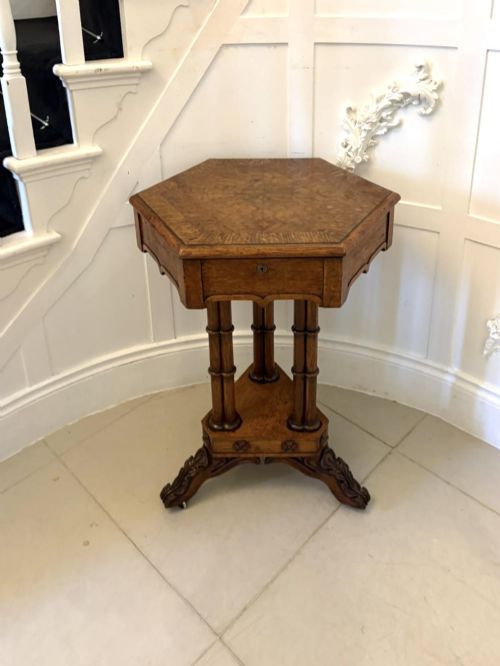
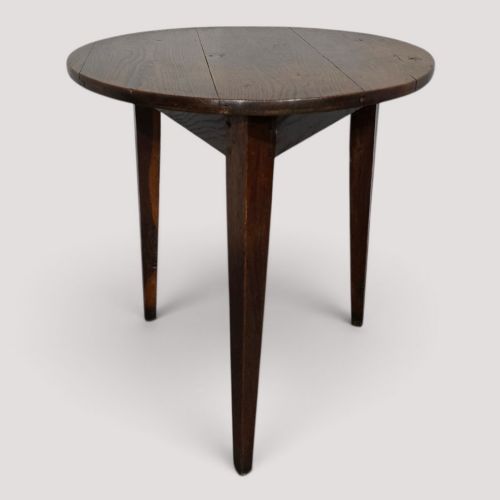
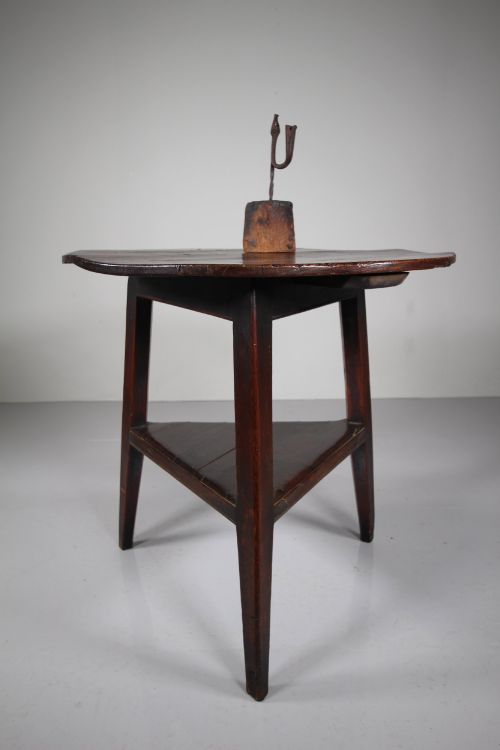
A period oak lamp table is typically encountered as a compact side table, occasional table, lowboy, or cricket table originating from the seventeenth and eighteenth centuries, alongside later vernacular revivals. Buyers searching this phrase look for functional timber furniture that fits beside seating while displaying genuine age through grain and patina.
The selection ranges from early joined tavern and centre tables dating to the sixteen-hundreds up to Georgian vernacular tripods and country house pieces. These forms serve reliably as lamp stands or small display surfaces in traditional and contemporary interiors alike.
Materials and Construction
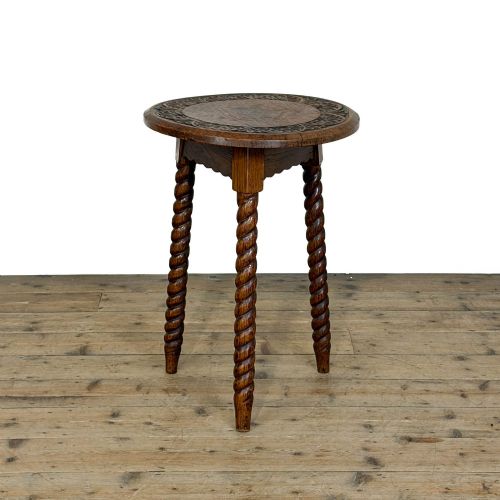
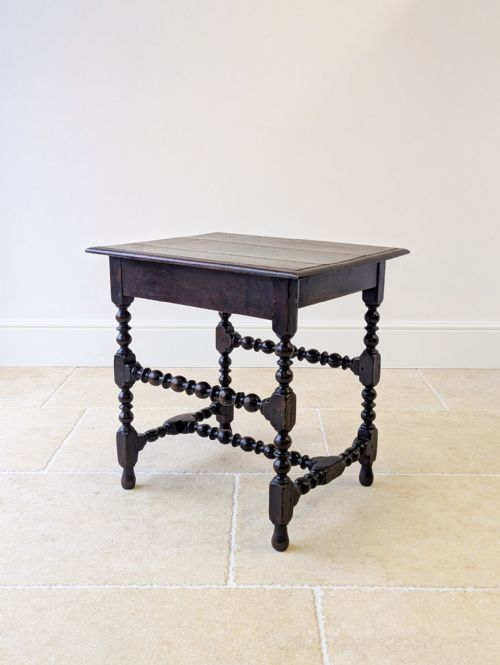
Construction relies primarily on solid oak, frequently supplemented with elm, beech, and occasional walnut or satinwood for secondary elements or contrasting top details. Joinery techniques include traditional mortise and tenon joints, bobbin turnings, and pegged frames designed to withstand heavy daily use.
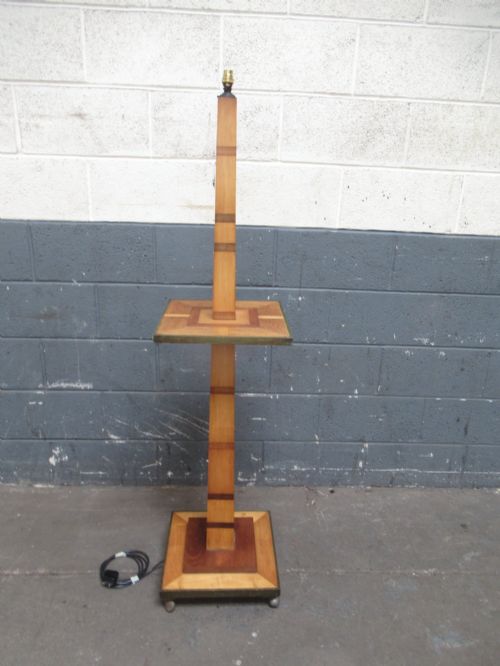
Secondary materials such as brass handles, iron fittings, and ceramic tiles appear on specific lowboys and arts and crafts period pieces. These components are integrated directly into the timber framework to support drawers and tabletop surfaces.
Period Oak Lamp Table Retail Price Guide 2026
Typical asking prices for period oak lamp table among the pieces listed under this phrase on Sellingantiques today, from the lower quarter to the upper quarter. They describe what is for sale here now, not the wider market.
Table forms span cricket tables, lowboys, tilt-top tripod tables, and tavern centre tables.
Judging Quality
Quality rests upon the integrity of the timber, the crispness of hand-carving, and the retention of original surface patination rather than applied finishes. Early joined examples with uncompromised stretchers and unaltered top boards stand at the upper end of the range.
Proportion and structural honesty separate finer workshop pieces from later alterations or heavy restorations. The relationship between leg thickness, top overhang, and the natural wear of the wood dictates the overall desirability of the piece.
The Period Oak Lamp Table Glossary
- Cricket table
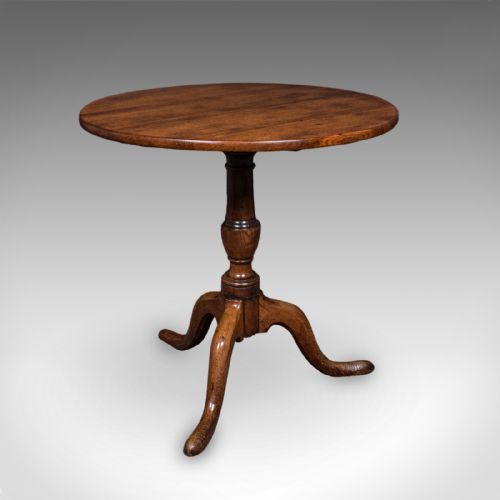
- A small three-legged occasional table with a round wooden top, commonly braced by lower stretchers. This design provides exceptional stability on uneven floors.
- Lowboy
- A small dressing or side table featuring one or more rows of drawers beneath the main surface. They typically stand on slender legs and serve well for lamp placement.
- Vernacular
- Furniture produced by regional craftsmen for local use rather than high-style urban workshops. These pieces prioritise practical utility and regional material availability.
- Tilt top
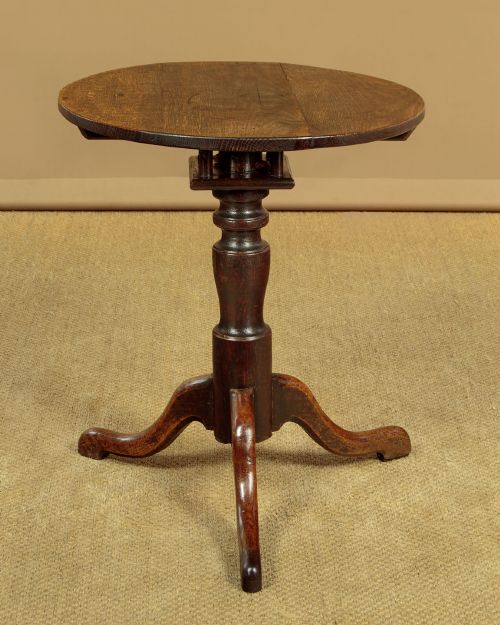
- A tabletop mounted on a catch mechanism that allows the surface to pivot vertically when not in use. This mechanism often incorporates a birdcage or pillar and tripod base.
- Bobbin turning
- A decorative lathe-turned moulding resembling a string of spools or bobbins. This technique appears frequently on seventeenth-century framework and underframes.
Period Oak Lamp Table: Frequently Asked Questions
What is a period oak lamp table?
A period oak lamp table is a small antique timber table, such as a cricket table, lowboy, or tripod table, adapted to hold lighting.
These pieces originate mainly from the seventeenth and eighteenth centuries, offering compact footprints and durable solid wood construction.
How do I use a lowboy as a lamp table?
A lowboy provides a flat upper surface and built-in drawer storage, making it suitable for placement beside a sofa or in a hallway.
The height allows easy reach for reading lamps while the drawers store small household items.
How can I tell a seventeenth-century table from a Georgian one?
Seventeenth-century pieces often feature joined frames, bobbin turnings, and heavier stretchers, reflecting earlier regional joinery methods.
Georgian examples tend to introduce lighter tripod bases, tilt tops, and cleaner lines associated with vernacular and country house design.
Are these tables sturdy enough for daily use?
Solid oak and robust pegged joinery provide the structural strength needed for holding lamps, books, and everyday objects.
Their centuries of survival demonstrate their practical resilience in active domestic environments.