


17th Century Accent Table
A 17th century accent table brings solid timber and centuries of domestic history straight into a room.
17th Century Accent Table
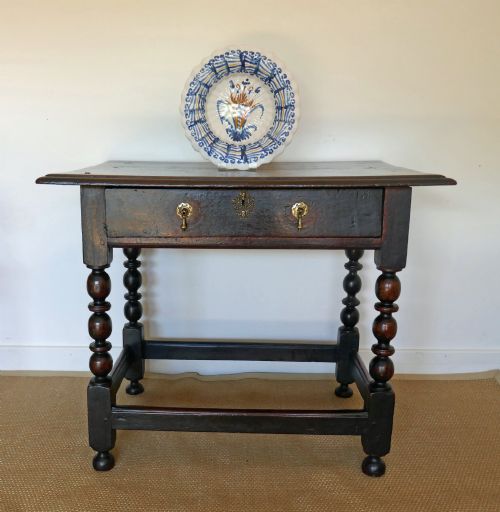
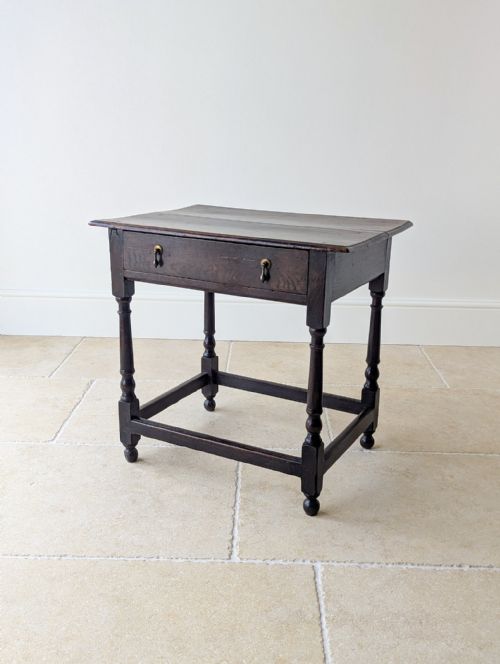
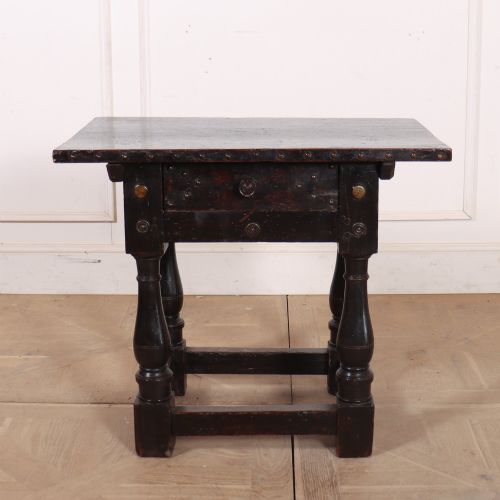
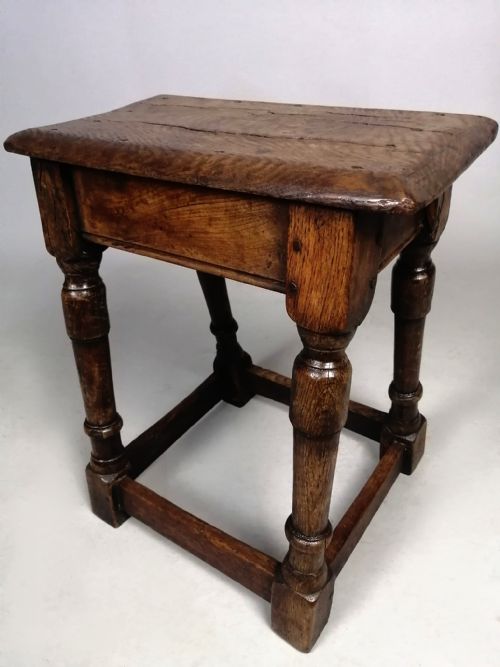
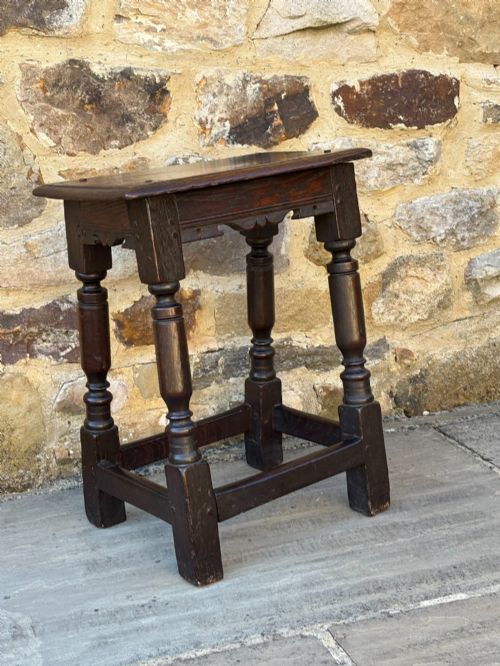
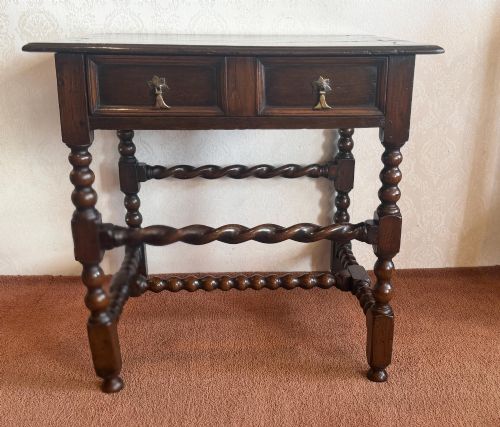
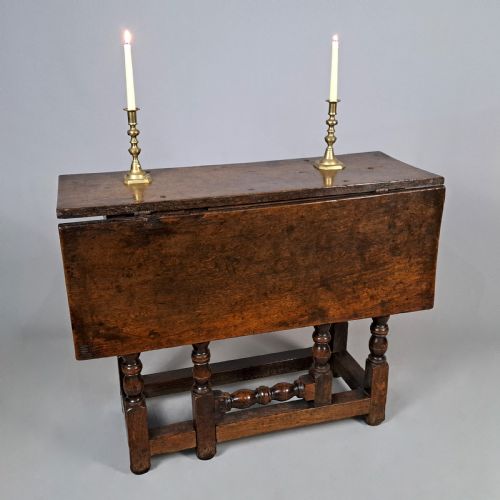
When searching for a 17th century accent table, a buyer encounters a focused selection of early British and continental forms used for daily utility. The inventory on this page ranges from authentic period pieces dating to the sixteen-sixties and sixteen-nineties through to revival pieces made in the nineteenth and early twentieth centuries. Side tables, joint stools, gateleg tables, and occasional stands dominate the forms available.
Authentic period items appear alongside later interpretations built in the Jacobean and William and Mary styles. The selection includes sturdy oak side tables, walnut tripod stands, and occasional tables fashioned from elm, yew, and ash. Buyers find pieces suited for use as lamp tables, lowboys, or compact serving surfaces in modern settings.
How they were made
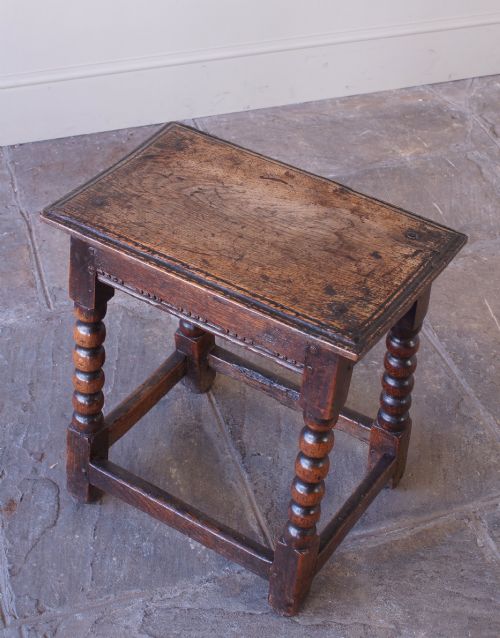
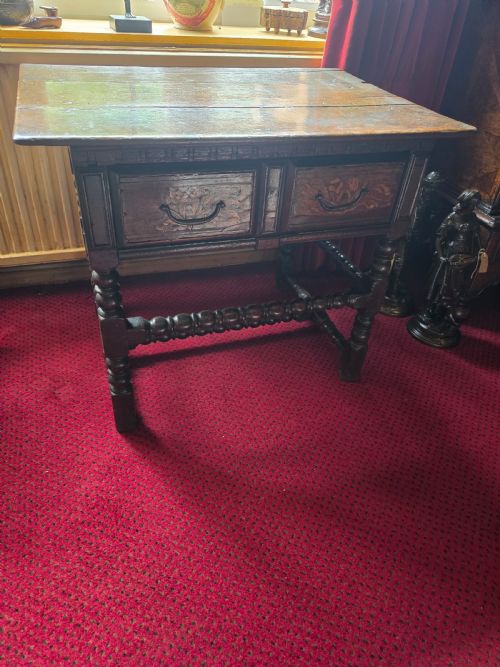
Makers constructed these tables primarily using native British hardwoods such as oak, elm, and ash, supplemented by walnut, yew, and olive wood for finer surfaces. Carpenters employed pegged mortise and tenon joints to build rigid frames that could withstand heavy domestic use. Turning techniques produced decorative structural elements like bobbin turnings and barley twists on table legs.
Surface decoration involved geometric wood inlay, parquetry, and oyster veneers arranged in intricate patterns on tabletops. Joinery methods relied on hand tools, resulting in visible pegged joints and thick timber tops showing natural grain patterns. Some pieces utilised soft woods or painted finishes alongside traditional joined construction.
Several tables rely on timber sliced from tree branches to form oyster patterns that resemble tiny wooden eyes watching the room.
What varies in quality
Quality separates through the integrity of the timber selection and the sophistication of the joinery and turning work. Tables built from dense, figured woods like olive oyster veneer or well-marked oak display greater craftsmanship than standard utility pieces. The precision of bobbin turnings and the complexity of parquetry or inlaid decoration distinguish superior examples.
The degree of original surface patination and the survival of early timber components dictate the standing of a piece within its period. Items retaining untouched timber surfaces and period hardware hold stronger material authenticity than those altered extensively during later centuries.
The 17th Century Accent Table Glossary
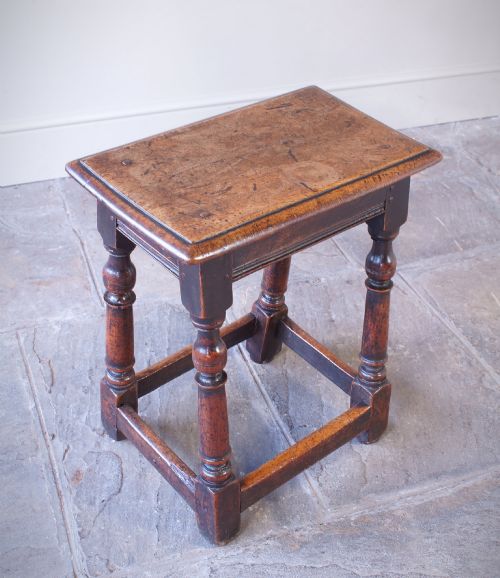
- Joint stool
- A sturdy wooden stool built with pegged mortise and tenon joinery, often used as a small side table.
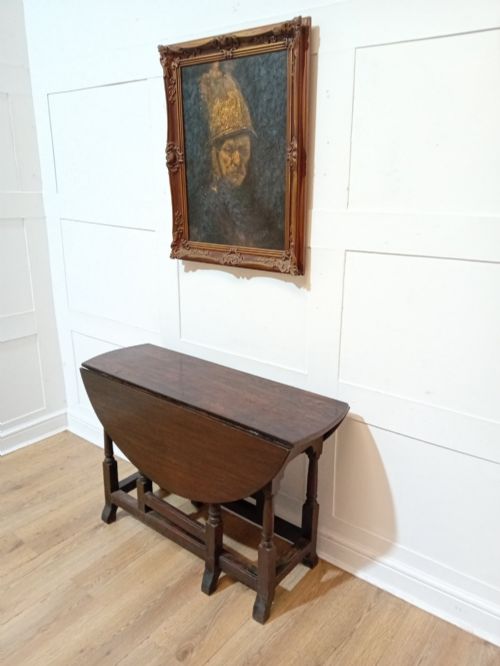
- Gateleg table
- A drop leaf table featuring hinged flaps supported by swing-out legs that pivot from the frame.
- Bobbin turned
- Formed by lathe-turning timber into a series of rounded, spool-like shapes linked end to end.
- Lowboy
- A small low table equipped with one or more drawers, originating in the late seventeenth century.
- Oyster veneer
- Thin circular slices cut across small branches to create patterned, undulating wood grain surfaces.
17th Century Accent Table: Frequently Asked Questions
What is a 17th century accent table used for?
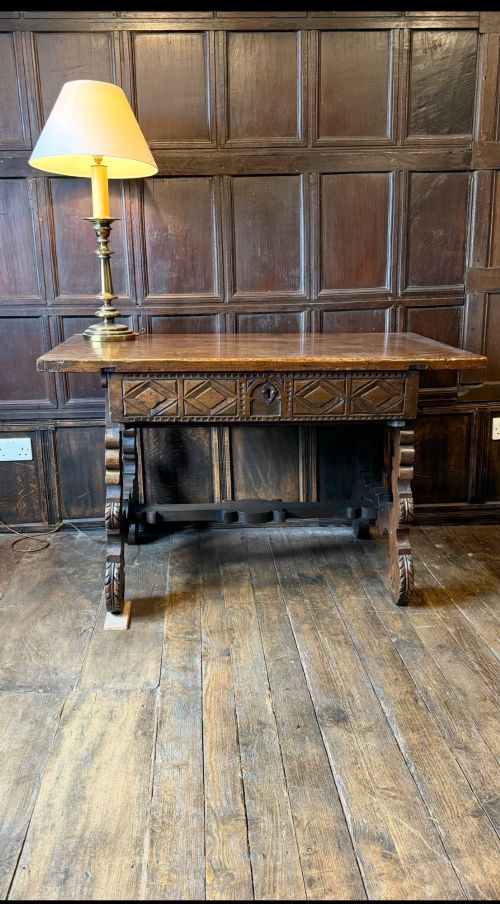
These pieces function practically as lamp tables, small side tables, or occasional surfaces in living spaces. Their compact proportions allow them to fit easily beside chairs or against walls.
Historically, similar small tables held candles, books, or personal items in domestic chambers. Today, they serve equally well to display decorative objects while adding historic character to a room.
How do I identify a William and Mary table?
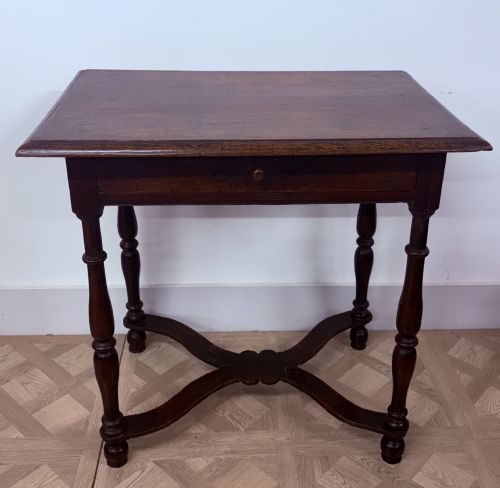
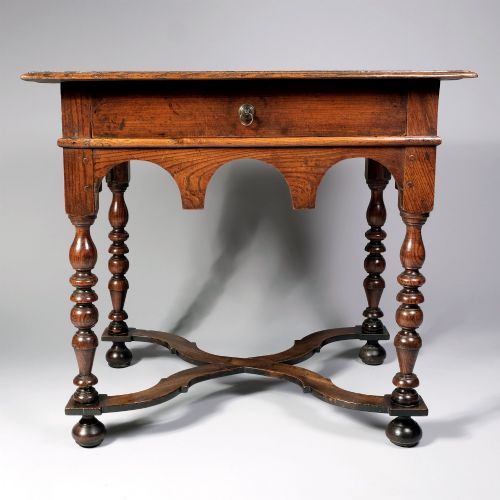
William and Mary style tables often feature trumpet turned legs, intricate crossbanding, and flat stretchers connecting the base. Walnut and exotic veneers became prominent during this period.
Such pieces typically exhibit lighter proportions and more refined decorative techniques compared to earlier heavy oak Jacobean furniture.
Are these tables made of solid oak?
Many of the tables utilise solid English oak for the frame, top, and stretchers. Other native timbers like elm, ash, and yew appear frequently across the selection.
Certain finer examples incorporate walnut or decorative veneers applied over a secondary wood base to create patterned tabletops.
Can I use an antique joint stool as a table?
Joint stools possess flat tops and sturdy four-legged frames that make them ideal for use as small side or lamp tables. Their height matches standard seating dimensions.
Using a joint stool in this manner mirrors historic domestic habits where furniture served multiple flexible functions around the home.