

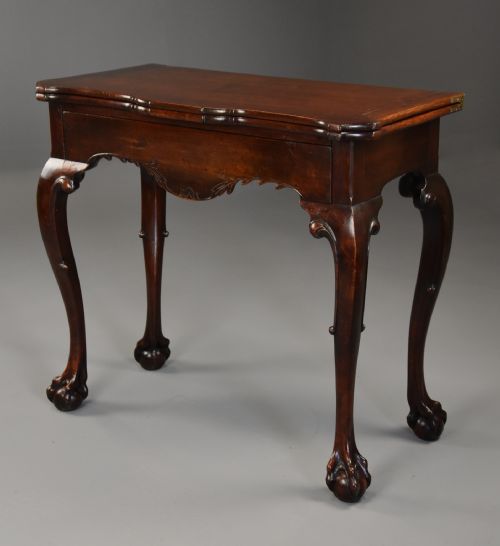


Georgian Carved Apron Table
A georgian carved apron table brings straightforward eighteenth-century utility and robust joinery into a modern room.
Georgian Carved Apron Table
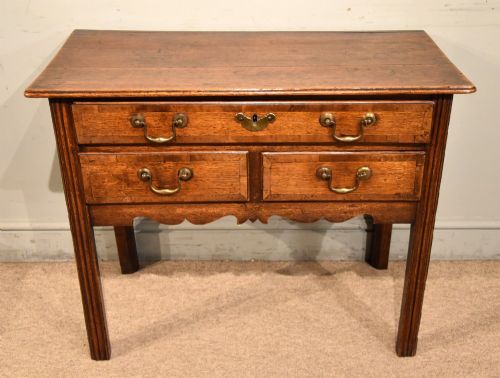
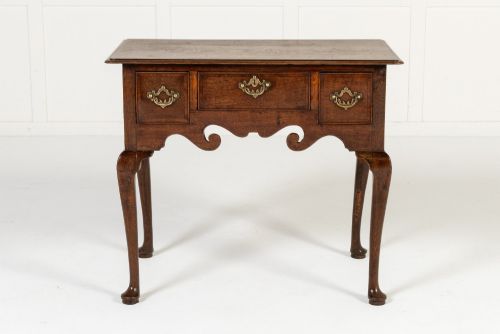
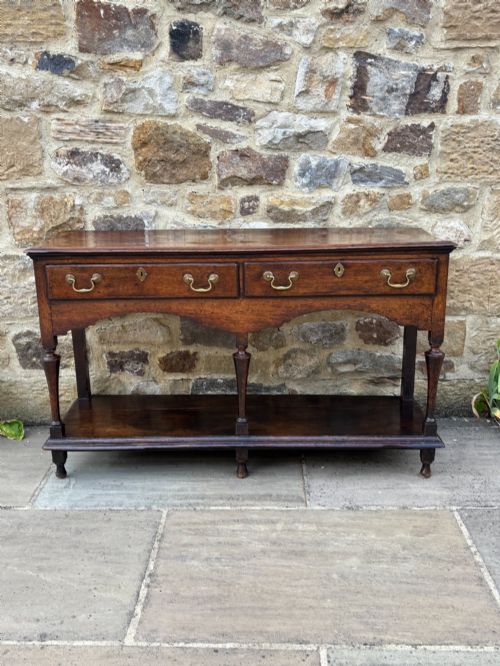
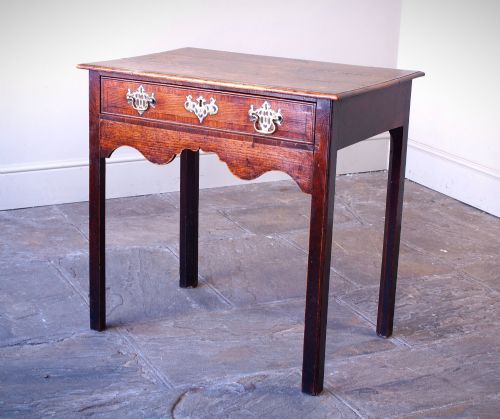
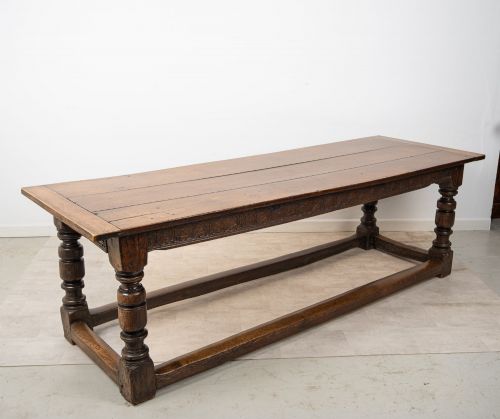
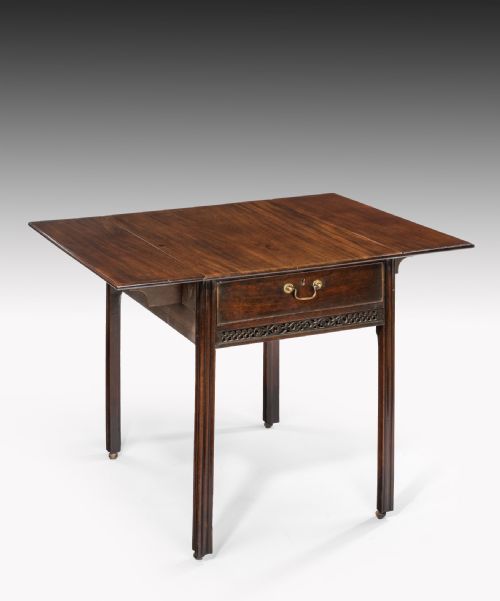
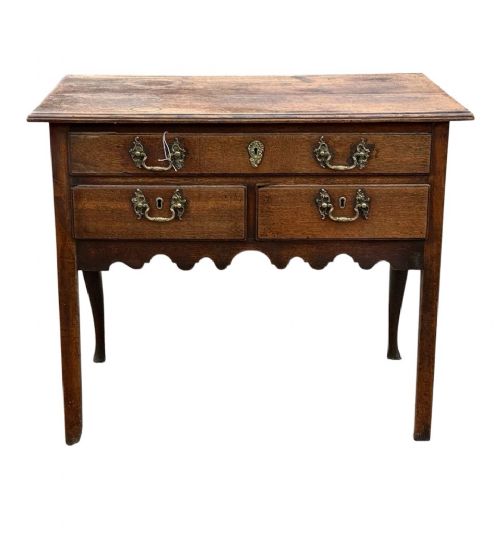
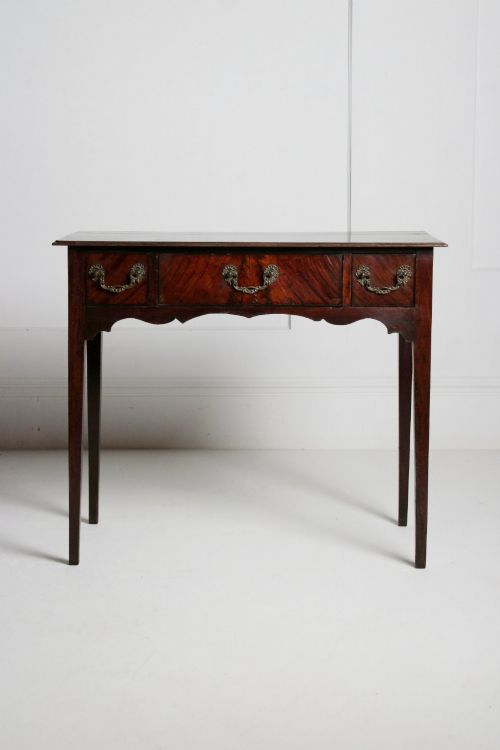
A georgian carved apron table encompasses lowboys, side tables, serving tables, and dresser bases originating predominantly from the eighteenth century. These pieces emerge in oak, mahogany, walnut, and fruitwood, carrying regional variations from English and Welsh workshops.
Buyers most frequently encounter oak lowboys and side tables supported by cabriole legs or straight framing. More formal examples incorporate mahogany and walnut timbers with influences from Irish Chippendale or George II design.
The functional scope stretches from compact tea and lamp tables to substantial serving tables and dresser bases. Surviving examples demonstrate construction methods spanning multiple centuries, including later revivals from the nineteenth and early twentieth centuries.
Materials and Construction
Cabinetmakers constructed these tables using native and imported hardwoods including solid oak, mahogany, walnut, burr walnut, fruitwood, and bleached oak. Brass hardware frequently appears on drawers, while giltwood accents and marble tops feature on specific console and serving tables.
Joinery relied on traditional hand-cut joints, pegs, and frames built to support heavy daily use in domestic settings. Carved details were chiselled directly into the solid timber aprons, framing the drawers or lower borders of the tables.
Georgian Carved Apron Table Retail Price Guide 2026
Typical asking prices for georgian carved apron table among the pieces listed under this phrase on Sellingantiques today, from the lower quarter to the upper quarter. They describe what is for sale here now, not the wider market.
Several tables manage to hide secret birds inlaid into the wood, proving that historical cabinetmakers enjoyed a quiet joke.
Character and Craftsmanship
Quality rests in the crispness of the carved apron detail and the depth of the natural timber patina accumulated over centuries. Superior examples display balanced proportions, undisturbed primary wood surfaces, and refined leg profiles such as cabriole designs.
Lesser versions show heavier alterations, replaced hardware, or timber degradation resulting from centuries of damp or heavy domestic wear. The integration of the apron design with the structural frame separates standard utility pieces from sophisticated regional variants.
Hicks of Dublin·Robert Adam
The Georgian Carved Apron Table Glossary
- Lowboy
- A small oak or walnut table with drawers, built during the eighteenth century and often used as a dressing table or side table.
- Dresser Base
- A low sideboard or table fitted with multiple drawers, typically constructed from solid oak in regional English and Welsh workshops.
- Apron
- The vertical wooden member beneath the tabletop that connects the legs, frequently decorated with carving.
- Cabriole Leg
- A furniture leg that curves outward at the knee and tapers inward toward the foot, popular in eighteenth-century designs.
- Silver Table
- An elevated serving or display table featuring a raised edge or gallery, often associated with Irish mahogany production.
Georgian Carved Apron Table: Frequently Asked Questions
What is a georgian carved apron table used for?
These tables served various domestic purposes including serving food, writing, and storing household items in bedrooms or dining rooms.
Today, they function effectively as lamp tables, sideboards, or entryway surfaces in contemporary interiors.
How do I identify an eighteenth century piece?
Look for hand-cut joinery, timber shrinkage, and surface patination that indicates decades of natural wear and polish.
Construction details such as pegged frames and native oak or mahogany timbers point toward the original Georgian period.
Are these tables solid oak?
Many examples are constructed entirely from solid native oak, particularly those originating from Welsh or English country workshops.
Other variations utilise mahogany, walnut, or fruitwood depending on the regional style and intended formality of the furniture.
How do I care for antique timber?
Keep the wood away from direct heat sources and sudden humidity shifts to prevent timber splitting or warping.
Apply traditional beeswax occasionally to nourish the grain and maintain the natural lustre of the aged surface.