
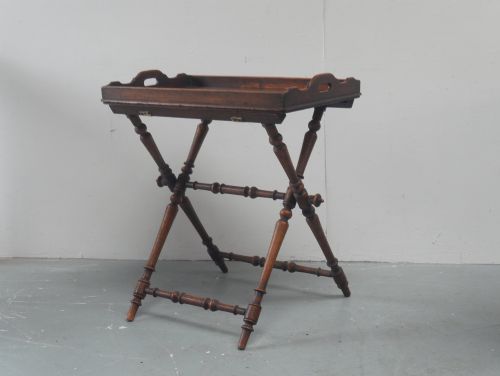


Oak Tray Top Table
An oak tray top table combines the utility of a portable serving vessel with the sturdy frame of an occasional table, offering both convenience and character.
Oak Tray Top Table
An oak tray top table is a versatile form that bridges the gap between serving ware and occasional furniture. When you search for an oak tray top table, you encounter items designed for practicality, ranging from folding butlers trays to fixed lamp tables with raised edges.
The versions most frequently met on this page span from the nineteenth century to the Edwardian period, incorporating styles such as English Country, Campaign, and Arts and Crafts. These pieces serve adequately as bedside cabinets, side tables, and compact serving stands.
The form often includes either removable trays that sit upon independent folding stands or integrated tops with moulded lips to prevent items from sliding off. Such dual functionality makes them practical additions to modern living spaces where flexible furniture is useful.
How they were made
Construction relies primarily upon oak, sometimes paired with secondary hardwoods, brass handles, or inset copper panels. Carpenters shaped these materials using traditional joinery methods suited to both folding campaign frames and sturdy occasional tables.
Surface treatments and decorative elements vary, including limed finishes, brass hardware, and metal inlays. Makers utilised the natural grain of the wood, finishing surfaces to withstand the daily use expected of serving trays and side tables.
One recorded piece arrived with a European map tucked inside, proving that cartographers and butlers occasionally shared the exact same tray.
What varies in quality
Quality in an oak tray top table is determined by the selection of timber and the precision of the joinery between the tray and its stand. Superior pieces display thoughtful grain matching and robust construction that withstands the repeated lifting of the tray.
The presence of integrated metalwork, such as copper insets or quality brass handles, distinguishes standard utilitarian examples from more ambitious decorative pieces. The stability of the folding mechanism or the tightness of the leg joints marks the difference between casual workshop production and finer craftsmanship.
The Oak Tray Top Table Glossary
- Butlers tray
- A portable wooden tray with panelled sides and carrying handles, traditionally used for serving food and drink. It often rests upon a folding X-frame stand.
- Campaign table
- Furniture designed for military officers on the move, characterised by folding frames and robust construction meant for disassembly. These pieces use brass corners and hinges for durability.
- Tray top
- A furniture top featuring a raised moulded edge or gallery designed to keep items from rolling off. This design appears on lamp tables, bedside cabinets, and serving stands.
- Occasional table
- A small, movable table intended for a specific, intermittent use rather than primary seating or dining. Examples include candle stands, bedside tables, and lamp tables.
Oak Tray Top Table: Frequently Asked Questions
What is an oak tray top table used for?
These tables function as versatile surfaces for lamps, drinks, or bedside storage. The removable top versions allow you to serve items directly and return the tray to its stand.
The compact dimensions make them suitable for placing beside seating or beds where space is limited.
How do I identify the period of a table?
Dating relies upon examining construction techniques, hardware, and timber preparation. Nineteenth-century examples often show hand-planed surfaces and simpler joints.
Later Edwardian and twentieth-century pieces may incorporate machine-sawn elements and different finish treatments like limed oak.
Are the trays removable on all models?
Many versions feature independent trays resting loosely on folding or fixed stands, designed for carrying. Other pieces integrate the tray directly into the table frame as a permanent top.
Checking the description clarifies whether the top lifts off or remains fixed to the base.
How do I care for antique oak furniture?
Maintain the wood by applying appropriate wax polish occasionally to nourish the grain and protect the surface from moisture. Avoid placing these tables in direct sunlight or near heat sources to prevent timber splitting.
Use coasters under glasses to protect the historic finish from water rings.