




Box Stretcher Side Table
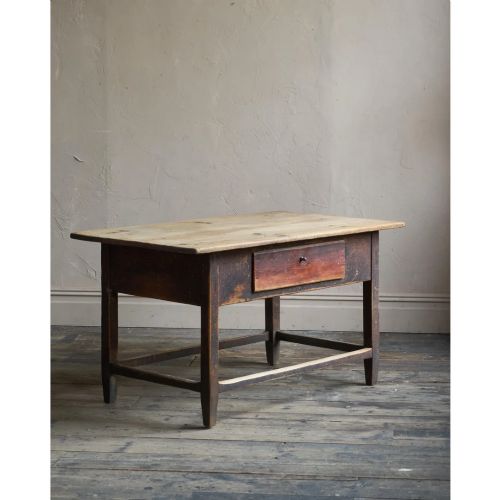
A box stretcher side table gives you sturdy timber construction and a classic lower rail, making these practical tables a reliable choice for any room.
Box Stretcher Side Table
When you search for a box stretcher side table, you are looking at solid timber framework designed to support frequent daily use. These tables draw on periods ranging from the seventeenth century through to the Edwardian era, spanning styles such as Jacobean, William and Mary, and Georgian.
The pieces appearing on this page include occasional tables, lowboys, needlework tables, and lamp tables alongside joint stools. Oak and mahogany form the core of the selection, accompanied by walnut, pine, paint finishes, and satinwood.
You are most likely to meet seventeenth-century oak examples and nineteenth-century interpretations on this page. These sturdy forms serve well as lamp tables, hall tables, or compact occasional surfaces in modern interiors.
How they were made
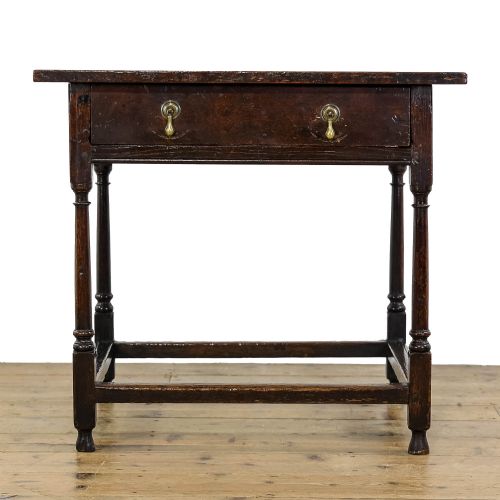
Cabinet makers constructed these pieces primarily from solid oak and mahogany, often utilising pine and walnut for secondary woods or specific structural elements. The defining characteristic involves horizontal stretchers connecting the legs near the base to form a rigid wooden box frame.
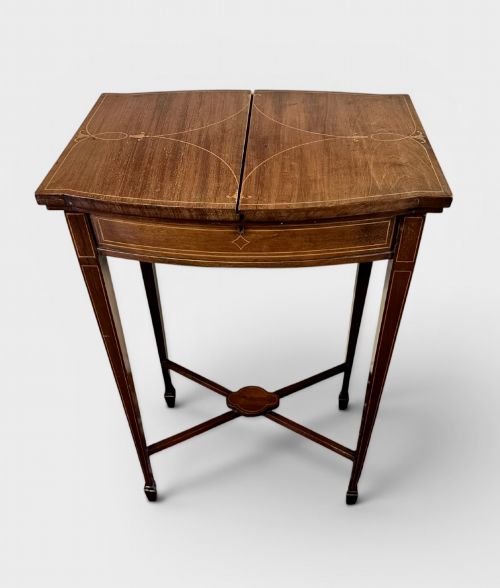
Surfaces feature inlaid decoration, painted finishes, or polished timber grains that highlight the natural material. Brass hardware appears on fitted interiors and drawers where present on work tables and lowboys.
Listings span eight distinct materials, with oak, mahogany, and walnut forming the primary structural timbers across multiple centuries.
What varies in quality
The standard of a box stretcher side table depends on the crispness of its joinery and the integrity of its timber. Early examples demonstrate hand-cut joints and dense grain patterns that reflect the working methods of their period.
Subtlety of proportion and the careful integration of the stretcher frame separate basic utility pieces from finer vernacular and formal examples. Surface treatments, from aged paint layers to polished mahogany, dictate the visual weight of each piece.
The Box Stretcher Side Table Glossary
- Box stretcher
- A system of horizontal wooden rails connecting all four legs near the floor to reinforce the table. This framework provides structural rigidity and prevents the legs from wobbling.
- Lowboy
- A small kneehole dressing table or side table with drawers, typically dating from the early eighteenth century. These low tables often feature elegant cabriole or straight legs.
- Joint stool
- A sturdy wooden stool built using mortise and tenon joints pegged together. These pieces often double as small side tables in contemporary settings.
- Inlay
- A decorative technique where contrasting materials are inserted into recessed portions of the base timber. Edwardian pieces frequently utilise this method for floral or geometric patterns.
- Work table
- A specialised small table fitted with compartments, drawers, or fabric bags for sewing and needlework. These versatile pieces function easily as compact side tables.
Box Stretcher Side Table: Frequently Asked Questions
What is a box stretcher?
A box stretcher is a set of four horizontal wooden rails joining the lower legs of a table together. This frame adds significant strength to the piece and prevents lateral movement.
Historically, it also kept feet off cold damp floors. Today, it defines the silhouette of many early oak and walnut tables.
How do I use a side table?
These tables fit easily beside seating, in hallways, or against bedroom walls for holding lamps and small objects. Their modest footprint makes them adaptable for awkward corners.
Drawered variants provide discreet storage for everyday clutter while maintaining a clean surface above.
How do I date an oak table?
Dating relies on observing construction methods, tool marks, timber selection, and stylistic details typical of specific centuries. Seventeenth-century pieces display pegged joints and heavy oak construction.
Later Victorian and Edwardian versions often employ machine-sawn timber and different joining techniques while mimicking earlier styles.
Are these tables sturdy?
Solid timber construction and the inherent design of the lower rail make these tables exceptionally stable. The box stretcher ties the legs together into a single rigid unit.
This robust engineering explains why so many seventeenth and eighteenth-century examples survive in active use today.