
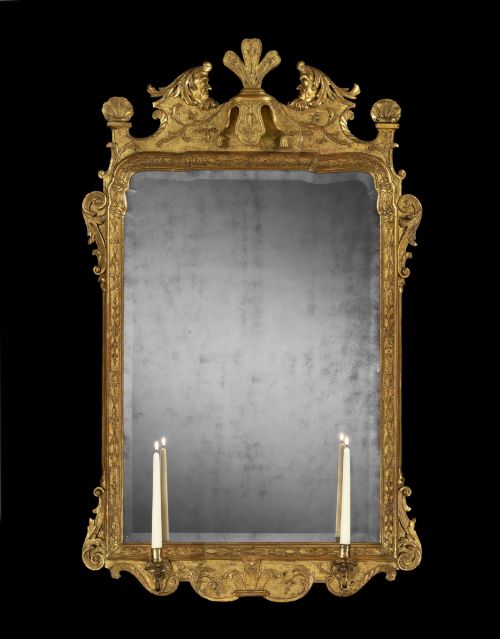
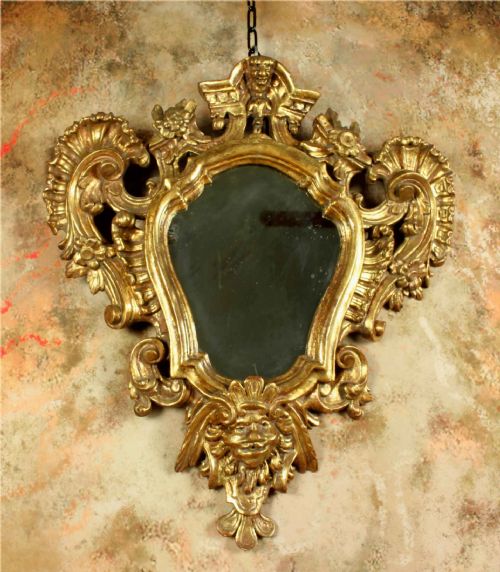
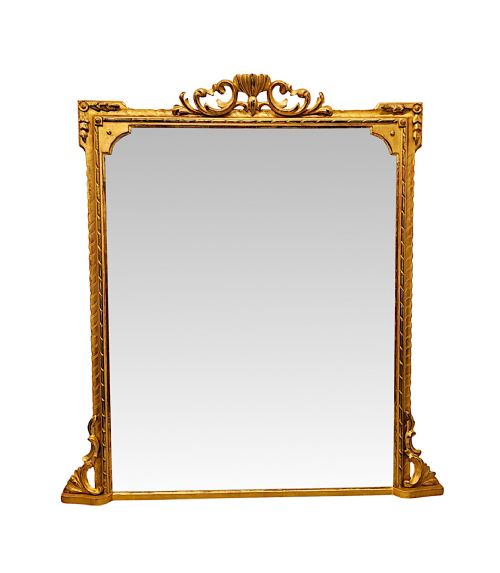

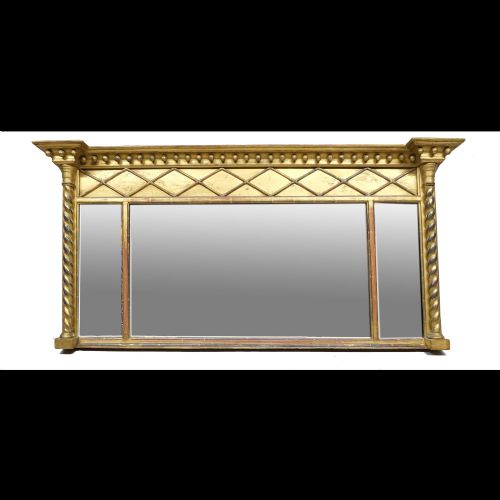

Period Giltwood Mirror
A period giltwood mirror brings warmth and reflective depth to a room through centuries-old craftsmanship.
Period Giltwood Mirror
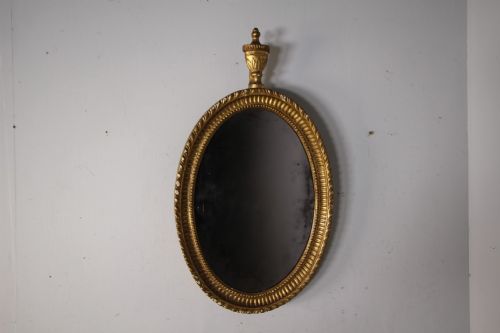
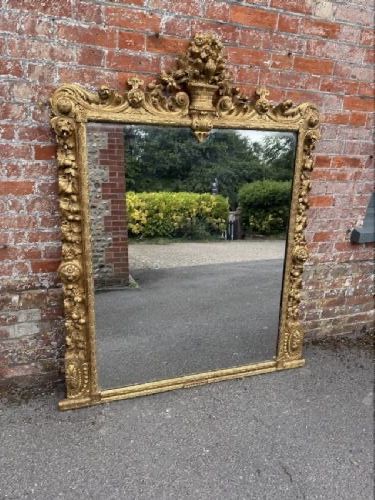
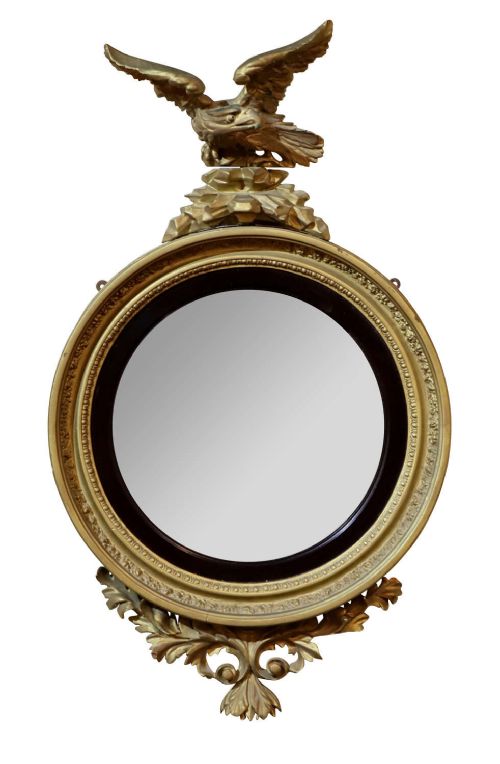
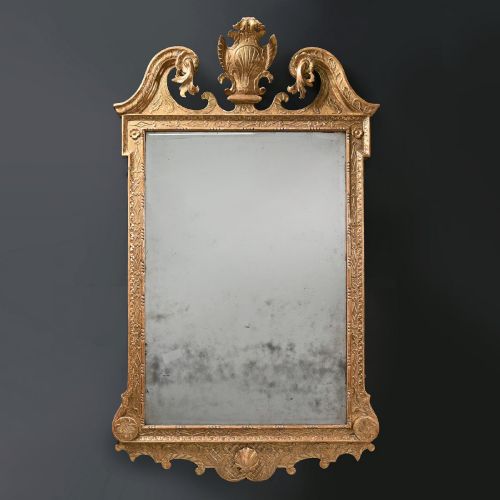
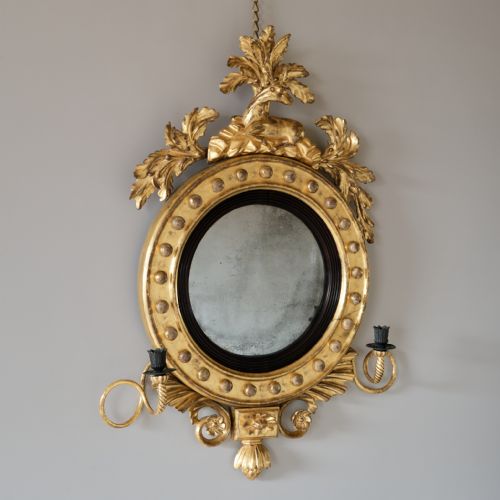
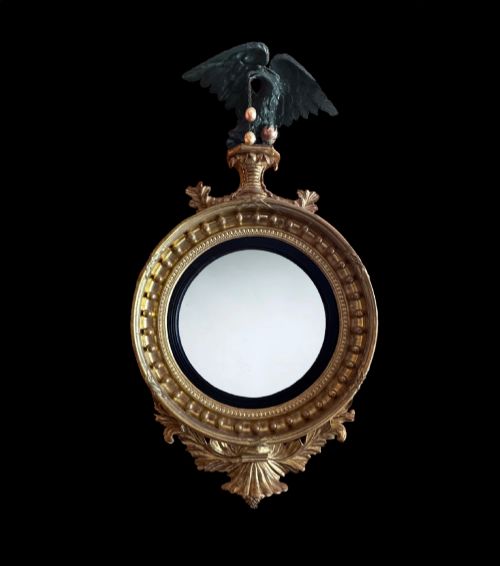
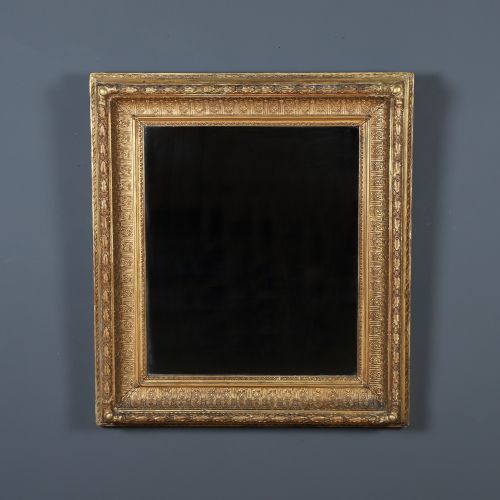
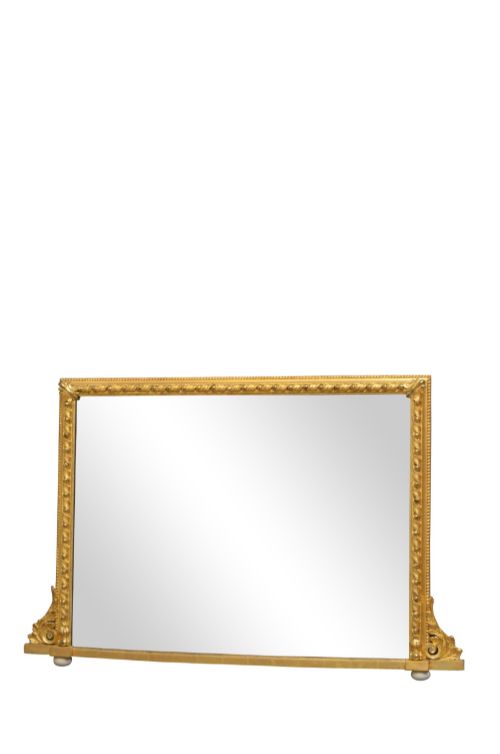
The selection ranges from compact Regency convex glasses surmounted by eagles to expansive Victorian and Georgian overmantels featuring intricate carved frames. Buyers encounter numerous regional interpretations spanning English country house styles to French rococo designs.
Objects on this page demonstrate the enduring appeal of gold leaf applied over carved wood and gesso substrates. Each form reflects the aesthetic priorities of its era, from neoclassical restraint to exuberant rococo ornamentation.
How they were made
Carvers shaped soft timbers such as pine or hardwoods like walnut before applying fine layers of gesso to build up relief details. Artisans then laid delicate sheets of gold leaf over the prepared surface, often burnishing portions to achieve contrasting sheens.
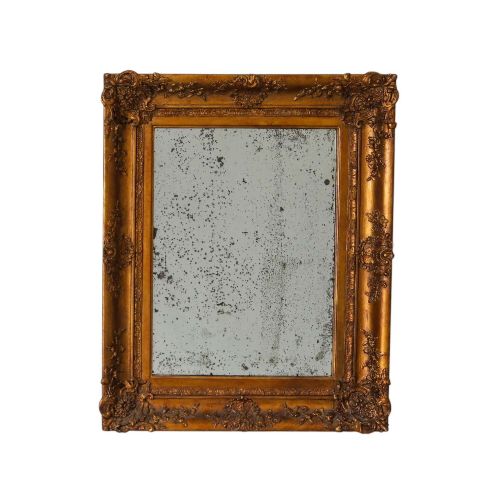
Mirror plates historically relied on mercury or early silvering techniques, which naturally degrade over time into characteristic foxed patterns. Frames frequently incorporated structural brass elements and ebonised wood accents to define specific stylistic periods.
Several watchful wooden eagles keep a steady gaze over the room from their perches atop Regency convex mirrors.
What varies in quality
The crispness of the hand-carved gesso and wood ornamentation distinguishes superior examples from simpler productions. Deeply undercut foliage, finely rendered figures, and balanced proportions indicate the hand of a skilled artisan.
The integrity of the original gilding and the survival of early mirror plates heavily influence the character of the piece. Preservation of original surfaces retains the authentic visual depth valued by collectors.
William Kent·John Belchier
The Period Giltwood Mirror Glossary
- Giltwood
- Wood that has been coated with thin sheets of gold leaf. This finish provides a luminous and enduring surface characteristic of formal decorative arts.
- Gesso
- A plaster-like mixture applied to a wooden base to create a smooth surface for carving and gilding. It allows intricate relief ornamentation to be modelled precisely.
- Convex mirror
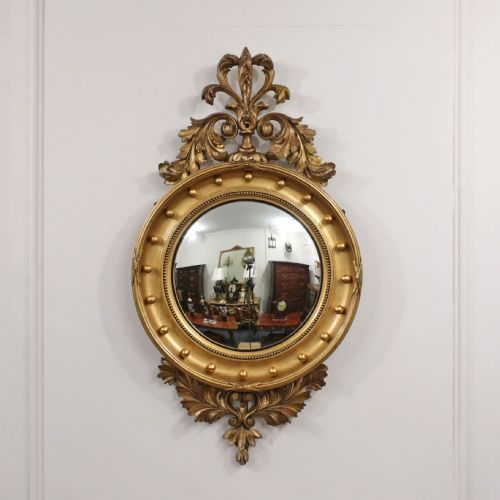
- A circular glass mirror with a bulging surface that reflects a wide panoramic view of the interior. These mirrors often feature decorative frames with eagle surmounts.
- Overmantel mirror
- A wide mirror designed specifically to be hung above a fireplace mantel. They frequently incorporate multiple glass plates and architectural cornices.
- Pier mirror
- A tall, narrow mirror intended to be hung on the wall space between windows. These pieces often coordinate with matching console tables.
- Foxed glass
- Mirror plate displaying dark spots and mottled oxidation caused by age. This natural weathering process is prized for its historical authenticity.
Period Giltwood Mirror: Frequently Asked Questions
How do I date a giltwood mirror?
Dating relies on examining the construction methods of the wooden frame, the composition of the gesso, and the style of the carving. Stylistic motifs such as neoclassical urns or rococo scrolls often correspond to specific decades.
Changes in mirror plate manufacture also help establish age. Early mercury plates and hand-blown glass exhibit distinct optical distortions compared to later industrial glass.
What is a convex mirror used for?
Convex mirrors were historically placed in reception rooms and parlours to monitor activity across a wide area from a single vantage point. Their curved glass creates a unique spherical reflection that gathers ambient light.
During the Regency period, these pieces became fashionable decorative statements. They frequently incorporated candle arms or eagle crests to enhance their visual presence.
Why does old mirror glass look speckled?
Speckled or foxed glass occurs when moisture and air seep behind the reflective backing over many decades. This chemical reaction breaks down the silver or mercury layer.
Collectors appreciate this natural ageing process because it confirms the antiquity of the plate. It also imparts a soft, atmospheric reflection rather than a harsh modern mirror image.
Where should I hang an overmantel mirror?
An overmantel mirror traditionally hangs centrally above a fireplace mantel to reflect light and balance the proportions of the hearth. Secure wall fixings are essential due to the substantial weight of these large wooden frames.
They also function effectively in hallways or dining rooms above sideboards. Positioning them opposite windows maximises the distribution of natural daylight.