
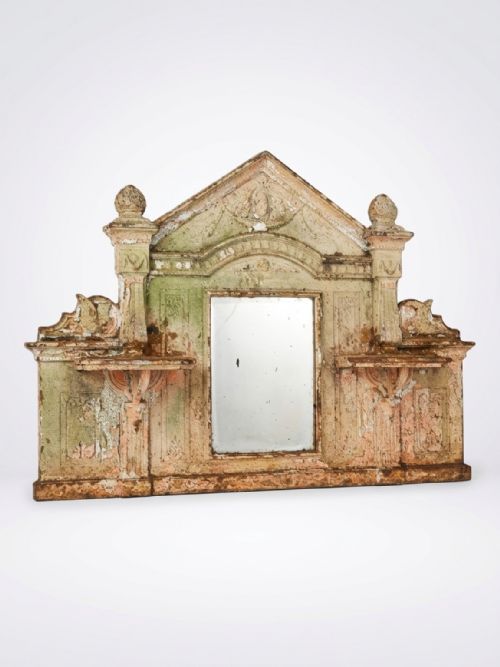
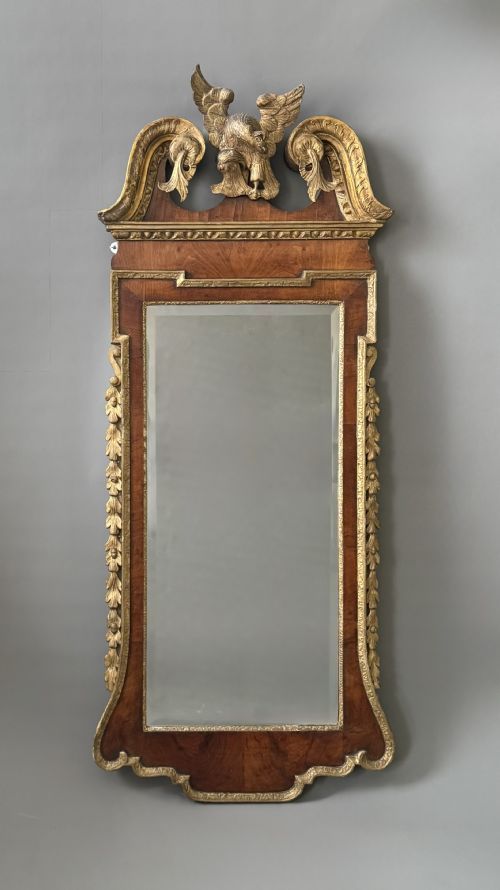
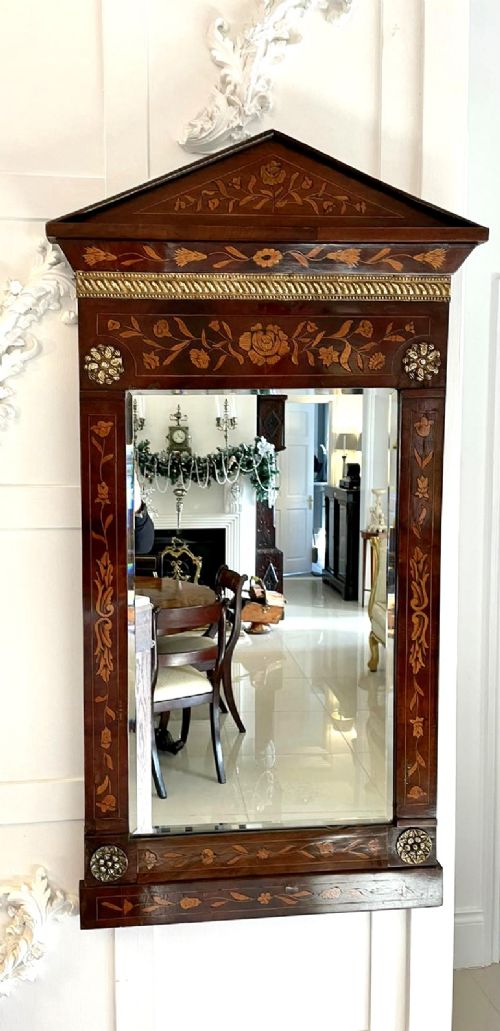
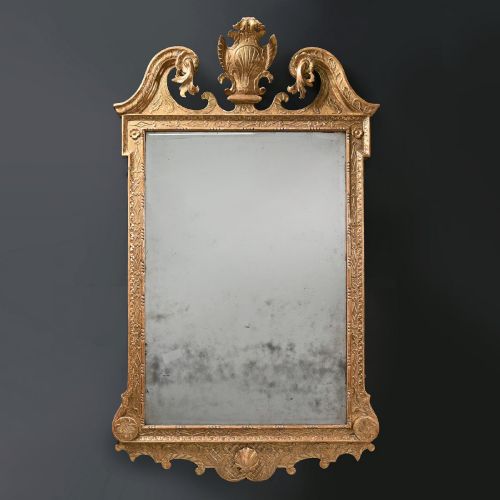


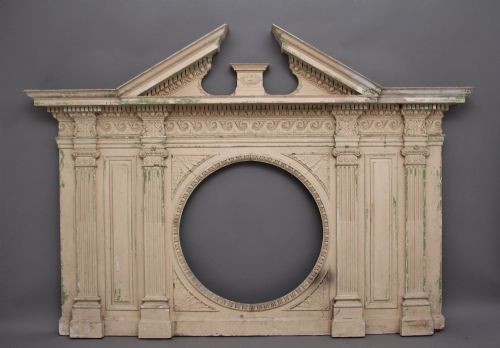

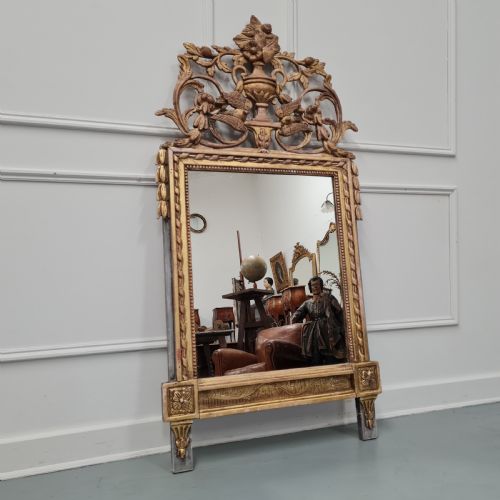


Pedimented Wall Mirror
A pedimented wall mirror brings architectural proportion to a room, offering a framed expanse of glass topped by a classical pediment that draws the eye upward.
Pedimented Wall Mirror
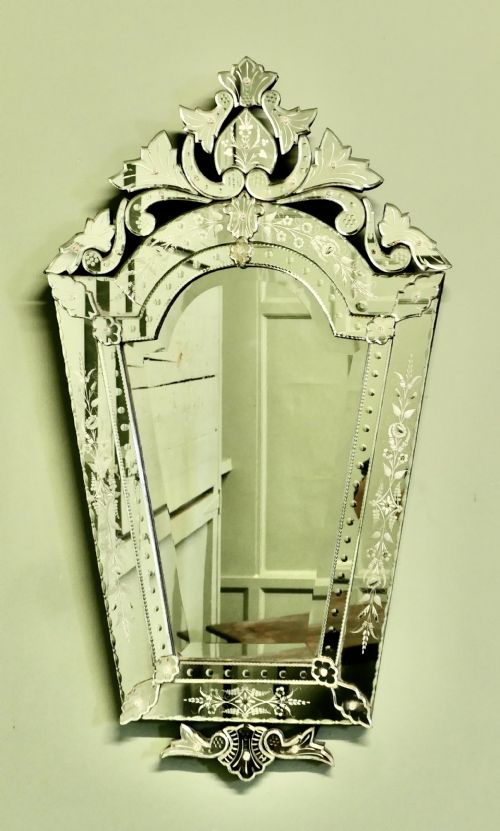
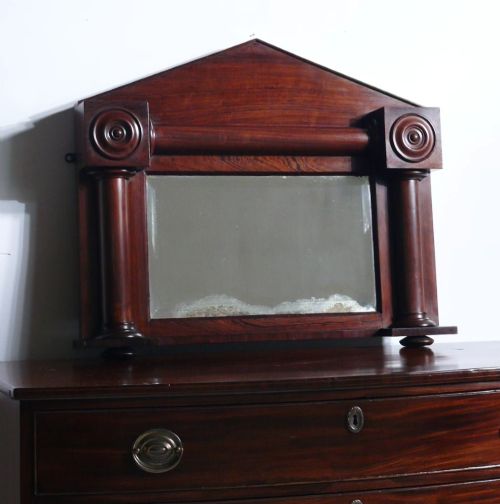
A pedimented wall mirror combines functional glass with architectural framing, frequently taking the form of overmantels, pier mirrors, and wall hanging pieces. These items originate across the eighteenth and nineteenth centuries, spanning Georgian, Victorian, and Edwardian eras.
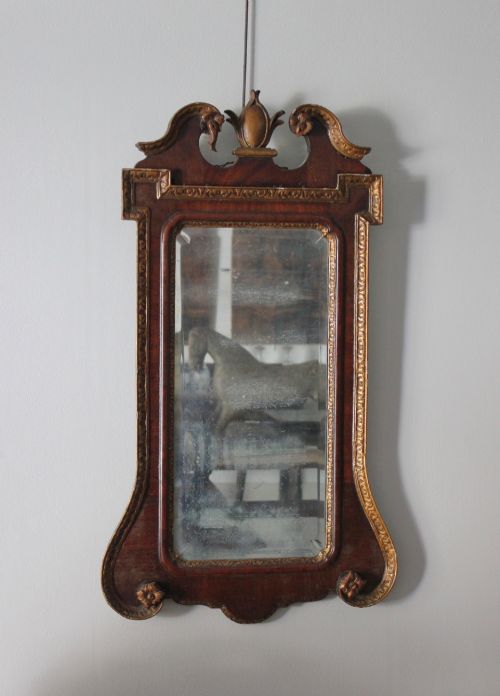
The most common examples on this page date from the nineteenth century, often reflecting earlier Georgian styles or incorporating revival aesthetics such as George II and Neoclassical designs. They employ diverse formats including arched tops, painted pine, and carved wood.
Originating in English, French, Swedish, and Italian workshops, these mirrors serve both utility and decoration. They range from compact hallway pieces to large scaled overmantels designed to anchor a principal room.
How they were made
Makers constructed the structural frames using native and exotic timbers such as mahogany, walnut, rosewood, and pine, frequently applying gesso to create crisp, moulded decorative details. Gilding with gold leaf was then layered over the prepared gesso surfaces to achieve a luminous metallic finish.
Carving was executed by hand on solid wood or built-up gesso layers, allowing for intricate architectural elements like broken-pediment crests, scrolls, and parcel-gilt highlights. Glass plates were bevelled or flat, secured within the rebate by wooden backs.
Pedimented Wall Mirror Retail Price Guide 2026
Typical asking prices for pedimented wall mirror among the pieces listed under this phrase on Sellingantiques today, from the lower quarter to the upper quarter. They describe what is for sale here now, not the wider market.
Listings feature mahogany, walnut, rosewood, and birchwood frames, alongside gesso and giltwood surfaces spanning the eighteenth to early twentieth centuries.
What varies in quality
Quality rests in the crispness of the hand-carved detail and the proportion of the architectural pediment relative to the glass plate. Superior pieces demonstrate confident carving in wood or gesso, where crisp edges remain intact beneath the gilding or paint.
The integrity of the surface finish and the retention of original components, such as early mirror glass plates, distinguish finer examples from later restorations. Weight, timber selection, and depth of the moulding further separate standard domestic mirrors from grander architectural iterations.
William Kent
The Pedimented Wall Mirror Glossary
- Pediment
- An architectural gable surmounting the frame, often triangular or broken. This feature defines the upper visual boundary of the mirror.
- Giltwood
- Timber coated in gold leaf over a prepared gesso base. It provides a reflective, warm surface finish characteristic of formal period frames.
- Gesso
- A plaster mixture applied to wood frames to create a smooth surface for carving and gilding. It allows for intricate, sharp ornamental relief.
- Pier Mirror
- A tall glass designed to hang on the wall between windows, frequently positioned above a pier table. These tall formats suit vertical architectural spaces.
- Parcel-gilt
- Partially gilded woodwork where gold leaf accents specific carved details against a contrasting painted or polished wood ground.
Pedimented Wall Mirror: Frequently Asked Questions
Where should I hang a pedimented wall mirror?
These mirrors suit placement above a fireplace mantel, a hallway console, or a principal reception room wall where their architectural pediment can command adequate visual space.
Ensure the wall construction supports the considerable weight of timber, gesso, and glass, anchoring the piece securely to wall studs.
How do I identify a Georgian period mirror?
Examine the timber species, construction joints, and the weight of the glass plate, as eighteenth-century pieces often utilise dense mahogany or walnut alongside hand-bevelled glass.
Revival pieces from the nineteenth century frequently mimic these proportions but reveal nineteenth-century machine methods or distinct secondary woods upon closer inspection.
Are the glass plates original?
Original glass plates frequently exhibit minor foxing, subtle surface bubbles, and slight silvering degradation due to age. Replacements usually appear overly clear and lack the undulating distortion characteristic of historic glass manufacturing.
How do I clean an antique gilded frame?
Dust the carved gesso and giltwood surface gently with a dry, soft artist brush to remove loose particles without disturbing fragile leaf. Avoid liquid cleaners, moisture, and abrasive cloths entirely, as they damage historic gilding and exposed gesso.