


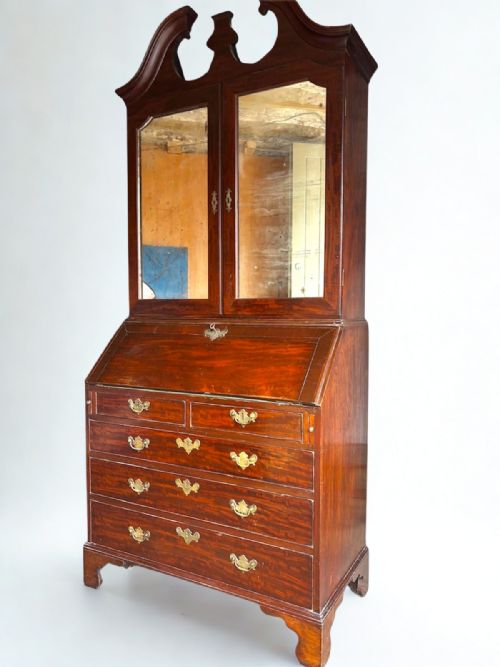


Swan Neck Pediment Mirror
A swan neck pediment mirror brings architectural proportion and classical line to a room.
What swan neck pediment mirror pieces are
A swan neck pediment mirror is a wall mirror defined by its broken scroll pediment, a classical architectural form adapted for domestic interiors. These mirrors appear in Georgian, 18th century, and 19th century periods, including George II style and George II revival pieces.
The most common examples on this page are wall mirrors constructed from walnut or mahogany, frequently detailed with parcel gilt highlights or fully gilded frames. They range from standard wall-hanging proportions to larger scale pier mirrors designed to sit between windows.
How they were made
Cabinetmakers built the foundational frames of these mirrors using hardwoods such as walnut and mahogany, selecting timber for grain and colour. They shaped the signature scrolling pediments by hand, applying gesso to prepare surfaces for gilding.
Makers set glass plates within the timber rebates, occasionally retaining original glass. Parcel gilt details were applied using thin gold leaf over gesso to accent carved mouldings and central cartouches.
Retail Price Guide 2026
Typical UK retail prices for swan neck pediment mirror, calculated from the Sellingantiques database of over a million retail prices indexed since 2003. This retail price guide relies exclusively on Sellingantiques data; no external sources or auction records are used, so the figures do not describe the wider market.
Many of these mirrors have spent centuries watching generations rearrange the furniture beneath them.
What varies in quality
Quality rests in the precision of the carved scrolls and the depth of the mouldings rather than surface finish alone. Finer examples display crisp botanical or classical carving that integrates harmoniously with the architectural sweep of the pediment.
The choice of primary timber and the retention of original glass plates elevate a piece. Superior proportion in the frame width relative to the mirror glass distinguishes workshop execution of greater ambition.
William Kent
The Swan Neck Pediment Mirror Glossary
- Swan neck pediment
- A broken pediment featuring mirrored ogee curves that rise to meet a central terminal, often a finial or carved cartouche.
- Parcel gilt
- A decorative treatment where specific carved details or mouldings are gilded with gold leaf while the underlying timber remains exposed.
- Pier mirror
- A tall vertical mirror designed specifically to hang on the wall space between two windows.
- Gesso
- A plaster-like mixture applied to timber frames to create a smooth, responsive surface for fine carving and subsequent gilding.
Frequently Asked Questions
What is a swan neck pediment mirror?
A swan neck pediment mirror is a wall-hanging looking glass featuring a broken scroll top that resembles the neck of a swan. These pieces draw on classical architectural vocabulary developed during the Georgian era.
Craftsmen adapted large-scale pediment designs from furniture and architecture for domestic wall mirrors, creating a focal point above mantelpieces and halls.
Where should I hang a pier mirror?
A pier mirror is traditionally proportioned to hang on the narrow wall space between two windows. This placement maximises natural light within a room by reflecting it back across the interior.
In modern rooms, they work equally well above console tables or low sideboards where vertical wall height needs balancing.
How do I date a Georgian wall mirror?
Dating relies on timber selection, construction methods, and the profile of the mouldings and glass plates. Georgian pieces utilise primary woods like mahogany and walnut alongside specific joinery techniques.
Later 19th-century revival pieces often imitate these earlier Georgian forms closely, meaning construction details and wear patterns provide the clearest clues to age.
Are original glass plates important?
Original glass plates contribute significantly to the character and period integrity of a mirror. Older glass often exhibits subtle distortions, minor foxing, and wavy surfaces that reflect light with a softer quality.
While replacement glass is common in pieces of this age, surviving original plates preserve the complete historical fabric of the mirror.