
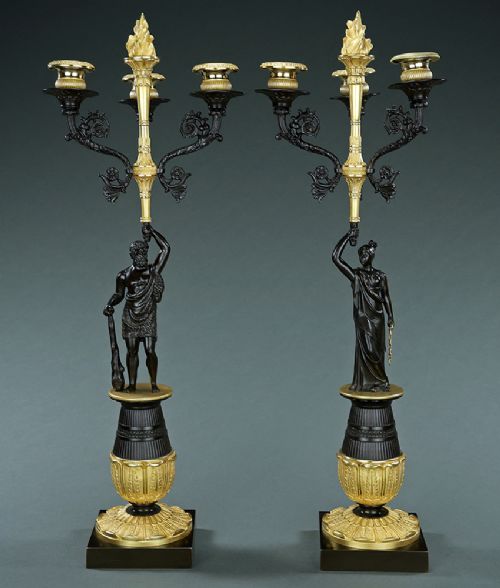
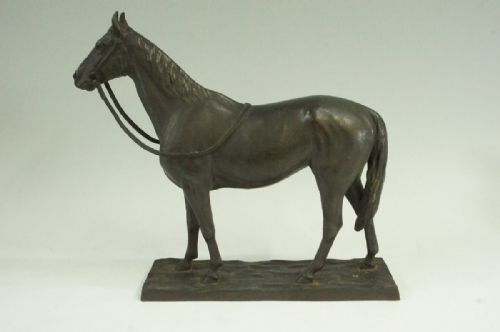



Patinated Bronze Standing Figure
A patinated bronze standing figure brings sculptural presence and historical depth to a room through cast metal and applied surface treatments.

Patinated Bronze Standing Figure
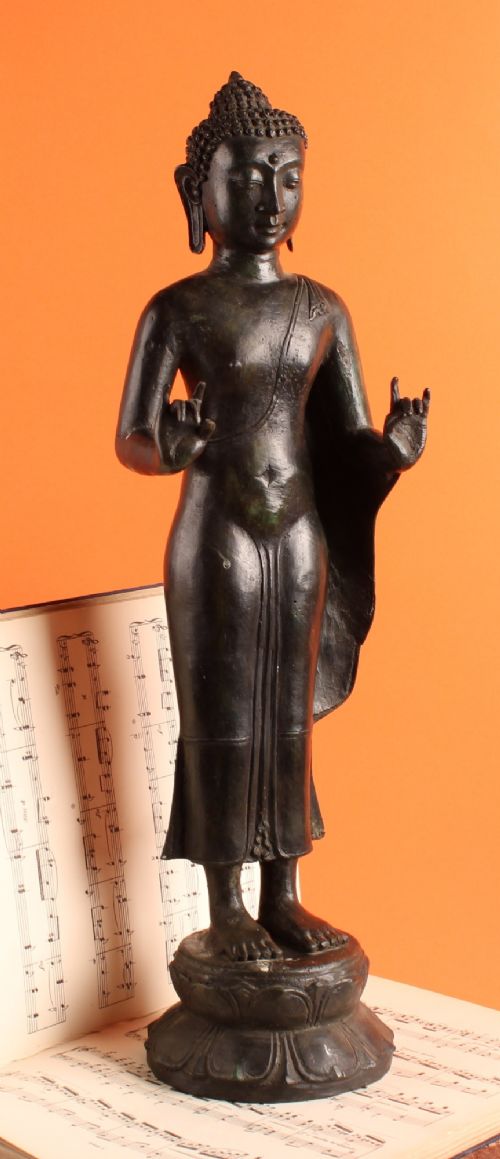
A patinated bronze standing figure is a freestanding cast sculpture depicting human, animal or allegorical subjects, often functioning as a standalone artwork or incorporating candle nozzles. The selections gathered here span nineteenth-century French realism, French Empire designs, Art Deco compositions and Asian Buddhist iconography.
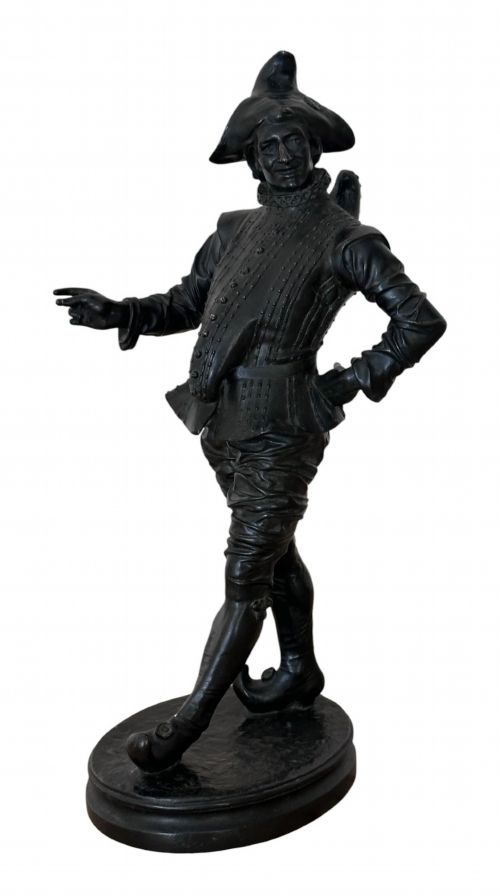
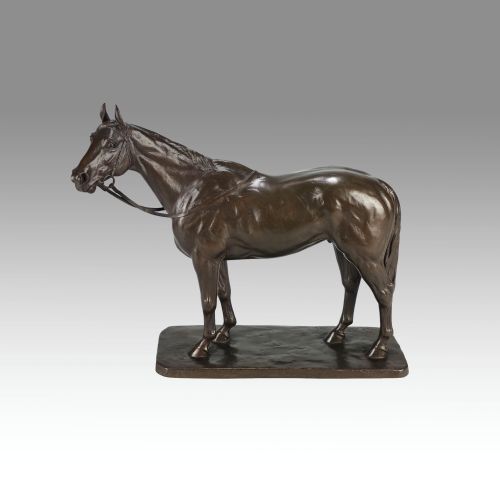
The version most frequently encountered on this page is the nineteenth-century European cabinet bronze or figural candlestick, cast in editions by established foundries and artists. These works range from classical heroes and court jesters to mythological deities and naturalistic animal studies.
Materials and casting methods
Foundries utilised traditional bronze casting methods, alongside alternative metal alloys such as spelter, cast iron, or silver and copper mixtures, paired occasionally with marble bases or ormolu mounts. The resulting metal body receives a chemical patination treatment to colour the surface, ranging from deep brown and black tones to green verdigris.
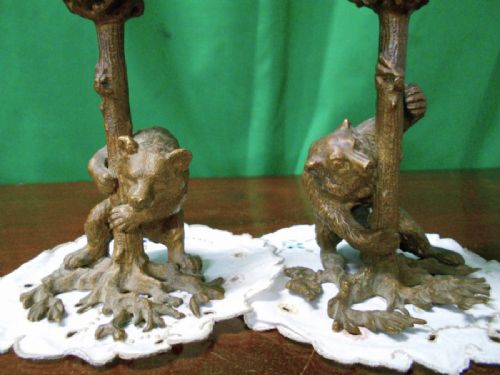
Medieval characters navigating the room on stilts appear alongside emperors, street urchins and bears holding candles.
Distinctions in quality
The depth and consistency of the chemical patination dictate the visual richness of the object, with skilled patination enhancing the contours of the sculpture. Furthermore, association with a recorded founder or sculptor elevates the standing of an individual piece.
P Granet·Kunio Itô·Barbedienne·Antonin Mercié·Jean Jules Salmson·Hebrard·Joaquim Angles·Jules Dalou·Susse Freres·Pierre le Faguays·E Laurent·Math Moreau·Gustav Adolf Daumiller·Charles Anfrie·Louis Auguste Moreau
The Patinated Bronze Standing Figure Glossary
- Patination
- The chemical treatment applied to the metal surface to alter its colour and tone. This process protects the alloy while enhancing the visual depth of the sculpture.
- Casting
- The method of pouring molten metal into a mould to form the primary shape of the figure. Traditional foundry work involves complex piece-moulds or lost-wax techniques.
- Ormolu
- Gilt bronze ornamentation applied to bases or mountings, providing a bright golden contrast to dark patinated metal surfaces. It appears frequently on nineteenth-century French works.
- Spelter
- A zinc alloy commonly used as a cost-effective alternative to bronze in nineteenth-century decorative figures and candlesticks. It typically receives a bronze-coloured surface finish.
- Mudras
- Symbolic hand gestures depicted in Buddhist sculpture, carrying specific spiritual meanings in works such as the Thai Rattanakosin standing figures.
Patinated Bronze Standing Figure: Frequently Asked Questions
What is a patinated bronze standing figure?
A patinated bronze standing figure is a cast metal sculpture portraying a person, deity or animal in an upright stance, treated with chemical agents to colour the surface.
These pieces function as independent works of art, decorative mantel ornaments, or figural candlesticks across various historical periods.
How do I identify the period of a bronze?
Period identification relies on stylistic cues, clothing details, and the character of the cast surface, which reflect the artistic movements of their time.
Signatures, foundry marks and accompanying materials like marble plinths also provide reliable chronological markers for nineteenth and twentieth-century works.
Were these figures used as lighting?
Many standing figures from the nineteenth century double as functional candlesticks or candelabra, incorporating sockets designed to hold taper candles.
Sculptural figures held aloft by the subjects or integrated into the base allowed makers to combine decorative art with domestic utility.
What is the difference between bronze and spelter?
Bronze is a durable copper and tin alloy capable of holding exceptionally sharp details during the casting process, preferred for fine art sculpture.
Spelter is a softer, lighter zinc-based metal that was frequently utilised as an economical alternative for decorative mantel pieces and figural candlesticks.
How should I care for patinated bronze?
Maintenance requires gentle dusting with a soft, dry cloth to remove surface particles without disturbing the underlying chemical patination.
Harsh cleaning agents, polishes and moisture must be avoided entirely to preserve the original surface finish of the metal.