


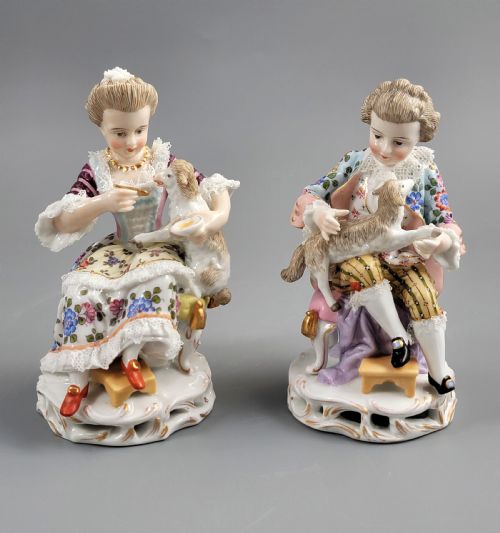


Pastoral Porcelain Figures
Pastoral porcelain figures capture idealised rural life through crafted ceramic shepherds, gardeners and musicians.
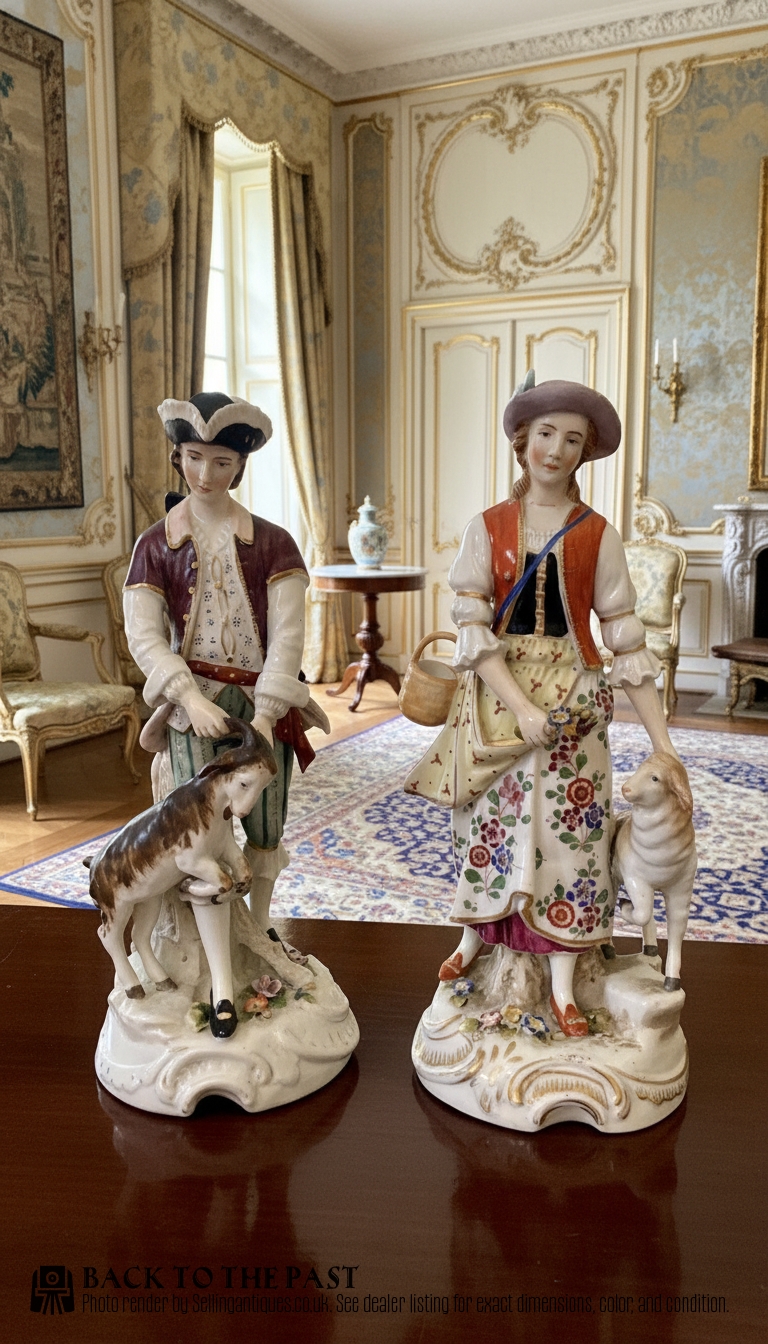
Pastoral Porcelain Figures
Pastoral porcelain figures represent shepherds, shepherdesses, gardeners, and musicians in idealised rural settings. These ceramic works span the eighteenth and nineteenth centuries, taking the form of standalone figurines, pairs, figural candlesticks, and larger sculptural groups.
German and French factories dominate the selection, with notable examples originating from Meissen, Derby, Sitzendorf, and Samson. Makers often drew inspiration from earlier Chelsea and Derby designs, producing romantic interpretations of agrarian life for domestic display.
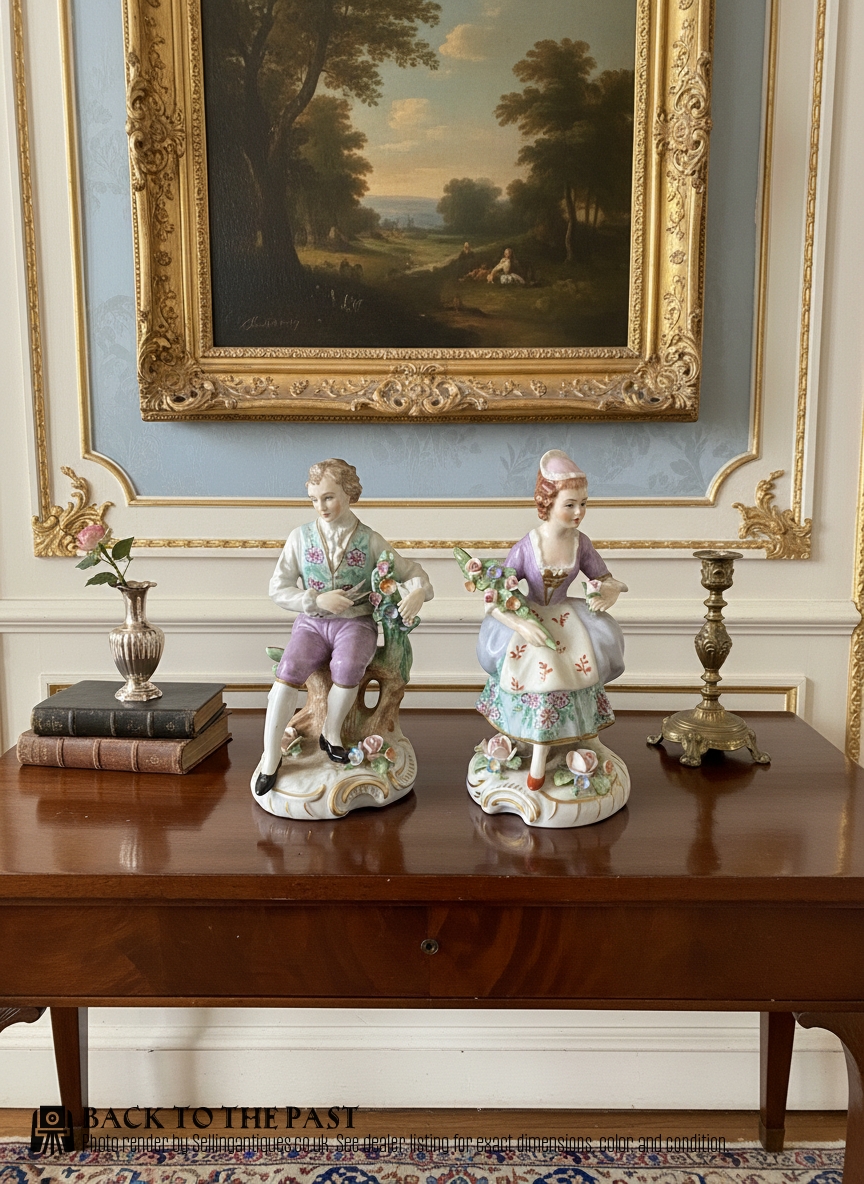
How they were made
Makers utilised hard-paste porcelain, soft-paste variants, and unglazed bisque porcelain to shape these figures. Surface decoration relied upon hand-applied enamel colours, intricate glaze finishes, and delicate gold leaf or gilt accents.
Many items required multiple mould parts to capture the complex drapery of garments and the forms of accompanying animals such as sheep, lambs, and cows. Artisans then painted finer details by hand before firing the ceramics at high temperatures.
Pastoral Porcelain Figures Retail Price Guide 2026
Typical asking prices for pastoral porcelain figures among the pieces listed under this phrase on Sellingantiques today, from the lower quarter to the upper quarter. They describe what is for sale here now, not the wider market.
Listings feature hard-paste porcelain, bisque porcelain, and enamel finishes across Georgian and Victorian periods.
What varies in quality
Quality rests upon the crispness of the moulding and the precision of the hand-painting on faces, foliage, and garments. Finer pieces retain sharp details in the facial expressions, fingers, and modelled flowers without blurring in the glaze.
The sophistication of the modelling distinguishes standard production pieces from exceptional sculptural groups. Early factory output and skilled revival pieces display more fluid movement and harmonious proportions in the figures and their animal companions.
Meissen·Derby·Samson·Sitzendorf·Carl Thieme Dresden·Royal Dux·Vion et Baury
The Pastoral Porcelain Figures Glossary
- Bisque porcelain
- Un-glazed porcelain with a matte, marble-like surface texture. This finish highlights fine sculptural detail without the reflective shine of a clear glaze.
- Hard-paste porcelain
- A dense, durable ceramic composed of kaolin and petuntse fired at very high temperatures. It forms the body of many eighteenth-century and nineteenth-century continental European figures.
- Glaze
- A glassy coating fused to the ceramic body through firing. It seals the porous clay and adds a glossy sheen to the pastoral clothing and bases.
- Gilt
- A thin application of gold or gold-coloured material used to highlight base rims, clothing edges, and decorative motifs. This embellishment adds rich contrast to the painted enamel colours.
- Figurine
- A small, three-dimensional sculpted representation of a human or animal form. In pastoral ceramics, these depict rural workers in romanticised poses.
Pastoral Porcelain Figures: Frequently Asked Questions
What do pastoral figures depict?
These pieces portray romanticised rural labourers such as shepherds, shepherdesses, gardeners, and milkmaids engaged in leisurely activities. They frequently incorporate domestic animals like sheep, lambs, and cows into the composition.
The imagery reflects an eighteenth-century fascination with the countryside, presenting an idealised view of agricultural life removed from genuine hardship.
Where were these figures made?
Production centred primarily in European ceramic hubs, notably in Germany and France. Prominent factories and workshops included Meissen, Derby, Sitzendorf, and Parisian makers such as Samson.
Many nineteenth-century pieces also paid homage to earlier eighteenth-century English and continental styles, recreating historical pastoral themes for Victorian interiors.
How do I display them?
Figures suit enclosed cabinets, mantelpieces, or dedicated display shelves where lighting can highlight their painted enamel details and glazed surfaces. Paired figures work well arranged symmetrically to anchor a decorative scheme.
Because many pieces feature delicate protruding elements like fingers, leaves, and floral appliqués, placement in stable, low-traffic areas prevents accidental damage.
How are periods identified?
Identifying the period involves examining factory marks, the composition of the porcelain body, and the painting style. Eighteenth-century originals typically display early underglaze blue marks and softer colour palettes.
Nineteenth-century revival pieces often incorporate impressed numbers, distinct factory stamps, or brighter enamel colours characteristic of Victorian and Art Nouveau manufacturing methods.