
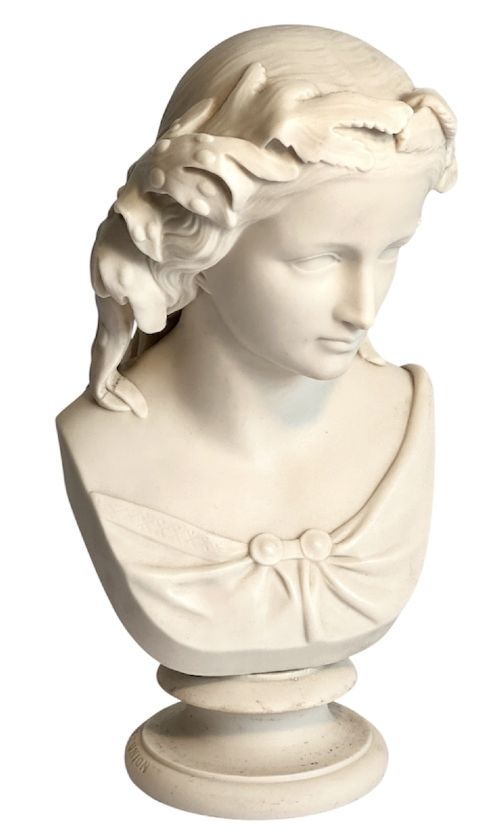
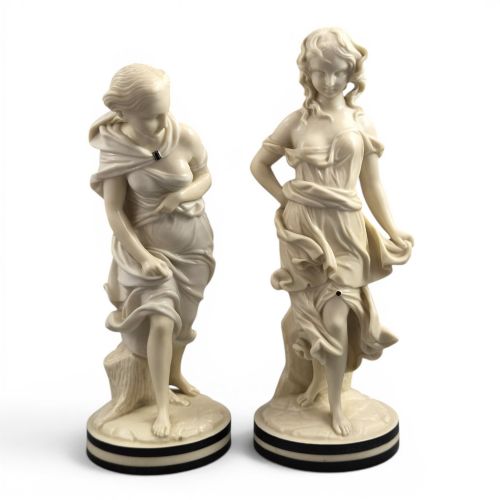


Parian Ware Female Figure
These parian ware female figure carvings bring Victorian neoclassical taste directly into your rooms with crisp ceramic detail.
Parian Ware Female Figure
When you search for parian ware female figure, you encounter nineteenth-century sculptural ceramics depicting classical maidens, literary heroines, and allegorical subjects. These pieces range from substantial busts and seated figures to standing statuettes accompanied by attributes like doves, cornucopias, and baskets of fruit.
You are most likely to meet Victorian examples produced by prominent English factories during the middle and late nineteenth century. These sculptures draw heavily on neoclassical aesthetics, presenting draped female forms with smooth, unglazed surfaces that mimic marble.
How they were made
Potters made these figures using fine parian porcelain, a specialised ceramic body developed in the nineteenth century to imitate carved marble. This unglazed biscuit porcelain allowed makers to capture intricate folds of drapery, hair strands, and facial expressions with sharp definition.
Selected examples incorporate touches of enamel paint and glaze to highlight specific details like botanical elements or garments. The ceramic was cast in multiple moulds and fired at high temperatures to achieve a dense, durable body without the glossy shine of traditional porcelain.
Several Victorian ladies share their pedestal space with watchful lizards, baskets of grapes, and remarkably heavy cornucopias.
What varies in quality
Sculptures bearing the marks of known makers or modelled by recognised artists demonstrate superior craftsmanship in the initial design and the care taken during the casting and cleaning stages before firing.
Copeland·Royal Worcester
The Parian Ware Female Figure Glossary
- Parian ware
- A type of fine biscuit porcelain developed in the nineteenth century to resemble carved white marble. It contains a high proportion of feldspar which vitrifies during firing.
- Biscuit porcelain
- Ceramic that has been fired once without a glaze, leaving a matte, porous surface. It is also known as bisque.
- Neoclassical
- An artistic style inspired by the classical art and culture of ancient Greece and Rome. It emphasises restrained dignity, classical drapery, and heroic or allegorical themes.
- Cornucopia
- A horn-shaped container overflowing with fruit, flowers, or corn. It frequently appears in classical sculpture as a symbol of abundance.
Parian Ware Female Figure: Frequently Asked Questions
What is parian ware?
Parian ware is a type of unglazed white porcelain developed in Victorian Britain to imitate carved marble. It gained popularity for portrait busts and classical figures because of its smooth, matte texture.
Manufacturers used this ceramic body to produce affordable sculptural works that brought classical art into nineteenth-century domestic interiors.
How do I date these figures?
Dating relies on factory marks, registry stamps, and stylistic cues associated with the Victorian period. Most pieces date from the mid-nineteenth century through the late eighteen-hundreds.
Sculptures from this era often carry impressed symbols, titles, or artist names on the base or reverse side of the ceramic.
Where were they made?
The majority of these pieces originated in English potteries operating during the nineteenth century. Factories in Staffordshire and Worcester were particularly active in producing parian statuary.
These regional centres employed skilled modellers who translated classical sculptures and contemporary artwork into porcelain.
How do I clean parian figures?
Cleaning requires a soft, dry brush to remove dust from the matte porcelain surface without damaging fine details. Avoid using water or chemical cleaners on unglazed ceramic.
Because biscuit porcelain is porous, moisture can absorb into the body and trap dirt within the microscopic pores of the material.