


Panelled Oak Blanket Chest
A panelled oak blanket chest is a sturdy historic storage box offering practical utility and centuries of carpentry character.
Panelled Oak Blanket Chest
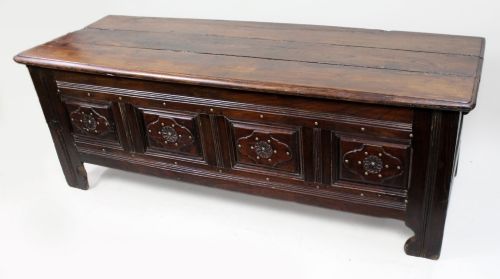
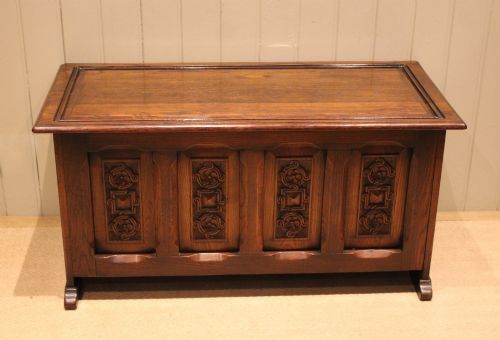
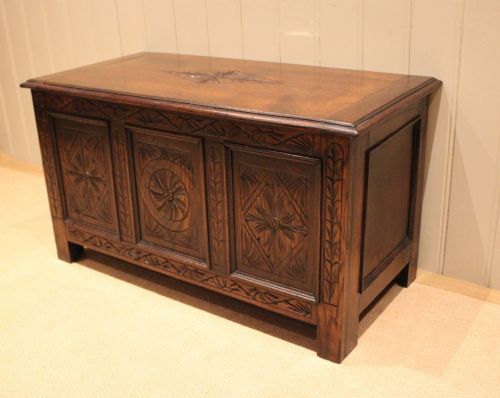
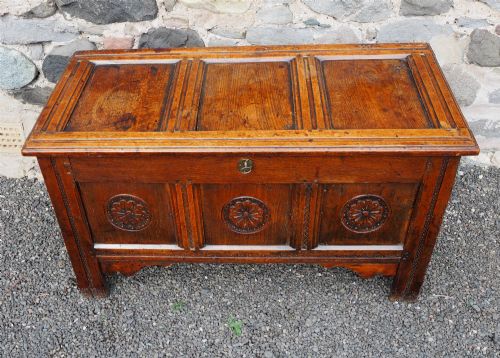
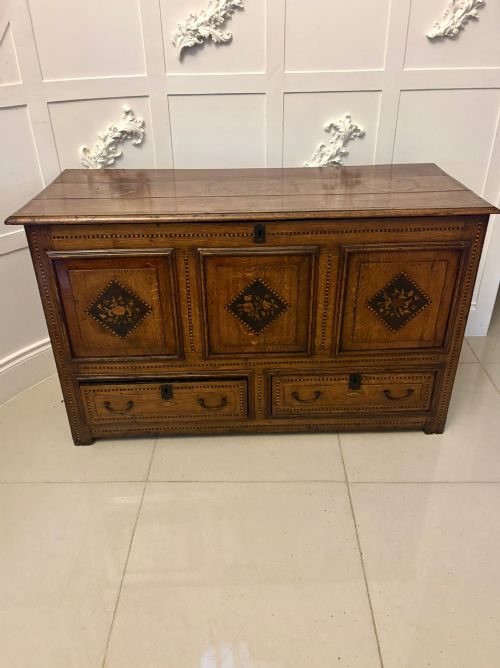
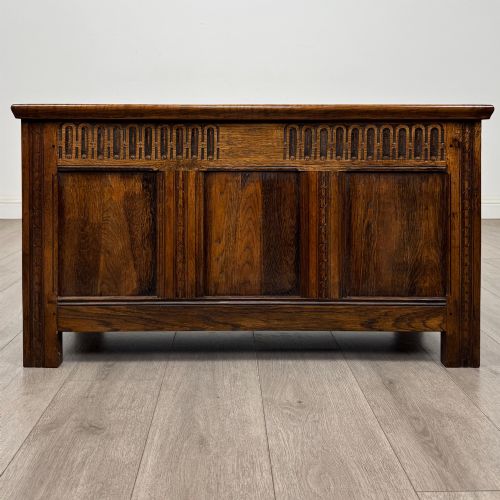
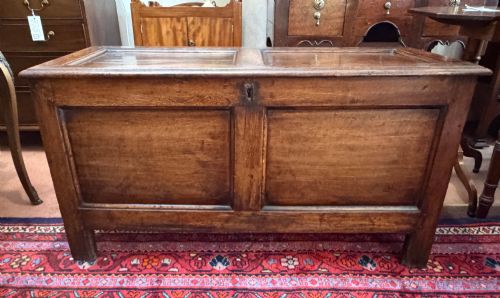
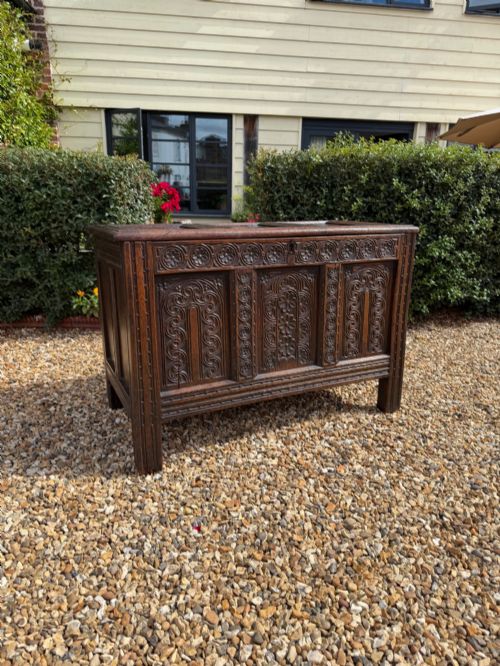
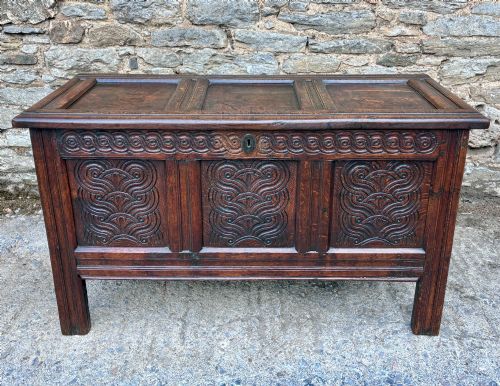
A panelled oak blanket chest serves as a traditional storage container built with framed wooden panels held together by tongue-and-groove or mortise-and-tenon joints. These pieces range from simple utilitarian boxes to sophisticated mule chests equipped with lower drawers.
The most common versions met on this page date from the seventeenth and eighteenth centuries, reflecting vernacular English, Welsh, and French rural cabinet-making traditions. Buyers encounter regional variants such as the Welsh coffer bach alongside standard joined oak boxes.
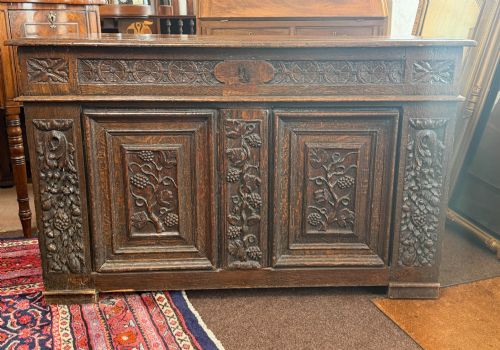
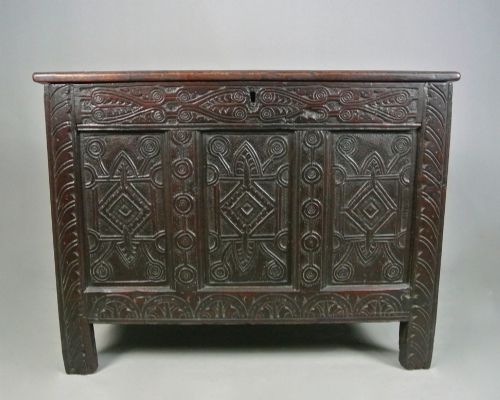
Surviving examples display a mix of unadorned joined construction, carved friezes, and occasional marquetry or wood inlay. Many retain iron hinges and brass fittings that anchor their functional history in domestic storage.
What varies in quality
The distinction between ordinary and superior pieces rests upon the crispness of the hand-carving, the weight of the solid timber, and the integrity of the original joined construction. Early examples with untouched surface patination command greater attention from collectors than later revivals.
Proportions also dictate desirability, with smaller proportions and Welsh regional pieces holding particular interest. The retention of original hardware, feet, and internal till boxes elevates an example above heavily altered or later constructed alternatives.
Listings span from sixteenth-century Elizabethan origins through seventeenth-century Jacobean pieces and Georgian examples into twentieth-century revivals.
The Panelled Oak Blanket Chest Glossary
- Panelled oak
- A method of construction where a rigid wooden frame surrounds a thinner floating central board. This technique prevents the wood from splitting as humidity shifts.
- Mule chest
- A storage chest featuring one or more drawers built into the base beneath the main compartment. This form bridges the evolution between the simple coffer and the chest of drawers.
- Marquetry inlay
- Decorative patterns formed by fitting contrasting pieces of wood veneer into pre-cut recesses within the solid oak surface. It adds visual depth to formal seventeenth-century surfaces.
- Joined construction
- Cabinet-making reliant on tight mortise-and-tenon joints secured with wooden pegs rather than modern adhesives. It forms the structural skeleton of early joined chests.
Panelled Oak Blanket Chest: Frequently Asked Questions
What is a mule chest?
A mule chest is a traditional storage box that combines a top-opening blanket compartment with one or more drawers fitted beneath. This layout evolved during the seventeenth and eighteenth centuries to offer more accessible storage without disturbing the contents of the main lid.
They appear frequently in oak, often linked to regional English and Welsh domestic workshops. The lower drawers distinguish them from standard blanket boxes.
How old is my oak chest?
Dating an oak chest relies on examining construction techniques, joinery marks, and hardware styles. Pieces featuring hand-carved friezes, pegged mortise-and-tenon joints, and board-built lids generally point to the seventeenth or early eighteenth centuries.
Later nineteenth-century and revival pieces often display machine-sawn timber, standardised screws, and lighter structural framing. Comparing the surface patination and tool marks helps confirm the period.
How do I care for historic oak?
Historic oak benefits from stable indoor humidity and shelter from direct heat sources and strong sunlight. Applying a traditional beeswax polish occasionally maintains the timber without building up heavy synthetic residues.
Avoid using modern liquid cleaners or silicone sprays that can penetrate the grain and damage the natural patina. Gentle dusting with a soft cloth preserves the historic finish.
What is a coffer bach?
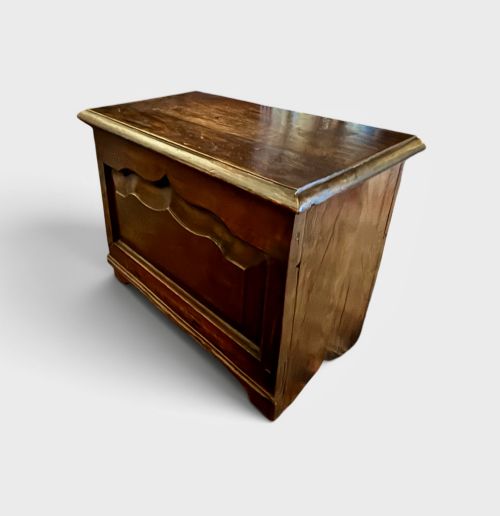
A coffer bach is a miniature Welsh oak chest built with the same traditional joined methods as full-sized furniture. These small boxes date primarily to the eighteenth century and served as presentation pieces or special domestic gifts.
Their diminutive scale and regional craftsmanship make them distinct collecting items. They share the panelled construction and hinged lids of larger blanket chests.