
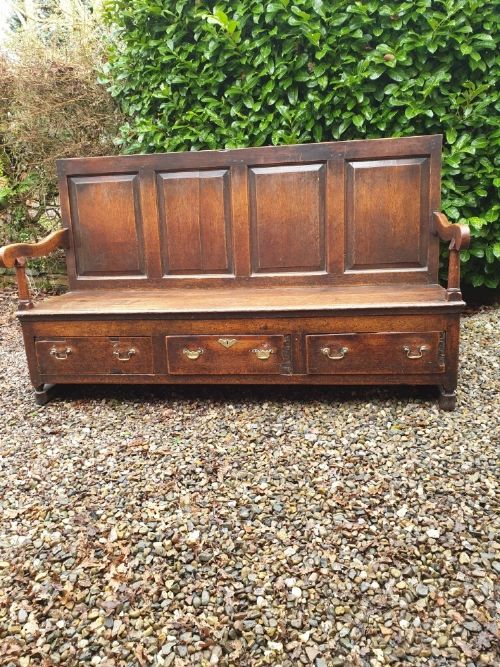
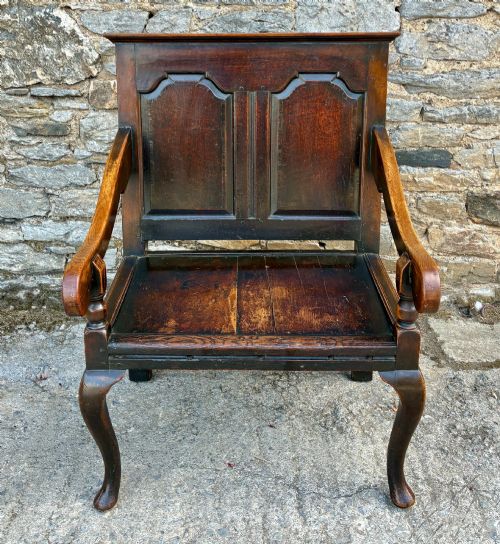
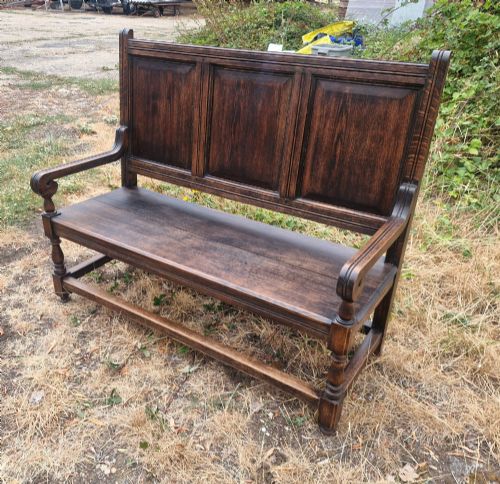
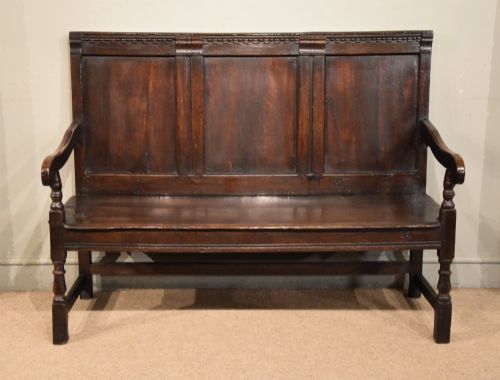
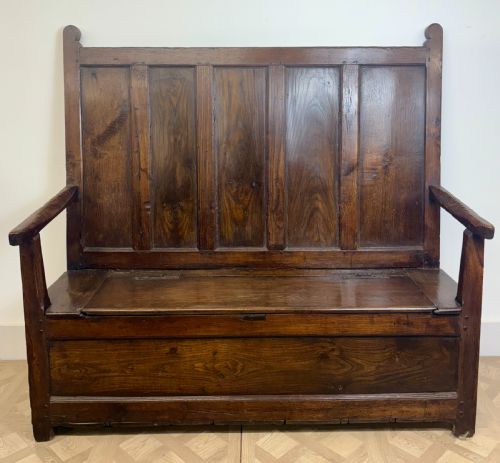
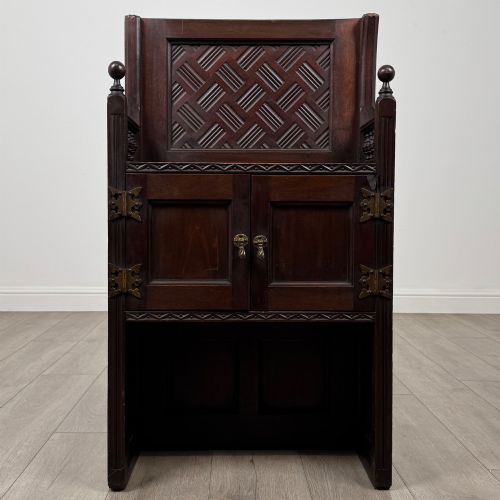
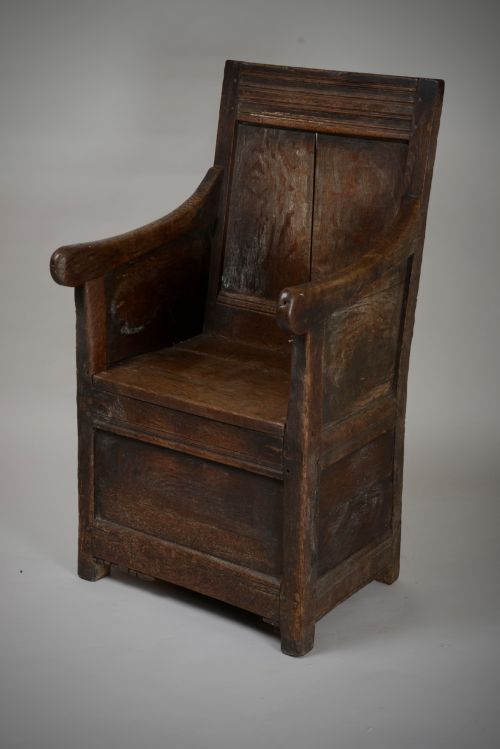
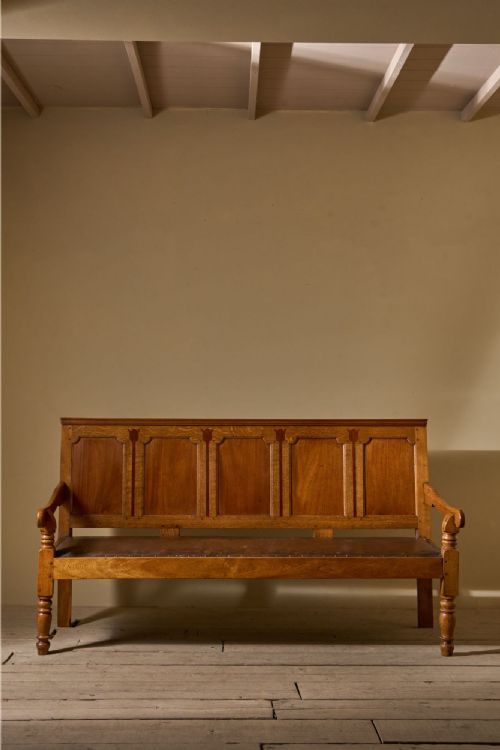
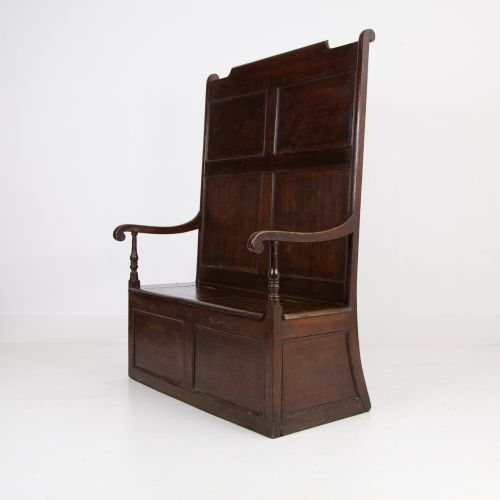
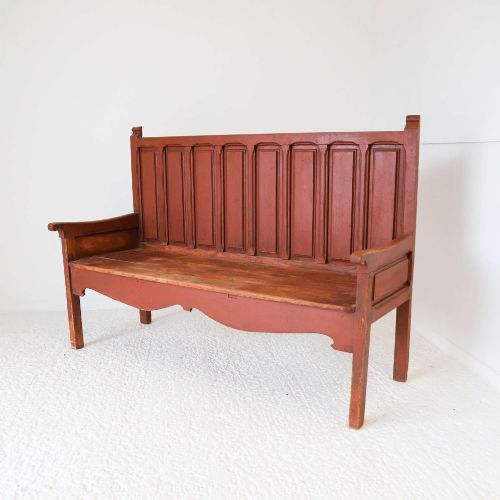
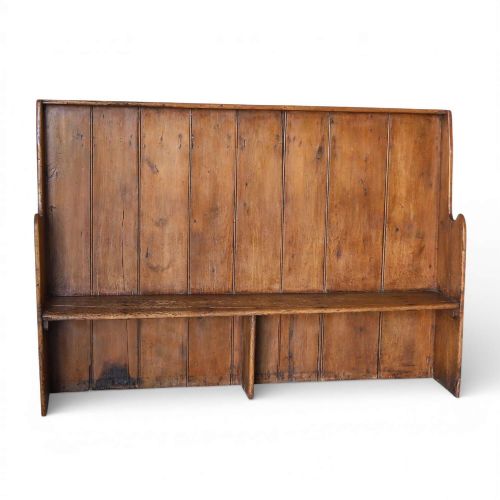
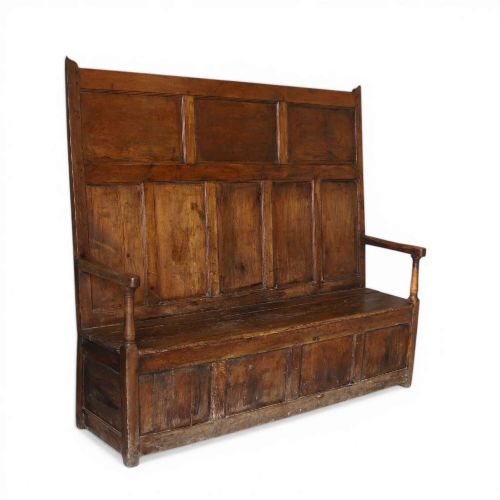
Panelled Back Wooden Settle
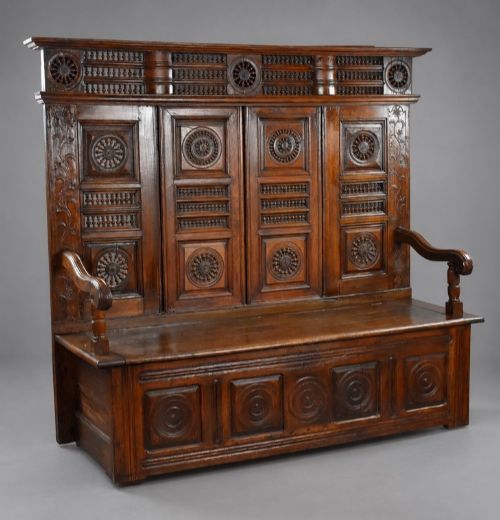
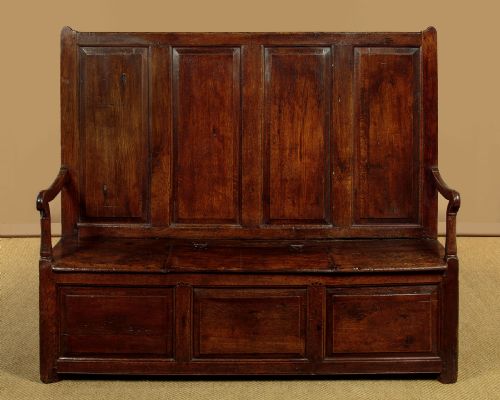
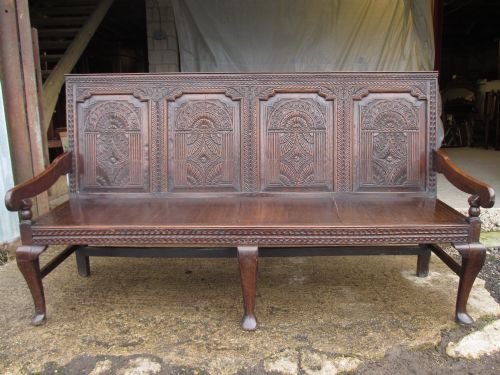
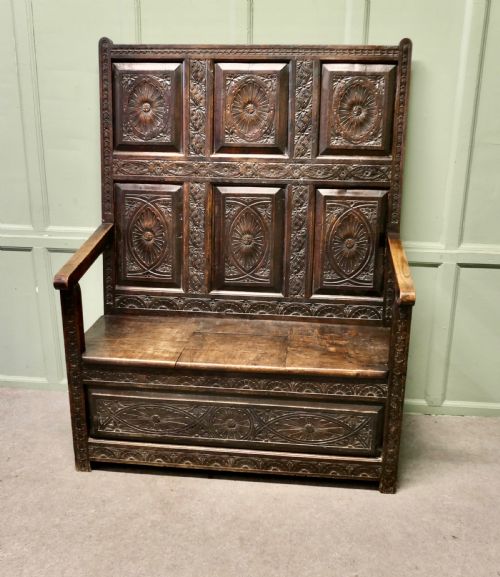
A panelled back wooden settle provides solid seating with high timber panels that block draughts, serving as a substantial bench in traditional interiors.
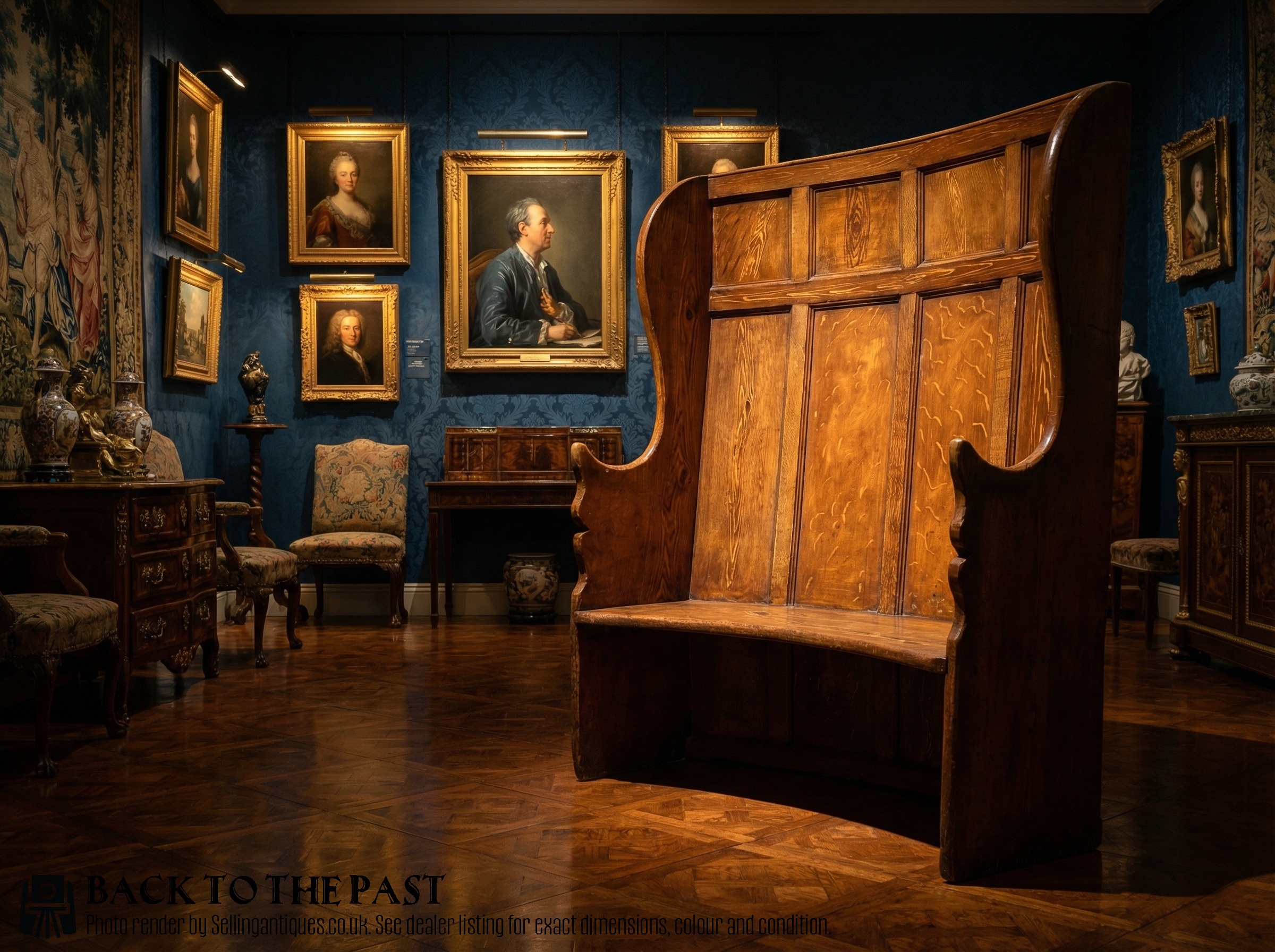
Panelled Back Wooden Settle
A panelled back wooden settle is a traditional long seat designed with solid timber back panels intended to keep out cold air in older properties. You will find these pieces largely constructed from oak or pine, spanning periods from the seventeenth century through to the Victorian era.
The forms vary from simple straight-backed benches to box settles featuring integrated storage beneath the seat. Many examples originate from country workshops, displaying regional vernacular styles associated with English, Welsh, and continental makers.
How panelled back wooden settles were made
Cabinet makers and local carpenters built these seats primarily from solid oak and pine, occasionally incorporating ash or walnut for specific components. Panels were fitted into grooved frames using traditional joinery to allow the timber to move naturally with changes in temperature.
Surface treatments range from waxed and honey-brown patinated finishes to historic painted surfaces and limed effects. Iron and brass hardware such as hinges appear on box settle lids, while carved decoration relies on hand-chiselled geometric or floral motifs.
Barrel settles wrap around you like a wooden hug, built specifically to keep the fireplace heat right where it belongs.
What varies in quality
Quality rests in the proportion of the timber, the integrity of the panel construction, and the depth of the natural patina developed over centuries of use. Earlier seventeenth and eighteenth-century examples often display superior timber selection and hand-carved detailing compared to later revival pieces.
The presence of original surfaces, intact storage compartments, and uncompromised structural frames elevate an example. Alterations to feet, armrests, or replaced baseboards alter the integrity of the piece.
The Panelled Back Wooden Settle Glossary
- Box settle
- A bench with a closed wooden compartment beneath the seat accessed by lifting the lid. This storage space held blankets or household goods near the hearth.
- Lambing chair
- A specialised high-backed wooden seat featuring solid wings designed to shield the occupant from drafts. These often incorporate enclosed lower sections or small storage drawers.
- Vernacular furniture
- Domestic pieces made by local regional craftsmen using traditional methods and native timbers rather than following metropolitan fashion. These items reflect the specific building traditions of areas like Wales or the North Country.
- Patina
- The surface sheen and coloration developed by wood over long periods through handling, polishing, and ageing. A desirable finish shows depth and honesty without artificial enhancement.
- Panel construction
- A method of joining wooden boards where a central floating panel fits inside a surrounding frame. This technique prevents the wood from splitting as it expands and contracts.
Panelled Back Wooden Settle: Frequently Asked Questions
How do I use a settle today?
A panelled back wooden settle functions effectively in a hallway as a primary seat with the bonus of hidden storage beneath the lid. They also suit farmhouse kitchens or large dining tables where long bench seating is required.
Positioning the high back against a wall blocks household draughts, recreating the original purpose of the design in modern rooms. Cushions can be added to the seat base for extra comfort without altering the antique structure.
Are all settles made from oak?
While oak remains the predominant timber found in seventeenth and eighteenth-century examples, pine was widely utilised in country workshops, particularly in Wales and across continental Europe. Ash also appears in structural framework or secondary elements alongside pine and oak.
Pine versions frequently retain traces of early or original paint finishes, whereas oak examples generally rely on waxed or polished patinated surfaces to highlight the grain.
How do I date an antique settle?
Dating relies on examining the construction methods, tool marks, joinery techniques, and the overall style of the carved panels. Seventeenth-century pieces typically feature heavy frame-and-panel work and pegged joints, while Georgian and Victorian versions show refined mouldings and differing proportions.
Timber shrinkage, hand-cut nails, and the quality of the surface patina provide further clues to the age of the piece. Comparing the regional form against documented vernacular types helps narrow the decade of origin.
What is the difference between a settle and a pew?
A settle is a domestic piece of furniture traditionally built by regional carpenters for farmhouse or cottage interiors, frequently incorporating a box base for storage. Pews were constructed specifically for ecclesiastical use in churches and chapels, featuring open lower sections and standardised seating lengths.
Settles often display high panelled backs and shaped armrests designed for domestic comfort near a fire, whereas pews prioritize rows of uniform bench seating.