


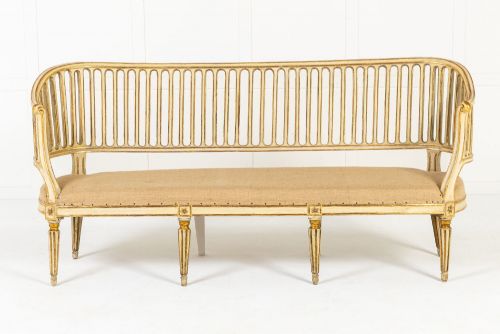


18th Century Painted Bench
These 18th century painted bench examples bring historic European seating into domestic spaces with original pigments and regional forms.
18th Century Painted Bench
When you search for an 18th century painted bench, you encounter regional seating spanning settees, settles, and long stools from British, Scandinavian, and Mediterranean workshops. The pieces on this page range from Welsh pine settles to Swedish Gustavian settees and Venetian rococo chairs.
The most frequent examples are regional European forms, particularly Swedish sofas and British country settles. These pieces combine utilitarian wooden framing with surviving painted finishes applied decades or centuries ago.
Materials and Construction
The primary structural material across these listings is pine, shaped into benches, settles, and settees using traditional joinery. Artisans applied liquid paint directly to the wooden surfaces, often building up layers that now show patination and wear.
Some examples incorporate auxiliary materials such as linen, hessian, and fabric upholstery to pad the seats. Giltwood highlights occasionally appear on continental rococo and neoclassical frames to accent the carved details.
A solitary 1900 Italian long stool slips quietly among the 18th-century veterans, proving age is just a number.
Assessing Quality
Quality in these benches rests primarily on the survival and integrity of the original painted surface. Pieces retaining their early pigment layers command greater attention than those stripped down or aggressively restored.
The sophistication of the regional style also distinguishes the range. Simple vernacular Welsh tavern benches differ significantly from refined Italian rococo or Swedish Gustavian settees in their carving and silhouette.
The 18th Century Painted Bench Glossary
- Settee
- An upholstered or wooden bench with a back and arms, designed for multiple sitters. These domestic forms appear frequently across 18th-century European furniture.
- Settle
- A wooden bench featuring a high back to block drafts and often a box base beneath the seat. Welsh vernacular examples showcase this traditional form.
- Gustavian
- The Swedish interpretation of neoclassical style, characterised by restrained carving and pale painted finishes. This aesthetic dominates several Scandinavian listings here.
- Giltwood
- Wood that has been treated with gold leaf or a gold-coloured metallic finish. It highlights specific decorative elements on continental frames.
- Vernacular
- Everyday architecture or furniture made by local craftsmen using regional materials and traditional methods. Welsh and Cumbrian pieces exemplify this approach.
18th Century Painted Bench: Frequently Asked Questions
What is an 18th century painted bench?
These pieces are historic wooden seats, including settles, settees, and benches, produced in various European regions during the 1700s. They feature applied paint finishes that have survived down to the present day.
Buyers seek them for their decorative painted surfaces and traditional craftsmanship. They function as practical seating and distinct historical objects in modern interiors.
Where were these benches made?
The pieces originate from diverse European workshops, spanning rural Wales, northern England, Sweden, Italy, Spain, and the Netherlands. Each region developed distinct structural forms and painting traditions.
Local timber availability and domestic customs shaped whether a maker built a high-backed pine settle or an elegant neoclassical settee.
How do I live with one?
Place the bench in a hallway, kitchen, or living space where its structural form and painted surface remain visible. Protect the piece from direct sunlight and excessive moisture to preserve the historic finish.
Use cushions if the wooden or upholstered seat requires extra comfort for daily sitting. Allow the existing patina to show the bench's age without heavy chemical cleaning.
How do I tell styles apart?
Examine the decorative motifs and silhouette to identify the regional style, such as Gustavian, rococo, or vernacular country. Swedish pieces often display pale paint and neoclassical restraint, whereas Venetian examples show elaborate curves.
British country benches tend to favour sturdy pine construction and utilitarian forms like the high-backed settle. Comparing the paint application and timber helps locate the origin.