


18th Century Wooden Settle
An 18th century wooden settle offers robust seating that commands a hall or kitchen with traditional provincial character.
18th Century Wooden Settle
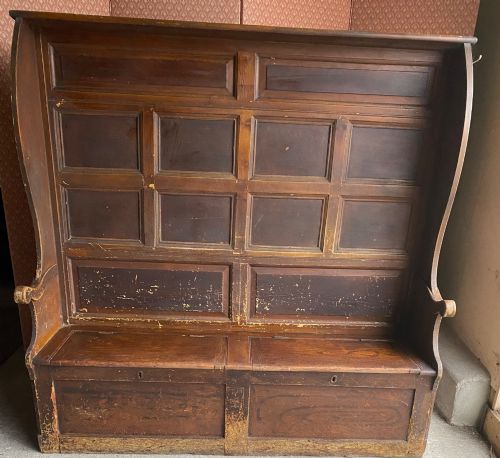
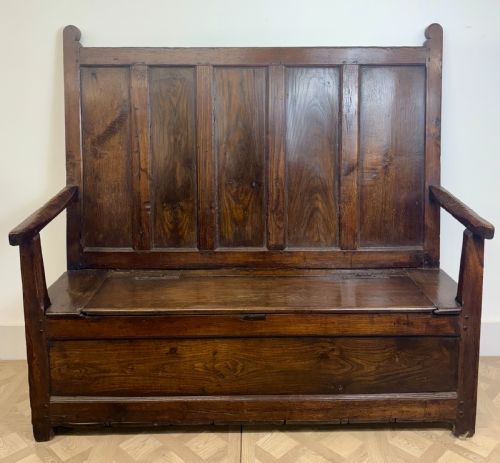
When you search for an 18th century wooden settle, you encounter high-backed benches designed to block draughts in period homes. These pieces serve as substantial seating options, often incorporating panelled backs and storage boxes beneath the seat.
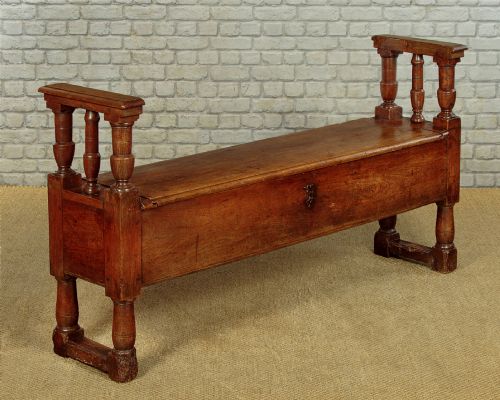
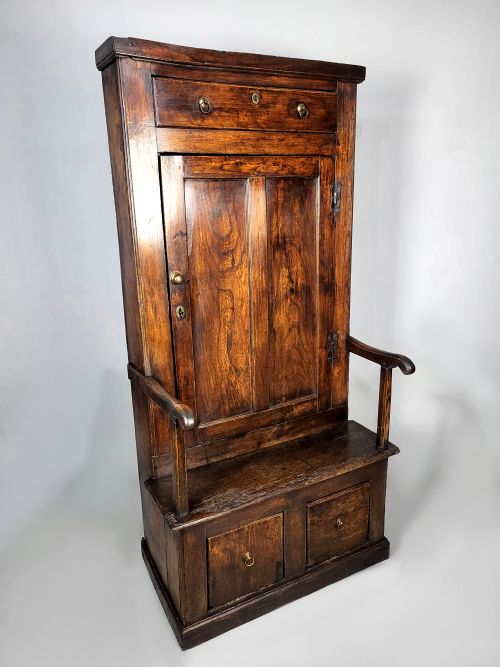
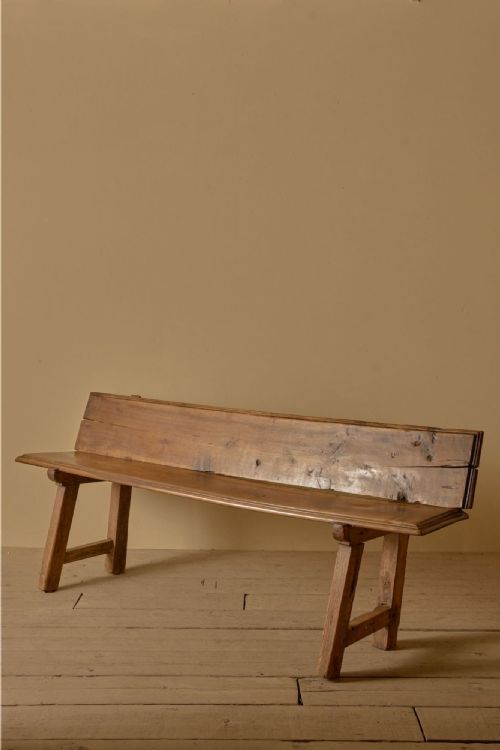
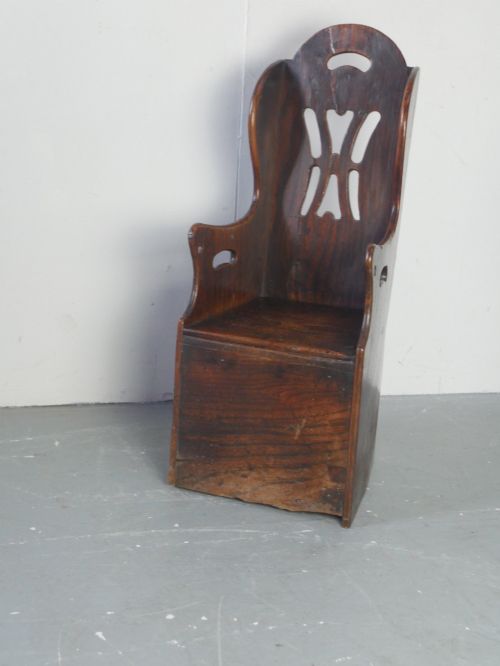
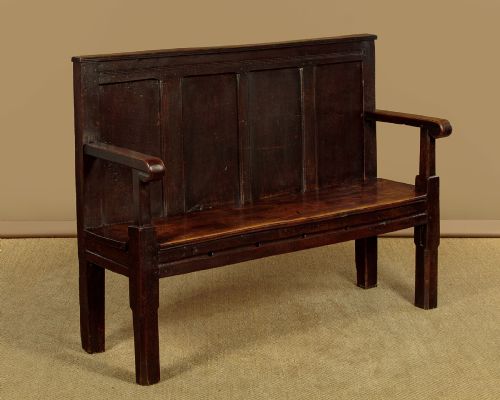
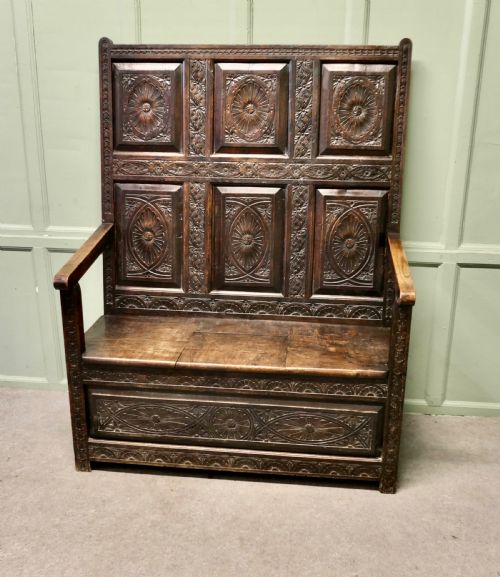
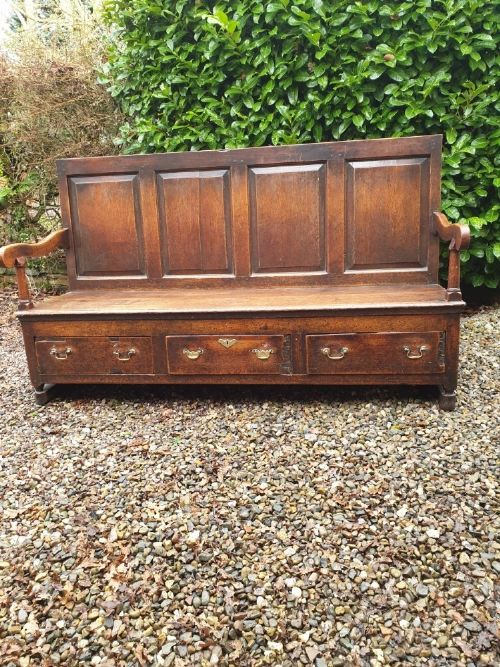
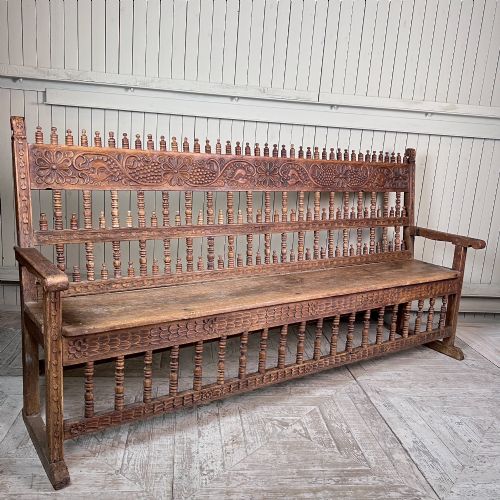
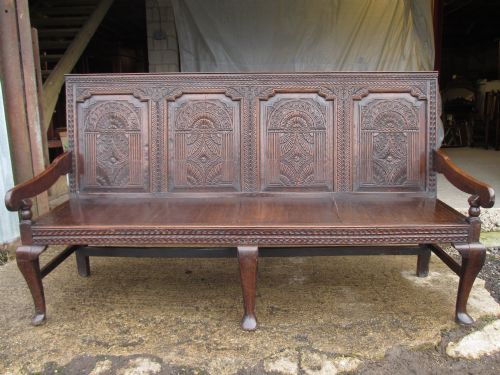
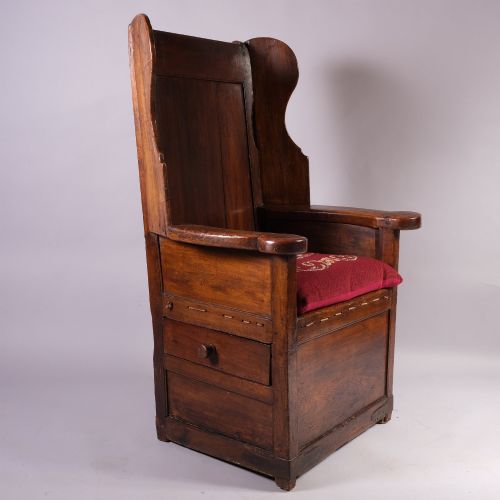
The versions most commonly met on this page originate from English, Welsh, and Spanish provincial workshops. They appear primarily in forms such as box settles, wingback lambing chairs, and panelled hall benches dating across the eighteenth century.
Regional variations span from Welsh vernacular designs to West Country bacon settles and Spanish colonial examples. Each piece reflects the utilitarian needs of domestic spaces through solid construction and functional design.
How they were made
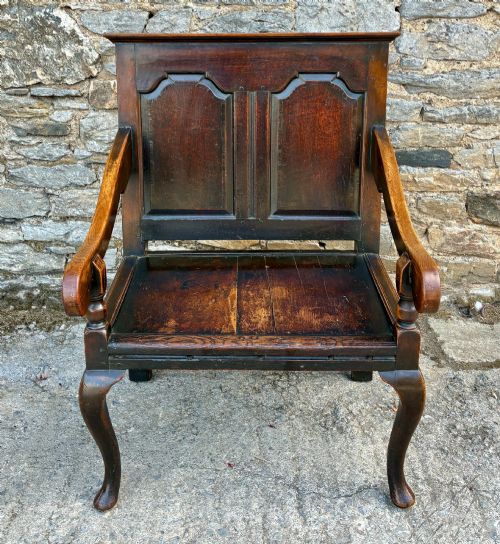
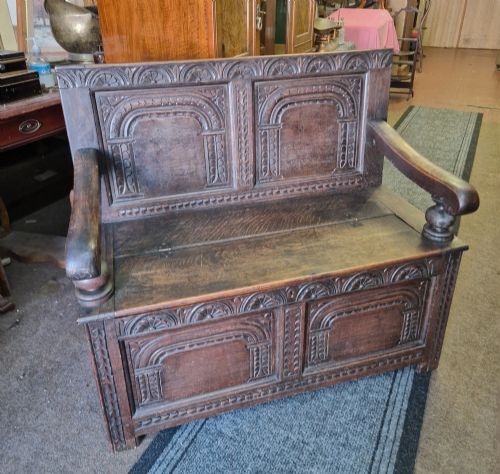
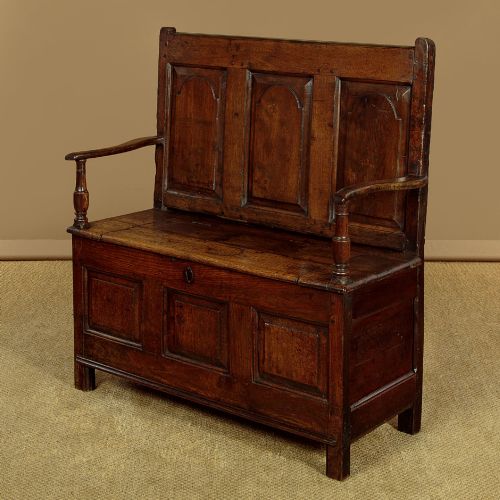
Local joiners utilised native timbers including oak, elm, ash, and pine, shaped with hand tools and held together with traditional pegged joints. Box settles feature hinged lids enclosing storage compartments, while panelled variants employ framed construction to prevent timber warping.
Surface treatments range from waxed natural grain to original painted finishes. Iron hardware such as strap hinges and latches reinforces the structure, while carving adorns the panels of country house and continental pieces.
18th Century Wooden Settle Retail Price Guide 2026
Typical asking prices for 18th century wooden settle among the pieces listed under this phrase on Sellingantiques today, from the lower quarter to the upper quarter. They describe what is for sale here now, not the wider market.
The inventory spans English country, Welsh vernacular, and Spanish colonial styles from the Georgian period and the eighteenth century.
What varies in quality
The proportion and integrity of the timber establish the standing of a piece, with well-balanced proportions and sound structural joints marking finer examples. Original timber surfaces, retaining untouched patination or authentic early painted finishes, carry greater integrity than heavily restored pieces.
Carved detailing and architectural elements such as high panelled backs, wings, or canopy hoods elevate provincial forms into notable examples of period cabinetmaking. The presence of original box seating bases and intact hardware further distinguishes superior survivals.
The 18th Century Wooden Settle Glossary
- Box settle
- A wooden bench featuring a storage compartment concealed beneath a hinged seat. This compartment kept household items dry and secure near the hearth.
- Lambing chair
- An enclosed high-backed armchair or settle equipped with wooden wings. These wings protected the occupant from cold draughts in rural farmhouses.
- Bacon settle
- A specialised high-backed bench fitted with interior hooks or rails. Rural households used these enclosed spaces to cure and store meat.
- Vernacular furniture
- Domestic objects made by local craftspeople using regional traditions and readily available materials. These pieces prioritise practical function over high-style court design.
- Panelled back
- A construction method utilising wooden stiles and rails holding floating central panels. This technique accommodates seasonal timber movement without splitting.
18th Century Wooden Settle: Frequently Asked Questions
How were settles used in historical homes?
Historically, settles stood near hearths to shield residents from chilly air flowing across stone floors. The high back and enclosed sides trapped heat from the fire for the people seated on the bench.
Box variants also doubled as storage chests for blankets, winter provisions, or household items, maximising functional utility in compact living spaces.
How do I live with an antique settle?
Living with an antique settle involves placing the piece against a sturdy wall where its high back and substantial footprint can anchor a room. These benches function well in hallways, large kitchens, or living spaces as primary seating.
Maintenance requires keeping the timber away from direct heat sources and treating the wood periodically with appropriate wax to preserve the finish.
How do I tell regional styles apart?
Regional styles reveal themselves through timber choice, construction methods, and decorative motifs. Welsh and West Country examples often display robust oak framing, while Spanish pieces incorporate distinct carved hardwood details.
Examining the panel configuration and hardware helps identify whether a piece originated from local British provincial workshops or continental makers.