


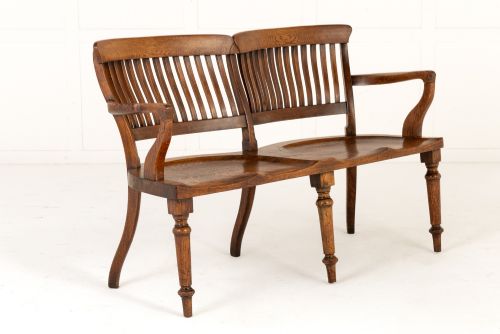


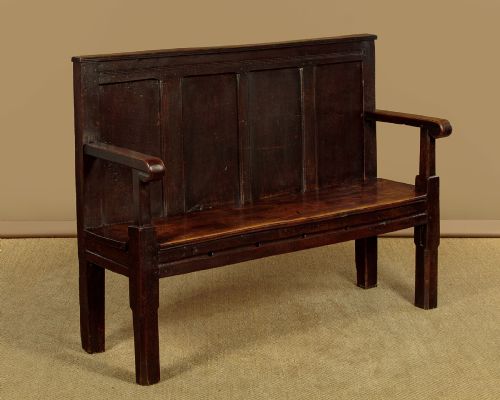
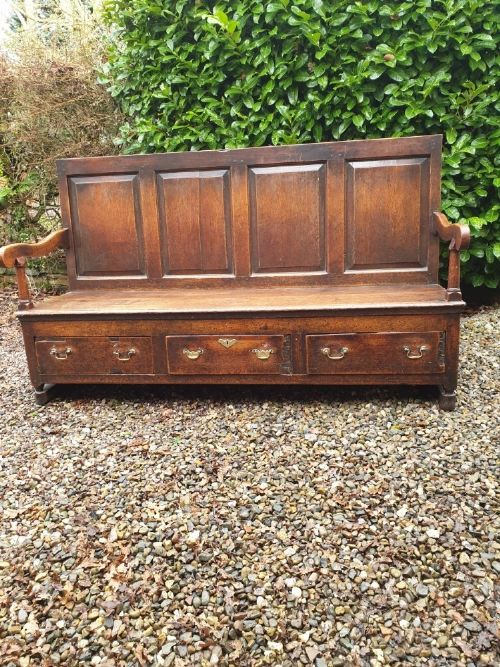
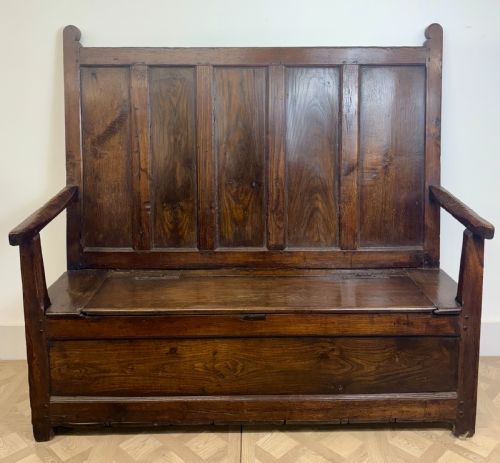
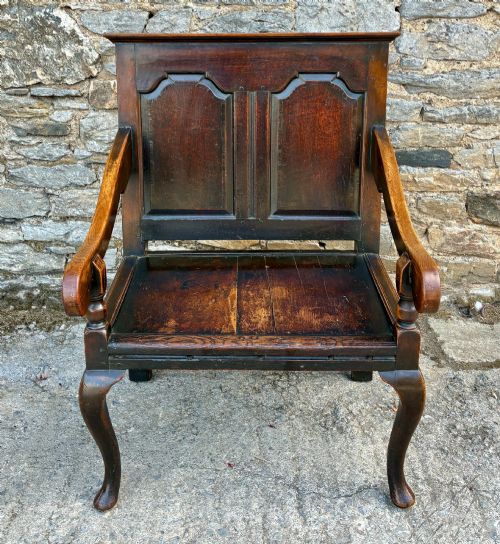
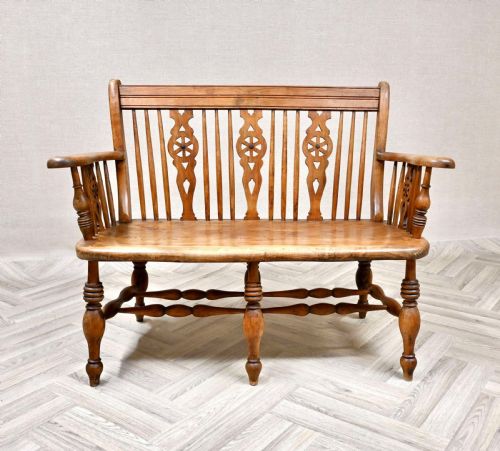
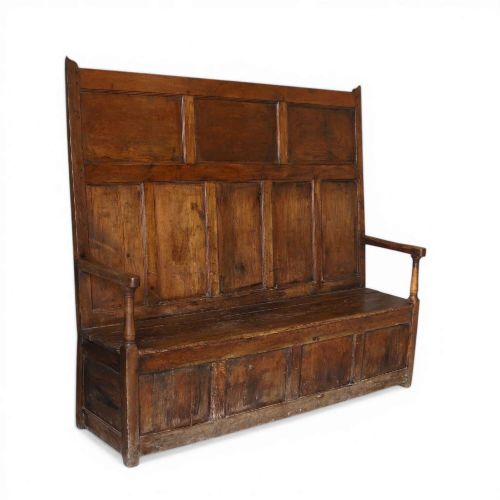
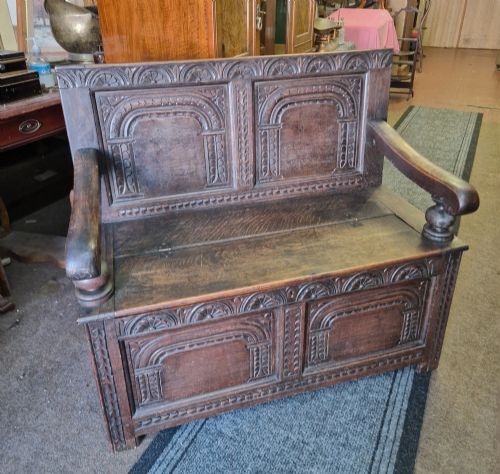

Country Oak Settle Bench
These country oak settle bench pieces combine high wooden backs with box seats, offering draught-free seating rooted in centuries of vernacular tradition.
Country Oak Settle Bench
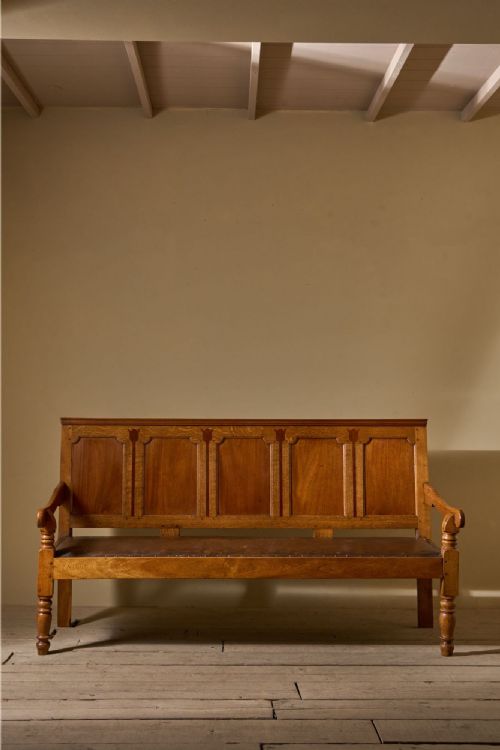
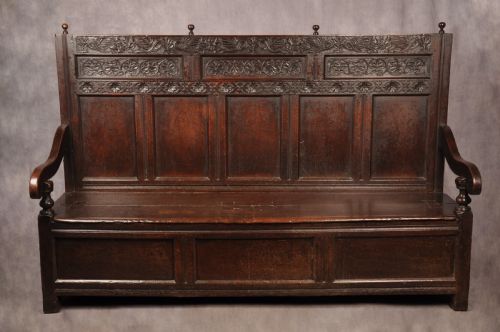
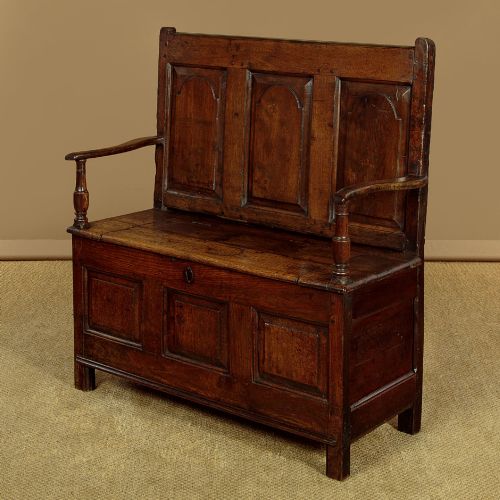
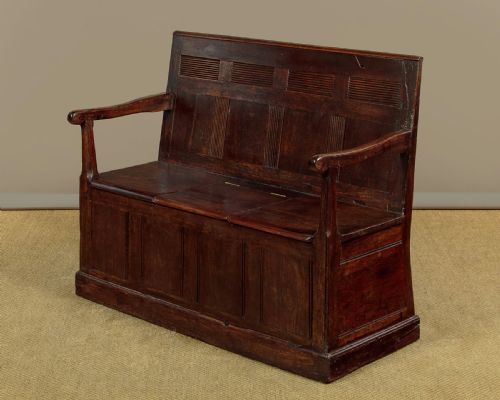
A country oak settle bench is a high-backed wooden seat designed to keep out draughts in domestic interiors, appearing frequently in seventeenth, eighteenth, and nineteenth-century forms. The most common examples seen here are panel-backed or box settles, often incorporating integrated storage beneath the seat and regional vernacular characteristics from English, Welsh, and Irish workshops.
Beyond the standard box settle, listings often include hall benches, Windsor bench seats, and bacon settles, reflecting the broad utility of these domestic seats across different rural households. Regional variations range from simple panel construction to concave barrel backs intended to enclose the sitter entirely by the hearth.
The materials span primarily native timbers, with oak forming the core of the tradition alongside elm, ash, and pine, occasionally supplemented by rush seating or textile upholstery in later interpretations.
What varies in quality
Quality rests principally in the integrity of the timber framing, the retention of original panelwork, and the degree of structural alteration over time. Pieces with untouched surfaces, original box bases, and minimal timber replacement hold greater authority than those heavily restored or re-pegged.
Proportion and regional detail also distinguish individual pieces, as finer examples display thoughtful panel carving, distinctive wingback curves, or well-balanced proportions rather than utilitarian bulk.
Country Oak Settle Bench Retail Price Guide 2026
Typical asking prices for country oak settle bench among the pieces listed under this phrase on Sellingantiques today, from the lower quarter to the upper quarter. They describe what is for sale here now, not the wider market.
Some regional examples were built deep enough to double as a makeshift bed when the hearth fire burned low.
The Country Oak Settle Bench Glossary
- Box settle
- A high-backed wooden bench featuring a hinged seat lid that opens to reveal an integrated storage compartment beneath. This form served both as seating and as a dry chest for household blankets or provisions.
- Panel-back
- A backrest constructed from fitted wooden boards held within a sturdy framework of stiles and rails. This method allowed the timber to expand and contract naturally without splitting.
- Bacon settle
- A specialised regional form featuring high enclosed sides, historically used in rural farmhouses for curing and storing salted meats away from pests and damp air.
- Vernacular
- Furniture built by local country craftsmen to practical domestic designs using regional materials rather than following formal metropolitan pattern books.
- Barrel settle
- A curved or concave seating form designed to wrap around a fireplace, completely shielding the occupants from cold draughts.
Country Oak Settle Bench: Frequently Asked Questions
How were settle benches used?
These seats were placed near hearths to shield people from cold draughts in large, unheated rooms. The high wooden back trapped the warmth of the fire around the sitter.
Many examples also provided hidden storage beneath the seat for household goods, serving a dual purpose in busy domestic spaces.
How do I tell an 18th-century settle apart from a later one?
Earlier pieces from the seventeenth and eighteenth centuries typically exhibit hand-riven oak panels, pegged frame construction, and deep natural patination from age and wear.
Nineteenth-century interpretations often feature machine-sawn timber, different secondary woods like pine or chestnut, and lighter framing techniques.
Where should I place a settle in my home?
Their high backs make them effective room dividers in open-plan spaces or substantial hallways where they function as grand entrance seating. They also work well against long dining room walls or paired with rustic tables.
Ensure you measure the depth of the box seat and the height of the backrest before placement to accommodate their solid proportions.