


Carved Back Wooden Bench
A carved back wooden bench brings centuries of solid craftsmanship and robust seating into a hallway or living space.
Carved Back Wooden Bench
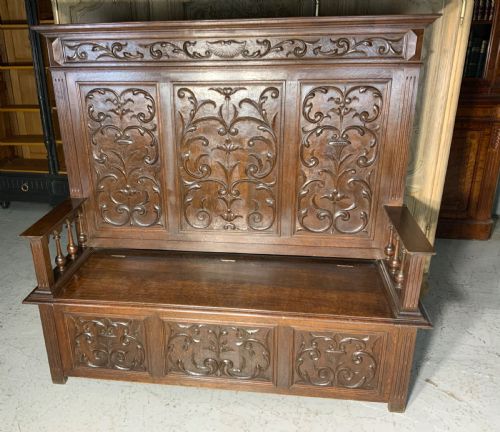
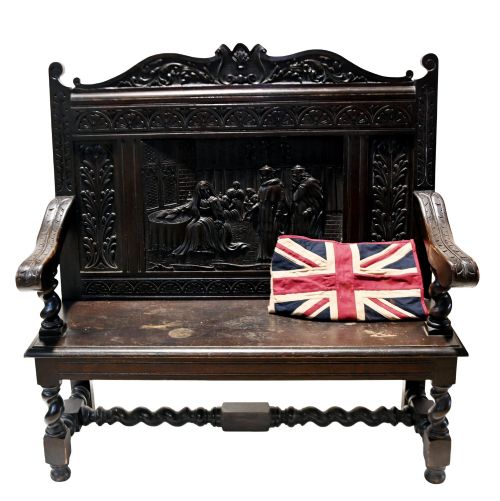
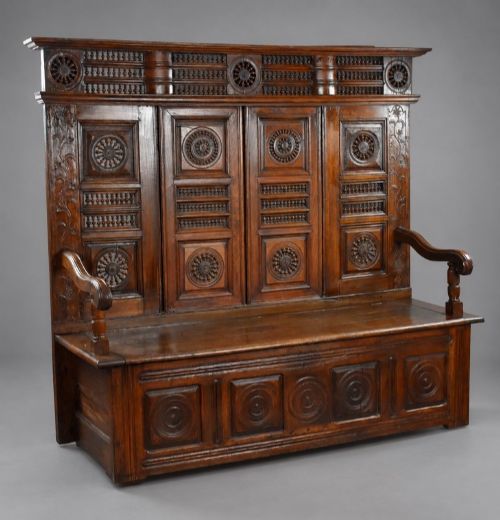
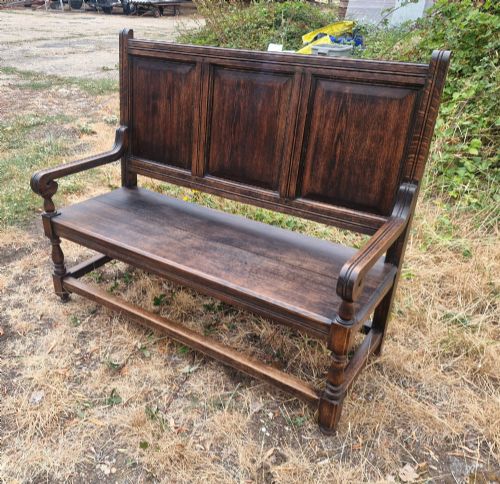
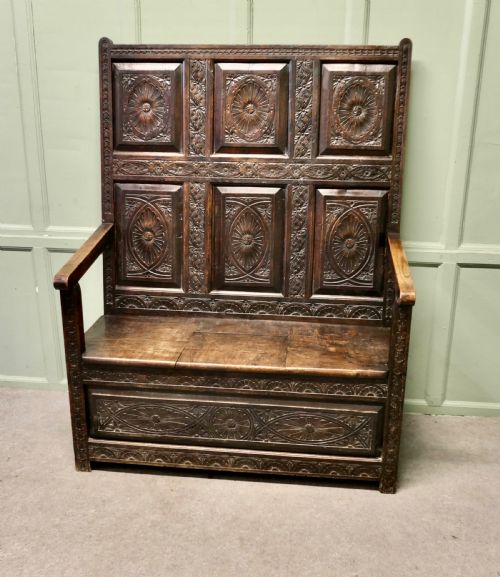
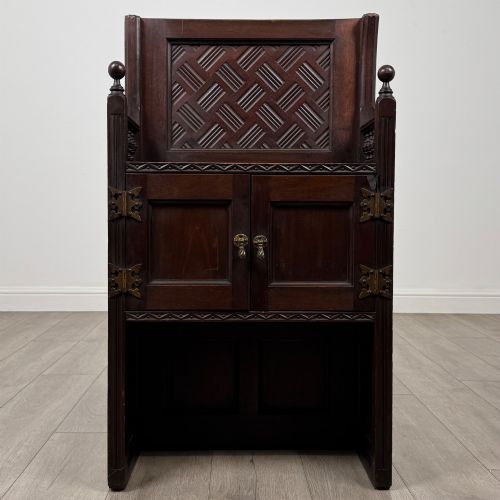
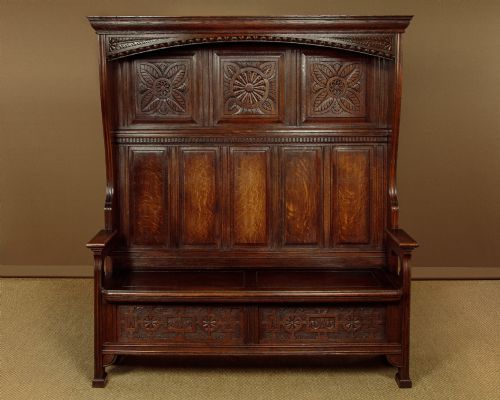
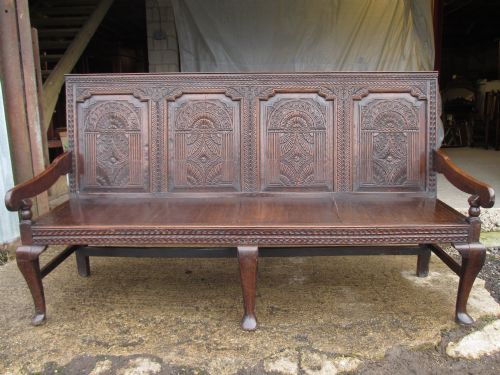
A carved back wooden bench spans sturdy hall seats, high-backed settles, and elaborate settees designed for communal and private spaces. You will most frequently encounter oak examples from the seventeenth, eighteenth, and nineteenth centuries, often featuring panelled backs or integrated storage boxes.
These forms originate from domestic and institutional settings across Britain, France, Spain, and China. Settles and hall benches served to block draughts in older homes while offering secure seating by the hearth.
Makers utilised various timber species, shaping upright supports and carving decorative motifs directly into the wooden structure. The resulting objects function as practical furniture with substantial historical presence.
How they were made
Makers constructed these benches primarily from solid oak, walnut, and mahogany, utilising traditional mortise and tenon joints to secure the heavy frames. Panels were set into grooves to allow for natural timber movement without splitting the surrounding structure.
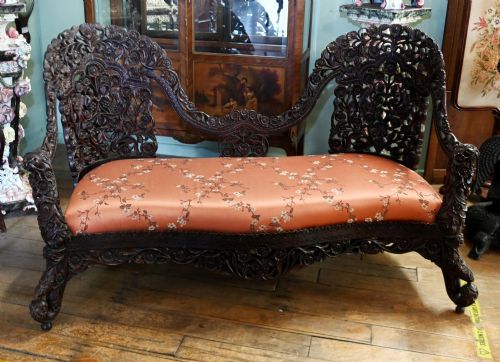
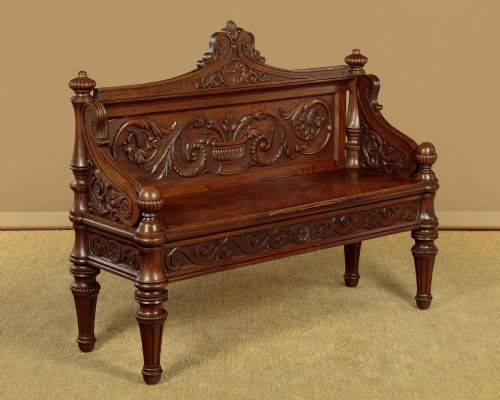
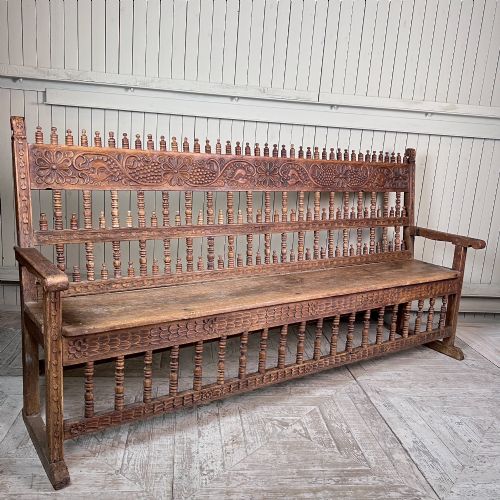
Carvers applied ornamentation directly to the wood using gouges and chisels, producing relief patterns, floral motifs, and tracery along the backrests. Caning, fabric, and brass elements occasionally supplement the wooden frames on later styles.
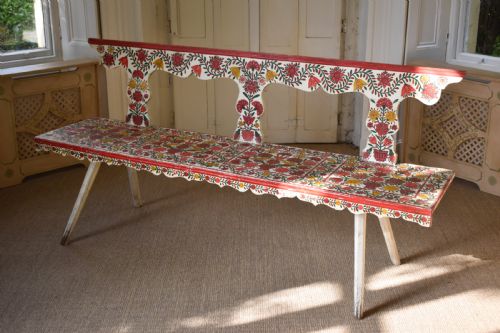
Surface finishes range from waxed or polished oak to painted wood, silvered teak, and gilded gesso. These treatments protected the timber while highlighting the grain and carved details.
Carved Back Wooden Bench Retail Price Guide 2026
Typical asking prices for carved back wooden bench among the pieces listed under this phrase on Sellingantiques today, from the lower quarter to the upper quarter. They describe what is for sale here now, not the wider market.
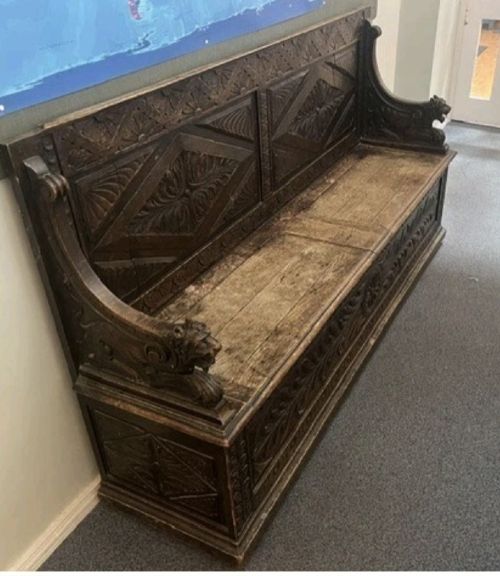
A Spanish colonial bench sits alongside seventeenth-century country settles, proving that wooden seats travelled as far as the carved dragons.
What varies in quality
The depth and crispness of the hand-carved ornamentation dictate much of the visual standard across these pieces. Crisp, well-defined relief work on seventeenth and eighteenth-century oak displays a higher level of artisan skill than later, mechanical or shallow replication.
Structural integrity depends upon the preservation of the original timber frame and joinery. Pieces that retain their early box bases, panelled backs, and uncompromised structural joints hold greater integrity than those rebuilt from disparate elements.
The selection of timber grain and the coherence of the design also separate standard utility seating from finer examples. Balanced proportions and harmonious integration of carved backrests reflect thoughtful construction.
The Carved Back Wooden Bench Glossary
- Settle
- A wooden bench with a high back, solid arms, and often a closed base or storage box beneath the seat. This form protected sitters from cold draughts in historical interiors.
- Cassapanca
- An Italian wooden bench featuring a storage chest as its base and a panelled back. These pieces combined seating with secure household storage.
- Bergere
- An enclosed upholstered armchair or settee with exposed wooden framing and woven cane panels. The style originated in France during the eighteenth century.
- Chippendale Style
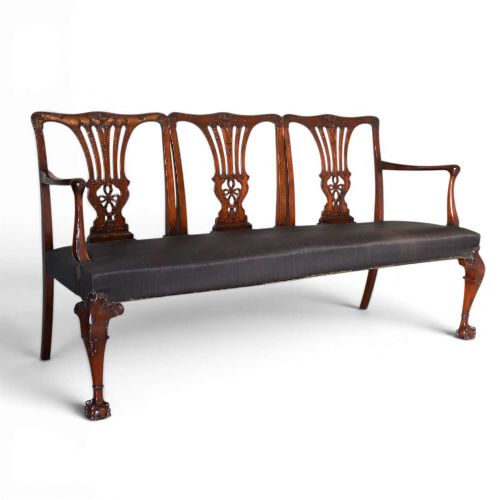
- Furniture influenced by the eighteenth-century designs of Thomas Chippendale, characterised by carved mahogany backs and cabriole or straight legs. This aesthetic returned in later revival periods.
- Box Settle
- A settle with a hinged seat lid opening to a deep receptacle below. It functioned simultaneously as a seat and a linen or wood chest.
Carved Back Wooden Bench: Frequently Asked Questions
Where did people place wooden benches historically?
Historical settles and benches stood primarily in the halls of large houses, near fireplaces in farmhouses, or beside entryways. Their high backs functioned as practical draught breaks in stone-floored rooms.
In public spaces or churches, similar forms served as fixed pews. Domestic versions often sat against walls to maximise floor space.
How do I care for a antique wooden bench?
Maintain the wood by applying a quality beeswax polish periodically to nourish the dry timber. Avoid placing the bench near direct heat sources or in strong sunlight, which causes the wood to warp or crack.
Dust carved crevices regularly with a soft brush to prevent grime buildup. Handle woven cane or upholstered sections with care to avoid puncturing the material.
How can I tell an older settle from a later revival piece?
Examine the construction joints, tool marks, and timber shrinkage patterns visible on the underside and back panels. Seventeenth and eighteenth-century pieces display hand-cut joinery and authentic surface wear consistent with age.
Revival pieces from the Victorian or Edwardian eras often show machine-sawn timber or stylised carving that mimics earlier periods without matching the original construction methods.