
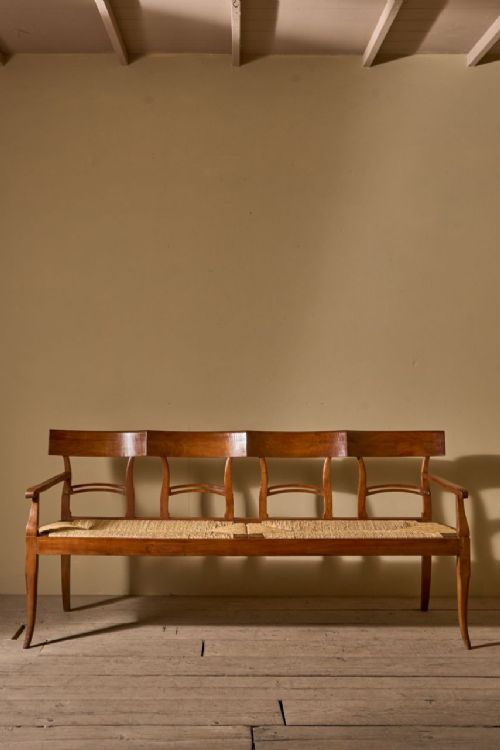
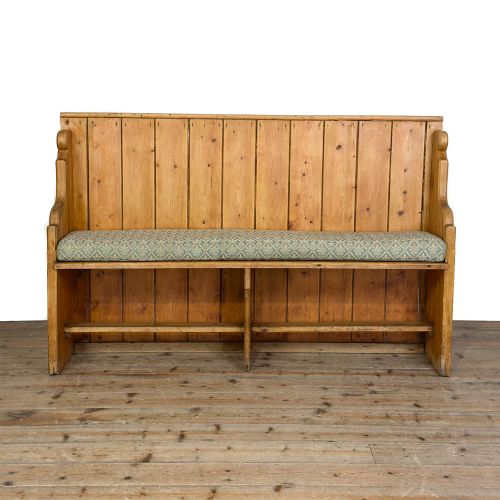
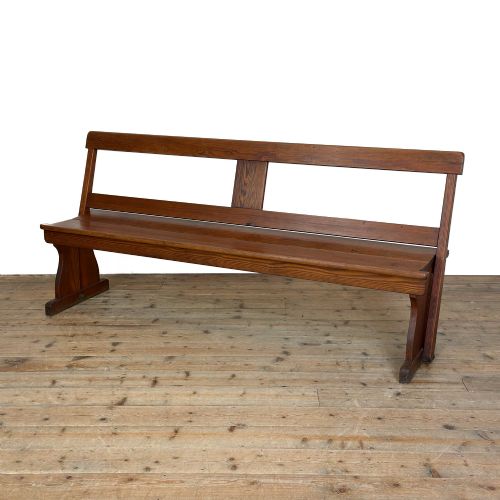
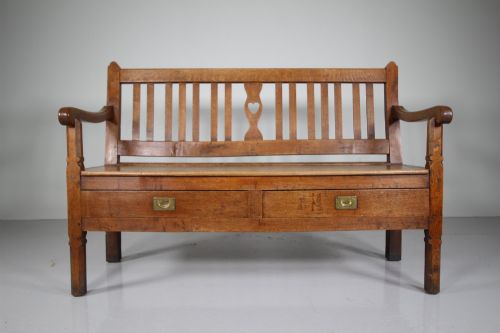
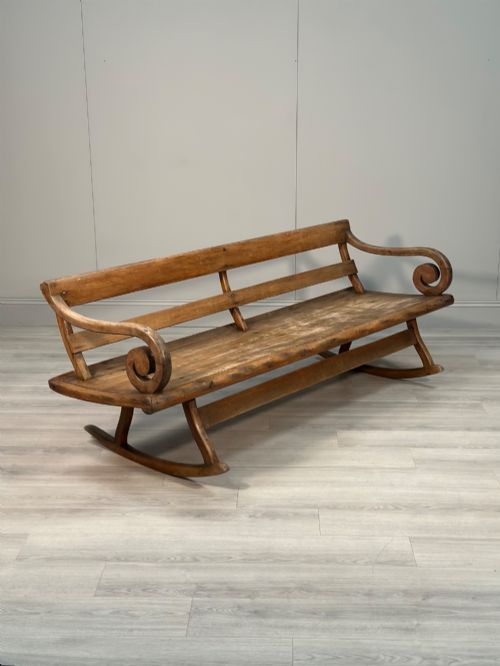
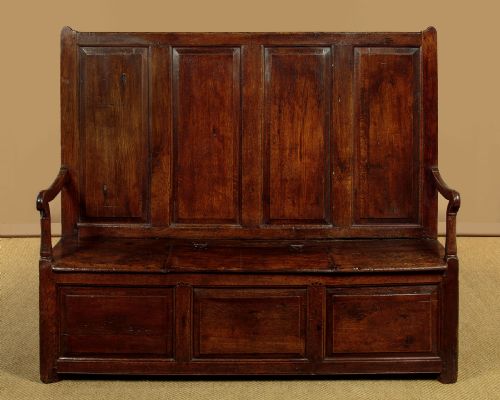
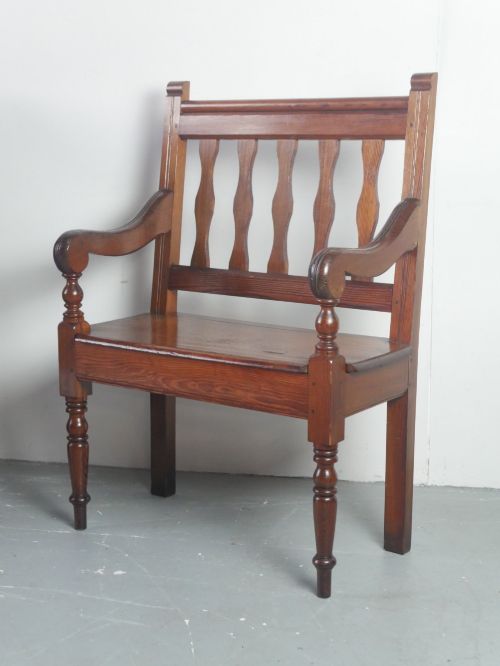
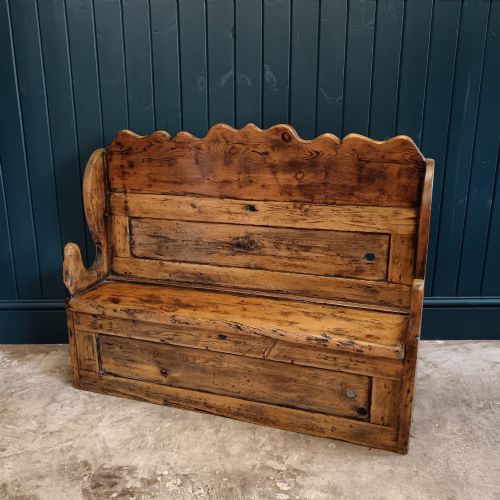
Traditional Wooden Settle Seat
A traditional wooden settle seat brings sturdy historic seating and concealed storage to a hallway or kitchen.
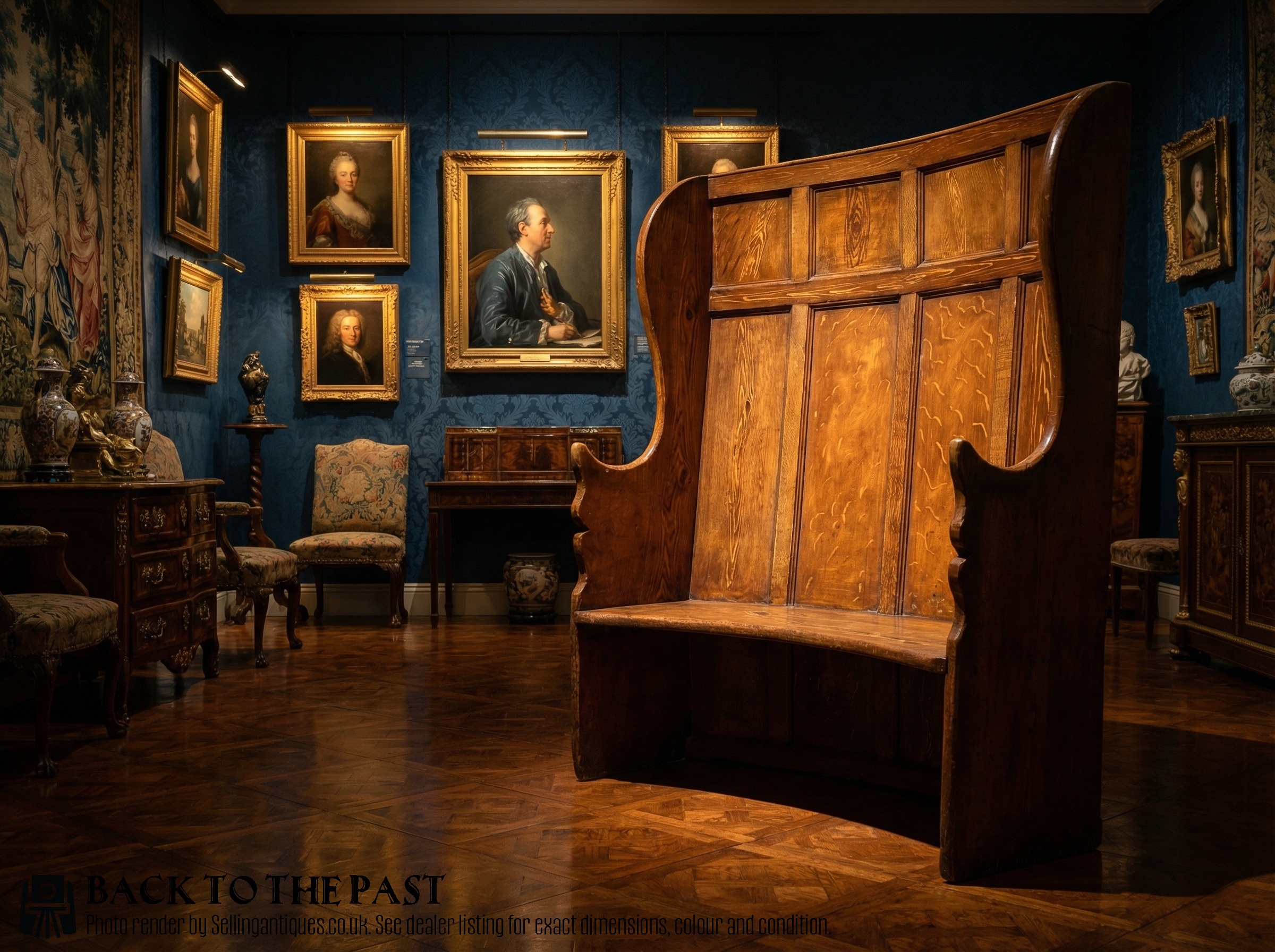
Traditional Wooden Settle Seat
When you search for a traditional wooden settle seat, you are looking at solid timber benches designed to block draughts and provide long-lasting communal seating. The pieces on this page span several centuries, including Georgian, Victorian and Edwardian examples alongside earlier items.
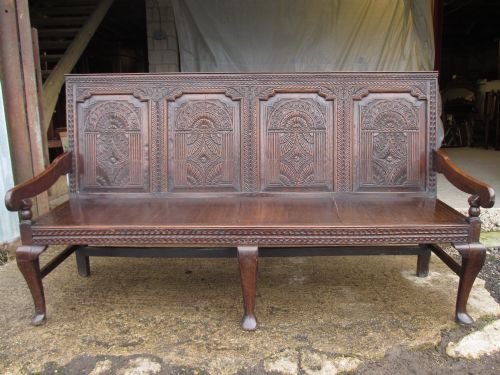
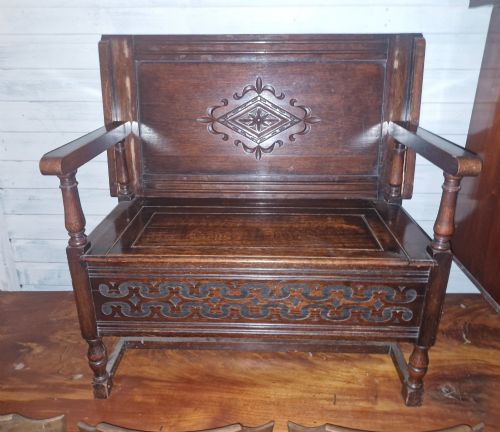
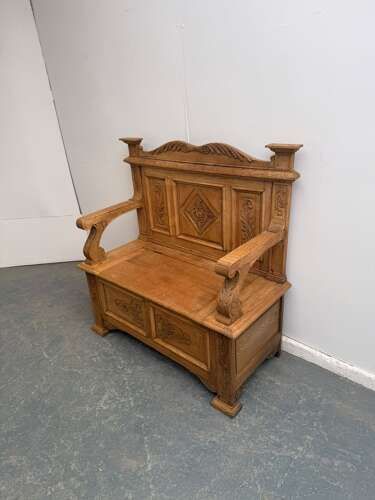
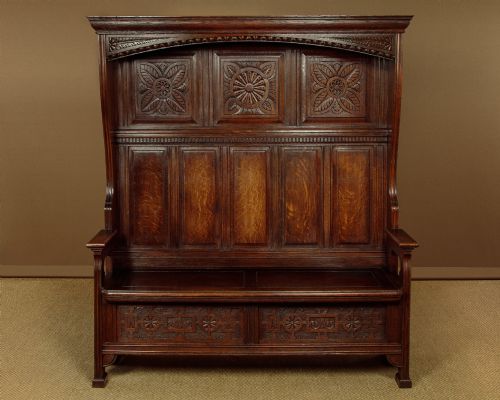
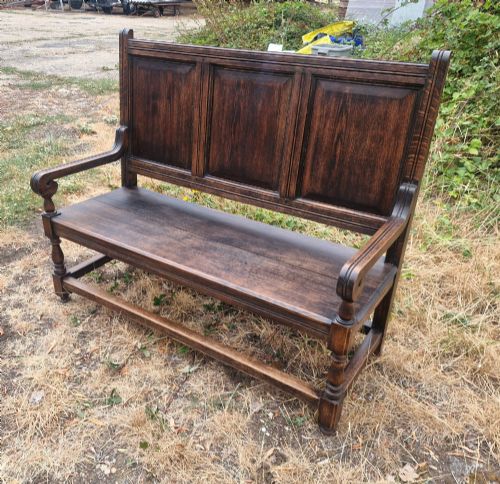
You will encounter various forms within this group, ranging from simple high-back chapel pews to enclosed box settles with hinged lids for storage. Many function as hall benches, while others take the form of specialised barrel or canopy seats.
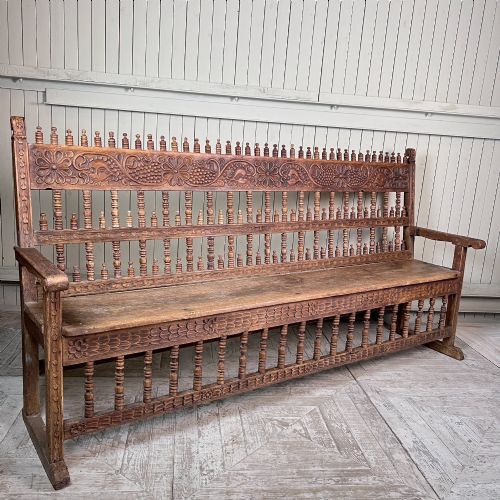
The regional origins and styles vary widely, encompassing English country designs, Welsh craftsmanship, Spanish colonial forms, and painted Hungarian folk art pieces. These items serve equally well as practical boot stores and striking decorative focal points in period properties.
How they were made
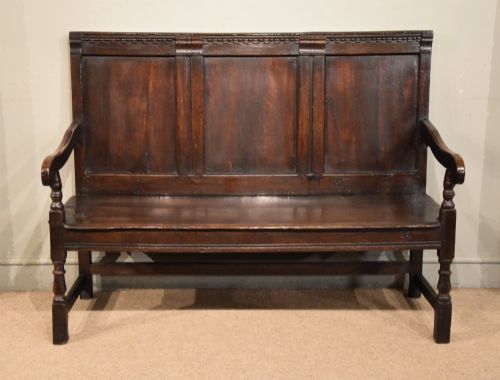
Traditional makers built these seats using locally available timbers such as sturdy oak, resilient elm, and versatile pine, occasionally incorporating cherrywood or mahogany. Panels were frequently joined using traditional carpentry methods to withstand heavy daily use.
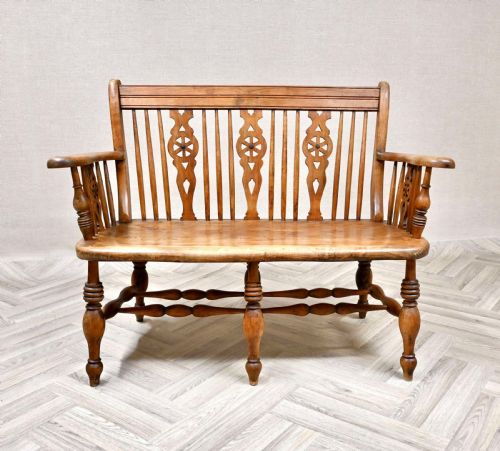
Many examples feature hand-carved details, raised panelling, or turned spindles, demonstrating the joinery skills of the period. Surface treatments range from natural wax finishes that highlight the wood grain to historic painted surfaces in black, grey, blue, and cream.
Listings feature pine, oak, elm, and painted finishes across Victorian, Georgian, and 18th-century periods.
What varies in quality
The distinction between ordinary utility seating and finer examples often lies in the depth of the carving and the architectural ambition of the frame, such as the inclusion of a canopy top or barrel back. Original structural integrity and untouched surface patination separate pieces that retain their historic character from those altered over time.
Proportion and timber selection also dictate the standing of a piece, with dense, well-figured oak or clean-grained pine commanding greater interest than standard utilitarian workshop output.
The Traditional Wooden Settle Seat Glossary
- Box settle
- A high-backed wooden bench featuring a compartment beneath the seat accessed by a lift-up lid or fold-over top. This storage space originally kept items dry and secure near a hearth.
- Canopy top
- An overhead wooden hood or projection attached to the top of a settle back. It was designed to trap heat from a fire and shield occupants from cold draughts.
- Barrel back
- A curved, semi-enclosed wooden seating structure that wraps around the user. This design offers maximum protection against chilly air in large, drafty rooms.
- Patina
- The surface sheen and colour acquired by wood through age, handling, and repeated waxing. It serves as a visual indicator of a piece's longevity.
- Chapel pew
- A long wooden bench traditionally used in ecclesiastical settings. These pieces often share structural similarities with domestic hall benches.
Traditional Wooden Settle Seat: Frequently Asked Questions
What is a settle seat used for?
A traditional wooden settle seat provides robust seating for multiple people while blocking cold draughts in entrance halls or kitchens. Many variations include built-in storage beneath the seat for boots and household items.
Historically, the high wooden back kept occupants warm near the hearth. Today, they function as practical hallway furniture and striking decorative anchor pieces.
How do I date a wooden settle?
Dating relies on examining the timber species, construction joints, tool marks, and overall stylistic vernacular. Earlier 18th-century examples often feature heavy oak framing and hand-carved panels.
Victorian and Edwardian versions frequently utilise pine or elm, sometimes displaying painted folk art finishes or revivalist Jacobean details. Comparing the hardware and patina helps confirm the period.
Where should I place a settle in my home?
These benches suit entrance halls, boot rooms, and wide corridors where their storage compartments prove useful. They also work well against a dining table or as a standalone statement piece in a living space.
Ensure you measure the height of the high back and the depth of the seat before positioning, particularly in narrow hallways.
Are all settles made of oak?
No, while oak was standard for earlier pieces, many traditional examples utilise pine, elm, cherrywood, or exotic hardwoods like Spanish colonial timber. Painted Hungarian pine variants are also common.
Each wood type brings a distinct weight, grain pattern, and colour to the finished piece.