

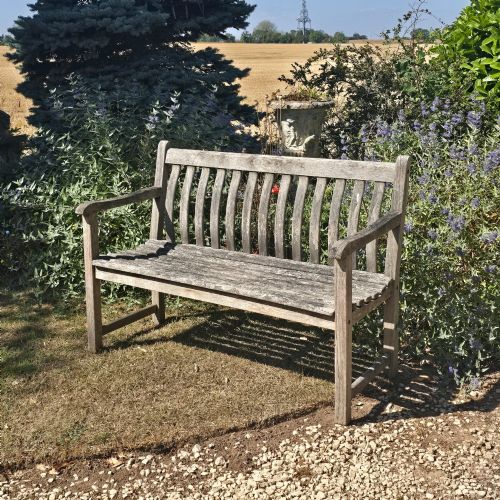


Curved Back Wooden Bench
These curved back wooden bench examples are practical seating forms designed for comfort, spanning centuries of craftsmanship.
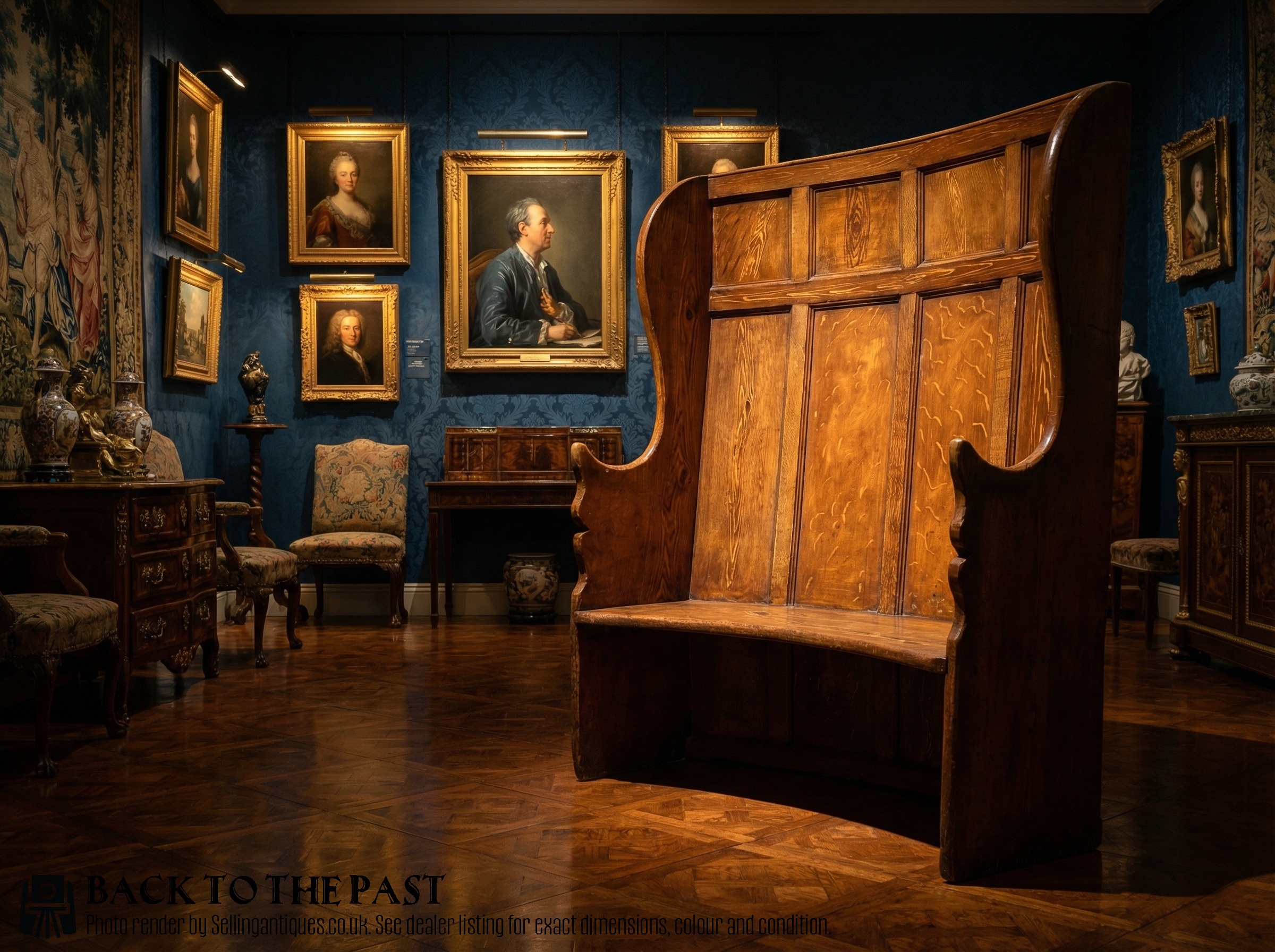
Curved Back Wooden Bench
A curved back wooden bench encompasses a variety of historical seating forms, including barrel settles, settees, garden benches, and loveseats. When exploring this selection, buyers encounter pieces ranging from early eighteenth-century oak panelled wingback concave barrel settles to later garden seats.
The materials and periods vary widely across the inventory, moving from 1750 oak examples to 1930 teak garden furniture, alongside Edwardian painted couches and Victorian pine pieces. English country garden styles and Georgian country forms dominate the structural language of these listings.
The most common iterations on this page combine functional wooden construction with enclosed backs designed to keep out draughts or provide supportive garden lounging. Makers utilised beech, mahogany, pine, and teak to shape these curved profiles.
Construction and materials
Makers constructed these pieces primarily from solid hardwoods and softwoods such as oak, mahogany, pine, teak, and beech. Joinery techniques varied from traditional panelled oak construction to steam-bent wood as seen in Viennese bentwood designs.
Surface treatments range from wax finishes and natural weathered patinas to applied paint and intricate marquetry inlay. Some pieces incorporate fabric upholstery alongside exposed wooden frames.
Structural framing relies on solid timber joined to create sweeping barrel backs, fluted legs, or supportive slats. Cabinetmakers and bodgers shaped the curved elements to enclose the user or fit garden spaces.
Listings feature items spanning from 1750 to 1930, utilising pine, oak, teak, mahogany, beech, paint, and fabric.
Assessing quality and craftsmanship
Quality in a curved back wooden bench rests on the integrity of the timber selection and the precision of the curved joinery. Early panelled oak work requires complex carpentry to form a concave barrel back without splitting.
The refinement of decorative elements, such as fluted legs, marquetry inlay, or carved wingback panels, distinguishes utilitarian workshop output from high-style domestic seating. Original surface finishes, whether early wax or authentic paint, retain more character than later interventions.
Thonet
The Curved Back Wooden Bench Glossary
- Settle
- A wooden bench with a high back, solid arms, and often a storage box beneath the seat, designed to keep out draughts. These pieces frequently feature panelled construction.
- Barrel back
- A seating design featuring a curved, semicircular back that wraps around the user to provide shelter and support. This form is common in Georgian and Victorian pieces.
- Viennese bentwood
- Furniture created by heating solid wood, typically beech, in steam and bending it into curved shapes. This technique defines lightweight nineteenth-century seating.
- Marquetry inlay
- Decorative woodwork where small pieces of contrasting veneer are fitted into a wooden background to form patterns. It appears on refined mahogany furniture.
- Wingback
- A chair or settle style with side panels attached to the back, designed to shield the occupant from drafts. Early examples utilise heavy oak framing.
Curved Back Wooden Bench: Frequently Asked Questions
What is a curved back wooden bench?
A curved back wooden bench is a seating form designed with an arc or enclosed barrel shape, encompassing indoor settles and outdoor garden seats.
These pieces use solid woods like oak, pine, and teak to provide structured support and shelter.
How were wooden settles used historically?
Historical wooden settles were placed near hearths in domestic interiors to block cold drafts and retain heat around the seated person.
Over time, similar curved designs moved into hallways, parlours, and eventually gardens for outdoor seating.
How do I date an antique wooden bench?
Dating relies on identifying the primary wood species, construction methods, and stylistic markers such as Georgian proportions or Edwardian paintwork.
Examining the tool marks and joinery reveals whether a piece originates from the eighteenth, nineteenth, or early twentieth century.
Are these benches suitable for daily use?
Most wooden benches and settles offer sturdy construction built from durable hardwoods like oak, mahogany, or teak.
Placing them in appropriate indoor or outdoor environments ensures the timber and joints remain stable for regular seating.