


Paneled Oak Chest
These paneled oak chest examples are sturdy domestic boxes built to store household textiles and valuables while anchoring a traditional interior.
Paneled Oak Chest
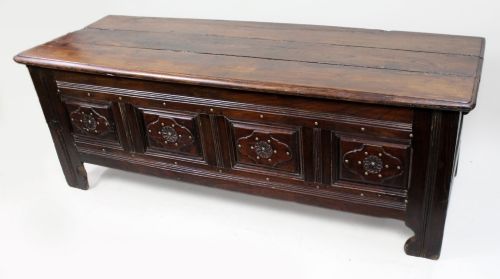
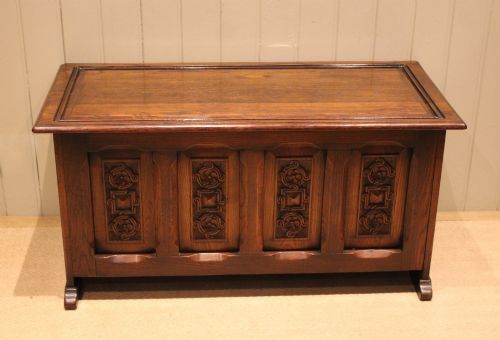
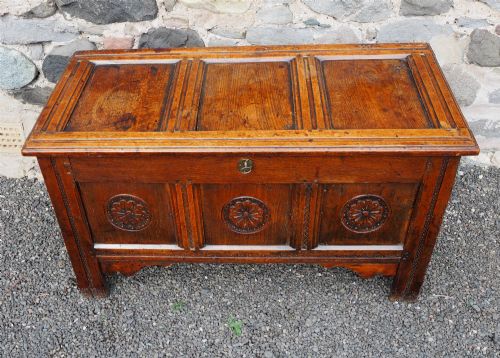
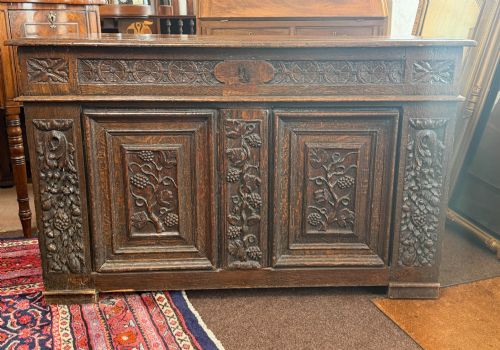
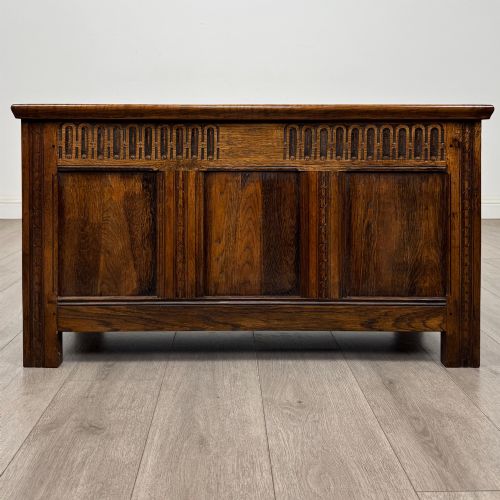
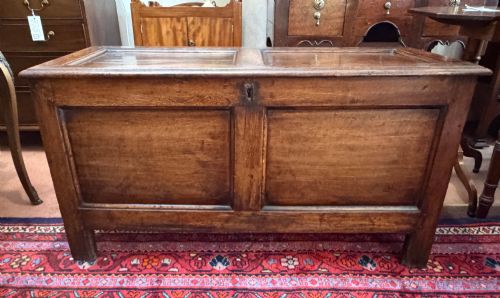
A paneled oak chest takes the form of a coffer, blanket box, or mule chest designed for heavy storage in domestic settings. The pieces seen span from the seventeenth century and the Georgian era through to Edwardian and later revival periods.
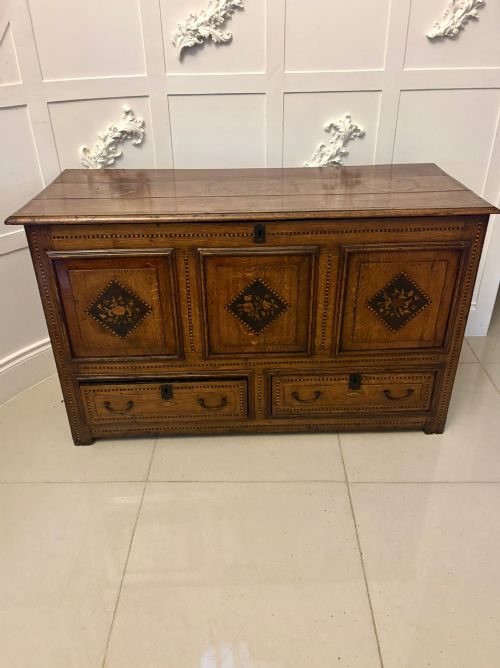
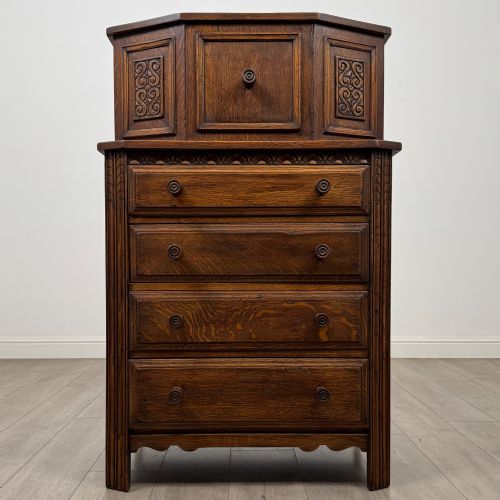
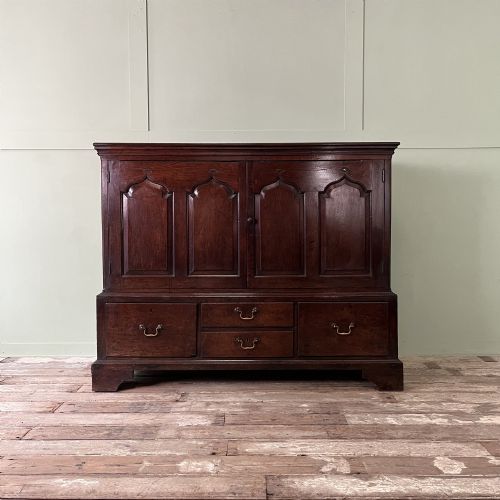
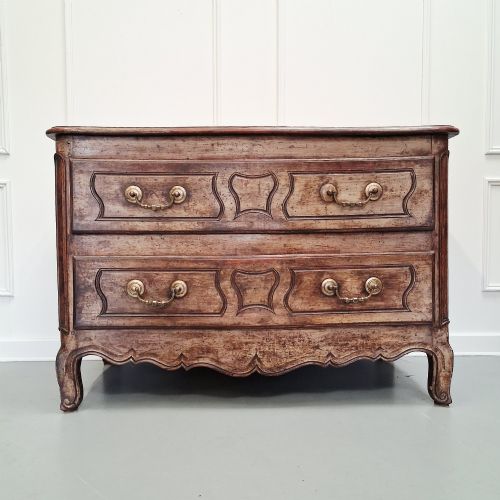
Makers constructed these storage pieces primarily as coffers and chests of drawers, occasionally incorporating lower drawers or cupboard doors beneath the main lid. Welsh and French regional variations appear alongside English examples, showing distinct local joinery traditions.
Buyers encounter seventeenth-century originals alongside later Jacobean Revival interpretations and twentieth-century reproductions. The common thread across these periods is the heavy timber construction and paneled lid arrangement.
Materials and Technique
Carpenters built these storage pieces using solid oak, often reinforced with iron hinges and brasses for operational hardware. Marquetry inlay, wood inlay, and ebonised wood occasionally accent the primary timber surfaces.
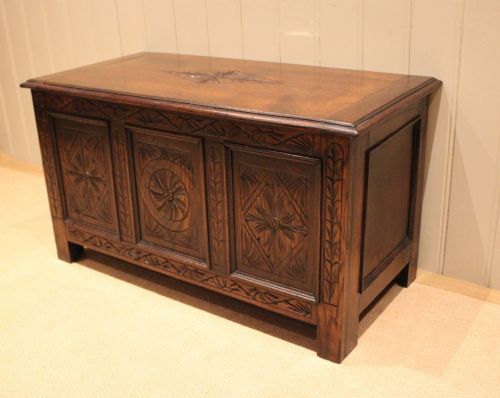
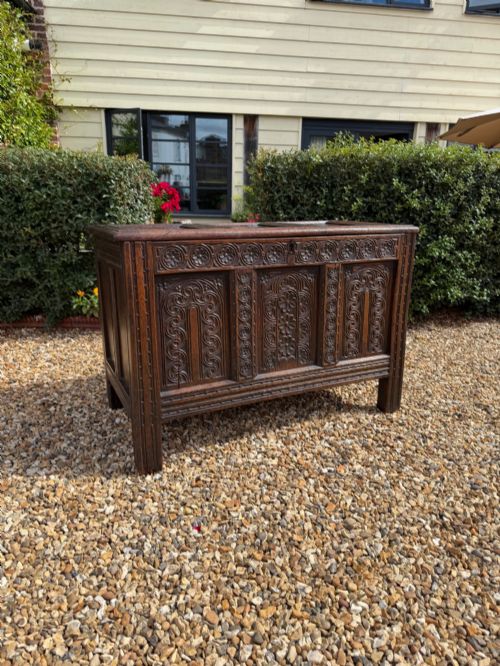
Construction relies on frame and panel joinery, which allowed the timber to expand and contract naturally without splitting the structure. Carving, moulding, and cushion-paneled fronts appear on domestic examples alongside simpler plain paneled surfaces.
Evaluating the Pieces
Quality rests on the depth of the timber's patination and the crispness of the original panel carving. Early seventeenth-century examples display hand-tool marks and pegged joints that differentiate them from mass-produced twentieth-century revivals.
The integrity of the original hinges, feet, and floorboards separates untouched survival pieces from heavily restored examples. Retaining the original lid and board construction adds substantial character to older coffers.
The Paneled Oak Chest Glossary
- Coffer
- A heavy storage chest with a hinged lid, traditionally used for keeping valuables and textiles secure. These boxes formed essential furniture in early homes before fitted closets became common.
- Mule chest
- A storage chest fitted with one or more drawers at the base beneath the main compartment. This form bridges the traditional coffer and the modern chest of drawers.
- Marquetry inlay
- Decorative patterns formed by fitting contrasting pieces of wood veneer into the primary timber surface. Artisans utilised this technique to enrich the facades of select seventeenth-century pieces.
- Cushion panel
- A raised panel with rounded or moulded edges that projects forward from the surrounding frame. This stylistic treatment adds visible depth to the front elevation.
- Patina
- The deep sheen and surface texture developed on oak through decades of handling, polishing, and ageing. A rich surface denotes an honest history of domestic use.
Paneled Oak Chest: Frequently Asked Questions
What were paneled oak chests used for?
These domestic boxes served primarily to store valuable household textiles, linens, and garments safely away from damp floors and dust. In older households, they doubled as seating benches or tables when space was at a premium.
Over centuries, the form evolved from basic blanket storage into more complex designs featuring lower drawers for smaller garments. Their robust construction made them suitable for transporting possessions or securing family documents.
How do I date an antique oak chest?
Dating relies on observing the construction methods, such as hand-split oak panels, pegged joints, and the style of the surface carving. Seventeenth-century pieces typically show different joinery techniques and tool marks compared to Georgian or Edwardian revivals.
Hardware details like iron strap hinges and lock plates also offer chronological clues. However, hinges and boards were frequently replaced over long periods of domestic use.
How do I live with a heavy oak chest?
Position the piece away from direct heat sources and strong sunlight to prevent the solid oak from drying out and splitting. Placing it against a living room or bedroom wall allows it to function as a coffee table base or blanket store.
Keep the interior clean and dry to protect stored fabrics. The heavy lid requires careful handling when opening, particularly on early pieces with original iron hinges.
What is the difference between a coffer and a mule chest?
A coffer is a simple box with a hinged lid opening from the top, accessing a single large interior compartment. It represents the foundational form of early domestic storage.
A mule chest adds one or more drawers beneath the main upper compartment, combining top-loading storage with drawer access. This hybrid design appeared as households sought easier access to smaller items without lifting the heavy lid.