


Pair Victorian Brass Candleholders
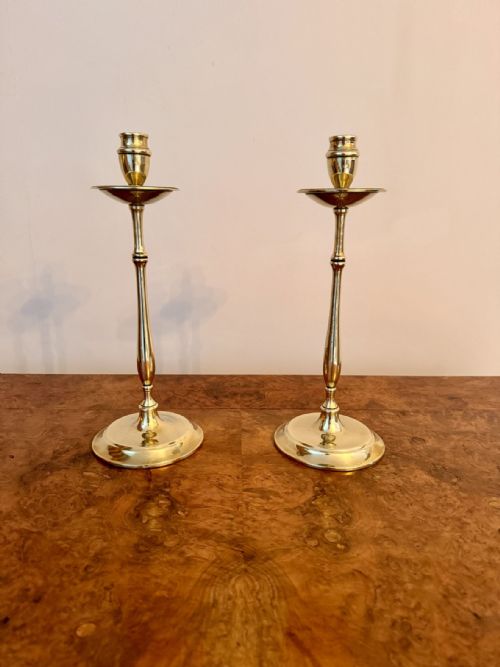
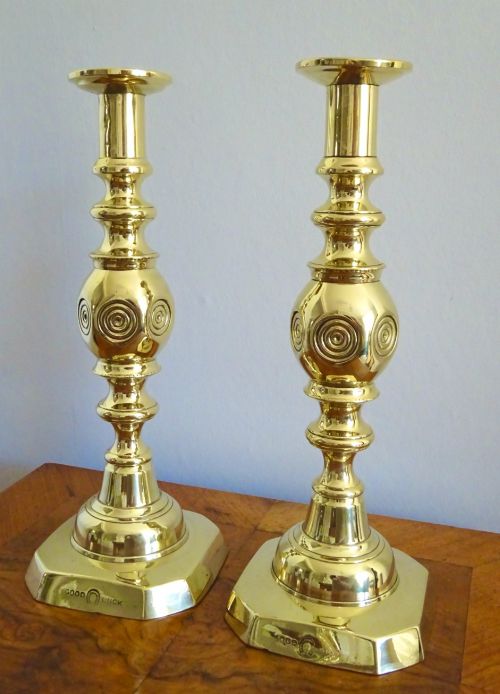
Pair Victorian brass candleholders bring the heavy, warm metal of the nineteenth century into a room, offering both practical light and sculptural presence.
Pair Victorian Brass Candleholders
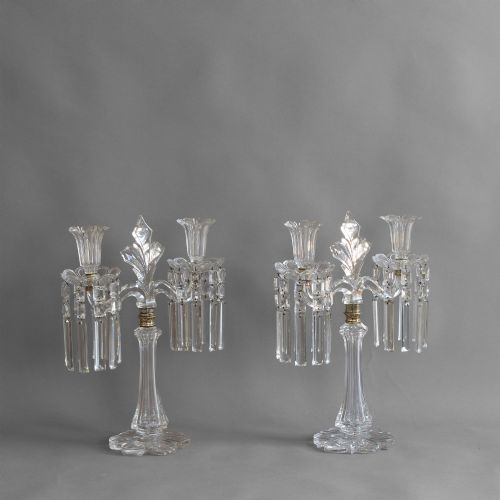
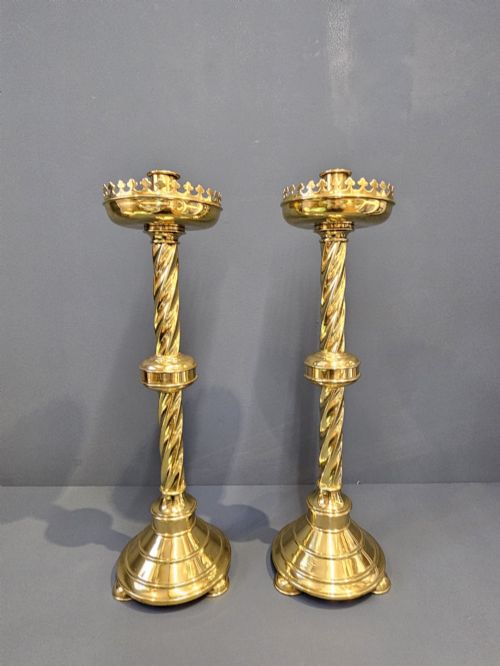
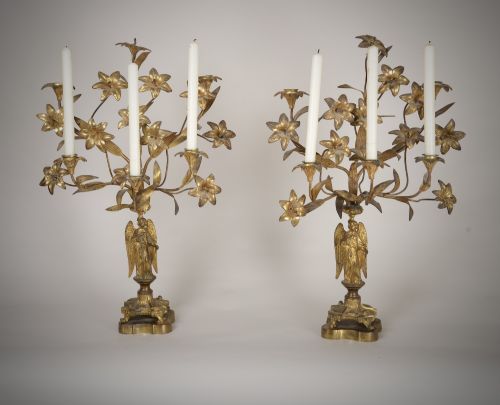
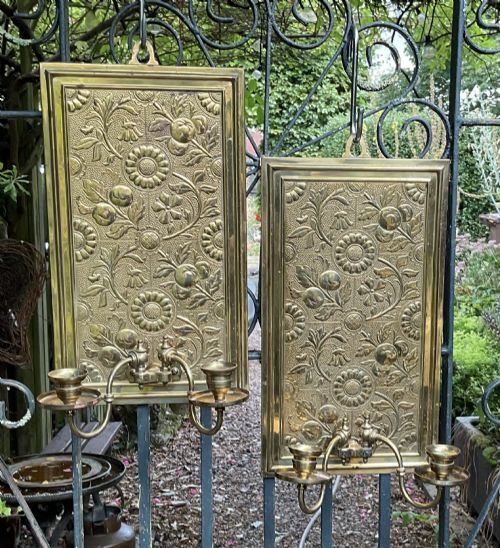
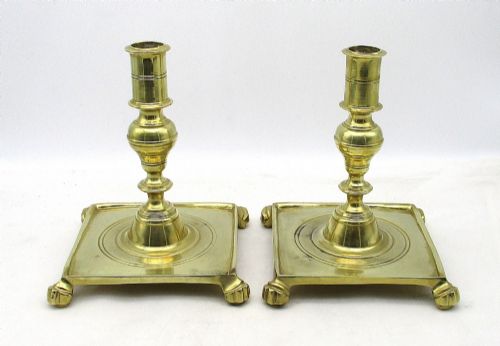
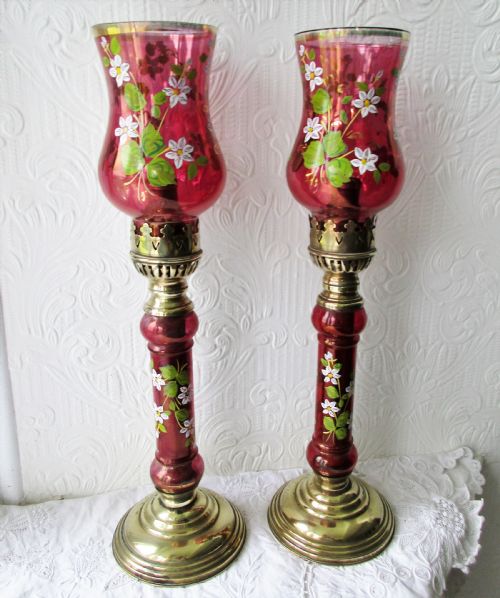
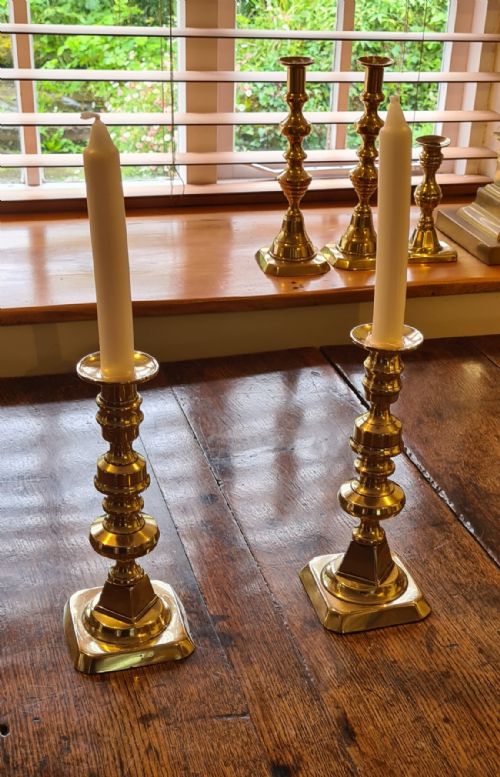
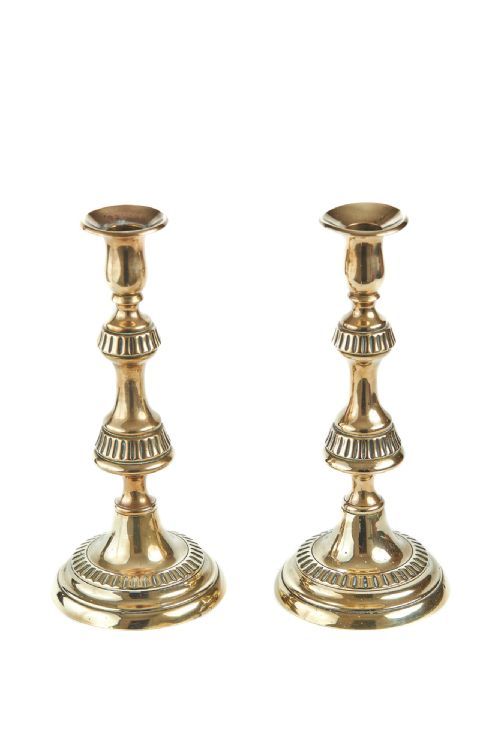
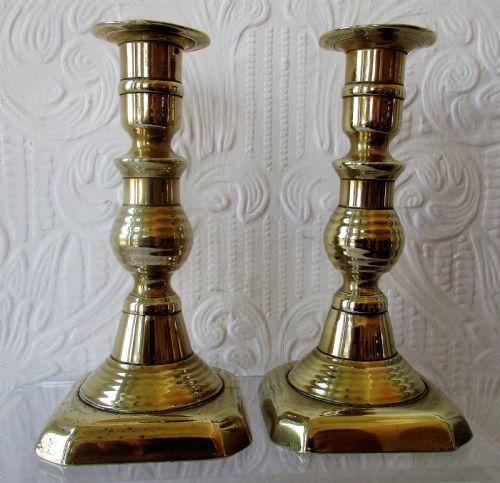
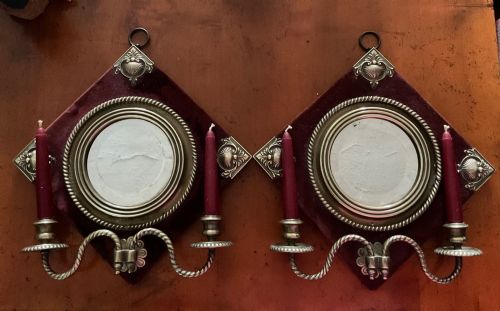
A search for pair victorian brass candleholders reveals matched sets intended to sit symmetrically on a mantelpiece, sideboard, or dining table. The items appearing in this category span standard domestic candlesticks, chambersticks, and taller ecclesiastical pricket designs, alongside multi-branched candelabra.
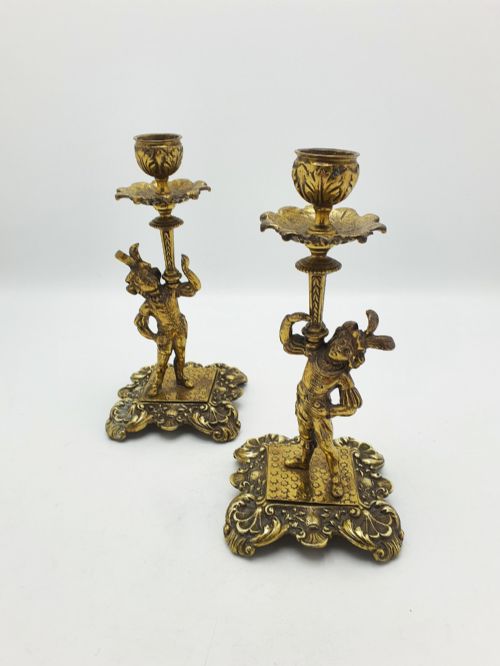
Most examples date from the core Victorian decades through to the turn of the twentieth century, often showing standard English domestic manufacture alongside items influenced by the Gothic Revival, Aesthetic Movement, and Arts and Crafts styles. Forms range from plain turned shafts to ornate figural and twisted designs, occasionally incorporating materials like marble or porcelain.
Buyers also encounter related wall sconces, girandole mirrors, and candle lamps that use the same foundational metalwork. These matched pairs provide a direct link to the domestic lighting habits of the nineteenth century, when metal casting and turning reached high industrial volumes.
Materials and construction methods
The primary metalwork relies heavily on brass, alongside variants such as gilt brass, gilt bronze, ormolu, and seamed bronze. Individual components were cast, turned on lathes, or hammered, with seamed examples showing the physical evidence of joined sheet metal before finishing.
Many items integrate contrasting elements, combining metal shafts with marble bases, cut glass, crystal, or porcelain inserts. Surface treatments range from polished bright finishes to patinated surfaces achieved through gilding or prolonged domestic handling.
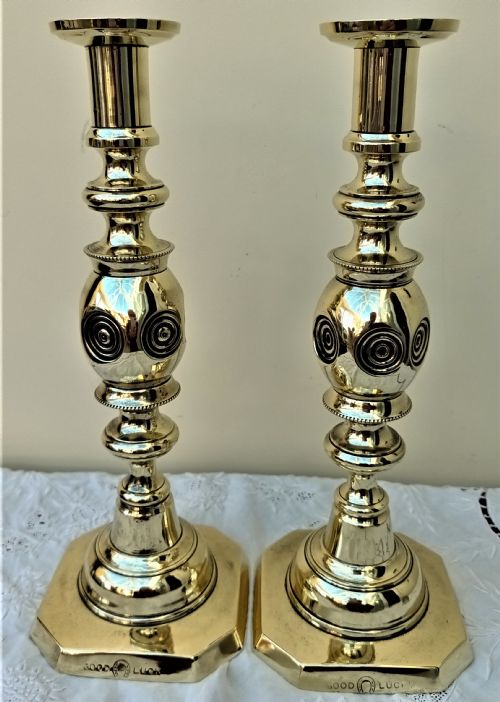
Named variations like the Good Luck and Ace of Diamonds designs reveal that nineteenth-century manufacturers understood the marketing power of a cheerful name.
Assessing quality in nineteenth-century metalwork
Quality rests on the crispness of the casting and the weight of the metal used in the construction. Heavier pieces with deep, clean chasing and well-defined decorative details separate superior workshops from mass-produced output.
The integrity of the matched pair determines the desirability of the set, particularly when components like bobbins, drip pans, or screw threads remain original to the piece. Finer examples display careful hand-finishing on hidden surfaces and precise alignment when assembled.
Bruce Talbert·Frederick J Smith & Co·Liberty·James Clews
The Pair Victorian Brass Candleholders Glossary
- Ejector candlestick
- A domestic design featuring an internal sliding mechanism pushed from below to raise and remove the used candle stub. This mechanical addition made clearing spent wax simpler.
- Pricket
- A candleholder that uses an upward-pointing metal spike to impale the base of a candle rather than a socket to hold it. These appear frequently on church and ecclesiastical brassware.
- Chamberstick
- A low-profile candleholder fitted with a broad saucer base and a loop handle for carrying room to room. They often include a small metal cone snuffer resting in the tray.
- Girandole mirror
- A wall-mounted looking glass featuring attached candle branches designed to reflect and multiply the flickering light into the room. These often incorporate ornate gilt frames.
- Ormolu
- A metallic technique involving the application of finely ground high-carat gold to a bronze base. It provides a rich, warm surface finish without solid gold construction.
Pair Victorian Brass Candleholders: Frequently Asked Questions
What is an ejector candlestick?
An ejector candlestick contains a hidden internal stem that pushes upward to release stuck wax residue. This clever mechanical addition made cleaning much easier for Victorian households.
Such items are typically marked by a small thumb-piece on the side of the shaft. They remain a practical favourite for collectors who enjoy functional nineteenth-century design.
How do I date these brass pieces?
Dating relies on stylistic clues, construction seams, and registration marks stamped into the metal. Gothic Revival and heavy aesthetic motifs often point toward the middle and late decades of the nineteenth century.
Later Edwardian examples tend toward lighter forms or distinct revival styles. Comparing the weight and casting sharpness helps place an item within its manufacturing era.
Are church candlesticks different from domestic ones?
Ecclesiastical candlesticks generally stand taller and heavier than domestic table items. Many use a pricket spike instead of a standard cylindrical socket to secure large wax candles.
These pieces frequently display Gothic or Renaissance Revival details. They were built for altars and large halls rather than everyday mantelpieces.
What maintenance do old brass holders need?
Historic brass requires gentle dusting and minimal intervention to preserve its aged surface patina. Aggressive chemical polishing strips away the dark oxidation that accumulates over generations.
Keeping them dry prevents corrosion on mixed materials like iron components or marble bases. Occasional wax protection helps maintain the metal in stable condition.