
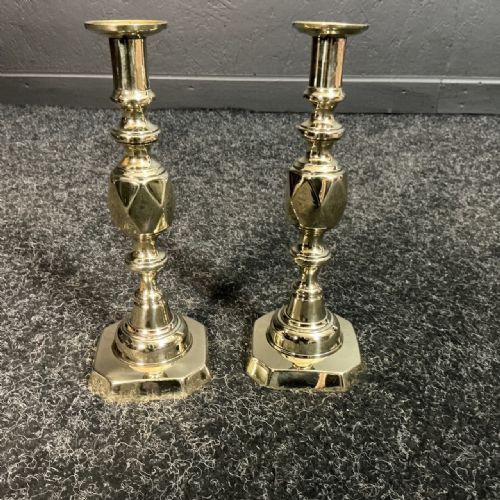


Victorian Diamond Knop Candlesticks
Victorian diamond knop candlesticks are heavy brass lighting pieces from the nineteenth century that bring warmth and genuine period character to any room.
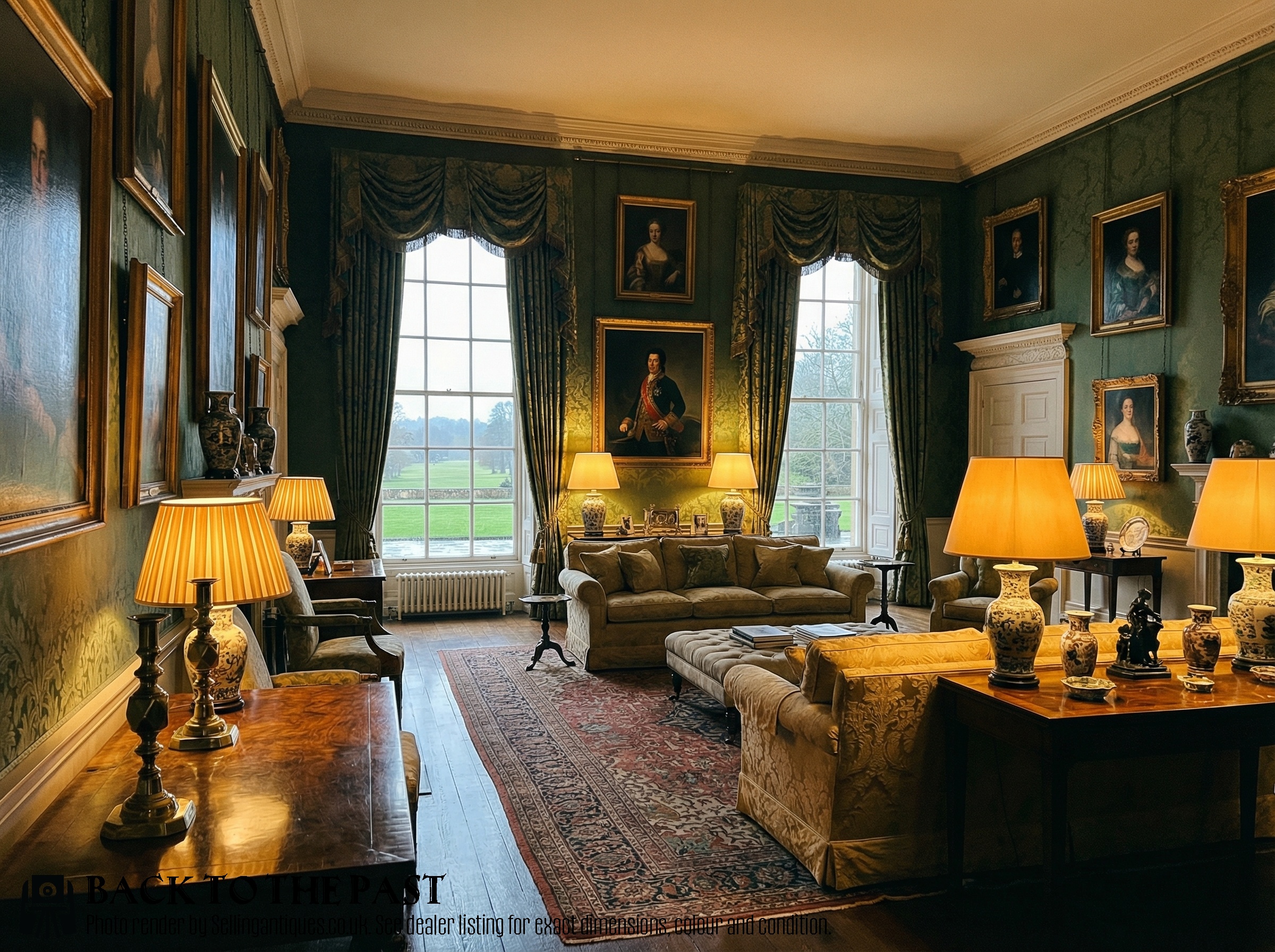
Victorian Diamond Knop Candlesticks
When you search for Victorian diamond knop candlesticks, you are looking at nineteenth-century brass lighting pieces that feature distinctive faceted stems. These items date from the Victorian era, specifically spanning the decades around eighteen eighty to eighteen ninety, and represent domestic metalwork of the period. Most examples you meet on this page take the form of tall pairs, often associated with named patterns like the King of Diamonds, Queen of Diamonds, or Ace of Diamonds.
The domestic interior of the late nineteenth century relied heavily on brass candlesticks for illumination before electric lighting became universal. These particular pieces often incorporate stacked or turned sections along the shaft, giving them a sturdy and decorative silhouette. They appear in various heights, sometimes reaching fourteen inches, and reflect the robust manufacturing traditions of nineteenth-century British foundries.
How they were made
Makers produced these Victorian diamond knop candlesticks using cast brass, shaping the metal in foundry moulds before finishing the components on a lathe. The faceted knops and stems required precise turning to create the sharp geometric angles that define the diamond pattern. Individual components were then joined together to form the complete candlestick, resulting in solid and durable construction.
Makers sometimes incorporated stamped inscriptions or maker details into the base or components during production. The metal received a polished or smoothed finish that highlighted the natural golden colour of the brass. Foundries utilised established casting methods to ensure uniform pairs, which explains why many surviving examples remain matched today.
Some nineteenth-century candlesticks bear card suit names like King of Diamonds, bringing a touch of the parlour game to the mantelpiece.
What varies in quality
Quality in these candlesticks lies in the crispness of the casting and the definition of the faceted stems. Finer examples show sharp, clean angles on the diamond knops and a heavier overall weight in the hand. Poorer examples often feature worn details where the casting has been smoothed down or simplified.
Proportion and scale also separate the standard production from the exceptional pieces. Taller candlesticks with substantial bases and well-balanced stems demonstrate greater care in the workshop. The presence of clear maker stamps, such as those by James Clews, adds another dimension of quality for collectors who value documented origin.
James Clews
The Victorian Diamond Knop Candlesticks Glossary
- Knop
- A protruding rounded or faceted knob on the stem of a candlestick. It provides a tactile grip and breaks up the vertical line of the shaft.
- Brass
- An alloy of copper and zinc used extensively for nineteenth-century metalware. It offers durability and a bright golden appearance when polished.
- Victorian
- Pertaining to the reign of Queen Victoria from eighteen thirty-seven to nineteen zero one. This period encompasses the majority of the candlesticks shown here.
- Foundry
- A workshop or factory where metal is melted and cast into moulds. Nineteenth-century foundries produced domestic items like candlesticks in volume.
- Ace of Diamonds
- A specific named design pattern found on nineteenth-century brass candlesticks. It forms part of a recognised group of card-themed brassware.
Victorian Diamond Knop Candlesticks: Frequently Asked Questions
What are diamond knop candlesticks?
These are nineteenth-century brass lighting pieces featuring faceted stems designed during the Victorian era. They served as functional household items for carrying and burning wax candles.
Today they function as decorative objects that reflect the metalworking skills of nineteenth-century British foundries.
How were these candlesticks used?
Households used them in various rooms to hold wax candles for daily illumination before electric lighting became common. Their solid brass construction provided the necessary stability for safe burning.
They often stood on mantelpieces, sideboards, or tables as both practical items and decorative ornaments.
How do I date these candlesticks?
Dating relies on stylistic markers, construction methods, and occasional maker marks recorded in the titles. Most pieces date from the eighteen eighties and eighteen nineties.
Comparing the casting style and height helps place them within the broader Victorian period.
Are they sold as pairs?
Many of these candlesticks appear on the market in matched pairs, which reflects how they were originally manufactured and used on mantelpieces. Single pieces also exist among surviving examples.
Pairs generally command more interest from buyers seeking symmetrical display items.