
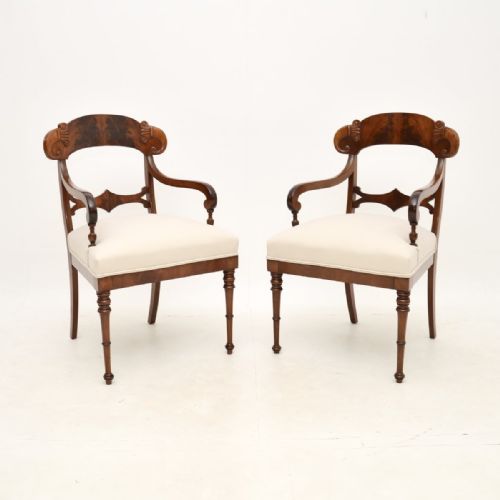
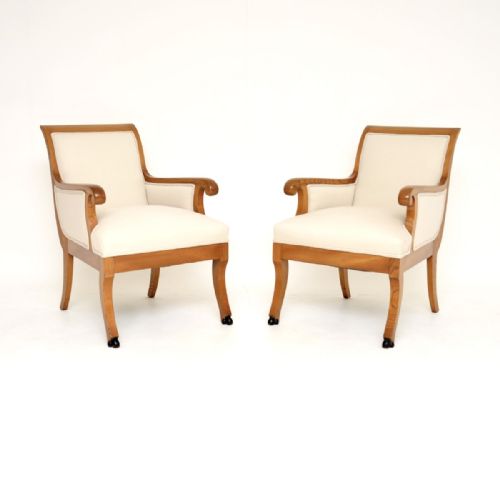
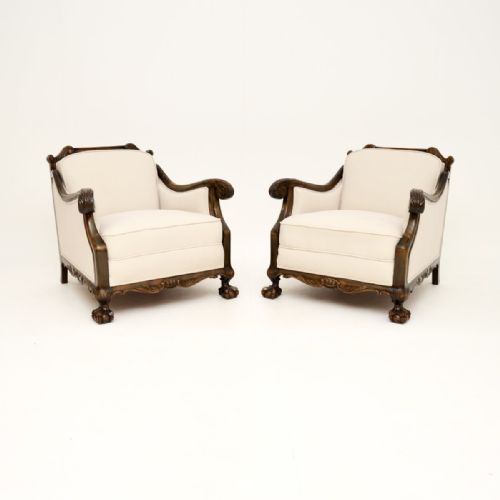
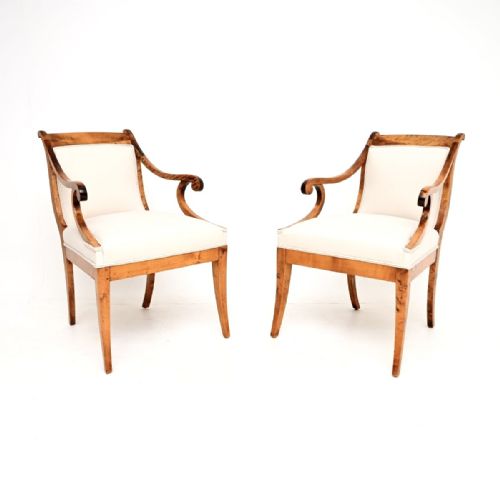


Pair Swedish Accent Chairs
Pair swedish accent chairs bring striking Nordic form and comfort to a room, ranging from neoclassical restraint to bold art deco curves.
Pair Swedish Accent Chairs
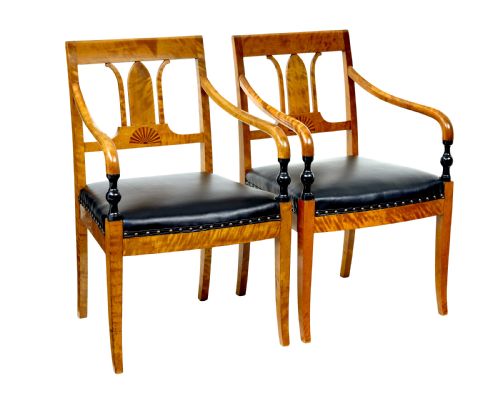
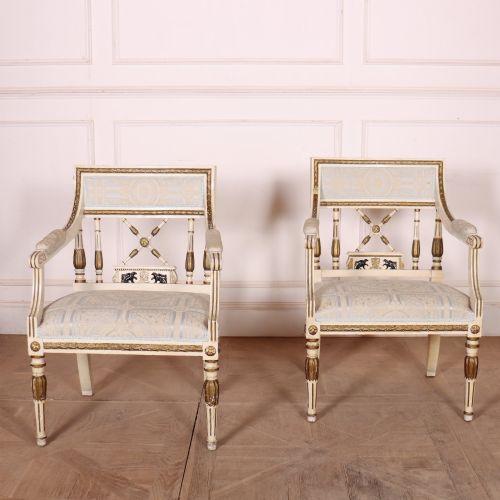
These armchairs arrive as matched pairs, sourced from nineteenth-century workshops through to the modernist 1930s. The selection spans distinct design movements, including Gustavian, Biedermeier, Swedish Empire, and Art Deco.
Buyers encounter solid wood frames paired with upholstery in various fabrics and leather. The forms function as focal seating in sitting rooms and libraries, bringing sculptural presence alongside everyday utility.
How they were made
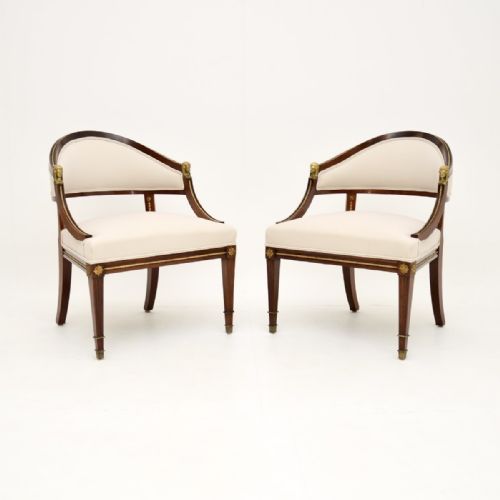
Cabinetmakers utilised native birch, satin birch, and elm, alongside imported mahogany for grander frames. Wood surfaces received polished finishes, paint, or ebonised treatments, occasionally accented with brass fittings.
Upholstery techniques developed from traditional horsehair stuffing on sprung or webbed bases to the clean lines of twentieth-century lounge seating. Carved details appeared on neoclassical and baroque revival pieces, while art deco versions relied on the natural grain of satin birch and elm.
The listings span from 1850 through to 1930, capturing a century of shifting Scandinavian cabinetmaking from neoclassical mahogany to art deco birch.
What varies in quality
The distinction rests in the choice of timber veneer, the crispness of carved woodwork, and the integrity of the original frame construction. Superior examples display carefully matched wood grains and balanced proportions that define Scandinavian design.
Condition of the underlying frame and survival of original surface treatments dictate the standing of a pair. Earlier nineteenth-century neoclassical pieces rely on architectural precision, whereas later art deco pairs depend on fluid, expressive joinery.
The Pair Swedish Accent Chairs Glossary
- Gustavian
- A Swedish aesthetic spanning the late eighteenth and nineteenth centuries, characterised by neoclassical restraint, light paint finishes, and fluted legs. It draws heavily on French Louis XVI inspiration adapted to Nordic proportions.
- Biedermeier
- A central European and Scandinavian style spanning the mid-nineteenth century, focusing on utilitarian comfort, clean lines, and the natural beauty of wood veneers like birch and mahogany without excessive ornamentation.
- Swedish Empire
- A regional interpretation of the French Empire style, marked by heavy classical forms, dark wood surfaces, and bold symmetry. These chairs often incorporate architectural columns and substantial proportions.
Pair Swedish Accent Chairs: Frequently Asked Questions
How do I care for antique wood frames?
Dust regularly with a soft, dry cloth and apply a quality beeswax periodically to nourish the timber. Avoid placing the chairs near direct heat sources or strong sunlight to protect the wood and finish.
Keep upholstered surfaces brushed or vacuumed on a low setting with a soft attachment. Professional cleaning is recommended for antique fabric and leather to preserve the material.
Can I use these chairs daily?
Most of these armchairs are structurally sound for everyday sitting room use, having been built with solid hardwood frames. Checking the stability of the joints ensures they withstand regular weight.
Lighter frames from the nineteenth century may require gentle treatment compared to sturdier art deco lounge chairs. Consider the internal webbing and padding if daily lounging is the primary goal.
How do I identify a neoclassical pair?
Neoclassical pieces typically display straight, tapered legs, symmetrical geometry, and restrained carved details such as fluting. Mahogany and solid elm often form the primary structure of these earlier items.
Later revival pieces maintain these architectural references but may employ lighter birch frames. Look for classical motifs that echo eighteenth-century proportions.
What defines the art deco pieces?
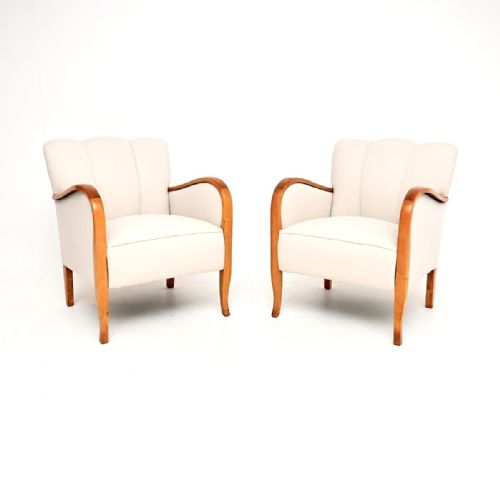
Art deco Scandinavian chairs from the 1930s feature sweeping, rounded forms, smooth elm or satin birch veneers, and low profiles built for lounging. These designs reject heavy historical ornamentation in favour of streamlined silhouettes.
The focus shifts entirely to the dramatic grain of the wood and the ergonomic curve of the arms and back. They offer a distinct visual contrast to nineteenth-century neoclassical seating.