

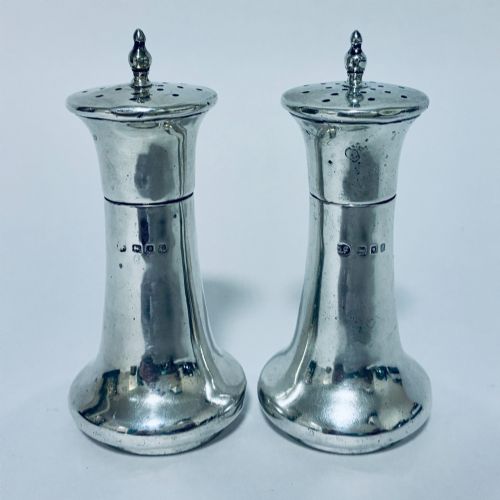
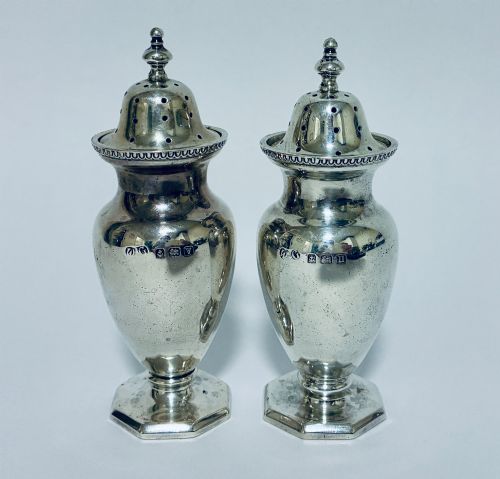
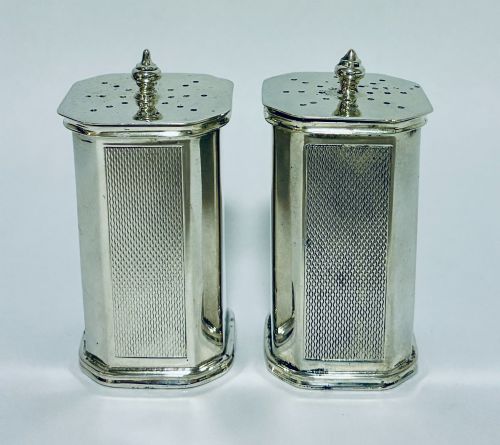


Pair Silver Shakers
These pair silver shakers bring period elegance to the table, offering a functional touch of history that collectors and hosts prize.
Pair Silver Shakers
When you search for pair silver shakers, you encounter matched sets designed for condiments like pepper, salt and sugar, spanning several centuries of dining culture. The most common examples on this page date from the Victorian and Edwardian eras through to the 1920s and 1930s, often taking the form of traditional pepper pots, salt cellars and casters.
Beyond standard domestic tableware, the selection encompasses novelty forms modelled as animals and figures, alongside cased sets and Georgian revival pieces. These items served functional roles on formal dining tables, where matching pairs brought symmetry and polish to the meal service.
The materials range from standard sterling silver and solid silver to combinations incorporating enamel, cobalt glass and cut glass inserts. Many pieces arrive alongside fitted presentation boxes or velvet-lined cases that highlight their original status as gifts or premium household purchases.
How they were made
Silversmiths utilised traditional techniques such as casting, piercing and hand-raising to form the bodies of these shakers. Molten metal or sheet silver was shaped into cylinders, urns and novelties, then finished with pierced tops for dispensing condiments.
Makers integrated secondary materials like cobalt glass and cut glass to line open salt cellars, while others applied coloured enamel over textured silver surfaces. Hallmarks stamped directly into the metal record the assay office, date letter and maker's mark.
Novelty peppers often relied on detailed cast modelling to render figures, birds and domestic animals with lifelike textures. These figural elements required careful assembly of multiple cast components to create hollow vessels with removable heads or screw-in bases.
Pair Silver Shakers Retail Price Guide 2026
Typical asking prices for pair silver shakers among the pieces listed under this phrase on Sellingantiques today, from the lower quarter to the upper quarter. They describe what is for sale here now, not the wider market.
Mr Punch's faithful dog Toby occasionally stands guard on the dining table as a figural pepper pot.
What varies in quality
The calibre of a pair rests upon the crispness of the casting and the precision of the piercing on the shaker tops. Fine work displays sharp detail in figural models and cleanly cut apertures that maintain structural integrity across both items in the set.
Original matching matters significantly, as matched pairs assembled later in the trade differ subtly in weight, height or hallmark dates from true factory pairs. The presence of undamaged glass liners and intact original gilding or enamel elevates the standing of a set.
Maker attribution also dictates standing, with documented pieces bearing the marks of notable workshops commanding attention from experienced buyers. The condition of the hallmarks and the preservation of surface engraving complete the distinction between ordinary and exceptional examples.
Sampson Mordan·Thomas Johnson·Charles Alchorne·Wilfred Chidlaw Griffiths·Carrington and Co·Mappin
The Pair Silver Shakers Glossary
- Caster
- A tall container with a pierced lid used for sprinkling sugar or dry spices onto food. These vessels often feature baluster forms and footed bases.
- Pepperette
- A small shaker designed specifically for ground pepper, frequently smaller in scale than sugar casters. The term appears frequently in nineteenth-century inventory records.
- Hallmark
- A series of official marks stamped on precious metals indicating the standard of purity, the assay office, the maker and the year of production. These marks provide definitive historical dating.
- Novelty
- An object made in an amusing or unusual shape, such as an animal, a human figure or a familiar character. In silver, these pieces combine decorative appeal with practical function.
- Sterling silver
- An alloy of silver containing ninety-two point five percent silver and seven point five percent other metals, usually copper. This standard ensures durability for daily use on the dining table.
Pair Silver Shakers: Frequently Asked Questions
What is the difference between a pepper pot and a caster?
Pepper pots are typically smaller vessels designed to hold ground pepper for individual place settings or general table use. They feature small pierced holes in the top for shaking.
Casters are taller, larger containers originally intended for sprinkling sugar or heavier spices. They often possess footed bases and more elaborate pierced domes.
How do I care for antique silver shakers?
Clean silver shakers gently using a soft cloth and a specialised silver polish designed to remove tarnish without abrading the surface. Avoid harsh chemical dips that strip away historical patina and damage delicate enamel or glass inserts.
Store the pieces in dry conditions away from direct sunlight, and utilise velvet-lined boxes if available to prevent surface scratches between uses.
Were these shakers used for salt?
Many early dining tables utilised open salt cellars rather than enclosed shakers, requiring diners to pinch salt using small spoons. These open salts often contained cobalt glass or cut glass liners to protect the silver from corrosion.
Enclosed salt shakers became more common in later periods, matching the design of the pepper pots to form uniform condiment sets.
How do I identify the date of a pair?
Examine the hallmarks stamped onto the base or lid of each shaker to find the date letter assigned by the specific assay office. Reference tables match these letters to exact years of manufacture.
Stylistic indicators such as Art Deco geometric lines or Victorian figural modelling provide a general period when hallmarks are rubbed or illegible.