

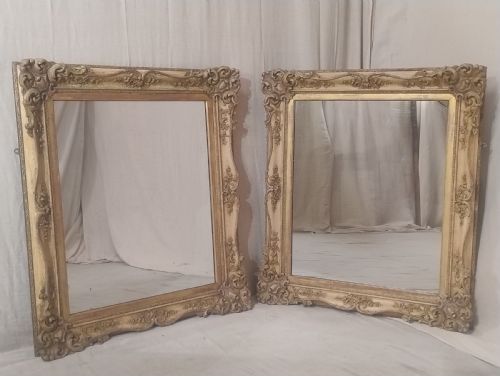
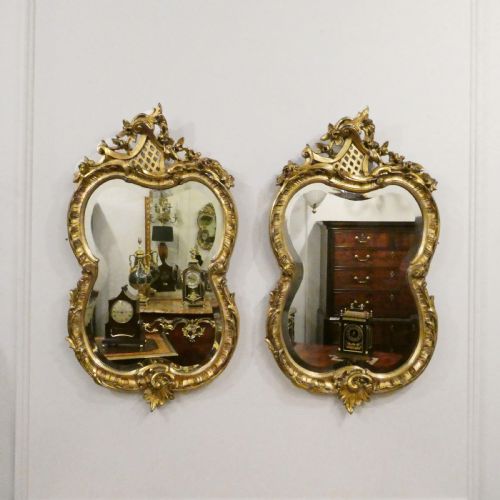
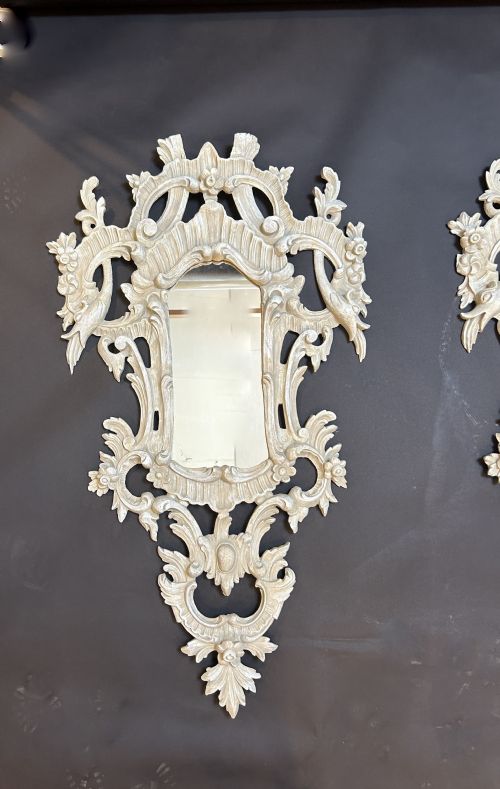


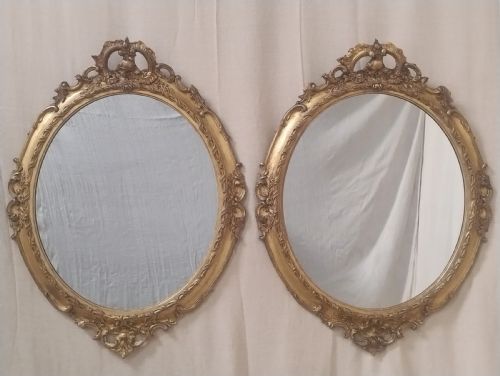
Pair Rococo Wall Mirrors
Pair rococo wall mirrors bring asymmetrical scrollwork and gilded light into a room, originating from European workshops across several centuries.
Pair Rococo Wall Mirrors
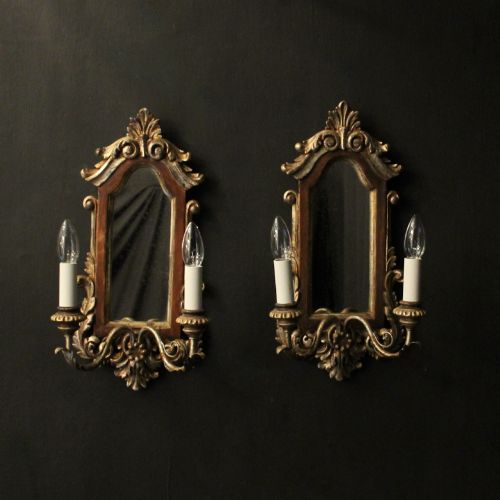
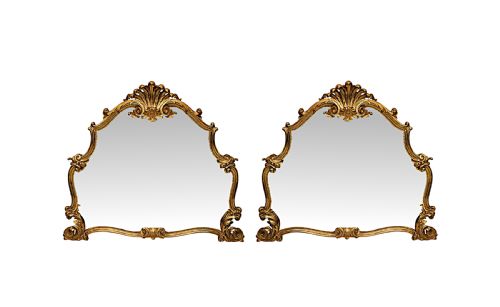
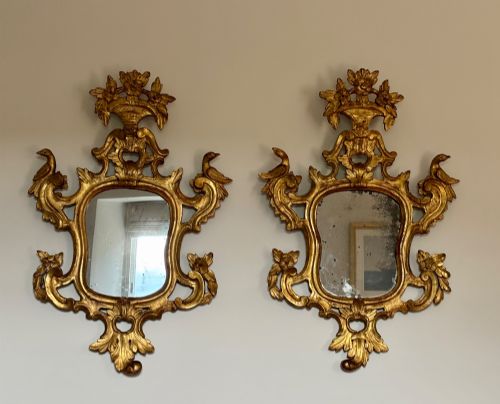
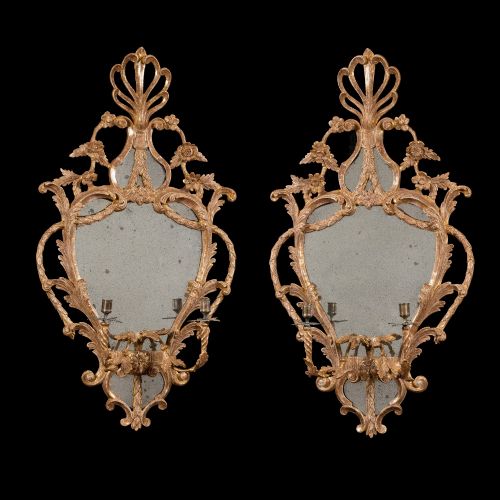
Pair rococo wall mirrors encompass matching looking glasses designed to hang opposite one another or flank a fireplace. The forms span grand overmantels, tall pier mirrors, and smaller wall sconces fitted with candle arms.
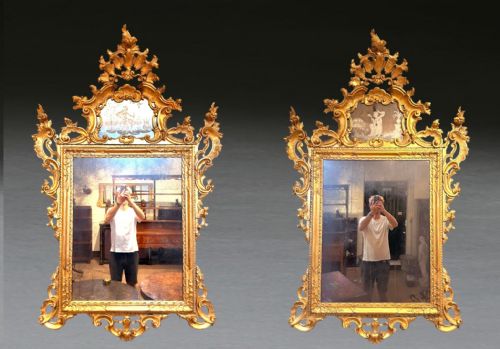
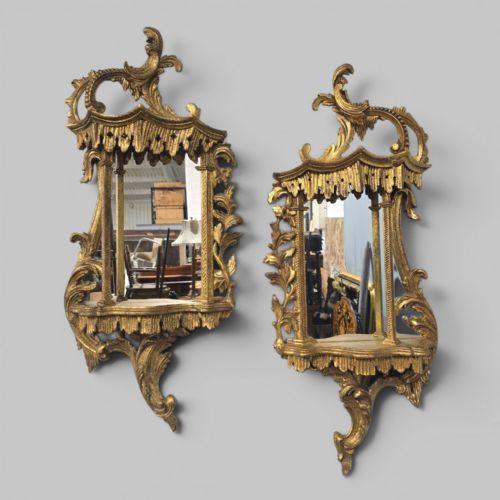
Most examples belong to the nineteenth century or later revivals, though eighteenth-century Venetian and Georgian pieces also appear. Makers drew on French, Italian, and Chinese Chippendale styles to shape the wooden frames.
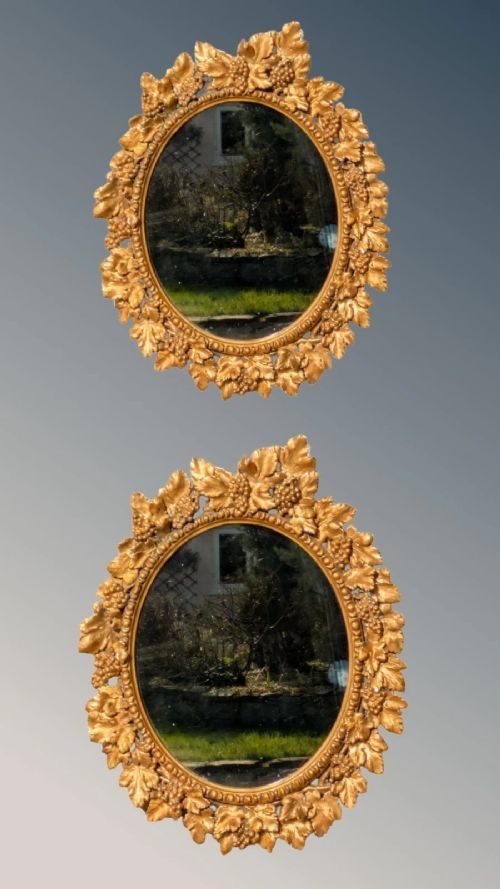
Object types range from simple gilt round frames to elaborate girandoles with multiple arms for candles. The common thread is the twin arrangement and the characteristic undulating silhouette of the design.
How they were made
Craftsmen carved intricate frames from softwoods or hardwoods, applying layers of gesso to build up high-relief scrollwork and foliage. Gold leaf or parcel gilt was then laid over the prepared surfaces to catch the candlelight.
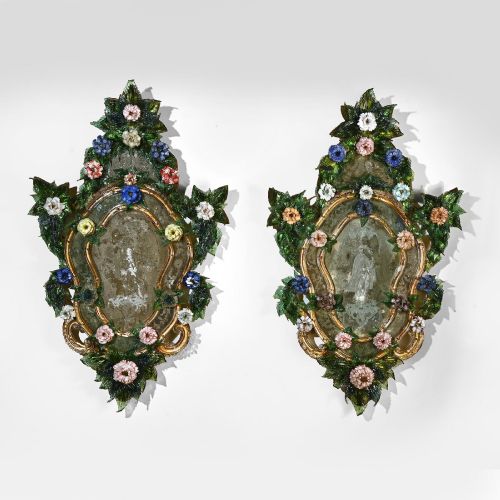
Glass production involved silvering mirror plates by hand, which often resulted in natural foxing and subtle imperfections over time. Some Continental pieces incorporated polychrome paint alongside the gilding for added visual depth.
Listings feature eighteenth-century Venetian work alongside nineteenth-century French and Italian revivals, executed in giltwood, brass, and carved wood.
What varies in quality
Depth and crispness of the wood carving set the finer examples apart from simpler moulded versions. Skilled carvers undercut the foliage and scrolls so that the decoration stands away from the main frame.
The quality of the gilding and the preservation of the original mirror glass dictate the overall character of a piece. Hand-applied gold leaf ages with a warmer tone than later metallic paint or inferior metal leaf.
The Pair Rococo Wall Mirrors Glossary
- Giltwood
- Wood that has been coated with a thin layer of gold leaf. This technique was standard for high-status European mirror frames from the eighteenth century onwards.
- Gesso
- A plaster mixture applied to carved wooden frames as a smooth base for gilding. It allows for sharp, detailed relief work.
- Girandole
- A wall mirror featuring attached candle branches or sconces. The candle flames reflected in the glass to multiply the light in a room.
- Pier glass
- A tall mirror designed to hang on the wall space between two windows. They often sat above matching console tables.
- Foxing
- Age-related spots and discoloration within the silver backing of old mirror glass. Collectors view this as a sign of authenticity.
Pair Rococo Wall Mirrors: Frequently Asked Questions
Where should I hang pair rococo wall mirrors?
These pieces work best hung symmetrically on either side of a fireplace, a doorway, or a large piece of furniture. Placing them opposite a window will also help bounce natural light back into the room.
Ensure the wall fixings can take the weight of heavy carved wood and glass. Professional mirror hangers use dedicated fixings matched to the wall construction.
How do I tell an 18th-century pair from a 19th-century revival?
Eighteenth-century mirrors typically show hand-beveled glass plates and deeper, more organic carving in the gesso and wood. Revival pieces made during the Victorian era often use machine-rolled glass and heavier plaster ornament.
Examine the backboards and fixings for signs of age. Older pine or walnut frames display hand-cut nails and tool marks consistent with early workshop practices.
Can I use gilt mirrors in a modern interior?
The ornate frames provide a strong textural contrast against clean white walls and contemporary minimalist furniture. Pairing antique gilded surfaces with modern lighting highlights the craftsmanship of the carving.
Keep surrounding decor simple so the matching frames remain the focal point of the wall. Let the natural patina of the gold leaf warm up the space.