


Pair Porcelain Baluster Vases
These pair porcelain baluster vases bring symmetrical balance and vibrant hand-painted colour to an interior, drawing the eye with their distinctive curved profiles.
Pair Porcelain Baluster Vases
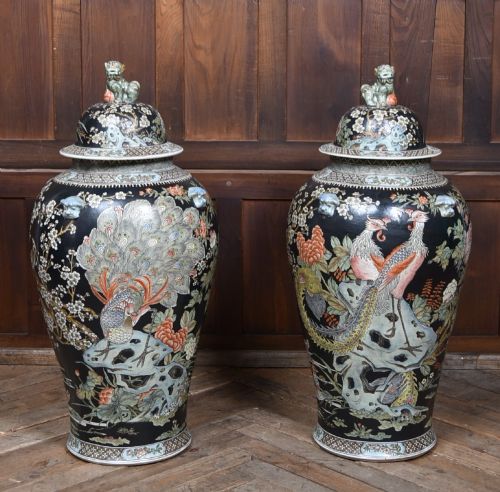
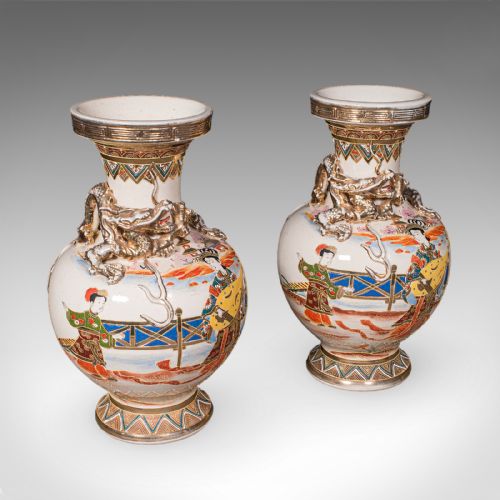
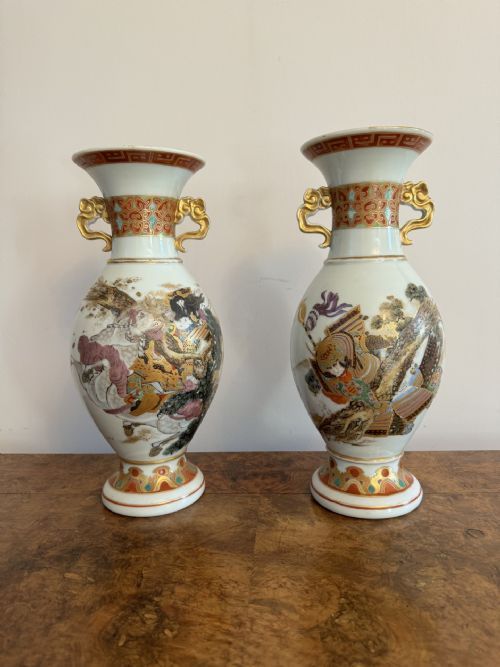
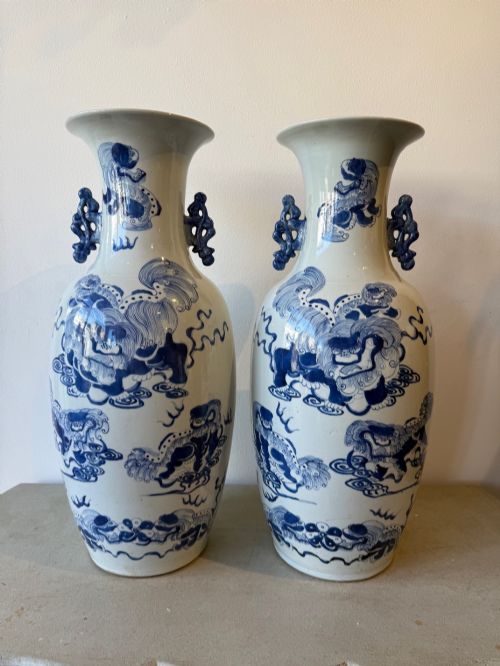
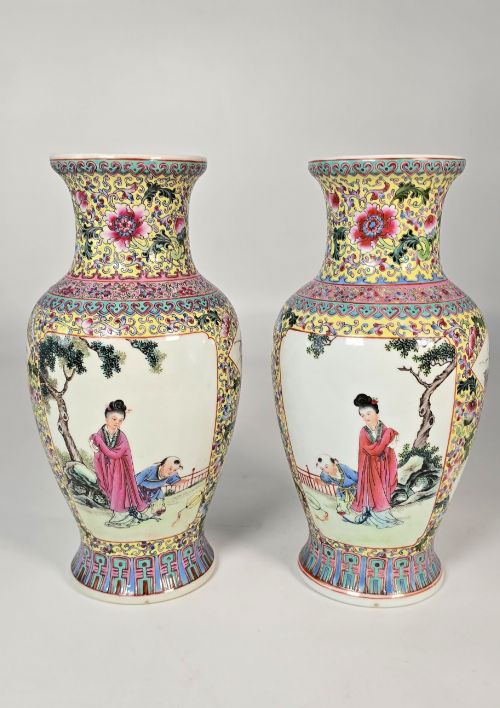
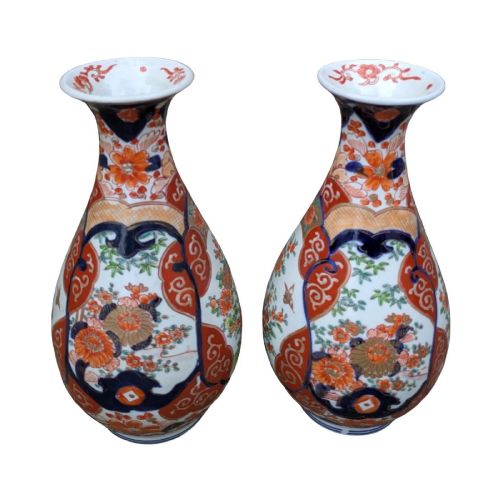
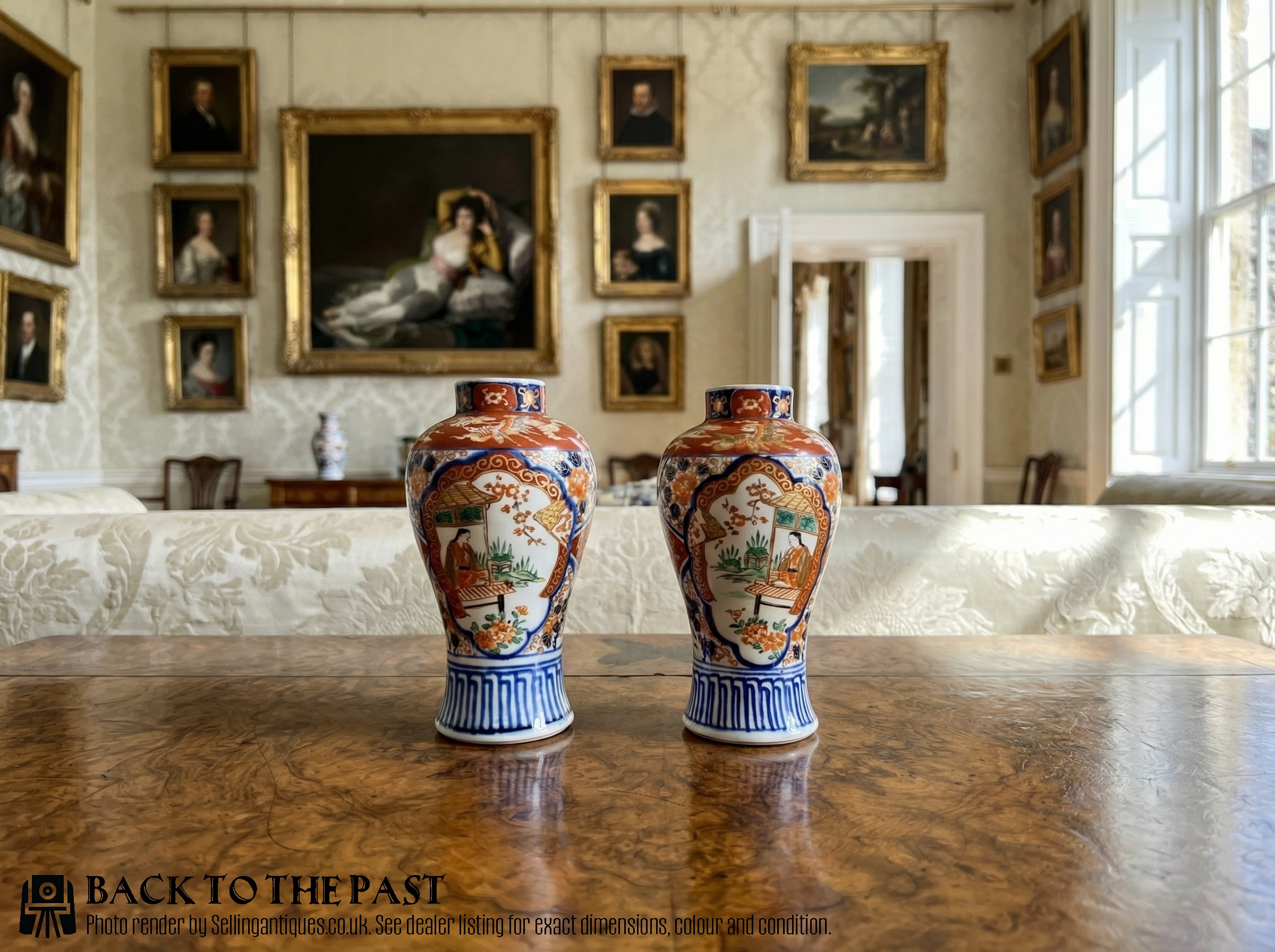
A pair porcelain baluster vases search brings together symmetrical vessels featuring curved bodies that swell below the neck and taper towards the base. The selection spans distinct traditions, ranging from Japanese Imari and Satsuma wares to Chinese export pieces.
The 19th century dominates the selection, alongside items from the Regency and Edwardian periods, including large floor jars and table lamps. These objects functioned as decorative focal points in period interiors and continue to serve as display pieces.
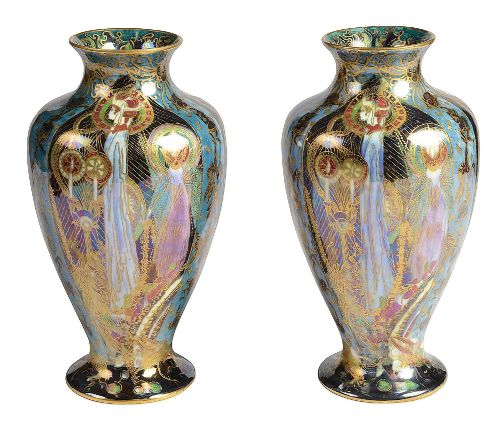
Makers represented include Wedgwood with the Fairyland Lustre range, alongside Mason's Ironstone and Carlton Ware. Most items reflect East Asian export styles such as blue and white, Canton, and famille rose alongside British ceramic interpretations.
How they were made
The body of each vessel relies on ceramic materials including porcelain, earthenware, and ironstone, shaped into the characteristic baluster silhouette. Artisans applied glaze and enamel decoration by hand, frequently incorporating gold leaf and gilding to accentuate painted scenes.
Certain pieces integrate structural mounts in brass and ormolu, particularly examples converted into lamps during later periods. Firing techniques achieved the dense white grounds and vibrant iron-red, cobalt blue, and green colourways seen across the styles.
Listings feature porcelain, earthenware, enamel, and gold leaf, styled across Qing Dynasty, Japanese Imari, and Chinoiserie traditions.
What varies in quality
Quality rests in the precision of the hand-painted brushwork and the complexity of the decorative palette, where dense enamelling and crisp detail separate standard production from superior examples. The depth and clarity of the glaze also indicate the skill involved in firing the ceramic body.
Scale and proportion distinguish monumental floor jars and palace pieces from smaller domestic vessels. The presence of matching lids and intact metal mounts further influences the standing of individual pairs.
Wedgwood·Carlton Ware·Samson·Royal Doulton
The Pair Porcelain Baluster Vases Glossary
- Baluster
- A vertical architectural form resembling a pillar or vase, curving out towards the lower portion. This silhouette provides stability and a balanced decorative canvas.
- Imari
- A style of Japanese export porcelain characterised by a palette of underglaze blue, iron-red, and gold. This decoration gained popularity in European interiors during the 17th and 18th centuries.
- Famille Rose
- A palette of Chinese ceramic enamel colours dominated by opaque pink or rose hues. Introduced during the Qing dynasty, the style permits subtle tonal gradations in painted florals and figures.
- Satsuma
- Japanese earthenware featuring a crackled ivory glaze decorated with intricate polychrome enamel and gilt designs. Originating in Kagoshima Prefecture, these wares expanded significantly during the Meiji period.
- Ormolu
- Gilded bronze used for decorative furniture mounts, candelabra, and bases. The technique involves applying a mercury and gold amalgam to cast bronze before heating.
Pair Porcelain Baluster Vases: Frequently Asked Questions
How were pair porcelain baluster vases displayed?
These vessels typically stood on mantelpieces, side tables, or directly on the floor as matching architectural pairs to create symmetry in a room. Their decorative scenes were positioned outward to engage viewers within formal reception spaces.
Over time, some examples were adapted with electrical fittings to function as table lamps while retaining their original ceramic bodies and painted surfaces.
How do I distinguish Japanese Imari from Chinese export porcelain?
Japanese Imari typically employs a stark white ceramic body beneath a palette dominated by deep underglaze cobalt blue, rusty iron-red, and heavy gold highlights. The motifs often feature dense floral arrangements and brocade patterns.
Chinese export porcelain of comparable periods frequently utilises famille rose or blue and white schemes with different potting weights and distinct glaze textures.
What period do most of these pieces come from?
The selection is heavily anchored in the 19th century, capturing Victorian interpretations as well as Meiji period production from Japan. Items also extend back to earlier 17th and 18th-century pieces alongside early 20th-century examples.
Stylistic influences range from Qing dynasty designs to Regency ironstone and Edwardian decorative arts.