


Japanese Figurative Porcelain Vase
These japanese figurative porcelain vase pieces bring intricate Meiji period handiwork into the home.
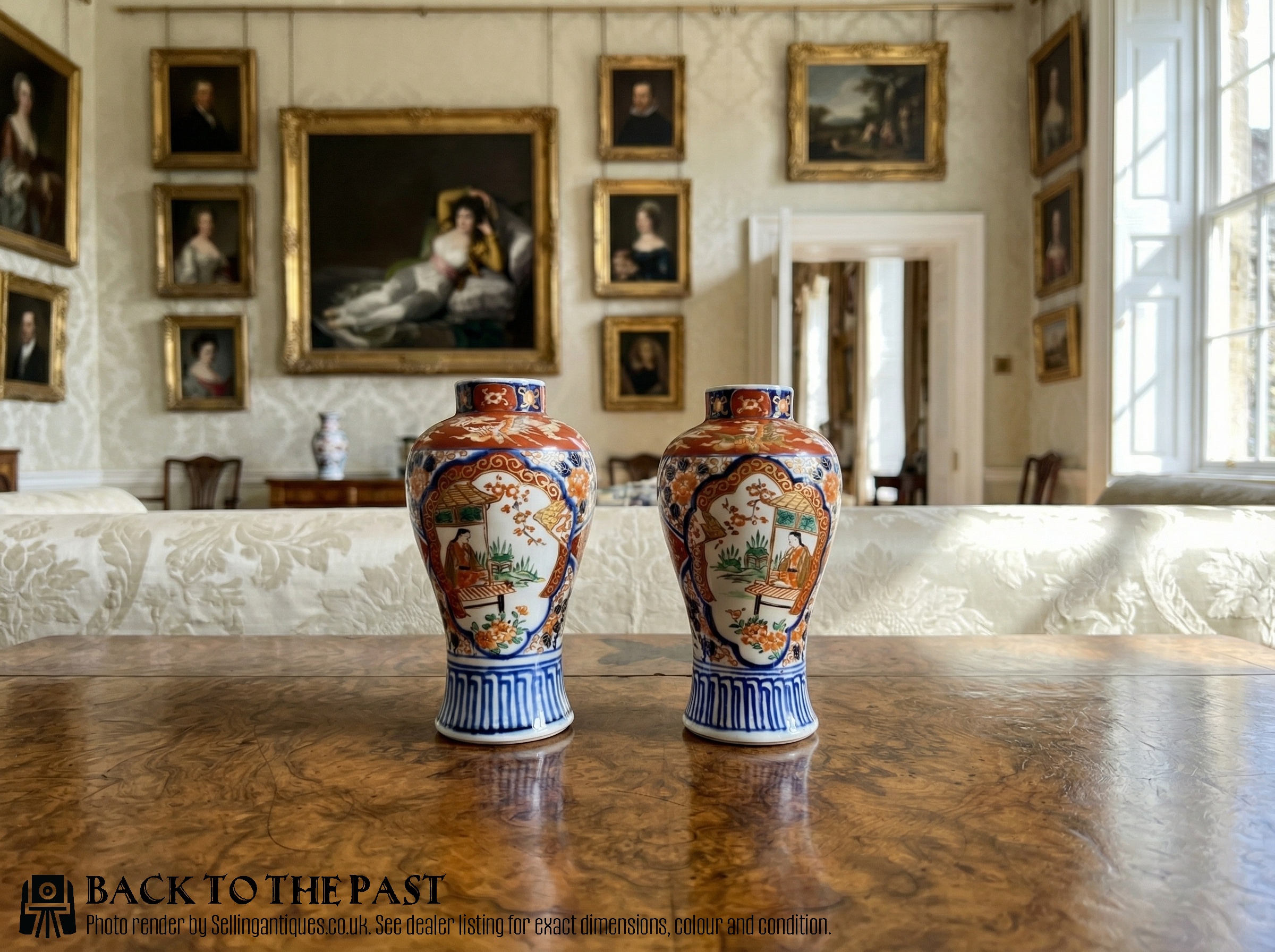
Japanese Figurative Porcelain Vase
A japanese figurative porcelain vase centres on the elaborate traditions of the Meiji period, spanning the late nineteenth century and around nineteen hundred. Buyers encounter bottle shapes, baluster forms, lidded vessels, and porcelain table lamps.
Most examples originate from prominent export centres like Imari and Satsuma, showcasing characteristic regional palettes. Miniature vases and large paired decorative objects appear frequently across the selection.
How they were made
Potters shaped fine porcelain and earthenware bodies before applying detailed enamel decoration and gold leaf accents. Many pieces incorporate rich gilding over traditional underglaze and overglaze pigments.
Specialised workshops produced intricate surface designs, including dense floral patterns and figural motifs, finished with artist signatures.
Japanese Figurative Porcelain Vase Retail Price Guide 2026
Typical asking prices for japanese figurative porcelain vase among the pieces listed under this phrase on Sellingantiques today, from the lower quarter to the upper quarter. They describe what is for sale here now, not the wider market.
One miniature vase packs a thousand distinct flowerheads onto a tiny surface.
What varies in quality
Execution of detail separates standard export items from exceptional studio pieces, particularly in the precision of enamel work and gold leaf application. Fine examples display meticulous control over the thousand flowerhead motifs and figurative scenes.
Signatures by renowned makers like Kinkozan distinguish superior works, alongside the overall crispness of the porcelain or earthenware potting.
Kinkozan
The Japanese Figurative Porcelain Vase Glossary
- Imari
- A traditional Japanese style of porcelain originating from the town of Arita, typically decorated in underglaze blue, iron red, and gold. These pieces were extensively produced for export during the Meiji period.
- Satsuma
- A type of Japanese earthenware featuring a crackle ivory glaze decorated with polychrome enamels and gilding. Major workshops and studios produced these for international markets.
- Kutani
- Japanese coloured porcelain and pottery known for bold enamel palettes and intricate designs. The style encompasses various historical periods including the nineteenth century.
- Baluster
- A vase form with a rounded body that tapers toward the base and swells out before rising to a narrow neck. This shape provides stability and visual balance for complex painted scenes.
- Meiji period
- The era of Japanese history lasting from eighteen sixty-eight to nineteen twelve, marked by extensive international trade in decorative arts. Craftspeople refined traditional porcelain and pottery techniques during these decades.
Japanese Figurative Porcelain Vase: Frequently Asked Questions
What are Japanese Imari vases?
These are traditional porcelain vessels created in Arita and decorated with distinctive blue, red, and gold pigments.
They gained immense popularity in the West during the Meiji period as decorative export items.
How do I identify Satsuma ware?
Satsuma pieces feature a characteristic creamy, crackle-glazed earthenware body painted with detailed enamels and gilding.
Many examples incorporate intricate figural scenes and floral motifs created by notable Meiji period studios.
Where were Kutani vases made?
Kutani porcelain originates from the Kaga province of Japan and is recognised for its vivid, multi-coloured enamel palettes.
These vessels often display dense decorative patterns across nineteenth-century forms.
Can I use antique vases as lamps?
Selected nineteenth-century porcelain and ceramic vessels were adapted into table lamps while preserving their original bodies.
Such pieces combine historical export craftsmanship with functional home lighting.