
Pair of Salon Armchairs
A pair of salon armchairs brings matched seating and period character to a room, offering both decorative presence and comfortable use.
Pair of Salon Armchairs
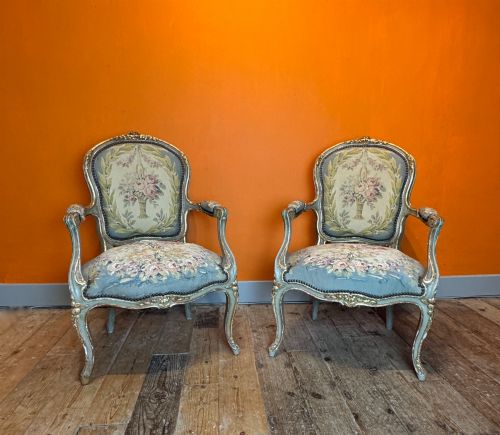
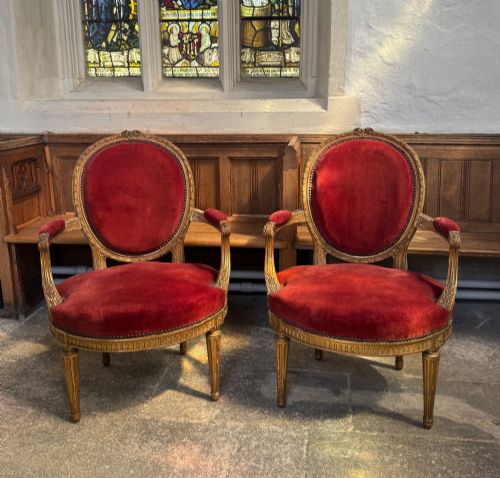
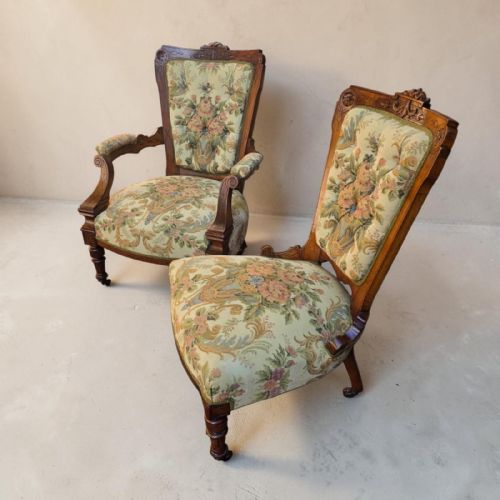
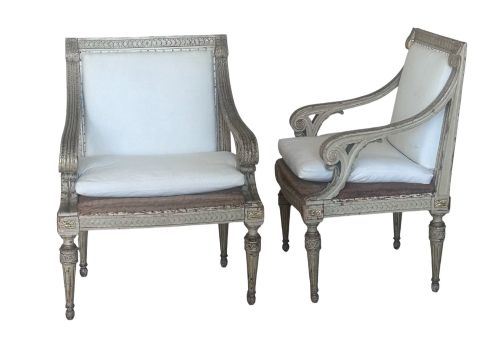
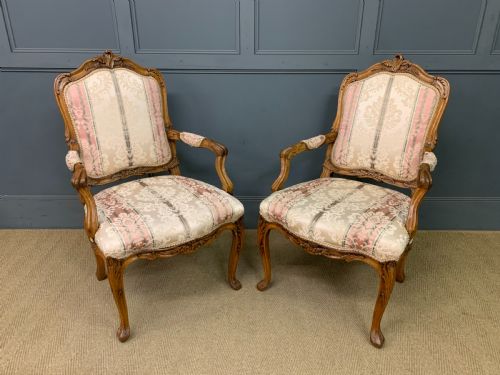
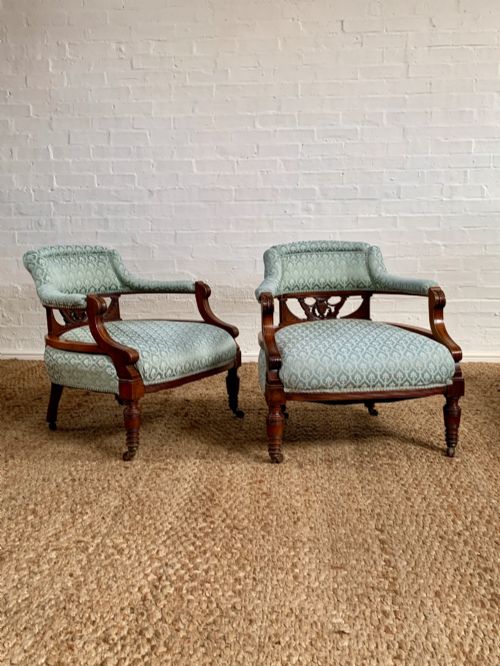
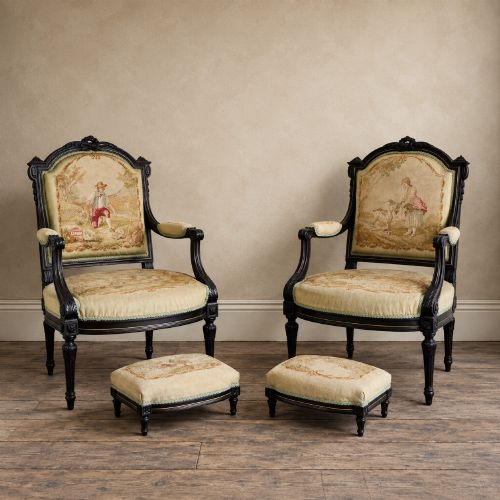
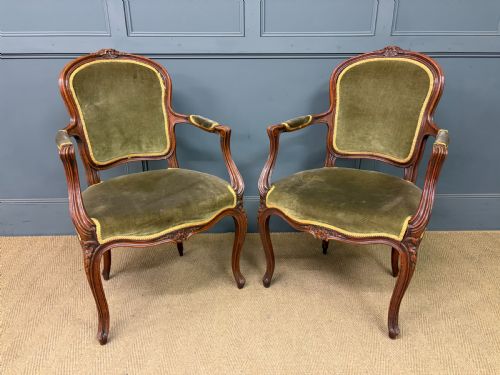
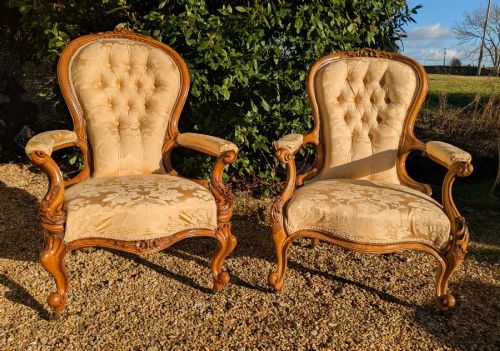
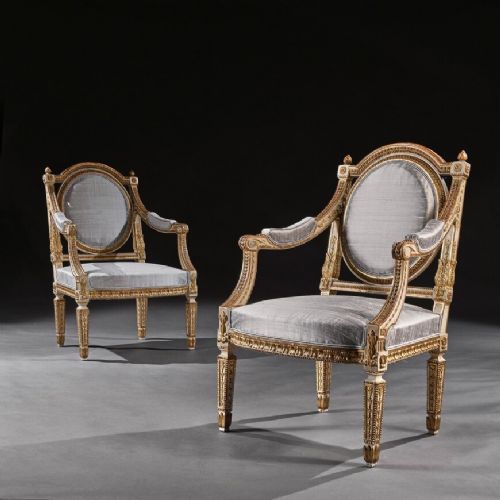
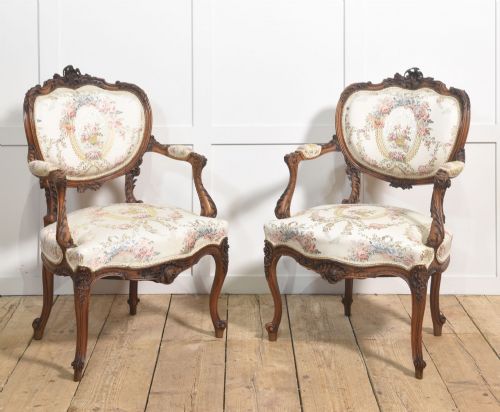
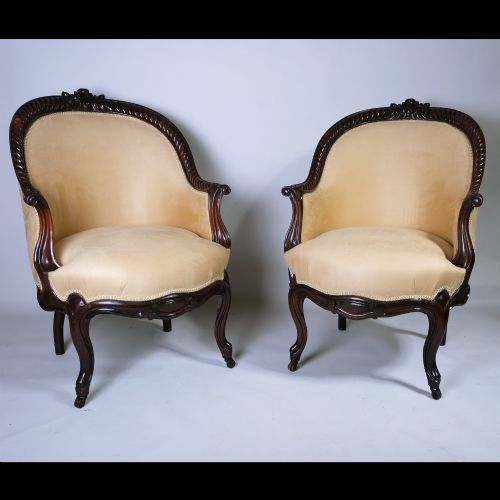
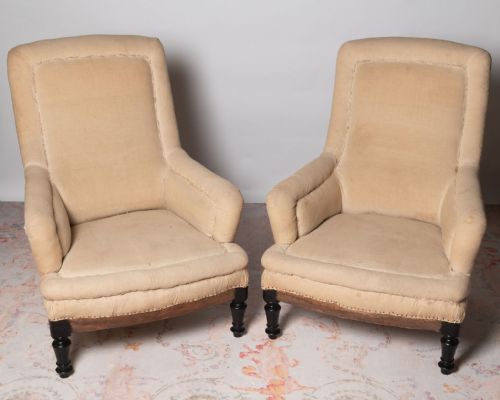
A pair of salon armchairs represents formal seating designed for drawing rooms, parlours, and reception spaces primarily during the nineteenth and early twentieth centuries. These seats span periods from the Victorian and Edwardian eras to earlier French revivals, taking forms such as fauteuils, tub chairs, and spoonback armchairs.
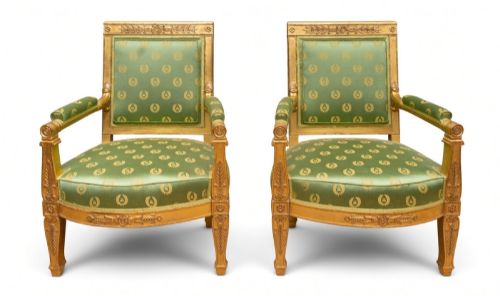
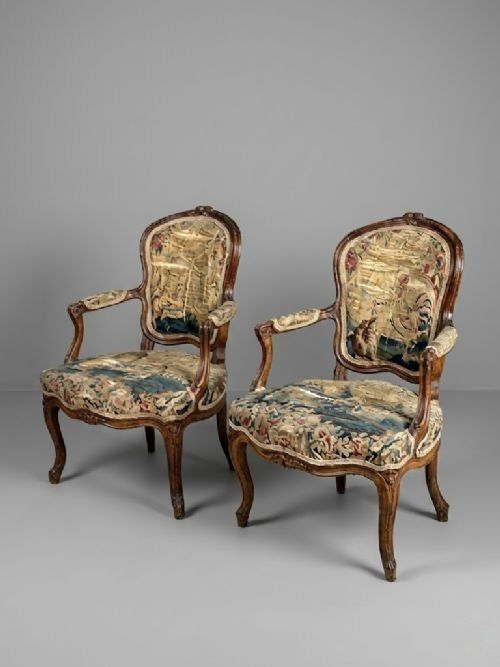
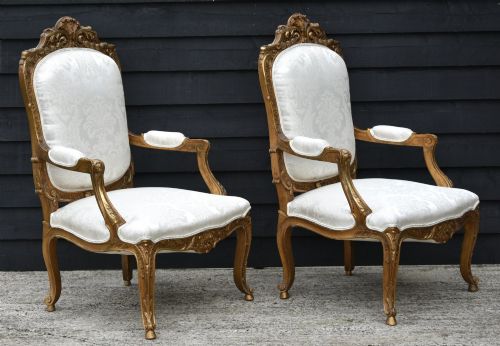
The buyer searching for a pair of salon armchairs will most frequently encounter French and English examples fashioned in walnut, mahogany, and giltwood. These pieces often reflect historical revivals including Louis XV, Louis XVI, and Neoclassical styles, with many retaining period upholstery or tapestry coverings.
How they were made
Frames are constructed from dense timbers such as walnut, mahogany, beech, and satin birch, alongside carved and gilded wood known as giltwood. Joinery relies on traditional methods to support carved cabriole legs, barley twists, and structural frames.
Listings feature walnut, mahogany, and giltwood frames spanning the Victorian, Edwardian, and nineteenth-century periods.
What varies in quality
The depth and crispness of hand-carving across the wooden frames distinguish finer examples from simpler production, particularly on moulded cabriole legs and crest rails. Superior pieces display deliberate proportion and balanced symmetry between the two chairs.
The choice of primary timber and the execution of surface finishes, such as original gilding or high-grade walnut, set high-tier seating apart. The retention of period textile coverings or high-specification traditional upholstery further elevates a pair.
Jacob Desmalter·Holland and Sons
The Pair of Salon Armchairs Glossary
- Fauteuil
- An open-framed armchair with wooden armrests, originating in France during the seventeenth century. These chairs typically feature exposed wood frames and upholstered seats and backs.
- Giltwood
- Timber treated with a thin layer of gold leaf or gilt paint over a prepared gesso surface. This finish is commonly found on formal French revival salon seating.
- Bergere
- A closed armchair with upholstered sides and a padded back, often featuring a cane lower frame. They provide a deeper and more enclosed seat than standard open armchairs.
- Spoonback
- A chair back shaped in a concave curve resembling the bowl of a spoon, designed to fit the human spine. This form is particularly prevalent in Victorian walnut seating.
- Parcel gilt
- A decorative technique where specific portions of a carved wooden surface are highlighted with gold leaf while the rest remains painted or polished.
Pair of Salon Armchairs: Frequently Asked Questions
Where were salon armchairs placed?
These seats were historically arranged in formal drawing rooms, parlours, and reception spaces for social gatherings and entertaining guests in pairs or larger seating suites.
Their decorative frames and matched designs allowed them to sit symmetrically against walls or around central tables within a grand interior scheme.
How do I identify a French revival chair?
French revival pieces typically display characteristic design markers such as cabriole legs, carved cartouche backs, and exposed walnut or giltwood frames influenced by the reigns of Louis XV and Louis XVI.
Craftsmen in the nineteenth century frequently reinterpreted these eighteenth-century aesthetics for contemporary Victorian and Edwardian drawing rooms.
Can I use these chairs daily?
Many period salon armchairs are structurally robust enough for regular daily use, provided the internal joinery and webbing remain sound and stable.
Upholstered seating from the nineteenth century may benefit from professional inspection of the internal padding to ensure comfort and support for modern sitting habits.
What is the difference between a salon chair and an easy chair?
Salon chairs generally feature lighter, more decorative wooden frames with open arms designed for formal sitting and aesthetic symmetry within a reception room. Easy chairs offer deeper, more heavily padded construction intended primarily for relaxed lounging.