

Pair of Pottery Vases
When you search for a pair of pottery vases, you open a remarkably varied field spanning Victorian domestic mantelpieces to Meiji Japan and the workshops of Europe.
Pair of Pottery Vases
A pair of pottery vases brings symmetry and balance to a room, functioning as matching focal points on mantelpieces, sideboards, or console tables. These decorative objects range from utilitarian stoneware to elaborate porcelain display pieces.
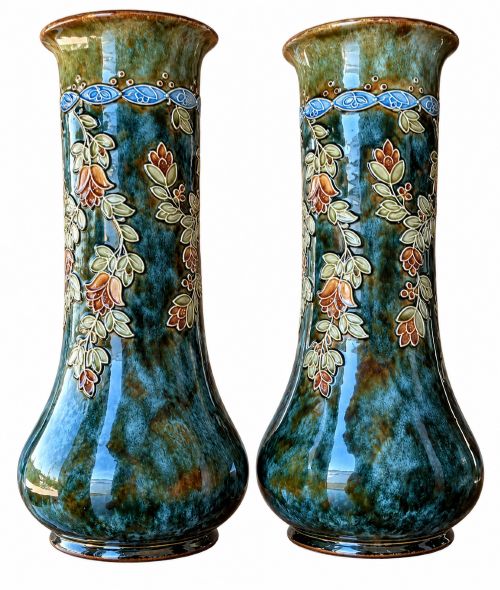
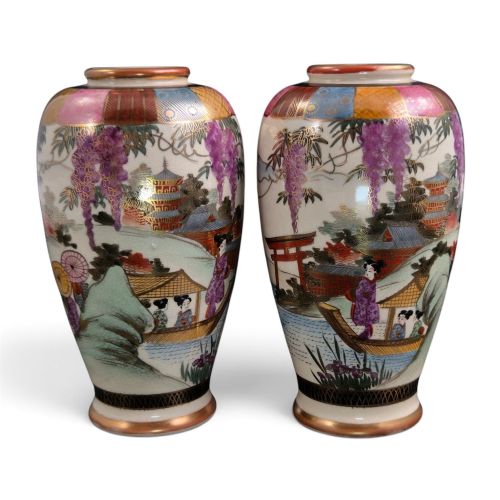
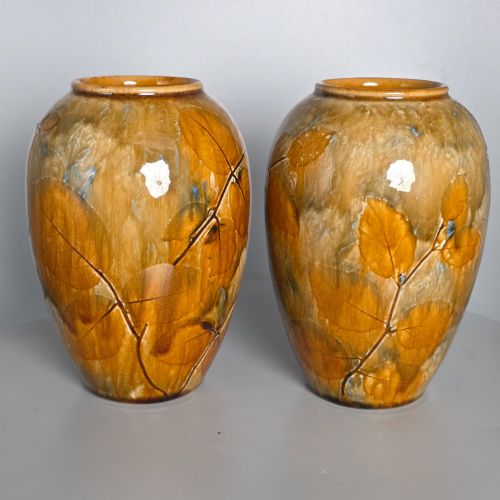
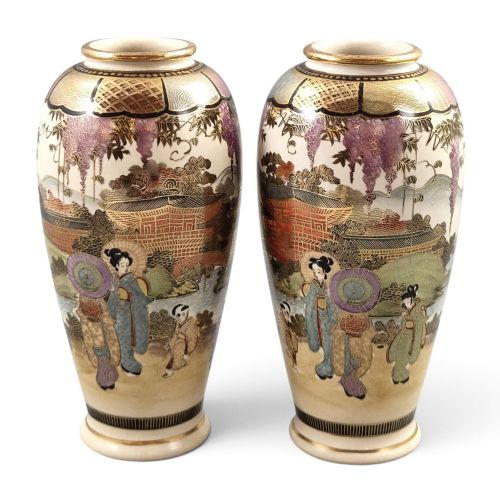
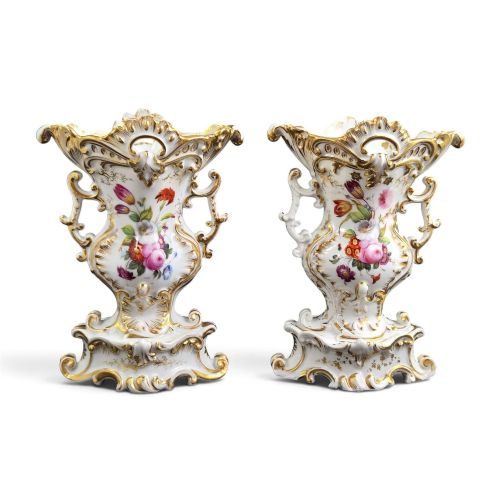
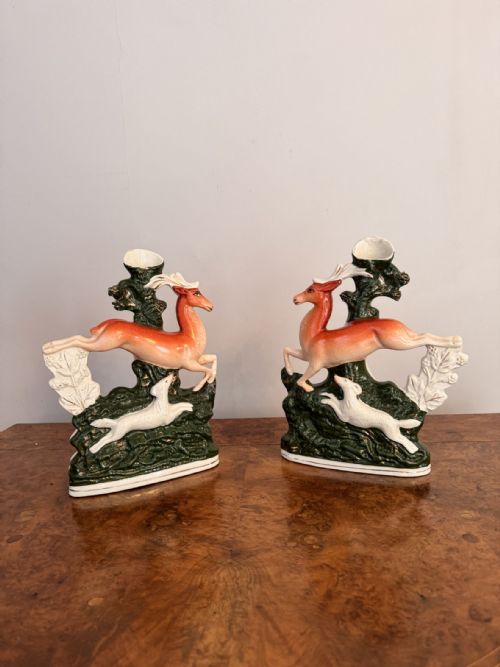
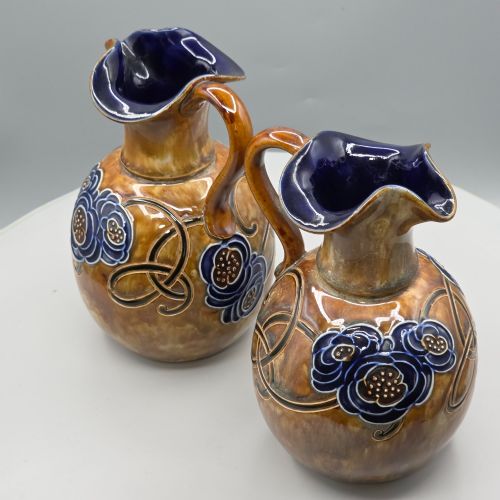
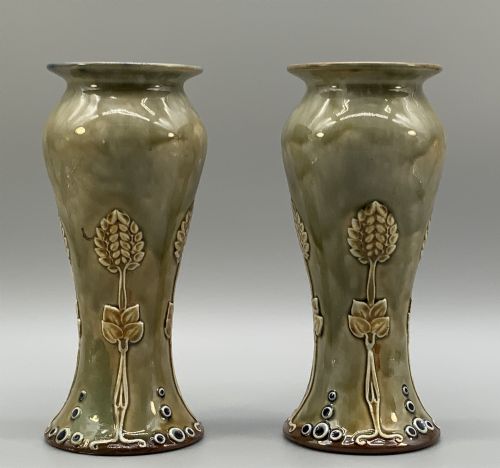
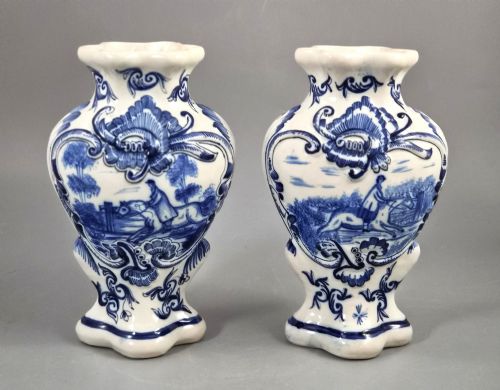
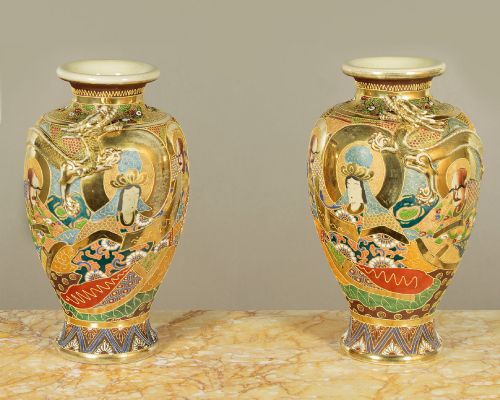
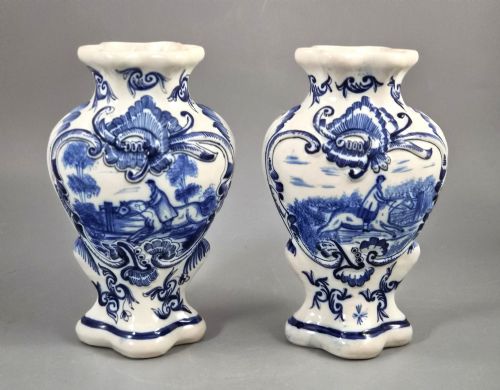
The selection on this page leans heavily toward nineteenth and early twentieth-century production. You will encounter English stoneware from Doulton Lambeth, Japanese earthenware from Satsuma, and French faience alongside Staffordshire figures.
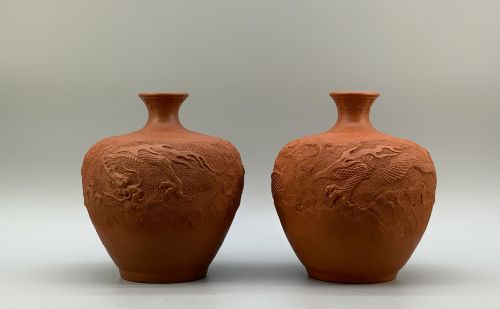
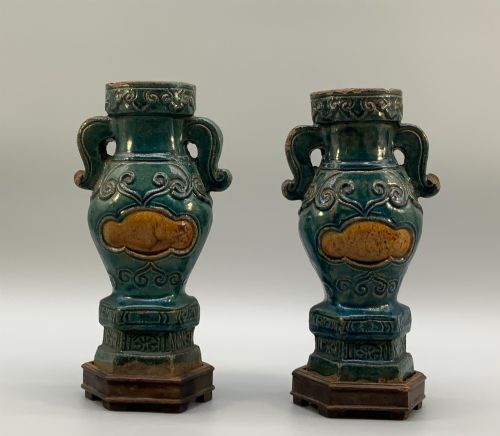
Forms vary from stout baluster vessels and moon flasks to functional spill vases designed to hold wooden matches near a hearth. Many examples reflect specific historical styles, including Art Nouveau curves and Chinese Qing aesthetics.
How They Were Made
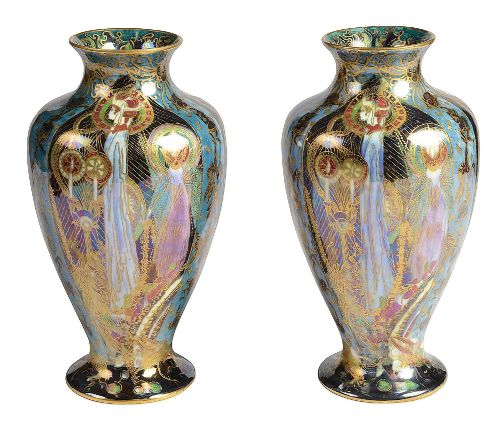
Makers utilised earthenware, stoneware, and porcelain as foundational bodies, shaping them on the potter's wheel or casting them in moulds. Artisans then applied glazes, enamels, and occasionally gold leaf or gilt accents to enrich the surfaces before firing.
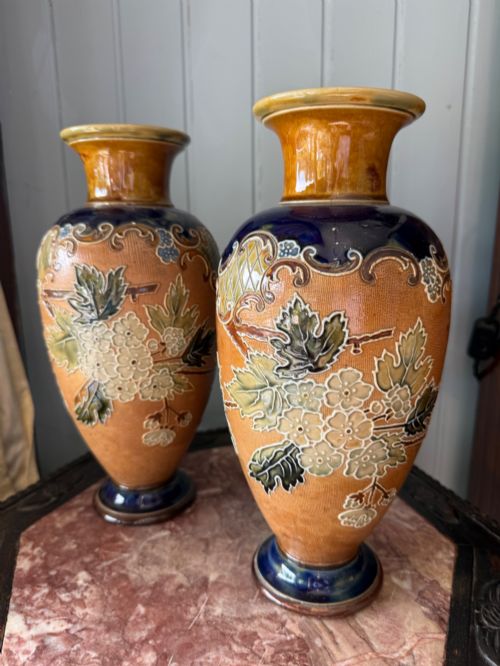
Decoration techniques combined hand-painting with transfer printing and slip trailing. Stoneware vessels often received incised foliage or textured patterns, while Satsuma pieces relied on intricate enamel work and subtle gilding over a crackle-glaze earthenware base.
Pair of Pottery Vases Retail Price Guide 2026
Typical asking prices for pair of pottery vases among the pieces listed under this phrase on Sellingantiques today, from the lower quarter to the upper quarter. They describe what is for sale here now, not the wider market.
Listings feature 19th-century and early 20th-century pieces, spanning earthenware, stoneware, and porcelain across Japanese, English, and French origins.
What Varies in Quality
Quality rests in the precision of the modelling and the control of the kiln during firing. Superior pieces display crisp, deep relief work and steady glazes free from accidental pooling or cloudiness.
Artistic execution sets the finest examples apart, particularly in hand-painted subjects like floral landscapes or figural scenes. Master decorators achieved depth and balance through disciplined brushwork and harmonious colour palettes that lesser workshops missed.
Royal Doulton·Doulton Lambeth·Jacob Petit·Fourmaintraux-Courquin·Wedgwood·Boch Freres·TG Green·Mettlach Pottery·Burmantofts Pottery·Gien·Pinon-Heuze
The Pair of Pottery Vases Glossary
- Baluster
- A vase form characterised by a rounded body that tapers toward the neck, resembling a traditional architectural baluster.
- Faience
- Tin-glazed earthenware originating in Europe, known for its opaque white surface and painted cobalt blue or polychrome decoration.
- Spill vase
- A narrow vessel designed to hold slender wooden spills used for lighting candles, pipes, and fires before the invention of safety matches.
- Stoneware
- A robust, vitrified ceramic fired at high temperatures, making it impermeable to liquids even without glaze.
- Famille Rose
- A Chinese ceramic palette dominated by opaque pink or rose enamel, introduced during the Qing dynasty.
Pair of Pottery Vases: Frequently Asked Questions
What is a spill vase?
A spill vase is a small holder traditionally placed on mantelpieces to store thin wooden spills. These spills were lit from the hearth fire to carry flame to candles or tobacco.
Over time, these practical objects became highly decorative mantle ornaments, often modelled as animals or birds in glazed earthenware.
How do I identify Satsuma ware?
Satsuma pottery is characterised by its ivory-coloured, crackled earthenware glaze decorated with detailed enamels and raised gilt work. Originating in Japan, these pieces frequently depict figures, landscapes, and floral motifs.
Many bear signature marks on the base from specific studios and artists active during the Meiji period.
What distinguishes stoneware from earthenware?
Stoneware is fired at significantly higher temperatures than earthenware, causing the clay body to vitrify and become completely non-porous. This makes stoneware much heavier, denser, and more durable.
Earthenware remains permeable unless coated in an impermeable glaze, and it typically possesses a softer, chalkier body when viewed unglazed.
Where were Doulton Lambeth vases made?
Doulton Lambeth vases were produced at the company's famous south London pottery works, which became a prominent centre for British art pottery. The factory employed talented studio artists who decorated each vessel by hand.
These pieces often feature distinctive salt-glazed stoneware bodies with incised patterns and applied ornamentation.