
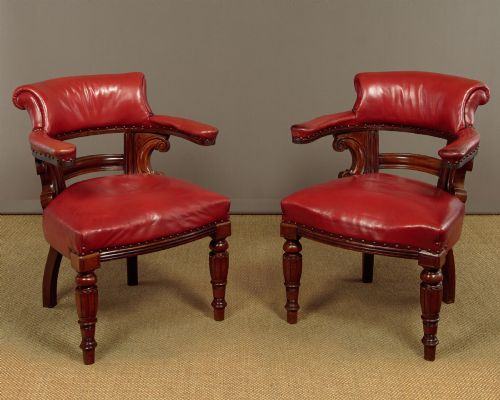
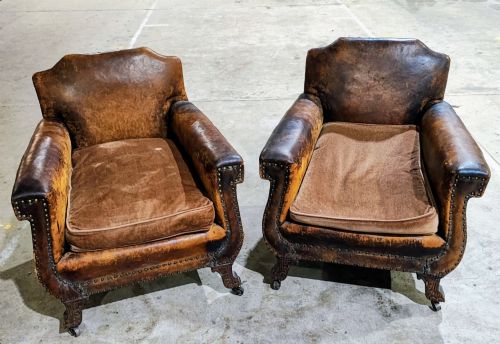
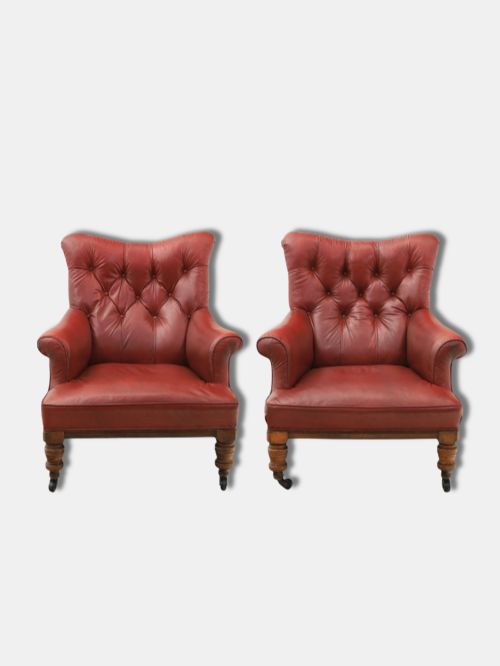
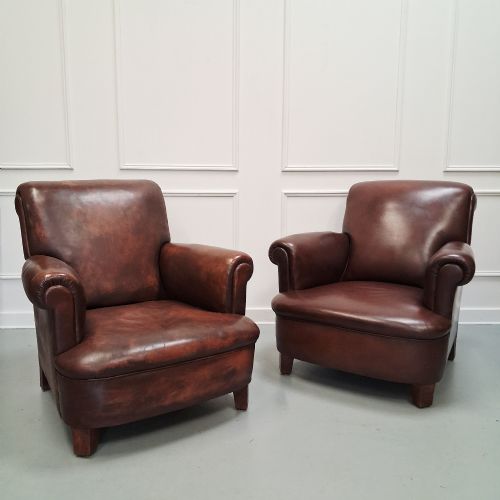
Pair of Library Armchairs
When choosing a pair of library armchairs, you select matched seating designed for reading rooms and studies across multiple historical periods.
Pair of Library Armchairs
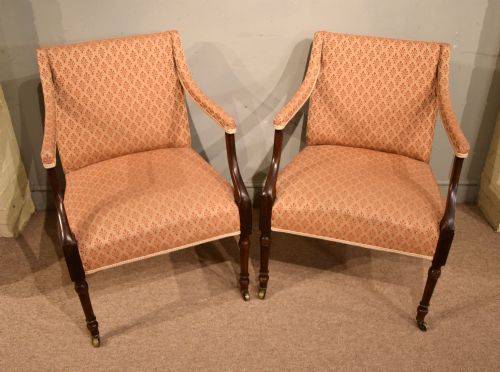
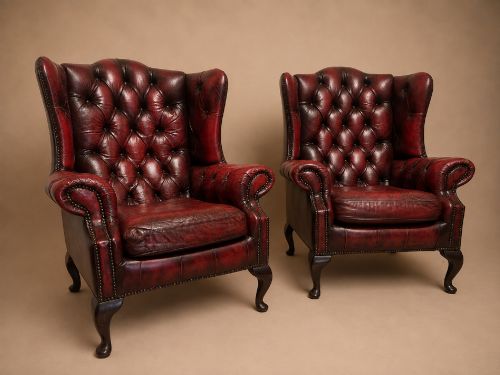
A pair of library armchairs typically brings together substantial timber frames and upholstered seating designed for extended reading or study. These seats appear most frequently in nineteenth-century and early twentieth-century interpretations, drawing upon Regency, Victorian, and Edwardian aesthetic traditions.
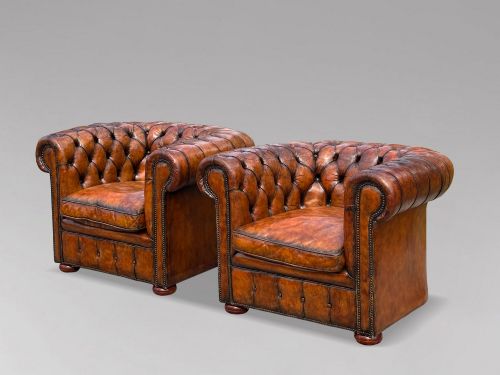
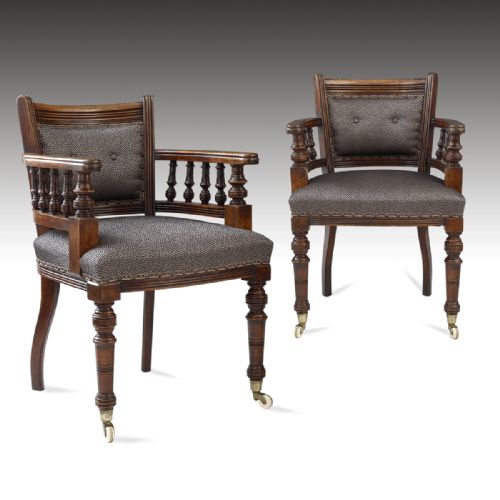
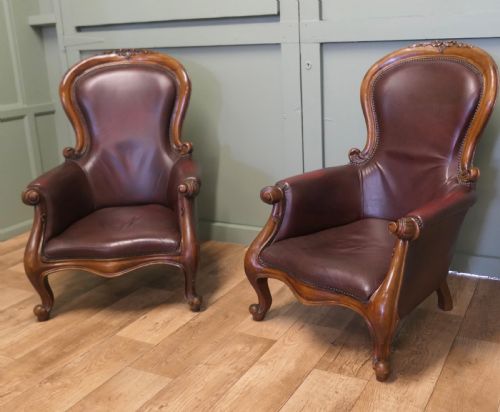
The selections range from open mahogany armchairs and buttoned leather club chairs to bergères incorporating caning or specialised reclining mechanisms. Walnut, oak, and mahogany form the primary structural timbers across both English and French workshop traditions.
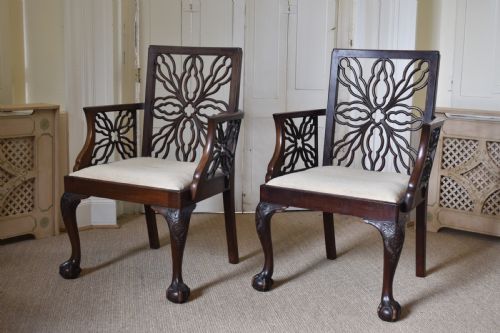
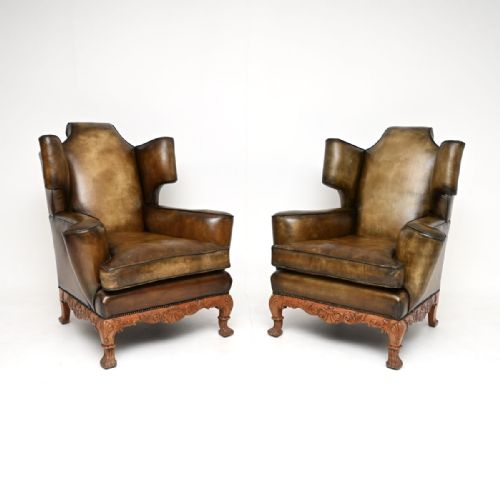
Many examples follow historical revivals such as the George II style or Gothic Revival, while others utilise simpler club formats intended for comfort. Buyers encounter both formal desk-associated armchairs and low-slung lounging variants suited to domestic libraries.
Quality and Proportion
Quality rests in the architectural integrity of the wooden frame and the crispness of any carved detailing, such as gadrooning or scrollwork on the arms. Heavier timbers and substantial gauges of mahogany or walnut indicate superior initial construction.
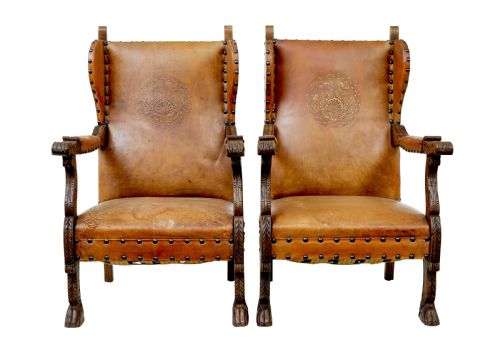
The articulation of the leather, whether plain, buttoned, or embossed, determines the visual weight of the piece, alongside the symmetry maintained between the two chairs. Original patination on both wood and hide distinguishes items retaining their authentic surface from heavily restored examples.
Several pairs crossed from institutional college libraries straight into domestic studies, bringing generations of studious scuffs with them.
Gillows·Heals·Johnstone and Jeanes·Howard and Sons
The Pair of Library Armchairs Glossary
- Bergère
- An enclosed armchair with stuffed upholstery and cane panels set into the wooden frame. This French seating form gained popularity during the eighteenth century and inspired later revival pieces.
- Gainsborough chair
- A wide, high-backed armchair with open padded arms and short legs, traditionally upholstered in leather. These chairs originated in the mid-eighteenth century for study use.
- Chesterfield chair
- A heavily upholstered seating form characterised by deep buttoning and rolled arms of equal height to the back. These pieces utilise leather or fabric across robust domestic frames.
- Wing chair
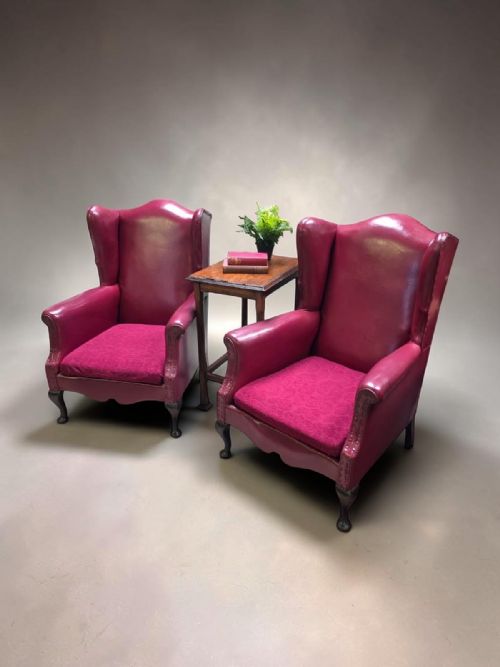
- An armchair featuring protective side panels attached to the back to deflect draughts near fireplaces. Edwardian and Victorian iterations frequently pair this form with leather upholstery.
- Fauteuil
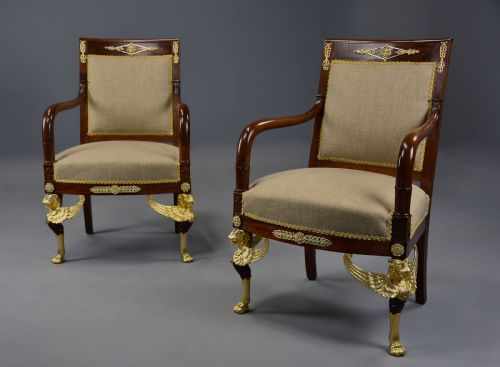
- The French term for an open-framed armchair with upholstered back and arm pads, exposing polished wood. These frames often display carving in styles such as French Empire or Directoire.
Pair of Library Armchairs: Frequently Asked Questions
What distinguishes library armchairs from standard dining chairs?
Library armchairs provide wider proportions, lower seats, and dedicated armrests designed for prolonged reading rather than upright dining.
Their construction incorporates heavier timber frames and deeper padding to support extended periods of study.
Are these chairs suitable for modern desk use?
Many nineteenth-century library and desk armchairs accommodate modern table heights, though seat depths vary considerably across the selection.
Open armchairs in mahogany or walnut generally fit standard desk clearance better than oversized club chairs.
How do I identify a Regency period pair?
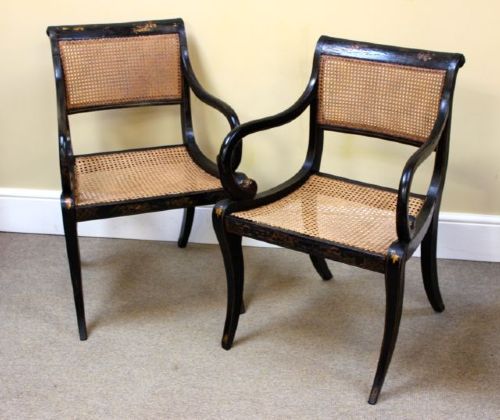
Regency pieces often display classical motifs, sabre legs, and occasional brass inlay set into dark mahogany or faux rosewood.
Proportions tend to be linear and restrained compared to the heavier carved decoration seen on later Victorian examples.
What is the difference between club chairs and wing chairs?
Club chairs feature low backs and deep, cushioned seats wrapped in leather or heavy fabric for relaxed lounging.
Wing chairs incorporate high backs with protective side cheeks designed originally to retain heat and block draughts.