


Studded Leather Side Chairs
Studded leather side chairs bring substantial timber frames and patinated hides together, offering firm seating rooted in centuries of diverse revival styles.
Studded Leather Side Chairs
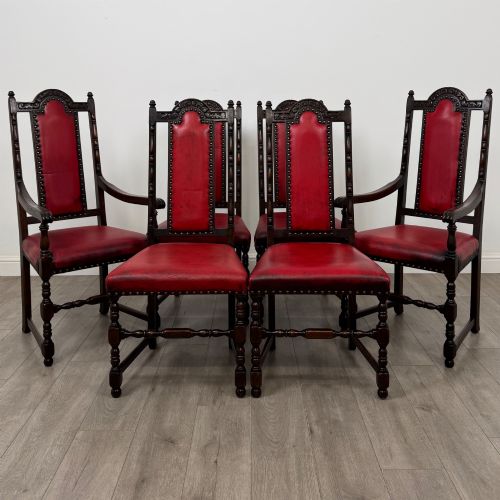
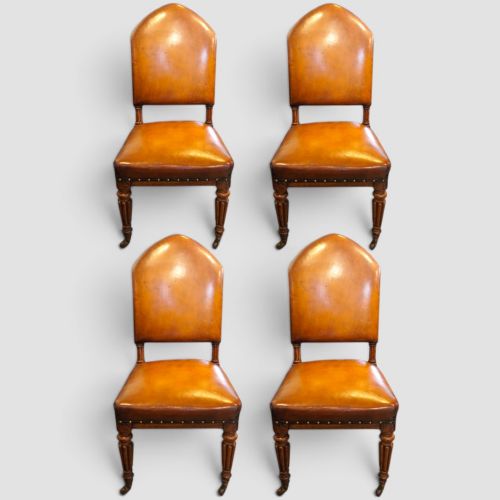
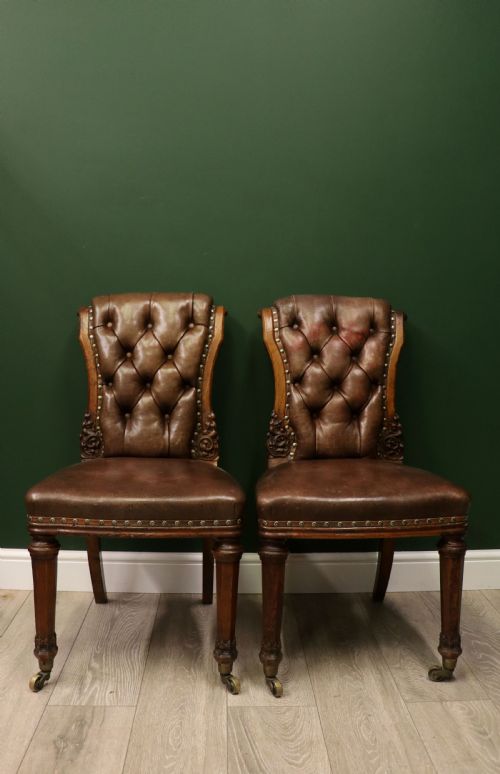
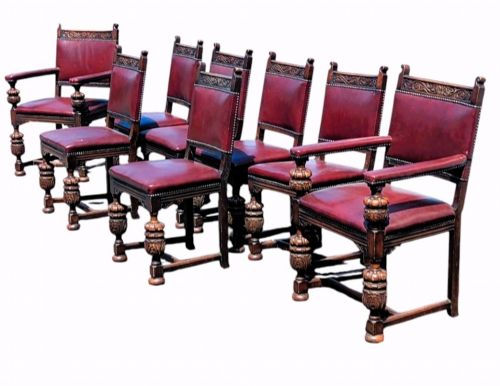
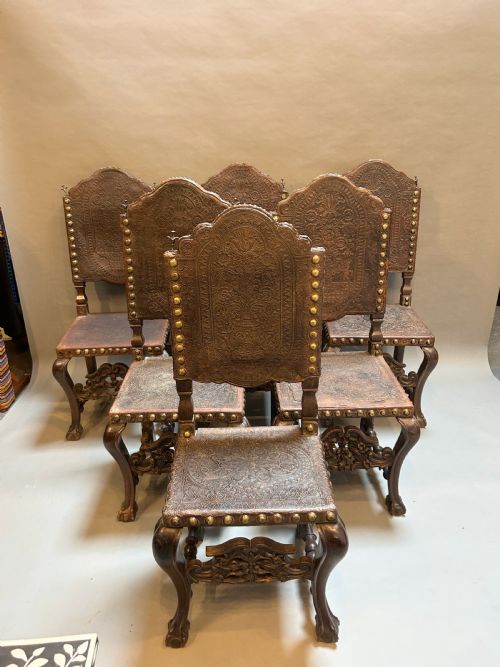
When you search for studded leather side chairs, you encounter seating designed primarily for dining rooms, halls and libraries from the eighteenth century through to the early twentieth century. The selection spans distinct historical revivals, including Jacobean, Gothic, Tudor and Spanish movements.
You meet oak most frequently on this page, often shaped into high backs and sturdy side frames, alongside walnut, mahogany and rosewood. These chairs serve functional dining roles or stand as occasional pieces in hallways and libraries.
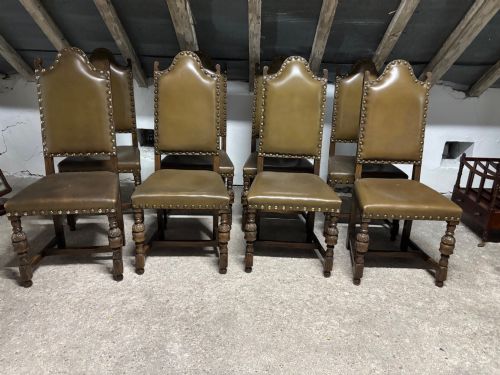
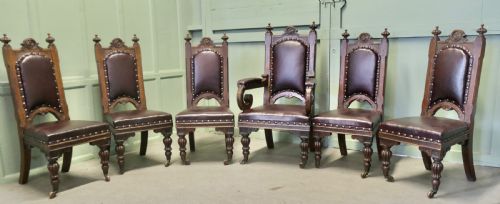
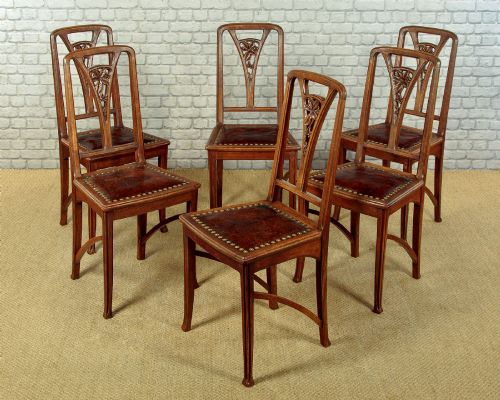
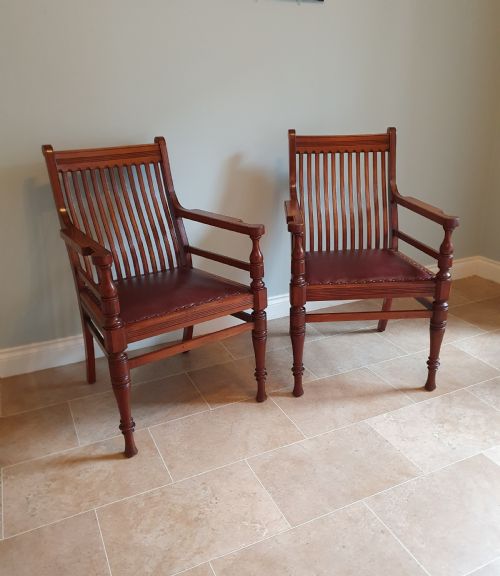
Sets appear frequently alongside pairs and single chairs, reflecting how households originally purchased seating for formal dining spaces. The overarching design unites wooden frames with upholstered leather seats and backs secured by metal studs.
Materials and Construction
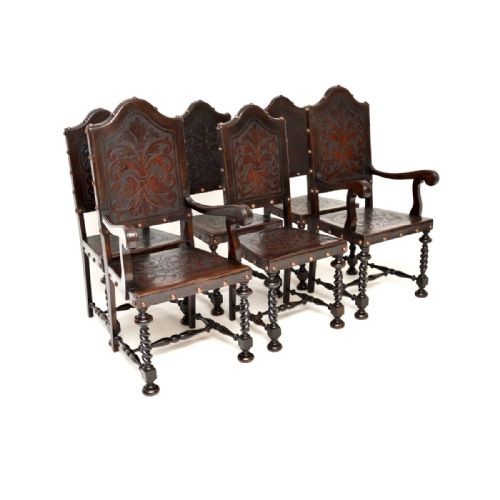
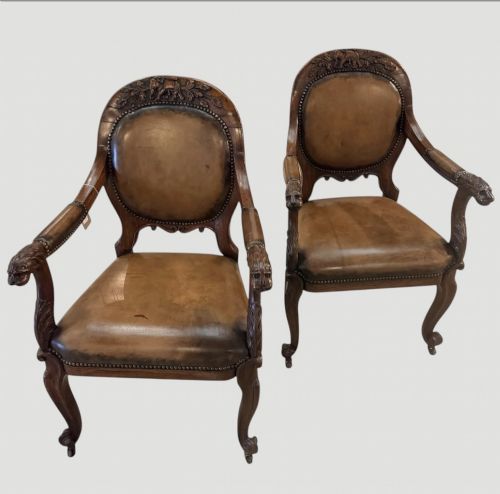
Cabinetmakers constructed the frames using solid timbers such as oak, walnut, mahogany and rosewood, employing traditional joinery like mortise and tenon. Carved detailing frequently decorates the crest rails and uprights on Gothic and revival examples.
Upholsterers stretched leather over pad or sprung stuffing, securing the hides to the wooden foundations with brass or metal studs driven individually along the borders. These metal fastenings perform a structural role in holding the leather edges tight while providing a decorative perimeter.
Listings feature woods spanning oak, mahogany, walnut, rosewood and Cuban mahogany alongside brass and metal hardware.
Standard and Craftsmanship
The degree of hand-carved detail in the timber frames sets apart standard production from exceptional examples, as seen in deeply sculpted oak motifs and reeded mahogany legs. Makers who invested time in intricate joinery and balanced proportions produced seating with superior longevity.
The quality of the leather and the regularity of the individual stud placement signal the standard of the original workshop. Finer hides retain supple textures and age with a deep patina, whereas coarser treatments lack the same depth of character.
Lamb Of Manchester·Gillows·George Henry Walton
The Studded Leather Side Chairs Glossary
- Side chair
- A chair without arms, traditionally used for dining tables or placed against room perimeters. These pieces remain compact to fit easily around furniture layouts.
- Studded
- A method of securing upholstery edges to wooden frames using individual metal nails with decorative heads. This technique creates a distinct perimeter line around the leather panels.
- Gothic Revival
- A nineteenth-century design movement drawing inspiration from medieval architecture and pointed arches. Chairs from this period frequently feature high carved backs and heavy timber proportions.
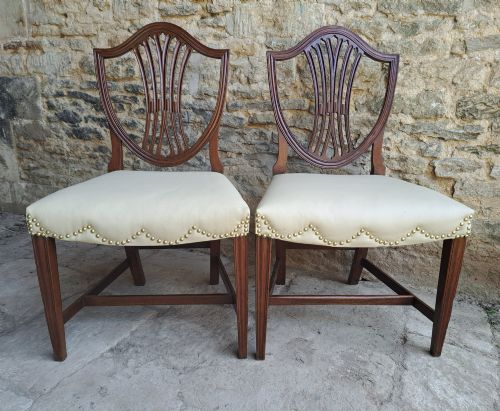
- Shield back
- A chair back shaped in the outline of a heraldic shield, popularized during the Georgian era. This form often incorporates carved splats within the timber frame.
Studded Leather Side Chairs: Frequently Asked Questions
How do I clean studded leather chairs?
Wipe the leather surfaces gently with a dry or slightly damp soft cloth to remove dust and surface particles.
Avoid harsh chemical cleaners or excessive water, which can damage the hide and corrode the metal studs over time.
Are these chairs suitable for daily dining?
Solid timber frames and sturdy leather seats make many of these historical chairs robust enough for regular daily use.
Heavier antique examples suit formal dining settings where careful treatment preserves the historic joints and finishes.
How do I date a leather side chair?
Examine the wood species, joinery methods and overall style indicators like Gothic revival motifs or Georgian shield backs.
Comparing the turned legs and carved details against documented periods helps narrow down the decade of manufacture.