



Dark Leather Dining Chairs
Dark leather dining chairs bring substance to a room, combining sturdy timber frames with hard-wearing hides that handle daily use.
Dark Leather Dining Chairs
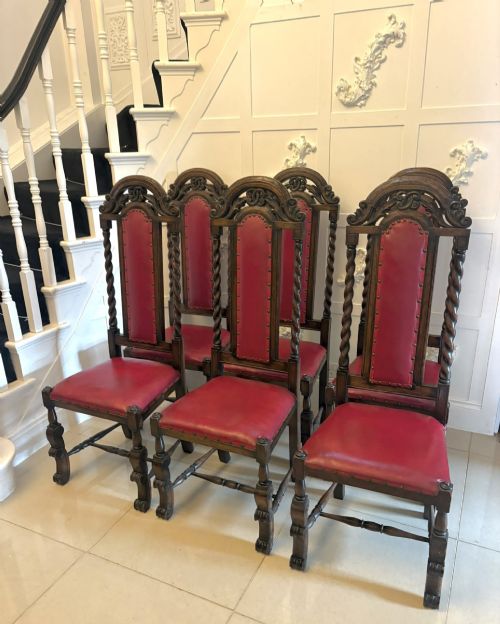
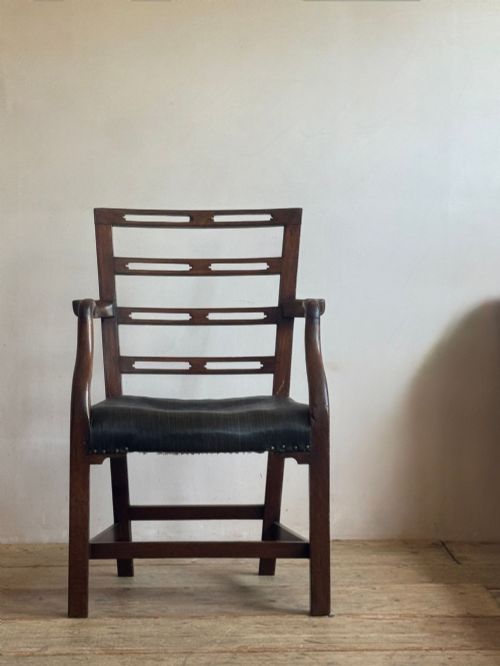
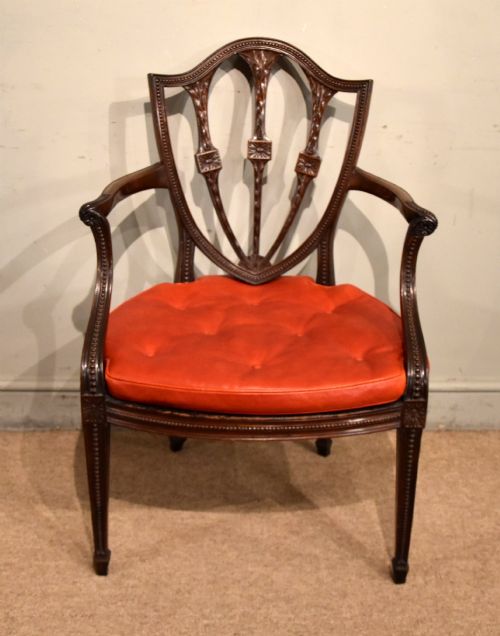
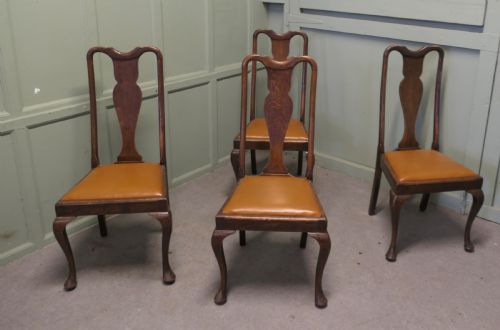
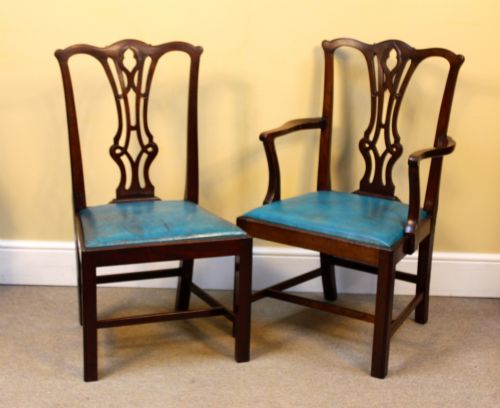
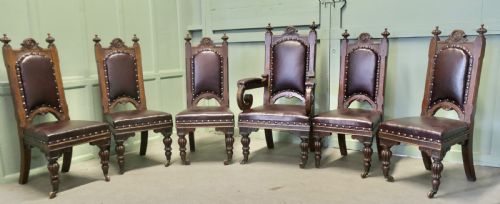
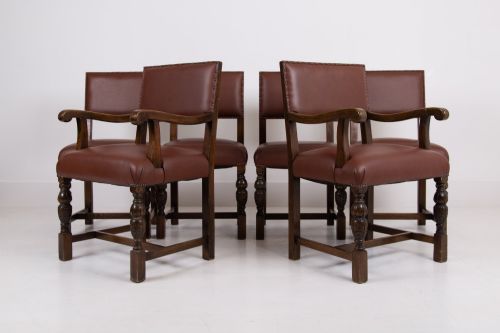
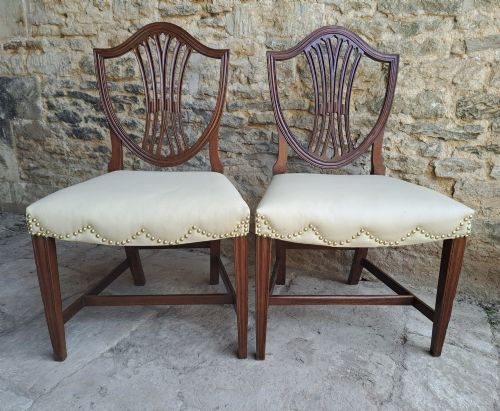
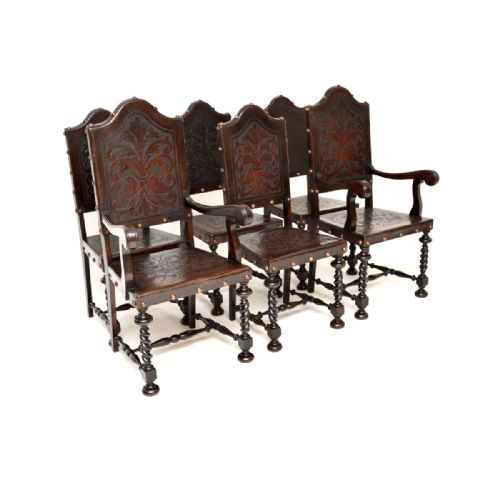
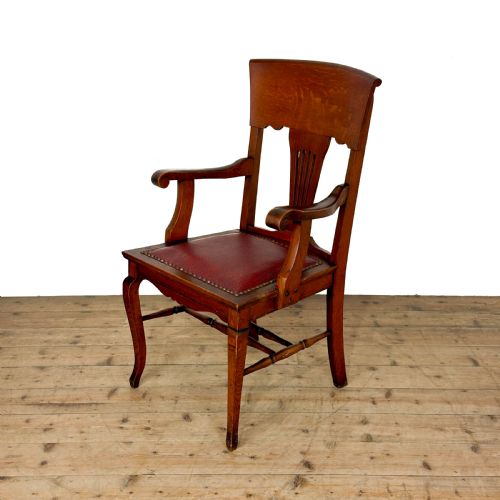
When you search for dark leather dining chairs, you encounter seating constructed predominantly in mahogany and oak, spanning periods from the eighteenth century through to the early decades of the twentieth century. These pieces encompass single side chairs, carvers, and larger matched sets suited to formal dining spaces.
The prevailing forms on this page draw upon revival movements, notably Chippendale, Jacobean, and Gothic styles, alongside simpler Edwardian and Victorian iterations. Many examples pair substantial timber frames with studded or embossed leather seats and backs.
Originating across British and European workshops, these chairs reflect the shifting domestic requirements of their respective eras, moving from heavy carved oak to lighter mahogany frames.
Assessing craftsmanship
The distinction between standard examples and superior pieces rests in the crispness of the timber carving and the selection of the wood grain. Refined sets display balanced proportions, symmetrical joinery, and thick, supple leather that retains its natural texture.
Lesser items exhibit simpler execution in the decorative details and may rely on replacement leather rather than original or period-appropriate hides. The weight of the timber and the rigidity of the frame under daily use also mark the distinction between everyday utility and exceptional workshop production.
Dark Leather Dining Chairs Retail Price Guide 2026
Typical asking prices for dark leather dining chairs among the pieces listed under this phrase on Sellingantiques today, from the lower quarter to the upper quarter. They describe what is for sale here now, not the wider market.
Ten chairs on this page spent their previous working lives stationed inside the British Museum reading room.
William Walker & Sons·LAMBS of MANCHESTER·CHARLES BEVAN·HOLLAND & SON'S
The Dark Leather Dining Chairs Glossary
- Carver
- An armchair designed with elbow supports, traditionally placed at the head of a dining table. These match the smaller side chairs in a larger suite.
- Chippendale Revival
- A decorative style inspired by eighteenth-century cabinet maker Thomas Chippendale, featuring interlaced splats and carved cabriole legs. Popularity for this aesthetic surged during the Victorian and Edwardian periods.
- Gothic Revival
- An architectural and decorative movement that incorporates pointed arches, tracery, and heavy carved motifs into furniture design. Pieces in this style often use dark oak.
- Embossed leather
- Leather decorated with a raised pattern pressed into the surface using metal dies and heat. This finish appears frequently on nineteenth-century European dining seats.
- Barback
- A chair design featuring a horizontal wooden slat across the upper backrest, resembling the top rail of a horse-drawn carriage bar. This form is common in nineteenth-century seating.
Dark Leather Dining Chairs: Frequently Asked Questions
How do I clean antique leather?
Wipe surfaces gently with a dry or barely damp cloth to remove dust. Avoid harsh chemical cleaners that strip natural moisture.
Apply a specialist leather balsam periodically to maintain suppleness and prevent cracking over time.
Can I mix these chairs with modern tables?
Dark wood frames contrast effectively against contemporary glass, stone, or light timber table surfaces. The neutral tones of dark leather bridge traditional and modern interior schemes.
Ensure seat heights align correctly with modern table clearances before combining different periods.
How do I date an oak dining chair?
Examine the timber grain, tool marks, and construction methods used in the underframe. Hand-cut joints and pegged tenons typically indicate older eighteenth or nineteenth-century manufacture.
Revival pieces often mimic earlier styles like Jacobean or Gothic but reveal machine-cut timber dimensions and later hardware.
Are these chairs suitable for daily use?
Solid hardwood frames and thick leather upholstery make these seats robust for regular dining. Inspect the stability of the joints and the tension of the seat webbing to confirm structural integrity.
Maintenance involves checking the brass studs and treating the leather hide to withstand constant sitting.