

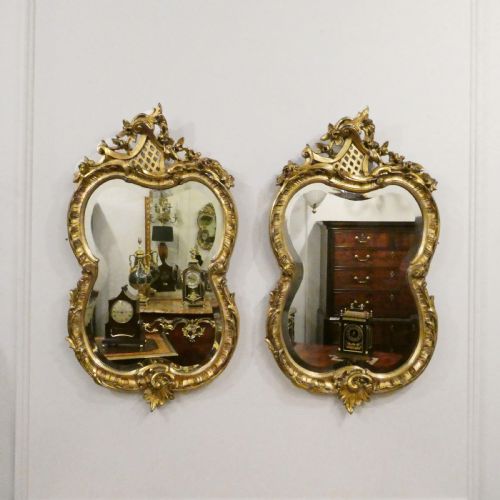
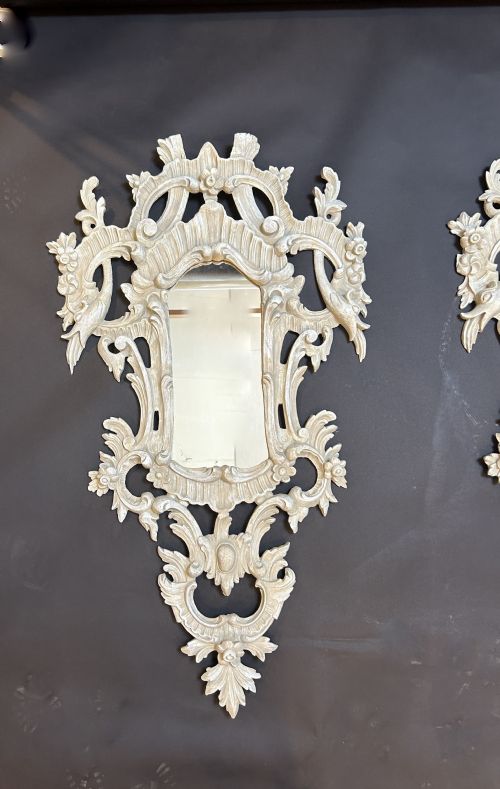


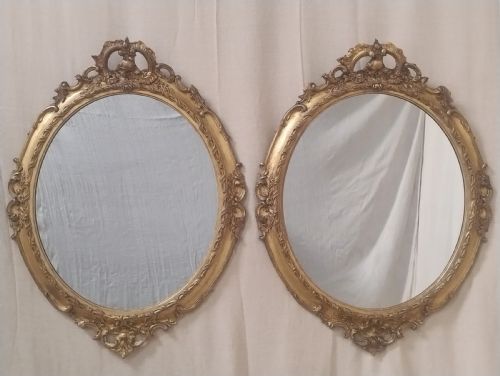
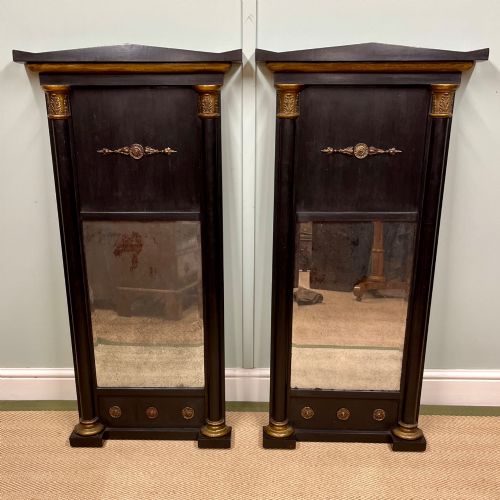
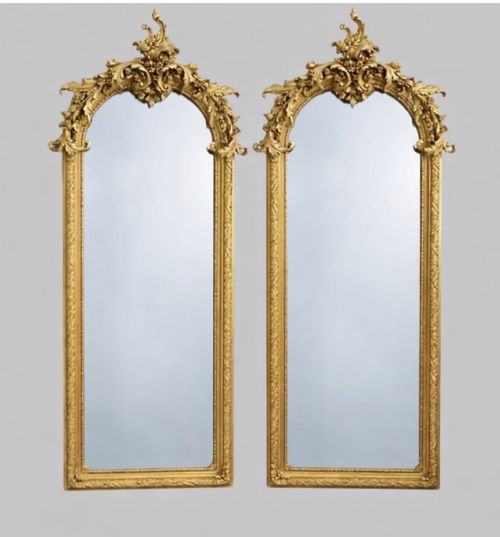
Pair of French Mirrors
A pair of french mirrors brings symmetry and reflected light to a room, drawing on centuries of European decorative arts.
Pair of French Mirrors
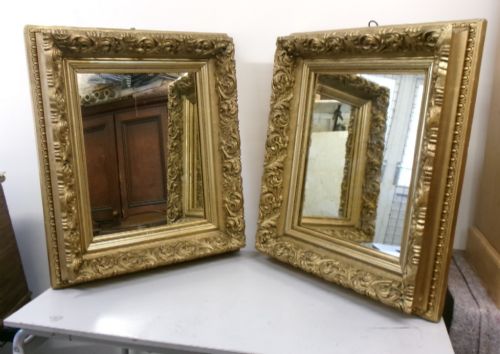
A pair of french mirrors typically comprises matched decorative wall hanging items intended to balance a room or flank a architectural feature.
The selections on this page span from the eighteenth century through the nineteenth and twentieth centuries, encompassing styles such as Rococo, Neoclassical, and Empire.
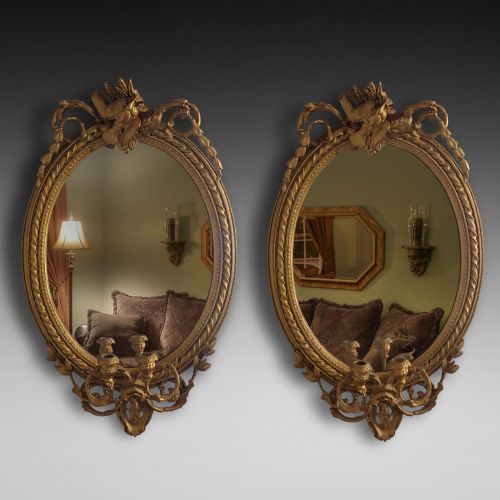
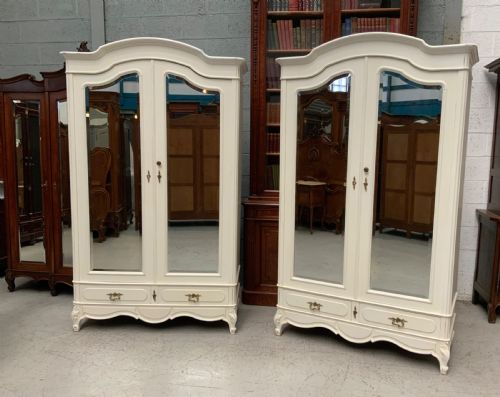
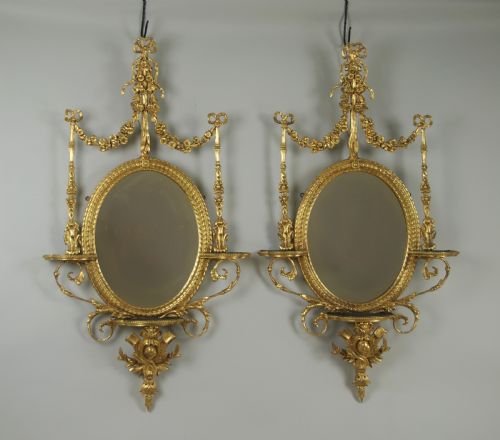
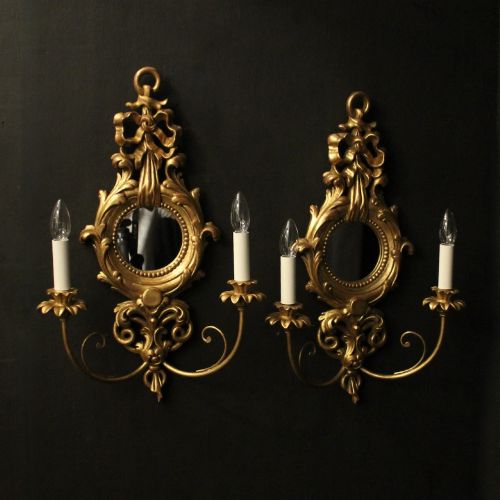
Most examples function as wall mirrors, pier glasses, or girandoles equipped with candle sconces, while occasional variations include armoires with mirrored doors and table top items.
Materials and construction methods
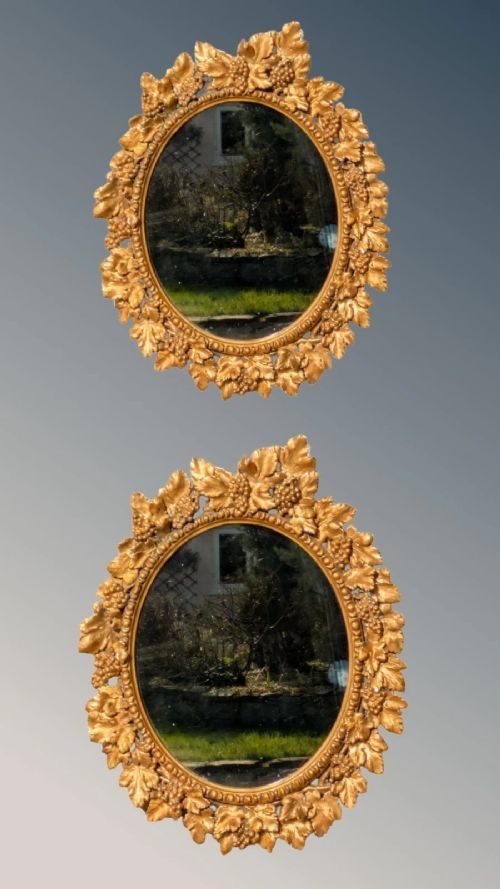
Carved wood and gesso form the foundational structure for many frames, allowing intricate floral, vine leaf, or scroll motifs.
Gilding techniques utilise gold leaf or water gilding applied over preparation layers, alongside simpler painted or parcel gilt finishes.
Reflective surfaces range from early mercury glass to standard silvered plate glass set within brass, bronze, or giltwood borders.
The listings show nineteenth century pieces dominate the selection, alongside eighteenth and early twentieth century examples in giltwood and painted finishes.
Evaluating craftsmanship and condition
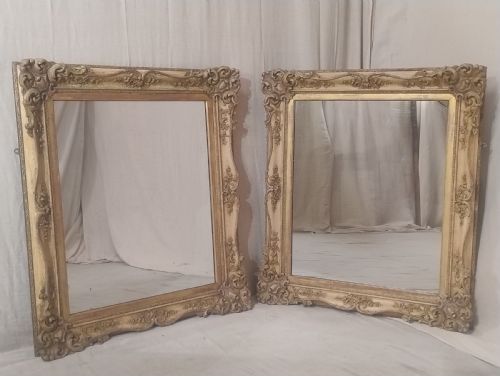
Depth and sharpness of hand carving separate ordinary mouldings from superior decorative frames, particularly in rococo scrollwork and floral details.
Originality of the surface finish dictates historical integrity, distinguishing untouched period gilding or paint from later interventions.
Matching consistency between the two items determines the success of the pair, as minor variations in ageing or dimensions occur over time.
The Pair of French Mirrors Glossary
- Girandole
- A wall mirror featuring integrated candle sconces or arms attached to the frame. These fixtures doubled the illumination of candlelight in period rooms.
- Pier Glass
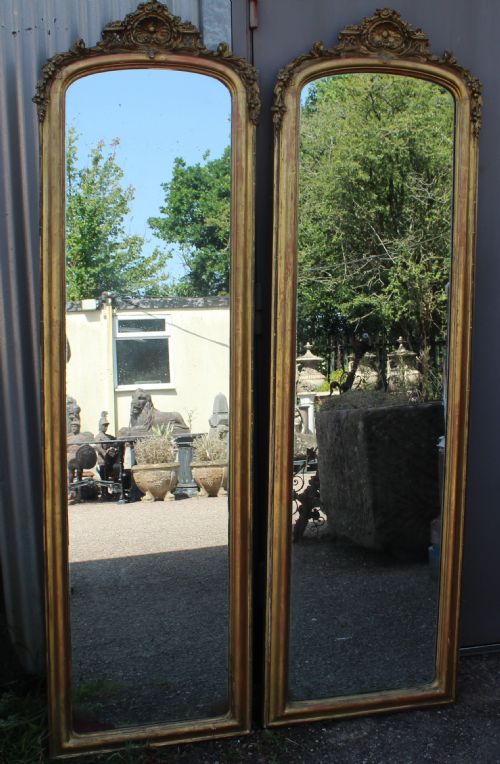
- A tall mirror designed specifically to hang on the wall space between windows. They frequently sat above matching console tables.
- Gesso
- A plaster mix applied to wood frames to create a smooth surface for gilding or painting. Deep relief details were often modelled directly in this material.
- Ormolu
- Gilded bronze mounted onto furniture or frames. This technique was widely employed in high status decorative items.
- Water Gilding
- A traditional method applying thin gold leaf to a prepared clay base using water as the adhesive. It allows the gold to be burnished to a high gloss.
Pair of French Mirrors: Frequently Asked Questions
How do I hang heavy giltwood mirrors safely?
Heavy frames require secure wall fixings suited to the structure of your wall, such as masonry plugs or direct attachment to timber studs. Using a two point hanging system distributes the weight evenly and keeps the pieces stable.
Positioning the items at eye level or aligned with existing architectural lines ensures they hang straight and bear the load securely without relying on decorative brackets alone.
What is the difference between pier mirrors and girandoles?
Pier mirrors are tall, narrow glasses traditionally made to hang on the narrow wall space between two windows. They amplify natural light in reception rooms.
Girandoles incorporate candle arms projecting from the lower frame, combining reflective glass with functional lighting sources.
Can I place these mirrors in a bathroom?
High humidity rooms can damage historic gesso, wood, and original gilding over time. Moisture causes the underlying layers to swell and the silver backing of older glass to degrade.
Displaying them in dry living spaces, hallways, or bedrooms preserves the materials and protects the finish from moisture related deterioration.
How do I clean antique mirror glass?
Dust the frame gently with a soft dry brush to avoid disturbing fragile gilding or paintwork. Use a slightly damp cloth on the glass itself, avoiding harsh chemical cleaners that might seep behind the edges.
Keeping moisture away from the wooden joints and the back of the glass prevents water damage and preserves the original silvering.