
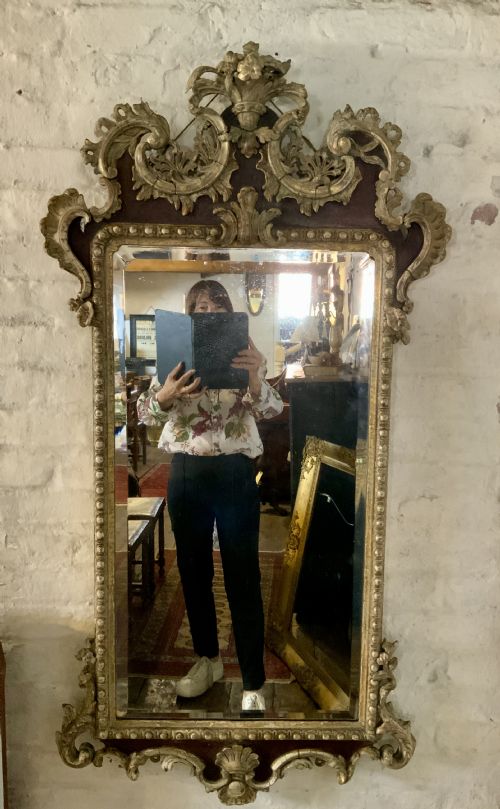
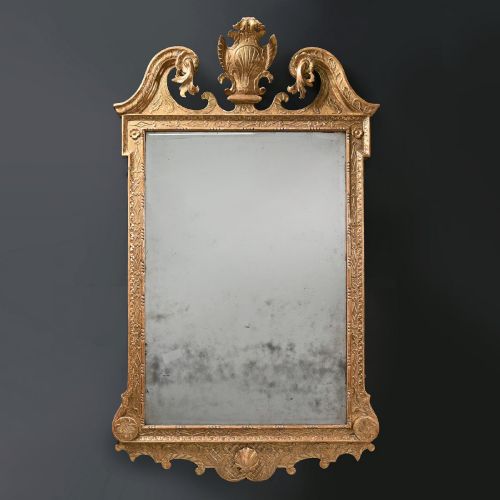

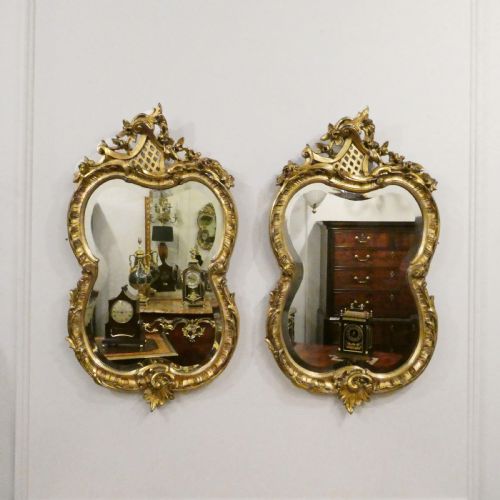

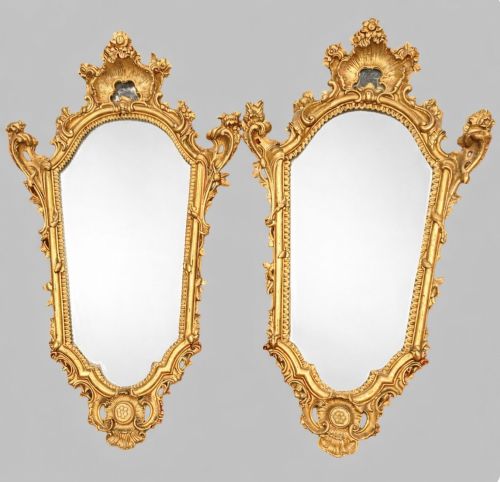


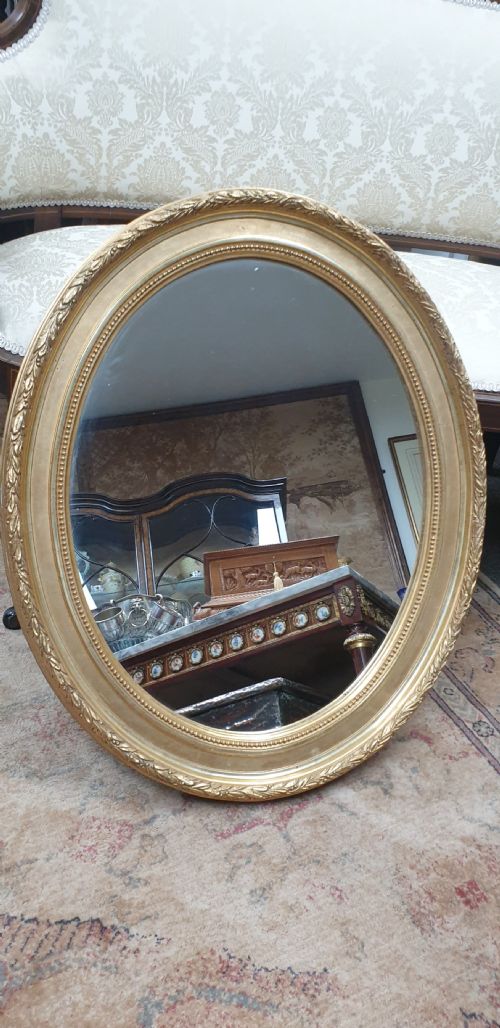
Decorative Gilded Looking Glass
A decorative gilded looking glass brings instant depth and reflective light to a room, using period craftsmanship to anchor a space.
Decorative Gilded Looking Glass
A decorative gilded looking glass is a wall mirror designed to catch the light and serve as a focal point within a room. These pieces appear across several distinct historical periods, ranging from the eighteenth century up through the Victorian era and into the early twentieth century. Most examples found on this page take the form of wall mirrors intended for hanging in reception rooms, hallways, or above mantelpieces.
Buyers will encounter various stylistic interpretations, including Georgian Rococo, Victorian Rococo Revival, French Louis XV and Louis XVI manners, and Italian Rococo designs. Forms vary from large oval wall mirrors to rectangular plates framed by intricate carvings. The materials reflect their heritage, combining traditional methods of framing and gilding with glass plates.
Materials and construction
The construction of a decorative gilded looking glass relies on solid timber foundations such as walnut and general wood, upon which artisans applied layers of gesso to build up intricate surface details. Carvers then applied gold leaf or gilt finish over the prepared surfaces to achieve the characteristic luminous sheen. Some pieces incorporate cast brass elements or feature engraved plates.
Makers utilised traditional joinery and carving techniques appropriate to their period, whether creating the bold proportions of an eighteenth-century George II piece or the lighter ribbon and bow motifs of later styles. The interaction between the wooden core, the gesso layer, and the gold leaf determines how well the surface holds its character over centuries.
Some oval frames feature carved ribbon and bow motifs that make even the most stern Victorian wall look rather cheerful.
Assessing quality and craftsmanship
Quality in a decorative gilded looking glass rests primarily on the depth and crispness of the carving within the gesso and giltwood frame. Finer examples display hand-carved details that retain sharp definition, whereas lesser pieces may show softer, less distinct ornamentation. The integrity of the original gilt surface also dictates the distinction between standard and superior pieces.
The nature of the mirror plate itself contributes significantly to the overall merit of the object. Plates that show period characteristics, such as early engraving or natural ageing, hold a different presence compared to later replacements. Proportion and balance in the frame design further separate ordinary mirrors from exceptional ones.
The Decorative Gilded Looking Glass Glossary
- Giltwood
- Wood that has been coated with gold leaf or a gold-coloured finish. This material forms the primary structure for many decorative frames across various periods.
- Gesso
- A plaster-like mixture applied to wood frames as a base for carving and gilding. It allows artisans to create high-relief ornamentation before applying gold leaf.
- Rococo Revival
- A nineteenth-century design style that revives the asymmetric scrolls, shell motifs, and naturalistic curves of the eighteenth-century Rococo movement.
- Overmantle
- A large mirror specifically designed to be hung on the wall directly above a fireplace mantel. These pieces often dictate the scale of a room's decorative scheme.
- Parcel gilt
- A finishing technique where only specific portions of an object are highlighted with gold leaf while other areas reveal the underlying wood, such as walnut.
Decorative Gilded Looking Glass: Frequently Asked Questions
How do I hang a heavy antique mirror?
Hanging a heavy wall mirror requires locating the structural studs within the wall or using appropriate heavy-duty fixings rated for the weight of timber and glass. Professional framing hooks and steel wire suited to the specific frame size ensure the piece remains secure.
Position the mirror at a height that allows it to reflect light effectively while balancing the surrounding furniture and architectural proportions of the room.
Can I clean the glass safely?
Cleaning the glass plate requires a soft cloth and a mild glass cleaner applied sparingly to the cloth rather than directly onto the mirror. This prevents moisture from seeping behind the plate or damaging the surrounding gilt surface.
Avoid letting any liquid come into contact with the giltwood frame, as moisture can lift the gesso and gold leaf over time.
How do I identify the period of a mirror?
Identifying the period involves examining the style of the carving, the assembly techniques at the back of the frame, and the characteristics of the glass plate. Georgian and Regency pieces often show distinct structural methods and carving depths compared to Victorian or early twentieth-century interpretations.
Matching the stylistic markers, such as Louis XV scrolls or George II proportions, helps narrow down the likely decade of manufacture.
Where should I place a looking glass?
A looking glass works best when hung opposite or adjacent to a window to maximise the natural light it reflects back into the space. Hallways and overmantles serve as traditional placements that enhance both light and spatial depth.
Consider the surrounding sightlines to ensure the mirror captures an attractive reflection rather than a blank wall.