


Pair of Consoles
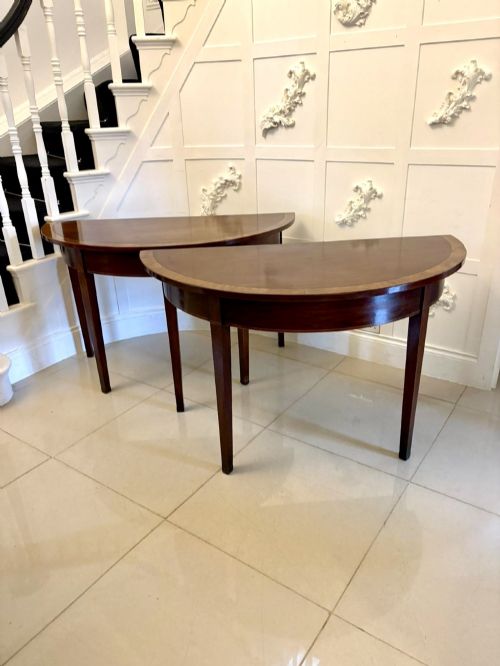
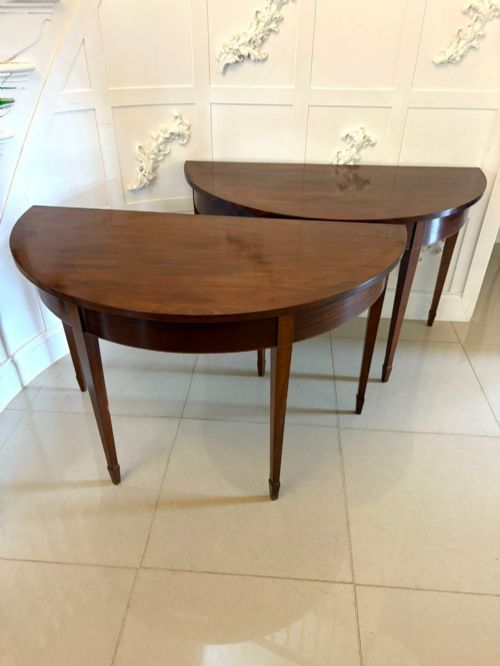
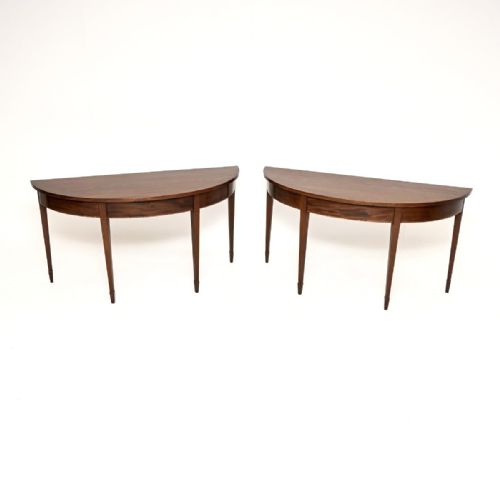
A pair of consoles brings architectural balance and symmetry to a hallway or drawing room.
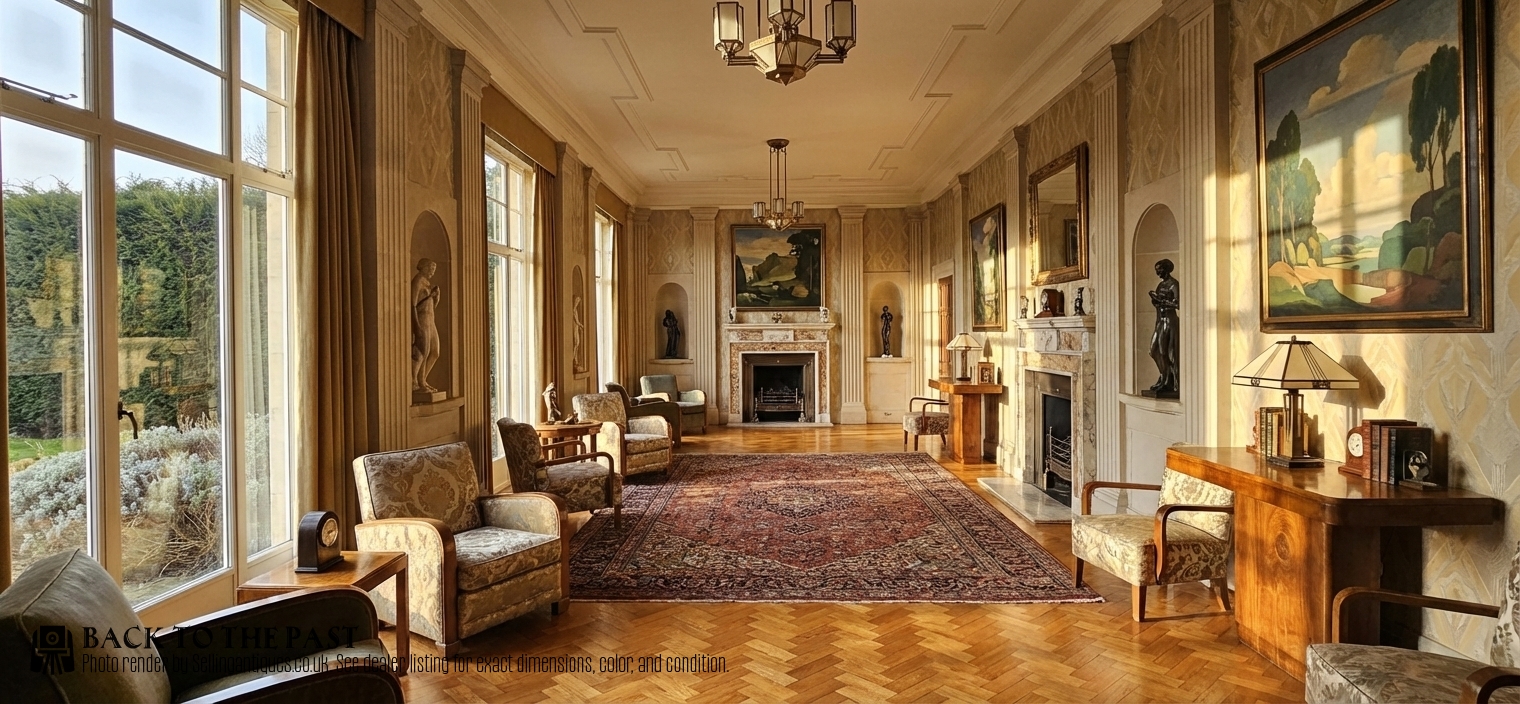
Pair of Consoles
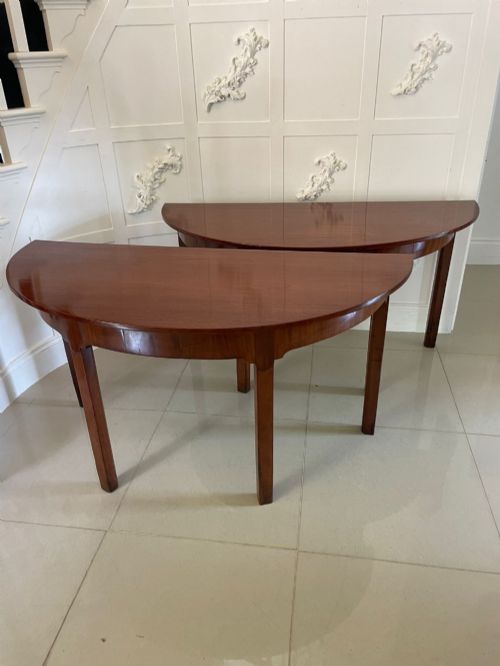
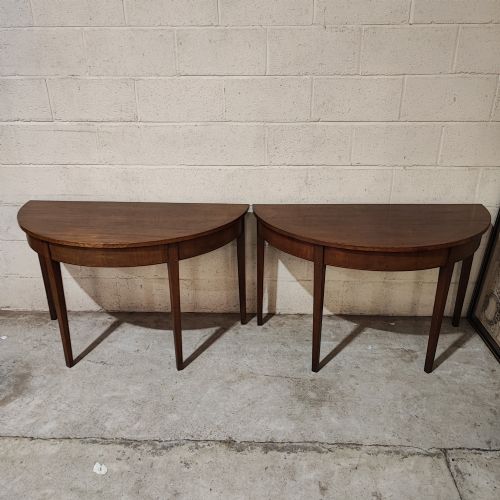
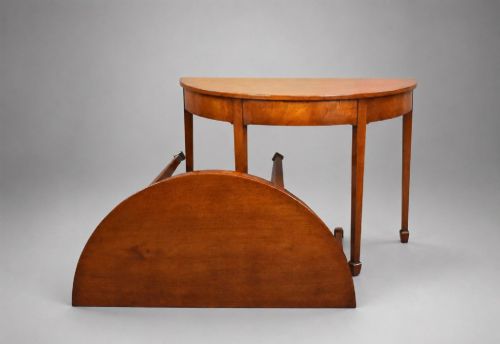
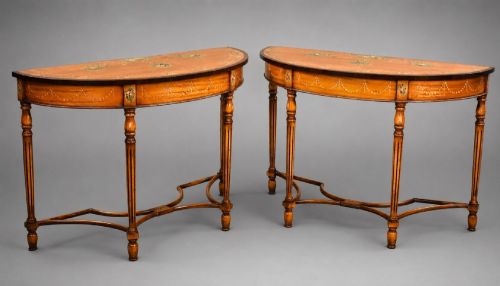
A pair of consoles comprises matching tables designed to stand against a wall, frequently taking a demi-lune or semi-circular shape to fit neatly into domestic spaces. These pieces emerge in Georgian, Regency, and later nineteenth-century periods, often functioning as serving tables, card tables, or decorative side supports.
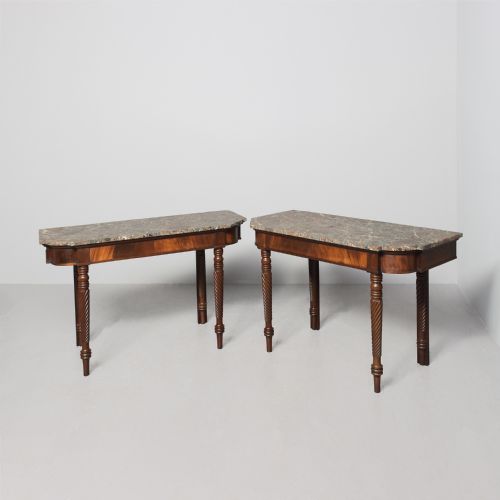
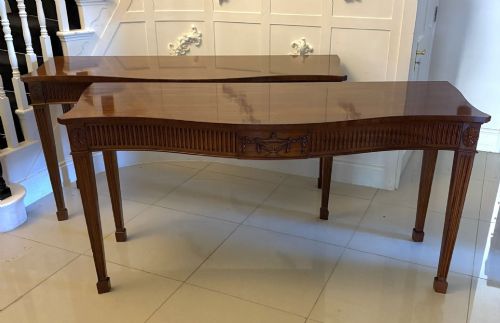
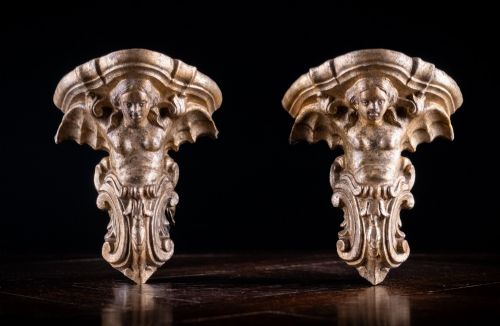
The items found here frequently span mahogany, painted wood, and walnut constructions, alongside variants featuring marble tops and neoclassical carving. Buyers will also encounter wall brackets and occasional tables matching the console form within the broader selection.
Materials and construction
Cabinet makers utilised solid timbers such as mahogany, oak, and walnut, frequently applying figured veneers and satinwood inlay to create decorative surface patterns. Carved wood details, gesso, and gilt finishes appear across specific styles, particularly those influenced by French Empire and Italian Neoclassical designs.
Marble tops feature on several heavier examples, providing a durable and cool surface supported by wooden frames. Brass inlays and hardware add structural and visual contrast to Regency card tables and side pieces.
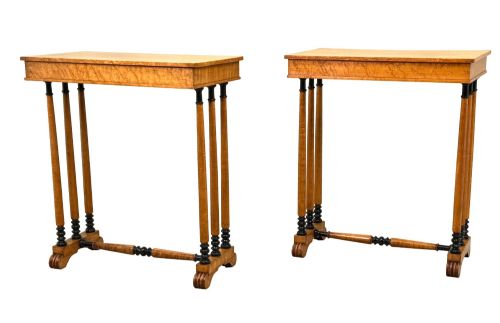
Listings feature woods such as mahogany, oak, walnut, satinwood, and birdseye maple alongside marble and brass elements.
Judging the standard
Quality rests upon the selection of timber grain, such as highly figured mahogany or birdseye maple, and the crispness of the hand-carving. Finer examples display precise inlay work and well-balanced proportions that maintain symmetry across both tables.
The integrity of the original construction, including the stability of the joints and the authenticity of surface finishes like period polish or paint, dictates the standing of each piece. Maker stamps, where present, add documented origin to the physical execution.
Krieger Paris
The Pair of Consoles Glossary
- Demi-lune
- A half-moon shape popular for console and side tables designed to sit flush against a wall. This form allows the furniture to occupy minimal floor space.
- Card table
- A folding table intended for gaming, often lined with baize and featuring a hinged top that opens to reveal a finished surface. These items frequently convert into console tables when closed.
- Gesso
- A plaster-based material applied to wood surfaces and carved or moulded before gilding or painting. It provides a smooth base for intricate decorative details.
- Marquetry
- The art of applying pieces of veneer to a structure to form decorative patterns and pictures. Craftsmen use various coloured woods to create contrast.
- Break-front
- A furniture facade where the central section projects forward from the flanking wings. This architectural arrangement adds depth to large side tables.
Pair of Consoles: Frequently Asked Questions
Can demi-lune consoles function as dining tables?
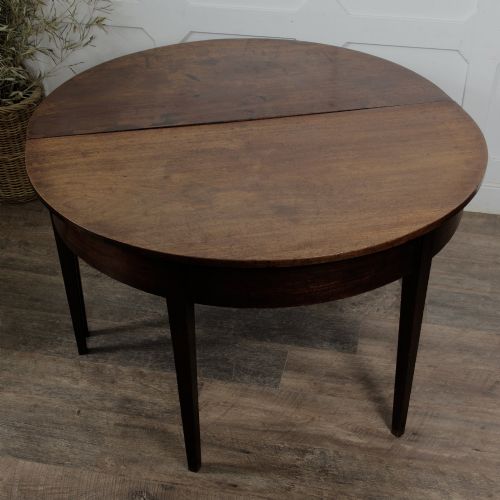
Certain eighteenth and nineteenth-century demi-lune consoles and card tables were designed to pull apart or combine with middle sections to form larger dining surfaces.
While individual pairs function mainly as side tables, their D-shape configuration reflects a modular approach to entertaining used by period cabinet makers.
How do I identify a Regency console?
Regency pieces often display darker woods like rosewood or mahogany, frequently accented with brass inlay, neoclassical motifs, and bold geometric lines.
This early nineteenth-century style draws inspiration from classical antiquity, distinguishing itself from the lighter satinwood of the preceding Sheraton revival or the heavier proportions of later Victorian furniture.
What maintenance do marble-topped consoles need?
Marble surfaces require simple dusting with a soft cloth and prompt wiping of spills to prevent staining on porous stone varieties.
Avoid acidic cleaners or abrasive pads that can dull the polished finish of the stone or harm the surrounding wooden frame.