
Pair of Brass Candleholders
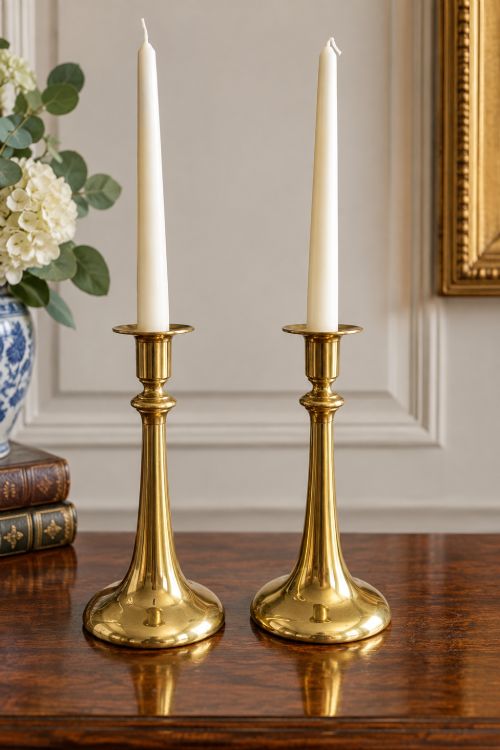
A pair of brass candleholders brings warm metal light and period character to a room, spanning simple domestic forms to ornate church styles.
Pair of Brass Candleholders
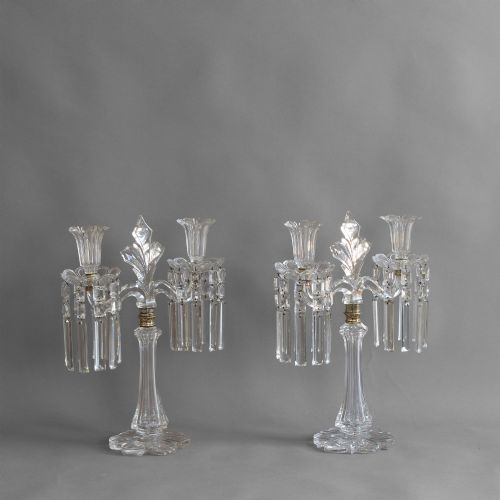
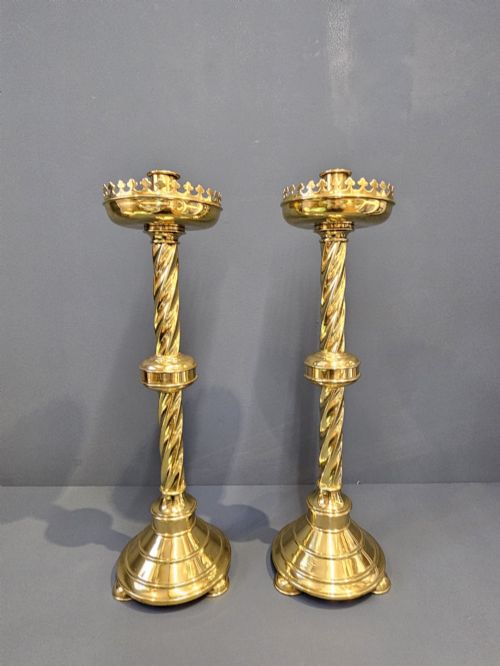
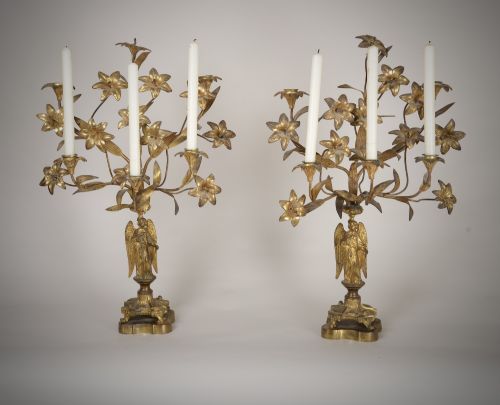
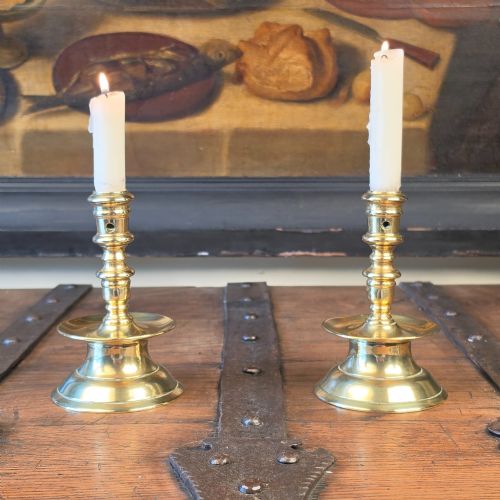
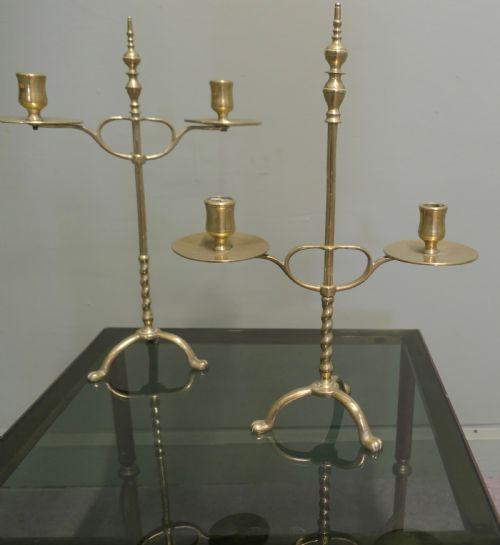
A pair of brass candleholders encompasses functional lighting pieces designed to hold taper candles, church prickets, or multi-branch candelabras in matching sets. These domestic and ecclesiastical accessories appear across Georgian, Victorian, and Edwardian eras, reflecting changing interior tastes.
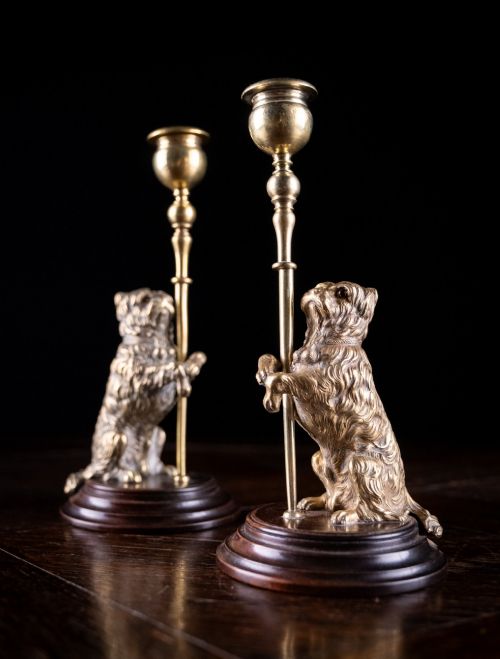
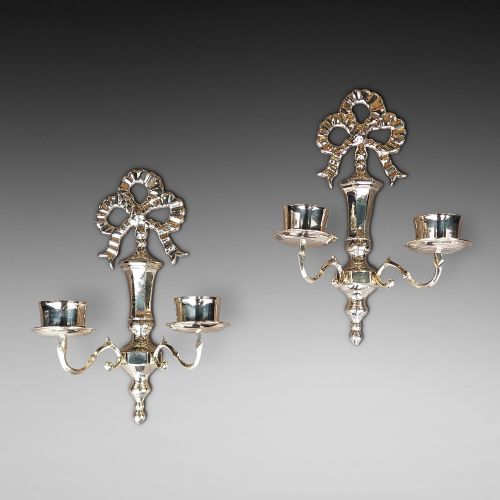
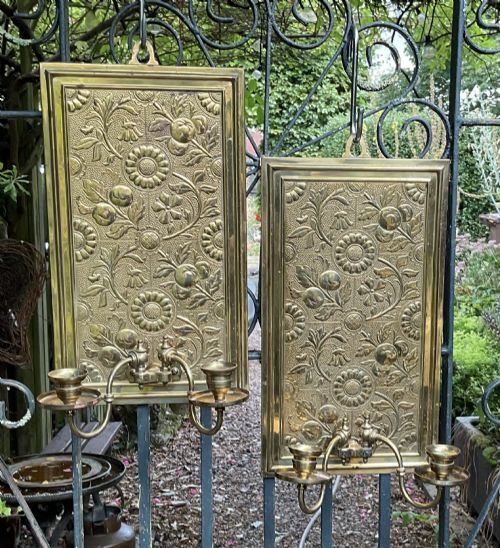
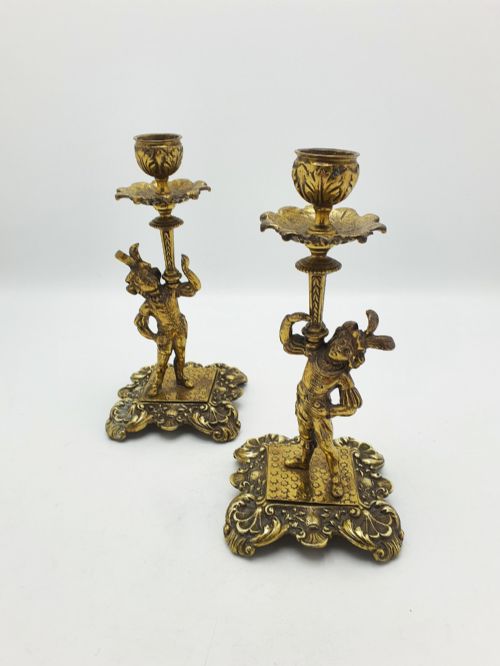
The most common versions met on this page are Victorian and late nineteenth-century examples, frequently featuring heavy cast brass or turned columns. Alongside standard candlesticks, buyers encounter wall sconces, student lamps, and figural designs incorporating animals or classical motifs.
Stylistic influences range from Gothic Revival and Arts and Crafts to French Rococo and Adam Revivals. They serve equally as decorative mantel ornaments and functional table lighting.
Materials and construction
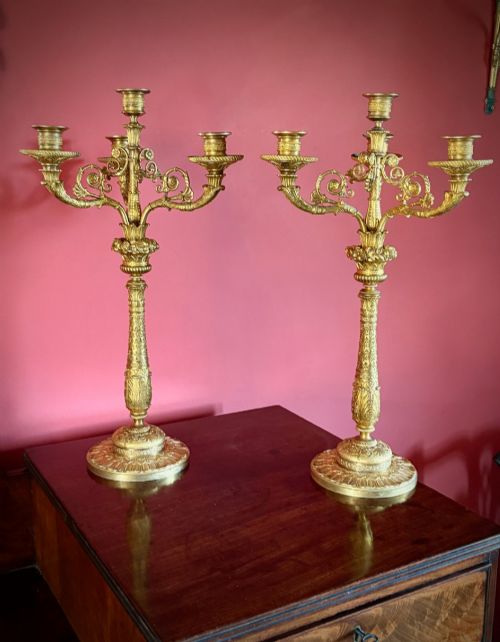
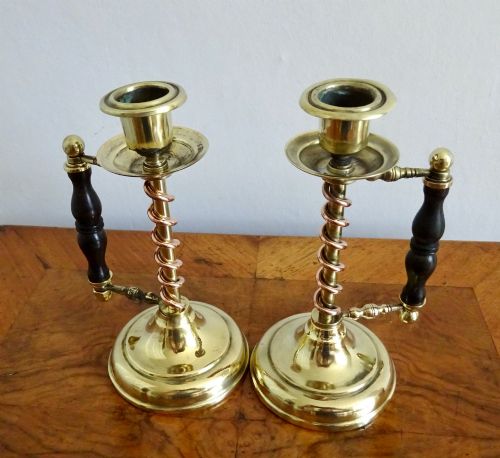
Makers utilised yellow brass, bronze, gilt brass, and ormolu, sometimes combining them with marble bases, glass shades, copper, or wood components. Metal was shaped through casting, turning on lathes, or seaming, depending on the period and the complexity of the design.
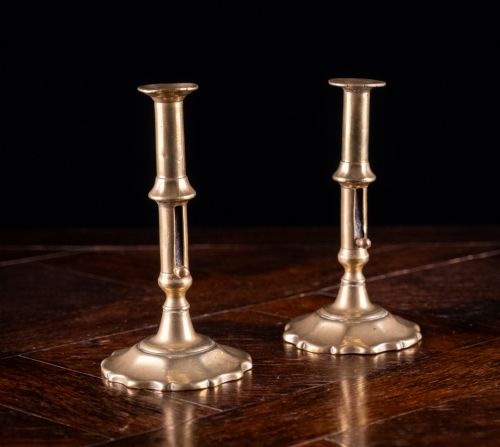
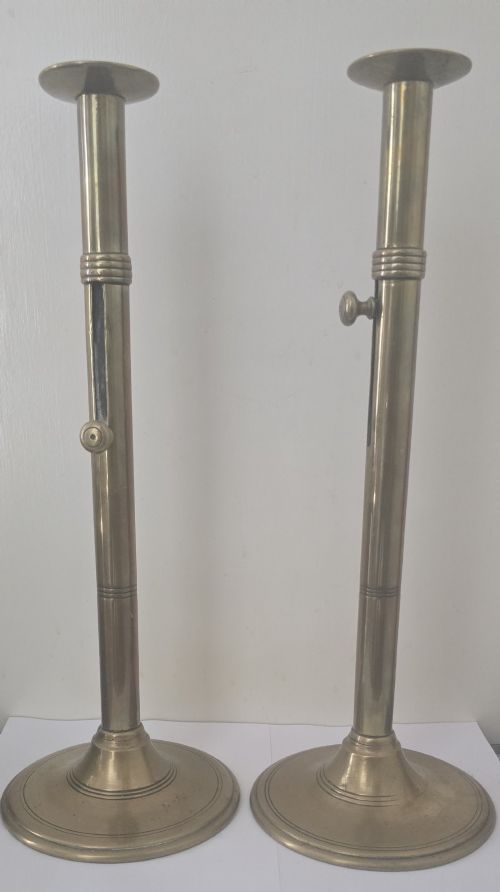
Mechanical elements such as side ejectors and telescopic stems required precision engineering in brass to function smoothly. Surface finishes varied from polished bright metal to fire gilding on bronze and patinated historical finishes.
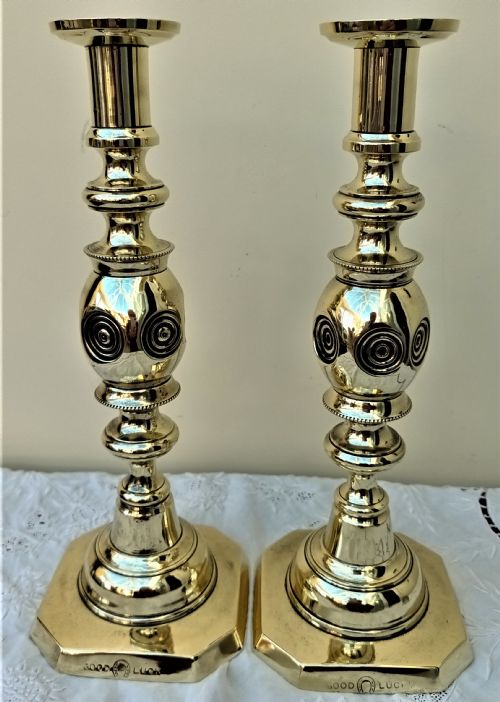
Certain Victorian candlesticks double as good luck charms, incorporating horseshoes and botanical motifs into the brass casting.
Assessing quality
Quality rests in the weight of the metal, the crispness of cast ornamentation, and the integrity of historical assembly techniques like seaming or threading. Heavy, solid castings with sharp chased details distinguish finer workshop output from lighter mass-produced domestic items.
Proportion and balance dictate visual success, where structural components relate harmoniously rather than appearing clumsy or overly plain. The presence of working mechanical components, such as ejector mechanisms, further elevates a piece.
J. Miller·Bruce Talbert·Frederick J Smith & Co
The Pair of Brass Candleholders Glossary
- Ejector
- A concealed internal mechanism with a small side lever designed to push the remaining candle stump out of the socket. This innovation became common on nineteenth-century brass candlesticks.
- Pricket
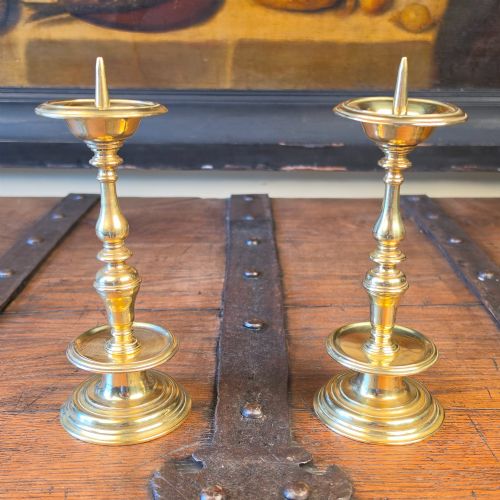
- A sharp metal spike set in the drip pan to secure a large candle, typically found on ecclesiastical altar pieces. Church candlesticks often utilise this formation.
- Ormolu
- Finely chopped high-zinc brass applied to objects via a mercury-gilding process to simulate solid gold. The technique creates a rich, warm surface lustre.
- Girandole
- An ornamental bracket wall sconce featuring a mirror designed to reflect and multiply candlelight. These fixtures were popular in polite reception rooms.
- Candelabra
- A branched lighting fixture holding multiple candles upon a single stem. They range from domestic table ornaments to grand gilt bronze fixtures.
Pair of Brass Candleholders: Frequently Asked Questions
How do I date a pair of brass candleholders?
Dating relies on manufacturing techniques such as casting seams, base weighting, and turn marks, alongside prevailing decorative styles. Earlier Georgian pieces often show simpler turned profiles, while Victorian examples introduce heavy ornamentation and mechanical ejectors.
Changes in screw threads and metal composition also help narrow down the period of production. Comparing base construction with documented historical examples provides further confirmation.
Were these used on dining tables?
Shorter pairs served primarily on dining tables, sideboards, and desks to provide direct task lighting during evening meals and writing. Heavier ecclesiastical examples remained fixed on church altars.
Tall column forms were also placed on mantelpieces or pier tables where their height balanced interior architectural proportions.
How should I clean antique brass?
Regular dusting with a dry microfibre cloth protects the historical surface and prevents grime accumulation. Avoid harsh chemical polishes that strip away age-related patination and damage softer metal.
If cleaning is necessary, mild soapy water dried thoroughly with a soft cloth keeps the metal stable without destroying its character.