


Figural Brass Candlesticks
These figural brass candlesticks bring sculptural presence and character to a room, combining functional lighting with narrative forms.
Figural Brass Candlesticks
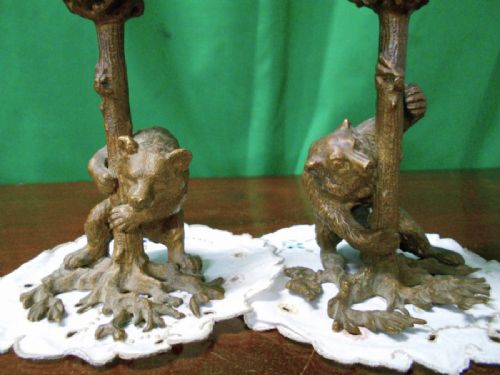
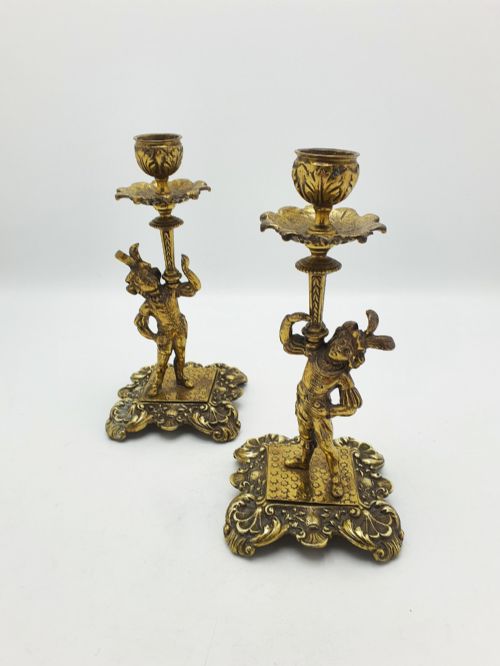
When you search for figural brass candlesticks, you encounter sculptural works that incorporate human figures, animals, or mythical subjects into their design. The selection ranges from nineteenth-century pairs featuring dancing cherubs and medievalist motifs to later cast brass examples.
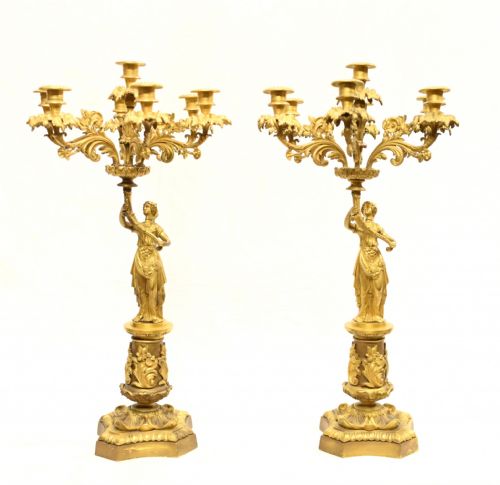
The most common versions on this page date from the nineteenth century, encompassing French ormolu candelabra, Black Forest animal bronzes, and Victorian Renaissance Revival pieces. These objects frequently appear in matched pairs, designed to sit symmetrically on a mantelpiece or side table.
Makers drew on diverse cultural and historical vocabularies, producing everything from Venetian style figures to heraldic designs and Rococo compositions. Alongside standard candlesticks, the category includes multi-branch candelabra and pieces adapted into table lamps while retaining their sculptural bases.
Materials and construction methods
The objects in this category rely heavily on cast brass, bronze, and ormolu, often enhanced through gilding or patination to create contrasting surface textures. Foundational metals are shaped using traditional casting techniques before being finished with hand-chasing and applied details.
Listings feature nineteenth-century dates alongside styles like Rococo Revival, Gothic Revival, and Venetian.
What distinguishes finer examples
Quality in these figural pieces rests upon the crispness of the casting and the sensitivity of the hand-finishing work on the metal. Superior examples display sharply defined facial expressions, clothing folds, and animal musculature rather than soft or blurred contours.
The integration of the figural element with the structural stem and drip pan dictates the overall success of the piece. Finer items demonstrate a cohesive design where the sculptural subject feels naturally incorporated into the support rather than clumsily attached.
The Figural Brass Candlesticks Glossary
- Ormolu
- Gilded bronze, typically produced by applying a mercury-gilding mixture to a cast bronze base. This technique creates a rich, warm metallic finish common on nineteenth-century French pieces.
- Parcel Gilt
- A decorative treatment where only specific portions of an object are covered in gold leaf or gilt. It creates contrast against patinated bronze or dark brass.
- Candelabra
- A branched lighting device designed to hold multiple candles simultaneously. They often share stylistic themes with single candlesticks of the same period.
- Patinated
- The surface colour or finish developed on metal over time, or applied artificially through chemical treatment. It alters the raw appearance of bronze and brass to achieve darker or antiqued tones.
Figural Brass Candlesticks: Frequently Asked Questions
Were these always used for lighting?
While primarily designed to hold wax candles for illumination, many of these figural pieces also served as decorative status symbols in formal rooms. Their sculptural weight and narrative subjects meant they functioned as miniature art objects.
Over time, some examples were converted to electricity for modern table lamps while preserving the original figural bases.
How can I tell the period?
Examine the casting quality, the style of the base, and the nature of the patina or gilding. Nineteenth-century pieces often reflect specific revival movements like the Gothic or Renaissance styles popular during that era.
Tool marks, assembly methods using threaded screws or pins, and wear patterns on the underside also offer clues to the age of the metal.
Are pairs always matching?
Most surviving examples were created as matched pairs for symmetrical placement on mantelpieces or sideboards. Slight variations can sometimes occur due to hand-finishing processes used by nineteenth-century workshops.
Checking the dimensions, casting details, and base weights helps confirm whether two pieces started life together as a set.