

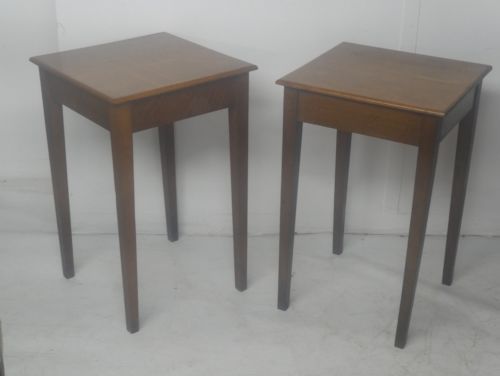


Pair Oak Side Tables
Pair oak side tables bring matched utility and timber grain to a room, spanning rustic joint stools to refined French bedside cabinets.
Pair Oak Side Tables
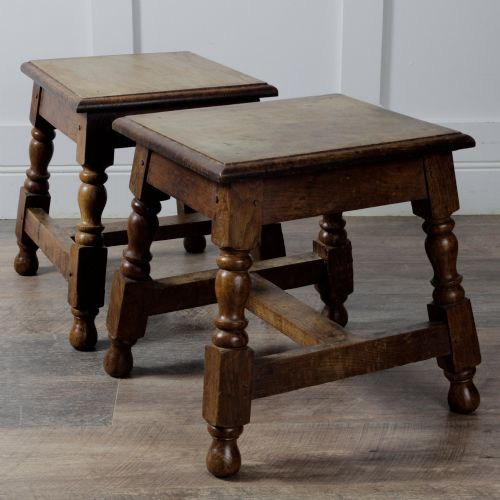
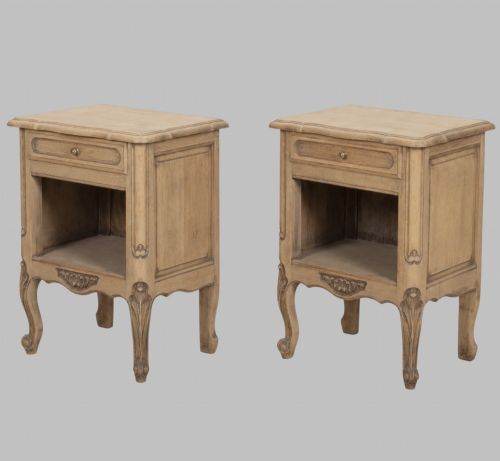
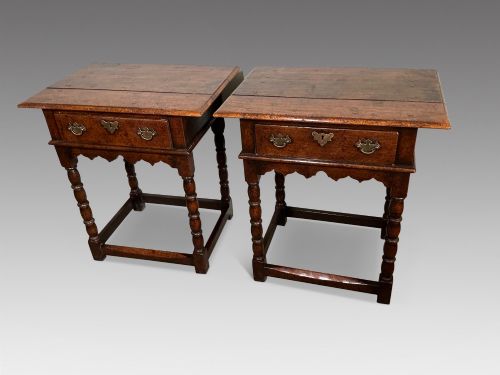
When you search for pair oak side tables, you encounter dual items primarily built for practical bedside, hall, or lamp placement. The selections range from early joint stools and 19th-century stands to 20th-century French provincial cabinets and Arts and Crafts tables.
Most examples date from the late nineteenth and early twentieth centuries, though earlier seventeenth and eighteenth-century styles appear in revival forms or original construction. Forms extend beyond standard tables to include demilune consoles, etageres, and bedside cupboards.
Makers and retail houses such as Heal and Son, Titchmarsh and Goodwin, and Bath Cabinet Makers contribute to the inventory, alongside unbranded country workshops and French cabinet makers utilising marble tops.
How they were made
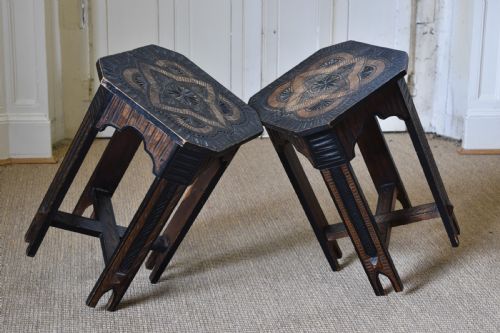
Makers relied predominantly on solid oak, frequently supplemented by auxiliary timbers like walnut, yew wood, or stained hardwood. Surfaces show traditional chip carving, jointed construction, and limed, bleached, or painted finishes.
Selected French and continental pieces incorporate inset marble tops above enclosed cupboard storage, while English pieces often feature octagonal tops, demi-lune shapes, or structural turnings in the Jacobean and Gothic revival manners.
Listings feature oak alongside auxiliary materials including brass, marble, yew wood, and walnut across various European and British country styles.
What varies in quality
The distinction between standard utility items and finer workshop production lies in the selection of timber and the precision of the joinery. Solid oak construction with clean grain matching commands greater attention than stained or heavily altered surfaces.
Original maker labels, integrated marble tops, and cohesive matching between the two individual items elevate the standing of a set. Unrestored condition with intact patination distinguishes superior historical examples from later adaptations.
Heal and Son·Titchmarsh and Goodwin·Bath Cabinet Makers·Whytock and Reid
The Pair Oak Side Tables Glossary
- Joint stool
- A sturdy wooden stool constructed with mortise and tenon joints, frequently utilised as a low side table or stand.
- Demi-lune
- A half-moon shape used for console tables and small side pieces designed to sit flush against a wall.
- Etagere
- A piece of furniture consisting of a set of open shelves for displaying small objects, sometimes designated as a whatnot.
- Limed oak
- A timber treatment developed to give oak a pale, pickled appearance, popular during the twentieth century.
- Bleached oak
- Oak that has been chemically treated to lighten its natural tone, commonly seen in continental bedside cabinets.
Pair Oak Side Tables: Frequently Asked Questions
How do I use pair oak side tables in a bedroom?
These pieces function ideally as matching bedside cabinets or lamp stands flanking a bed. Their surfaces hold lighting and evening essentials while providing enclosed storage or open shelf space beneath.
Matching pairs create symmetry within the room layout, balancing the bed frame and unifying the overall furniture scheme.
What is the difference between a side table and a joint stool?
Joint stools are rigid, pegged wooden seating furniture built with heavy underframing that historically doubled as portable surfaces. Side tables generally feature four legs connected by stretchers specifically configured to support objects rather than sit upon.
Both serve effectively as compact lamp tables in contemporary spaces, though joint stools display heavier structural joinery.
How can I date an oak side table?
Dating relies on observing construction marks, hardware types, and stylistic revivals such as Jacobean, Arts and Crafts, or Art Deco. Tool marks, timber shrinkage, and original maker labels or stamps provide definitive periods.
Bleached and limed finishes point firmly towards twentieth-century production, whereas pegged joints and moulded stretchers suggest earlier centuries.
Are marble top oak tables French?
Marble inset tops on oak bedside cabinets and console tables typically indicate French provincial or Parisian workshop origins from the nineteenth and early twentieth centuries. French makers combined heavy timber carcase work with decorative stone surfaces for bedroom hygiene and utility.
English equivalents of the same period more commonly featured all-wood tops or leather inserts.