


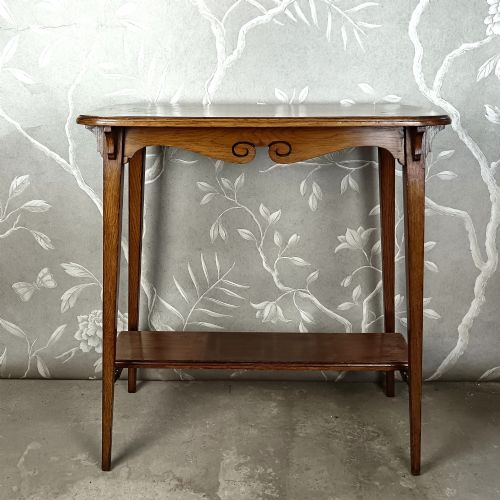


Liberty Style Lamp Tables
These liberty style lamp tables are compact occasional tables and plant stands designed for domestic use, offering useful surface space and characteristic period styling.
Liberty Style Lamp Tables
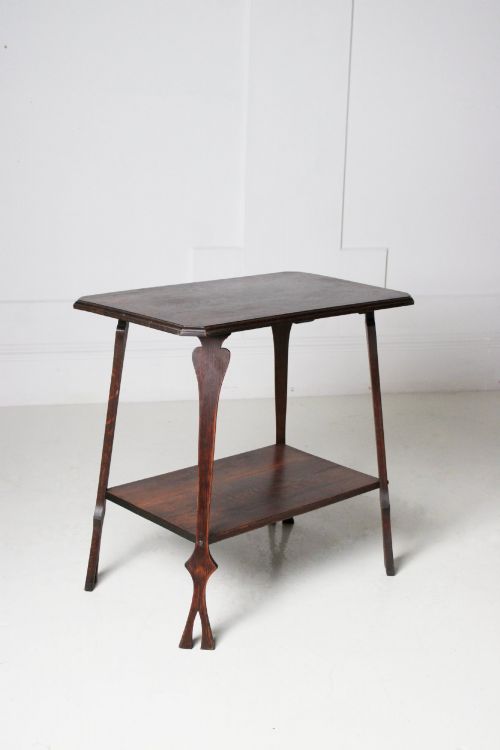
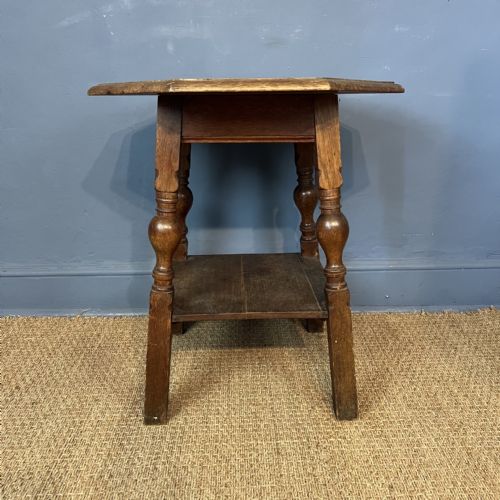
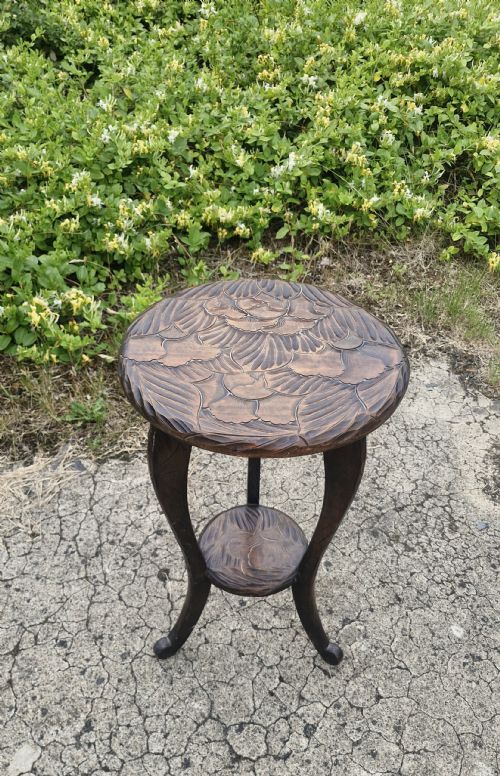
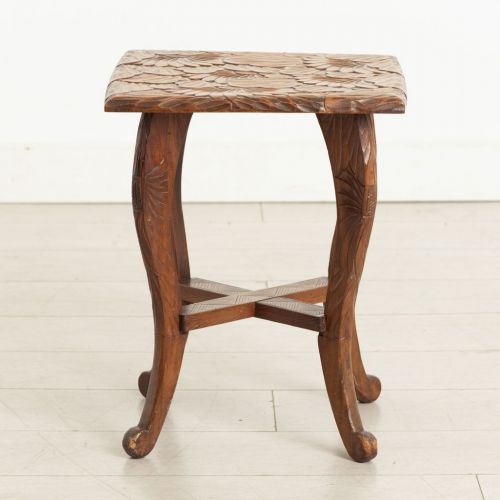
When you search for liberty style lamp tables, you encounter compact side tables, occasional tables, and plant stands primarily originating from the late nineteenth and early twentieth centuries. These pieces serve as functional furniture designed to hold lamps, plants, or small decorative items within a room.
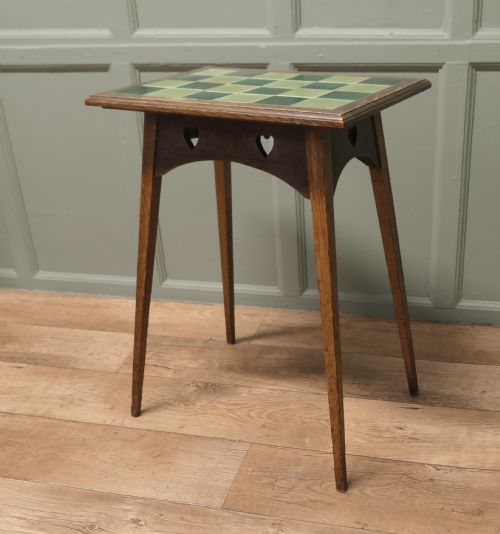
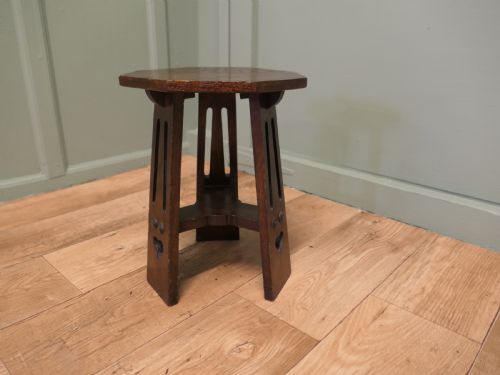
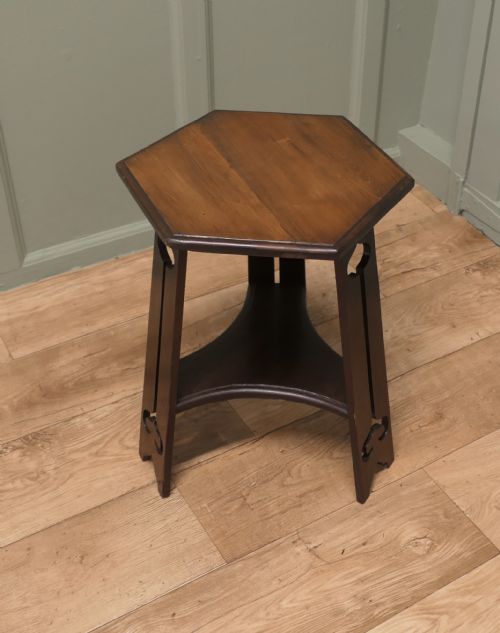
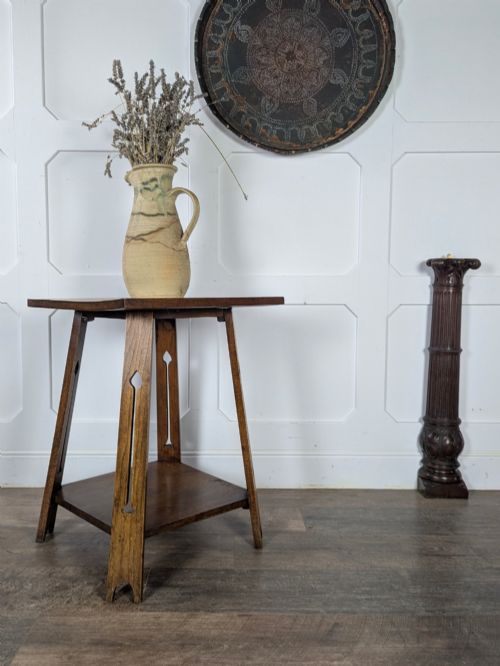
The versions you are most likely to meet on this page span the Victorian, Edwardian, and early twentieth-century periods. They frequently manifest as octagonal or square forms, sometimes incorporating two tiers or specialised surfaces like ceramic tiles.
Makers and designers of this era drew heavily upon Arts and Crafts, Art Nouveau, and Anglo-Japanese aesthetics. This lineage ensures that the tables combine structural utility with distinct artistic detailing rooted in British design history.
Materials and construction
Solid oak and various carved hardwoods form the primary structural foundation of these tables. Cabinetmakers utilised these sturdy timbers to create lasting frames capable of supporting everyday household objects.
Surfaces frequently incorporate decorative elements such as ceramic tiles, inlaid wood, and detailed fretwork. Metal accents like copper also appear alongside hand-carved motifs to accentuate the distinct aesthetic of the period.
Listings feature oak, mahogany, and carved hardwoods, frequently complemented by ceramic tiles and copper inlays.
Assessing quality and craftsmanship
The distinction between standard examples and finer pieces lies in the execution of the hand-carved details and inlay work. Superior items display crisp, intentional carving and precise joinery that remain tight over time.
The choice and integration of secondary materials, such as decorative ceramic tiles or inset copper panels, signal higher tier production. Tables featuring thoughtful proportional balance and cohesive stylistic integration command greater attention from collectors.
Liberty and Co·Liberty of London·Baillie Scott
The Liberty Style Lamp Tables Glossary
- Arts and Crafts
- A design movement advocating for traditional craftsmanship and simple forms. It rejected mass production in favour of hand-finished integrity.
- Occasional table
- A small, movable table designed for specific, intermittent use in a room. These pieces easily relocate to serve as lamp or display stands.
- Tiled top
- A table surface incorporating ceramic tiles set directly into the wood. This feature provided a durable, heat-resistant area for tea services or plants.
- Two-tier
- A furniture design featuring an upper surface and a lower shelf supported by the legs. This configuration adds storage or display capacity without enlarging the footprint.
Liberty Style Lamp Tables: Frequently Asked Questions
What is a liberty style lamp table?
These pieces are compact occasional tables, plant stands, or side tables produced during the late nineteenth and early twentieth centuries. They reflect design movements such as Arts and Crafts and Art Nouveau.
Buyers select them to provide functional surface area while introducing characteristic period character and craftsmanship into a room.
How were these tables used originally?
Households utilised them as convenient surfaces for oil or electric lamps, potted plants, and small decorative objects. Their portable nature allowed them to sit beside seating or in hallways.
Today, they serve similar practical purposes while functioning as distinct decorative accents in modern interiors.
How do I identify an Arts and Crafts table?
Look for visible construction methods, solid oak timbers, and straightforward, functional forms. Decoration often draws inspiration from natural motifs rather than classical revival styles.
Many examples incorporate hand-carved details, exposed grain, or integrated ceramic tiles that point directly to this aesthetic movement.
How do I care for antique oak furniture?
Protect the wood by keeping tables away from direct heat sources and sudden temperature fluctuations. Regular dusting with a soft, dry cloth preserves the finish.
Applying a traditional beeswax periodically helps nourish the timber and maintains the natural lustre of the antique surface.