
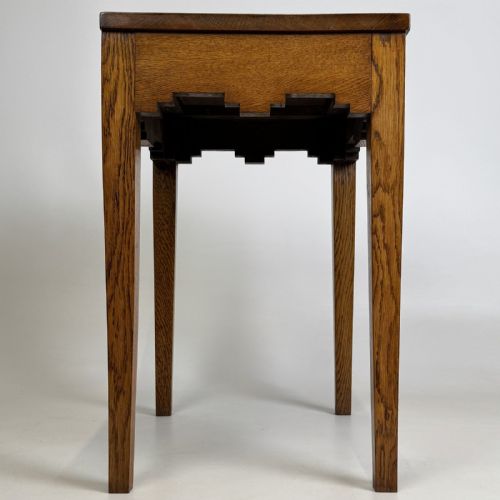
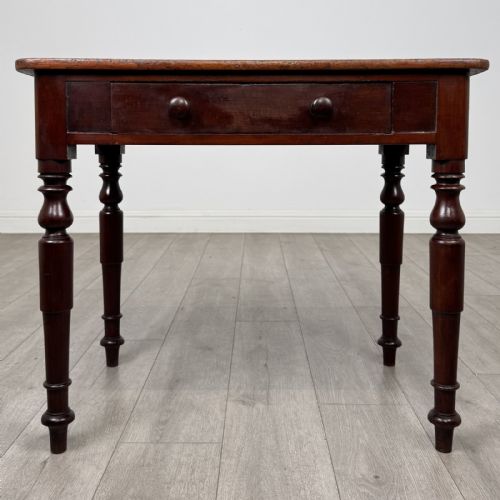
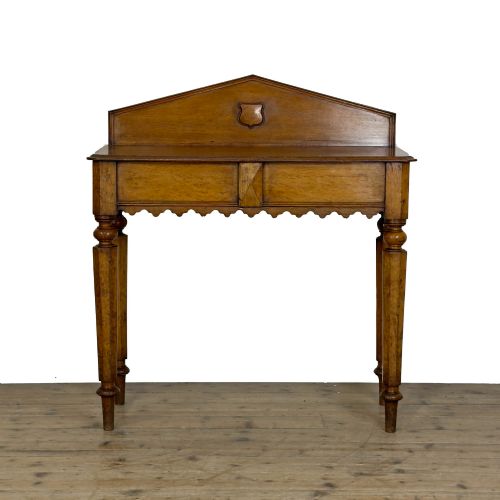
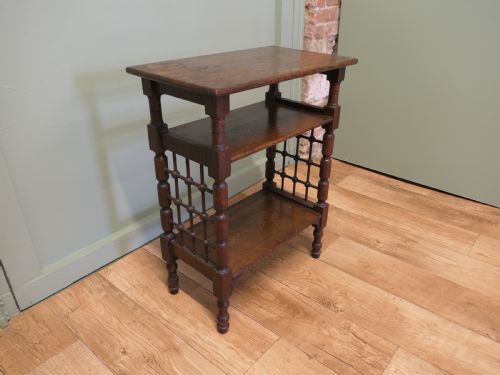
Edwardian Oak Side Tables
Edwardian oak side tables bring practical utility and sturdy construction into daily living spaces, pairing functional surfaces with period character.
Edwardian Oak Side Tables
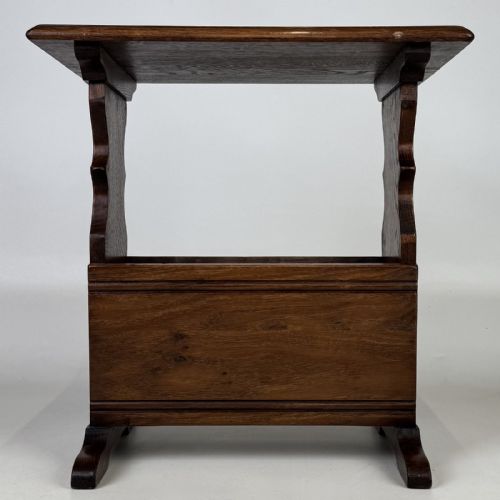
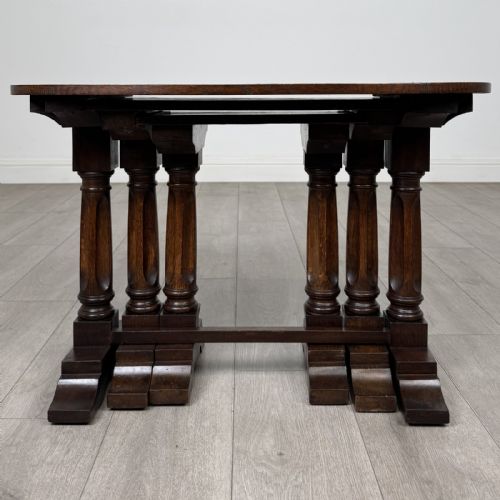
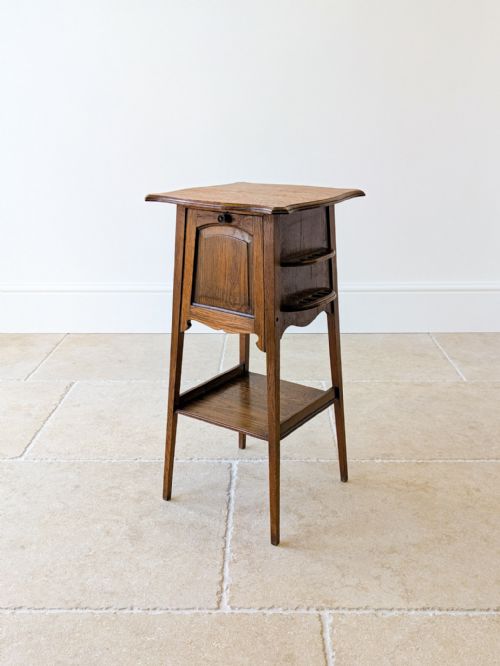
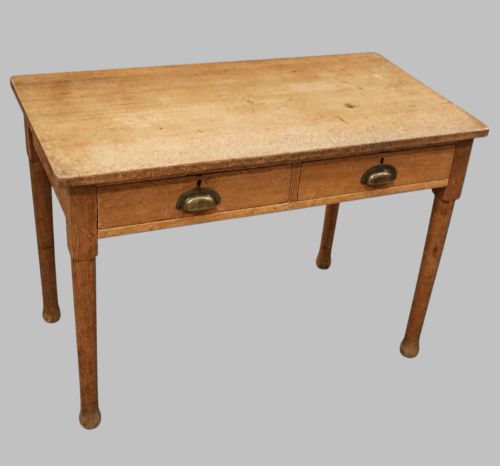
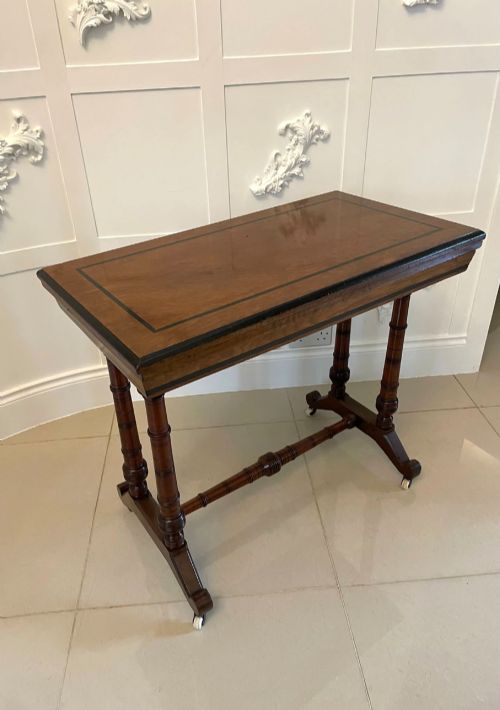
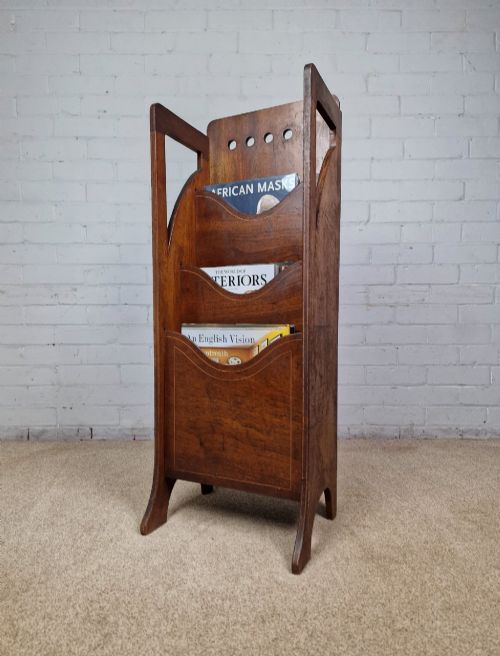
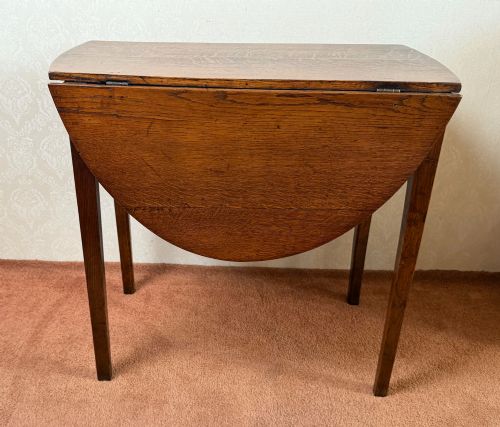
Edwardian oak side tables combine the robust material traditions of earlier decades with lighter, more domestic forms suited to turn-of-the-century interiors. When you examine edwardian oak side tables, you meet pieces built for specific domestic roles, from small occasional tables to lamp stands and writing tables.
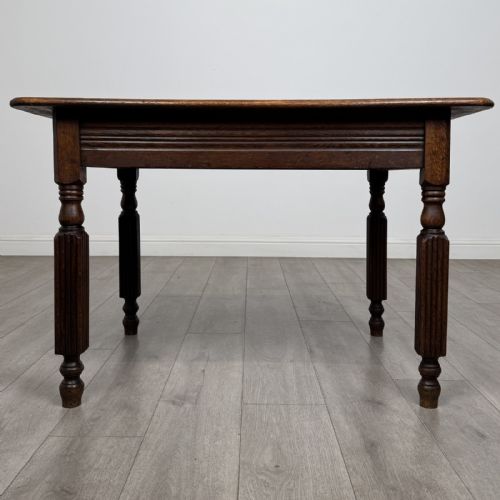
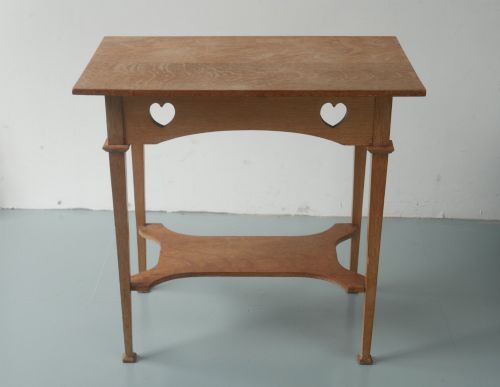
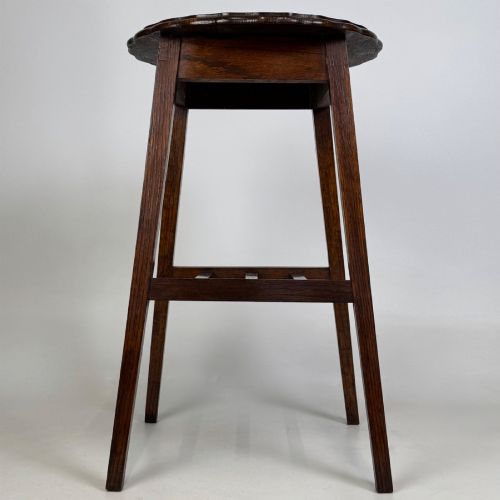
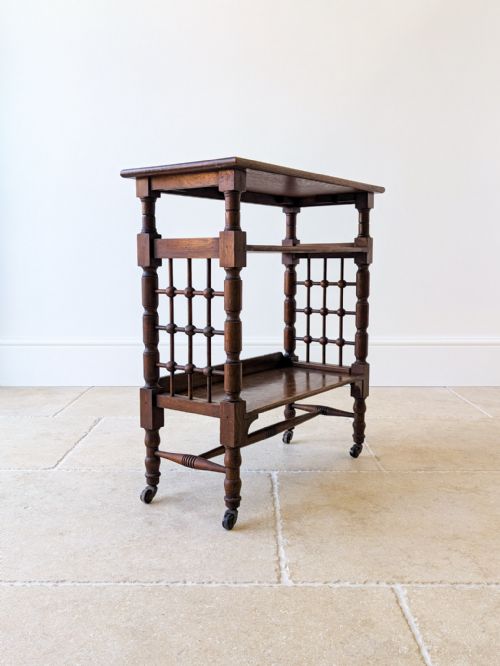
The dominant style running through these examples is Arts & Crafts, alongside Jacobean Revival and rustic farmhouse influences. Many pieces feature shaped or hexagonal tops, turned legs, and practical lower shelves designed for daily use.
Materials and Technique
Solid oak provides the structural foundation for these pieces, occasionally accented with mahogany, ebony, and boxwood inlay for decorative contrast. Cabinetmakers utilised traditional joinery methods to shape sturdy frames that endure decades of regular handling.
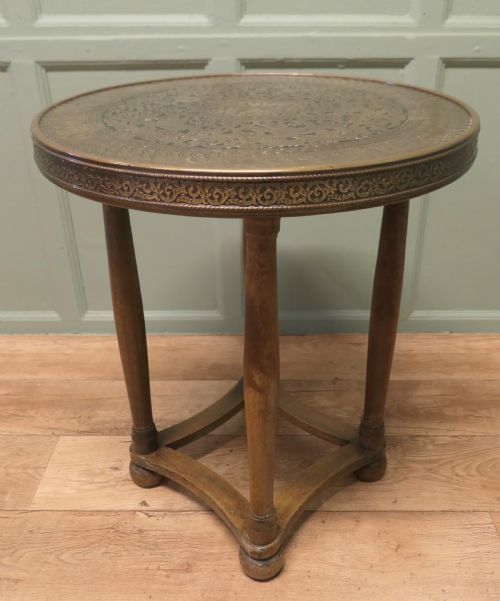
Surface detailing ranges from simple carved elements to contrasting metal hardware, brass accents, and inserted ceramic tiles. Finishes vary from natural golden oak tones to darker stains, highlighting the grain of the timber.
Listings feature solid oak and mahogany alongside decorative elements like brass tops, ceramic tiles, and boxwood inlay.
Markers of Quality
Quality in these tables rests on the selection of timber and the precision of the construction, distinguishing standard utilitarian pieces from workshop productions. Tables featuring figured timbers, intricate boxwood inlay, or integrated brass elements show a higher tier of craftsmanship.
The integration of maker attributions or specific house designs elevates certain pieces above anonymous factory output. Attention to detail in the turning of the legs and the fitting of drawers determines the overall merit of the piece.
Leonard Wyburd·Finnigans·Shapland & Petter·William Birch
The Edwardian Oak Side Tables Glossary
- Arts & Crafts
- A design movement prioritising handcraftsmanship, simple forms, and visible construction methods over mass-produced ornamentation. It heavily influenced furniture makers at the start of the twentieth century.
- Occasional table
- A versatile small table designed to be moved around a room as needed for lamps, books, or drinks. These forms dominate smaller domestic listings.
- Boxwood inlay
- A decorative technique where thin strips of pale wood are set into recesses on the oak surface to create geometric or floral patterns.
- Cabriole leg
- A furniture leg that curves out and then in, mimicking an animal's leg in motion. It appears on select refined Edwardian designs.
Edwardian Oak Side Tables: Frequently Asked Questions
How do I date edwardian oak side tables?
Dating relies on stylistic markers such as Arts & Crafts influences, construction methods, and hardware choices typical of the period around nineteen hundred. Surviving labels or stamps also assist in confirming the exact timeframe.
Changes in leg turning styles and the presence of specific inlay materials help distinguish Edwardian pieces from earlier Victorian examples.
What were these tables used for originally?
They served multiple roles in the home, holding lamps, magazines, or serving as compact writing desks in reception rooms and parlours. Their portable nature made them adaptable to various daily domestic tasks.
Larger versions functioned as occasional dining surfaces or plant stands, reflecting the versatile interior layouts of the era.
How do I care for oak side tables?
Maintaining solid oak requires simple dusting with a dry cloth and avoiding placement near direct heat sources or strong sunlight. Periodic application of appropriate wax preserves the finish.
Protecting the surface from moisture prevents rings and staining on the timber.
Are these tables suitable for modern homes?
Their compact proportions and sturdy construction make them highly adaptable for contemporary living spaces as lamp or side surfaces. They integrate easily beside modern seating.
The warm tones of the oak add character to contemporary interiors.