




Antique Oak Nesting Tables
Antique oak nesting tables offer clever space-saving utility and solid construction, making them a practical addition to any period home.
Antique Oak Nesting Tables
Antique oak nesting tables comprise sets of graduating tables that slide neatly beneath one another when not in use. These space-saving items appear in forms ranging from traditional sets of three or four to quartetto arrangements designed for occasional use.
The pieces on this page span several distinct periods, including Victorian, Edwardian, and the 1920s and 1930s. Buyers most frequently encounter Edwardian and 1920s examples featuring turned legs, barley twists, or simpler golden oak finishes.
Styles vary from straightforward English Country designs to more decorative Anglo-Indian and Jacobean Revival pieces. Formats include square, round, and oval top tables suited to various domestic settings.
How they were made
Cabinet makers constructed these tables primarily using solid oak and wood veneer, sometimes incorporating carved hardwood for decorative detailing. Surfaces often display the distinct grain and warm tones characteristic of oak furniture.
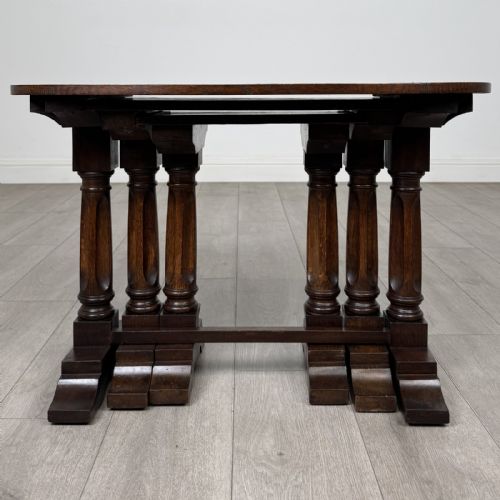
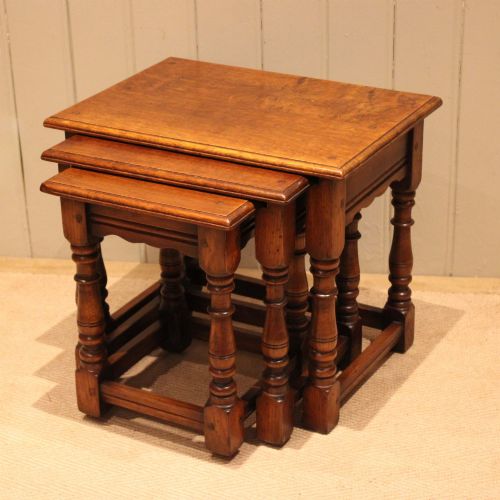
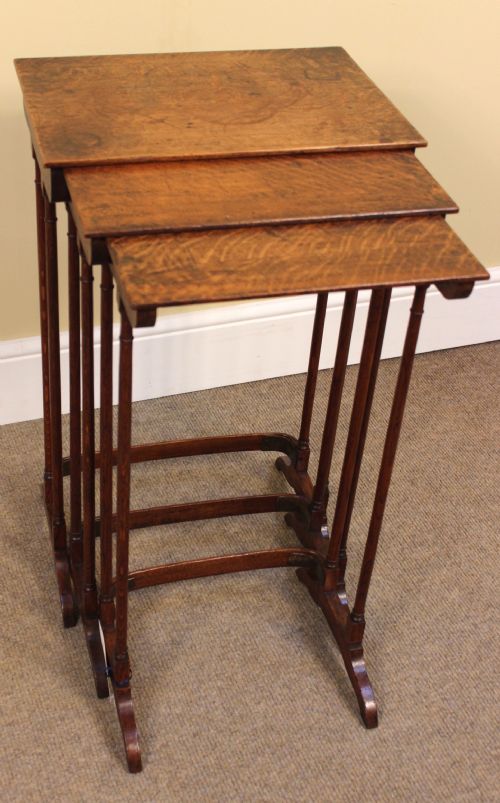
Structural support relied on traditional joinery techniques combined with turned legs or barley twist uprights. Sets typically comprise three or four graduated tables engineered to fit precisely within the footprint of the largest piece.
Styles represented across the inventory include English Country, Art Deco, Anglo-Indian, and Jacobean Revival.
What varies in quality
Quality in these tables depends on the selection of timber and the precision of the graduating frame sizes. Superior sets maintain structural stability across every tier while preserving smooth sliding action between the tables.
Refinement in carving and turning distinguishes standard utility pieces from finer examples. The integration of decorative elements, such as specific regional carving styles or well-executed wood veneers, elevates the overall standard of craftsmanship.
The Antique Oak Nesting Tables Glossary
- Nest of tables
- A set of graduating tables designed to fit one beneath another to save floor space. These assemblies typically comprise three or four pieces.
- Quartetto
- A set consisting specifically of four small tables designed to nest together. This term often appears in nineteenth-century listings for occasional tables.
- Barley twist
- A spiral turning technique used on the legs or supports of furniture. It gained widespread popularity during various revival periods.
- Wood veneer
- A thin slice of superior wood applied to a base surface of cheaper material. It allows makers to display attractive grain patterns while maintaining structural economy.
Antique Oak Nesting Tables: Frequently Asked Questions
What are antique oak nesting tables?
These pieces are sets of graduating tables designed to slide neatly underneath one another when floor space is required.
Originating in various forms from the nineteenth century onwards, they provide versatile surfaces for serving drinks or displaying objects.
How were nesting tables used?
Victorian and Edwardian households utilised these sets in drawing rooms and parlours where space was at a premium. Individual tables could be pulled out independently for guests and packed away compactly afterwards.
Their modular design made them practical for entertaining without permanently cluttering the room.
How do I identify an Edwardian set?
Edwardian examples often display lighter golden oak tones and frequently incorporate turned legs or simpler decorative mouldings.
They reflect the domestic requirements of the early twentieth century, combining utility with traditional cabinet-making materials.
What is a quartetto nest?
A quartetto nest is a matched set of precisely four tables built to slide inside one another. This configuration appears in nineteenth-century pieces designed for occasional use.
Such sets often showcase finer turning or specialised regional carving traditions.