
Pair Meiji Period Vases
Pair meiji period vases bring distinctive Japanese artistry into an interior, combining precise metalwork, ceramic traditions, and decorative motifs from the late nineteenth and early twentieth centuries.
Pair Meiji Period Vases
When searching for pair meiji period vases, collectors examine works produced during the reign of Emperor Meiji, spanning from 1868 to 1912. These symmetrical pairs served primarily as ornamental objects for display within domestic and export markets, reflecting the opening of Japan to Western trade during the late Victorian and Edwardian eras.
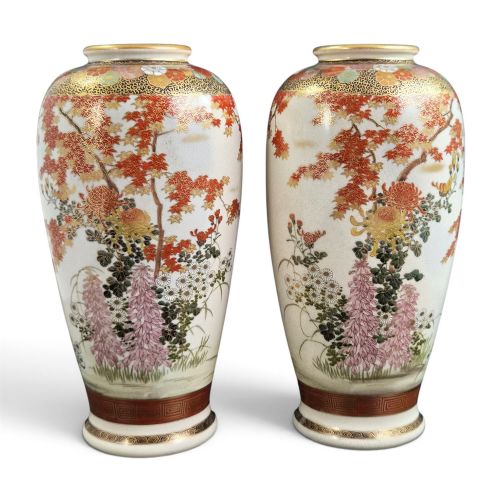
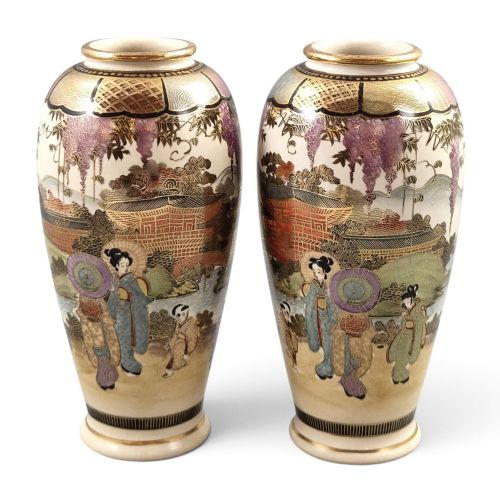
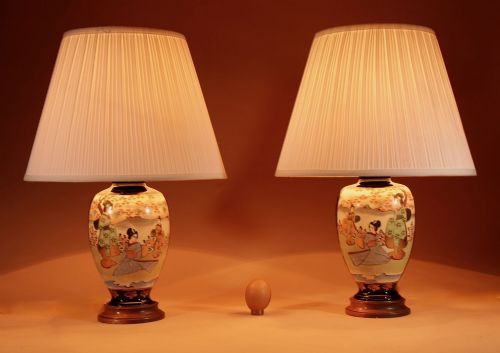
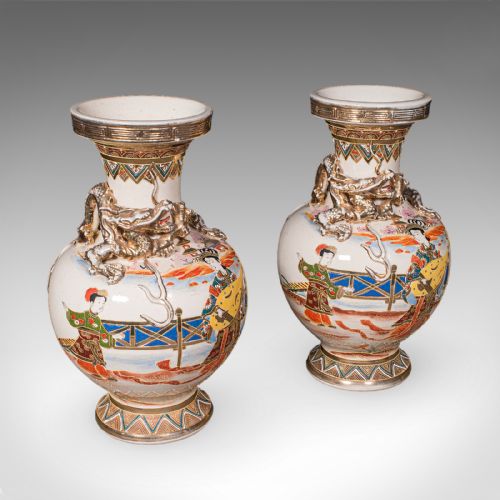
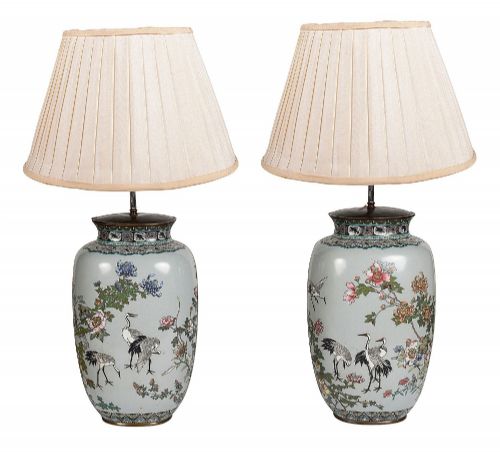
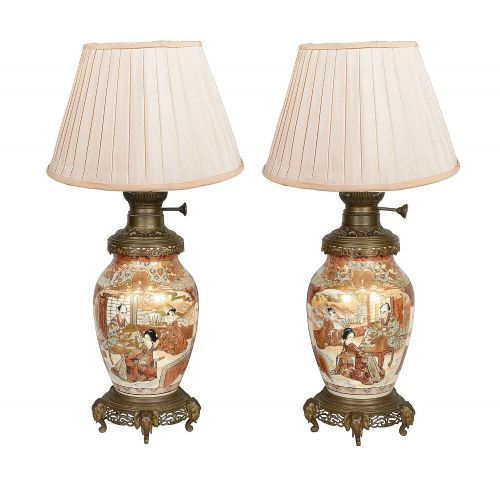
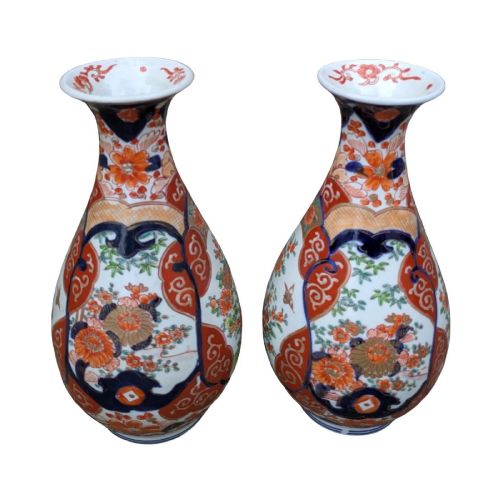
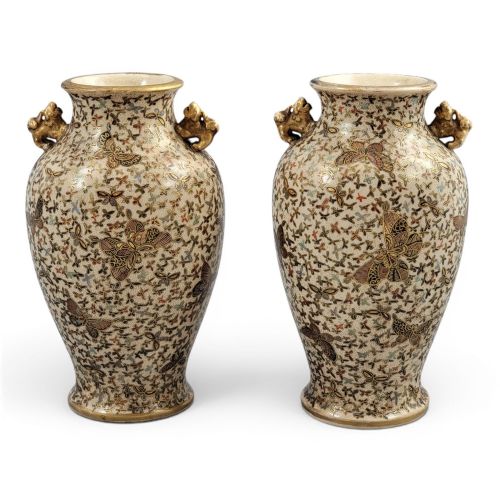
The most common examples encountered on this page include earthenware Satsuma ceramics decorated with figures, floral panels, and gilt accents, alongside bronze vessels featuring inlaid details or sculptural handles. Porcelain forms such as Imari and Kutani also appear frequently, often displaying traditional cobalt blue and iron red palettes.
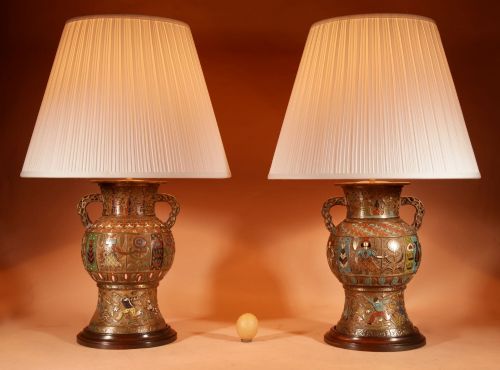
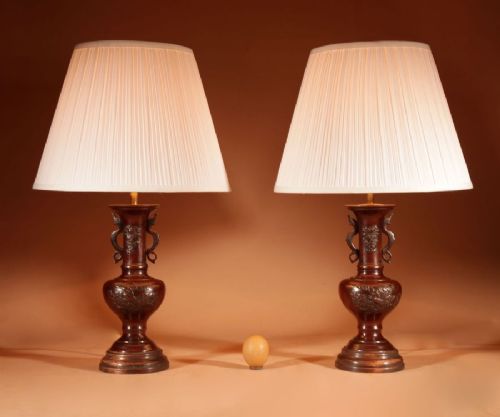
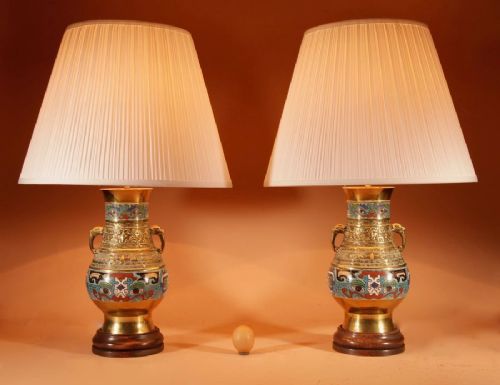
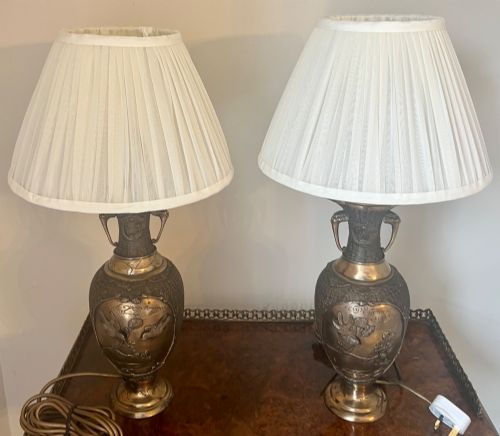
Beyond standard decorative vessels, many pairs have been adapted into table lamps or utilise alternative shapes like baluster urns, double gourds, and hexagonal bodies. Their origins span notable production centres including Kyoto, Kobe, and Seto, showcasing a wide variety of regional aesthetics.
How They Were Made
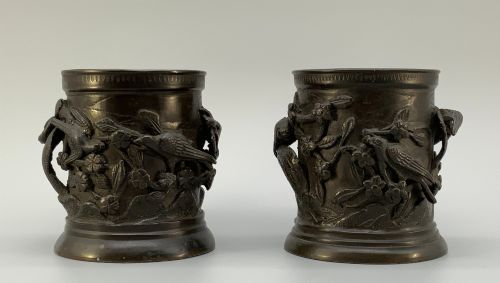
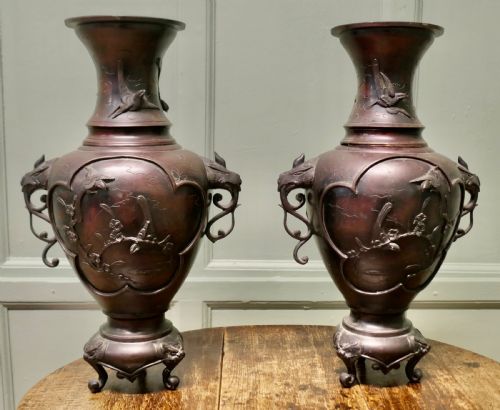
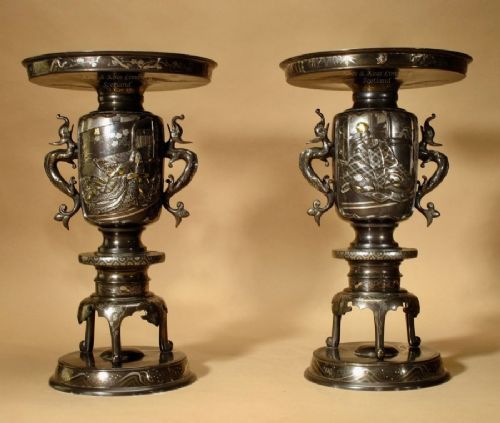
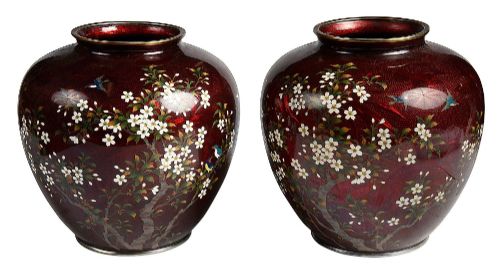
Bronze and brass works utilise casting techniques enhanced by applied patination, incised motifs, and mixed-metal inlays of gold and silver. Artisans also constructed cloisonné pieces by soldering thin wire grids onto metal bases, subsequently filling the compartments with coloured enamel pastes before firing and polishing.
Ceramic examples rely on earthenware and porcelain bodies shaped on the wheel or in moulds. Satsuma ware typically employs a finely crackled cream-coloured glaze painted over with polychrome enamels and rich gold leaf, while Imari porcelain combines underglaze blue with overglaze red and gilt highlights.
Several bronze vessels employ lifelike egrets and mythical dragons as functional handles, turning practical grip points into miniature sculptures.
What Varies in Quality
The refinement of execution distinguishes exceptional examples from standard production, particularly in the precision of cloisonné wirework or the intricate detail of hand-painted Satsuma figural scenes. Superior metal castings exhibit crisp relief work, secure handles, and harmonious patination without crude surface blemishes.
Signatures from recognised workshops, master artists, or imperial suppliers elevate the standing of a pair, reflecting the high standards demanded by international exhibitions during the late nineteenth century. Original matching stands and intact surface gilding further indicate superior preservation and craftsmanship.
Maruni Kobe·Shozan·Hododa·Kato Sanhei·Takahara Komajiro·Shimazu·Kinkozan·Hayashi Kihyoe·Koransha
The Pair Meiji Period Vases Glossary
- Satsuma
- An earthenware ceramic style originating from the Satsuma Province, characterised by a distinctive ivory-coloured crackle glaze and ornate polychrome enamel decoration. These pieces frequently depict figures, historical scenes, and dense floral patterns highlighted with gold.
- Cloisonné
- A metalworking technique where thin wire partitions are soldered onto a brass or copper body to form distinct cells that hold coloured enamel. Artisans then fire and polish the surface until smooth and lustrous.
- Imari
- A traditional style of Japanese porcelain featuring a characteristic palette of cobalt blue and iron red, often enriched with supplementary green and gold details. These export wares were widely produced in Arita for Western markets.
- Meiji Period
- The historical era spanning from 1868 to 1912, marking a time of rapid modernisation and an explosion of decorative arts destined for international trade. Objects from this period demonstrate supreme technical mastery.
- Kutani
- A style of Japanese porcelain known for bold pictorial designs and vibrant overglaze enamels, particularly deep greens, blues, purples, and yellows. The tradition developed in Ishikawa Prefecture.
Pair Meiji Period Vases: Frequently Asked Questions
What is a meiji period vase?
These vessels are decorative items manufactured in Japan between 1868 and 1912, during the reign of Emperor Meiji. They were created largely for export to Western buyers who developed a strong appetite for Japanese craftsmanship.
Craftsmen produced them in various materials including bronze, earthenware, and porcelain, applying traditional motifs such as birds, blossoms, dragons, and figures.
How can I tell Satsuma from Imari?
Satsuma ceramics have a distinct ivory-coloured earthenware body covered in a fine crackle glaze, typically painted with detailed figures and gold. Imari pieces consist of hard porcelain decorated in underglaze blue and iron red.
Satsuma surfaces feel slightly warmer and textured due to the enamel build-up, whereas Imari porcelain presents a smooth, vitrified finish with traditional cobalt and gilt patterns.
Were these vases made for export?
A large proportion of these pieces were manufactured specifically for international export following the opening of Japanese trade ports in the nineteenth century. Makers tailored their designs to appeal to Western tastes through grand scale and ornate decoration.
International exhibitions in Europe and America further popularised these goods, leading to widespread demand among Victorian and Edwardian collectors.
How do I care for antique vases?
Maintenance requires gentle dusting with a soft, dry cloth to protect delicate enamel, gold leaf, and patinated bronze surfaces. Moisture and abrasive cleaners should be avoided, particularly on porous earthenware like Satsuma.
Positioning them away from direct sunlight preserves the vibrancy of the pigments and prevents any deterioration of the original materials over time.