





Fluted Ceramic Urns
Fluted ceramic urns bring classical presence and intricate hand-painted detail into a room, offering striking decorative form.
Fluted Ceramic Urns
Fluted ceramic urns span diverse origins and aesthetics, appearing primarily in nineteenth-century European and Japanese decorative traditions. These vessels encompass monumental garden planters, lidded jars, and converted table lamps that share vertical architectural moulding.
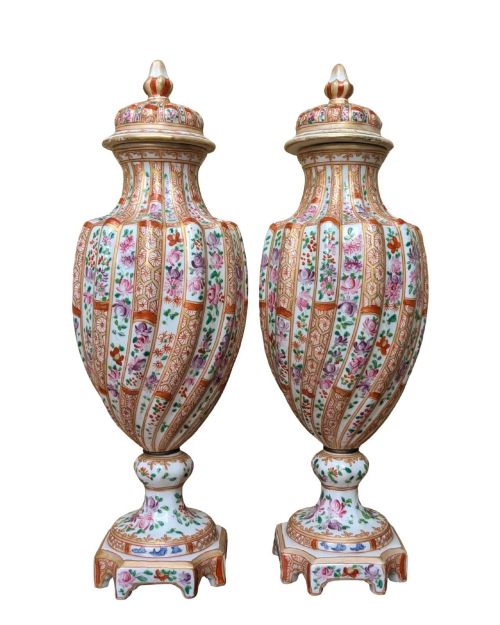
The pieces on this page heavily favour Japanese Imari and Satsuma wares alongside French nineteenth-century porcelain. Buyers will encounter both grand pairs designed for focal display and singular table vessels showing intricate hand-painted palettes.
Forms range from flared necks and shaped bodies to traditional garden jardinières. Each object bridges utility and ornamental display, reflecting the distinct aesthetic priorities of Meiji Japan and Victorian Europe.
Materials and construction methods
Makers utilised high-fired porcelain and terracotta as the primary structural bodies, shaping them with vertical flutes or ribbed panels. Artisans then applied detailed hand-painting, often incorporating enamel pigments and gold leaf accents.
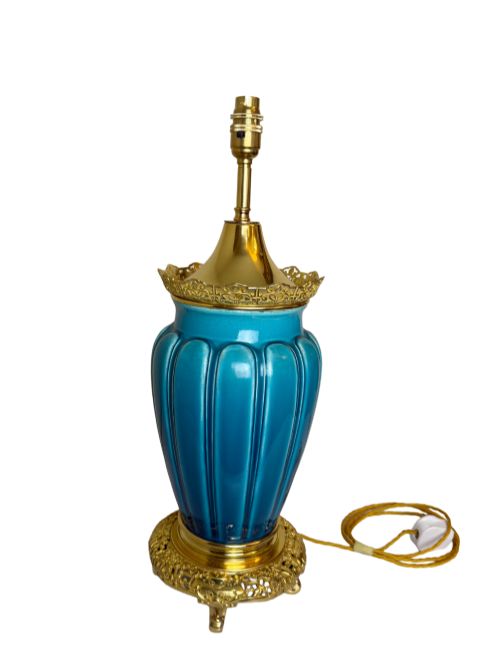
Many examples feature metal mounts in gilt bronze or brass, securing the ceramic body or adapting the vessel for domestic lighting. Lacquer and gilding also appear over painted surfaces, demonstrating complex multi-stage workshop techniques.
Fluted Ceramic Urns Retail Price Guide 2026
Typical asking prices for fluted ceramic urns among the pieces listed under this phrase on Sellingantiques today, from the lower quarter to the upper quarter. They describe what is for sale here now, not the wider market.
Some nineteenth-century artisans hid minute signature marks inside lidded rims, playing a quiet game of hide-and-seek across the centuries.
Distinctions in craftsmanship
Quality rests upon the precision of the ceramic moulding and the fineness of the hand-painted decoration. Crisp vertical fluting paired with controlled, detailed brushwork separates superior pieces from standard production.
The integration of secondary materials defines the upper tier of the range. Securely fitted gilt bronze mounts, well-preserved gold leaf, and undamaged enamel pigment elevate the overall execution of the vessel.
Samson of Paris
The Fluted Ceramic Urns Glossary
- Imari
- A traditional style of Japanese porcelain featuring distinctive cobalt blue and iron red decoration, often enriched with gold. These wares were heavily exported to Europe during the nineteenth century.
- Gilt bronze
- An alloy of copper, zinc, and tin finished with a fine layer of gold applied by mercury amalgamation or electroplating. It provides decorative mounts and structural support for ceramic vessels.
- Satsuma
- A type of Japanese earthenware characterised by a ivory-coloured, crackled glaze and elaborate polychrome enamel decoration. Pieces from the Meiji period often depict figurative and floral scenes.
- Jardinière
- A large ornamental pot or urn designed to hold plants or flowers. These vessels were frequently cast in terracotta or formed from heavy ceramics for interior and garden display.
- Fluting
- A series of shallow, vertical parallel grooves cut or moulded into the surface of a column or ceramic body. This architectural detail adds visual depth and linear structure.
Fluted Ceramic Urns: Frequently Asked Questions
What are fluted ceramic urns?
Fluted ceramic urns are decorative vessels featuring vertical grooves along their bodies, originating from various nineteenth-century European and Japanese traditions. They encompass everything from monumental garden planters to delicate porcelain table lamps and lidded jars.
These objects combine functional vessel forms with elaborate surface decoration like hand-painted enamels and gilding. They served primarily as ornamental focal points in period interiors.
How do I identify Japanese Imari urns?
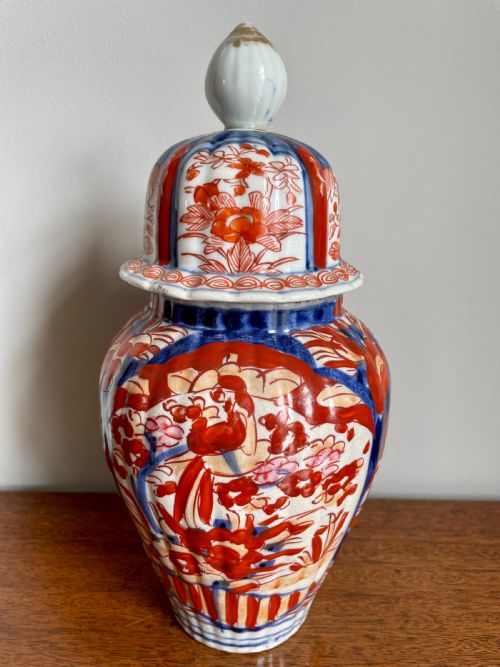
Japanese Imari pieces typically display a distinct palette of deep cobalt blue and rust red against a white porcelain ground, frequently highlighted with gold. The forms often incorporate traditional lidded shapes and structured vertical panels.
Examining the foot ring and the crispness of the hand-painted motifs helps confirm the period of manufacture. These wares reflect the cross-cultural exchange between Japanese kilns and Western collectors during the nineteenth century.
Can I use antique urns for lighting?
Many nineteenth-century porcelain urns were adapted into table lamps, incorporating metal hardware such as brass and gilt bronze trim. These pieces allow you to integrate period ceramics into modern lighting schemes.
Care should be taken with electrified antiques to ensure the internal wiring meets current safety standards without altering the historic ceramic body.