

Pair Marble Top Tables
Pair marble top tables unite durable stone surfaces with timber frames across French, Italian, and Chinese cabinet-making traditions.
Pair Marble Top Tables
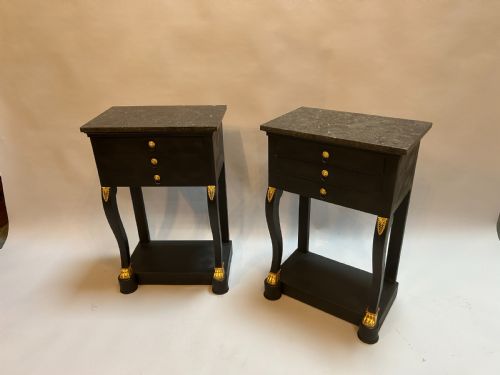
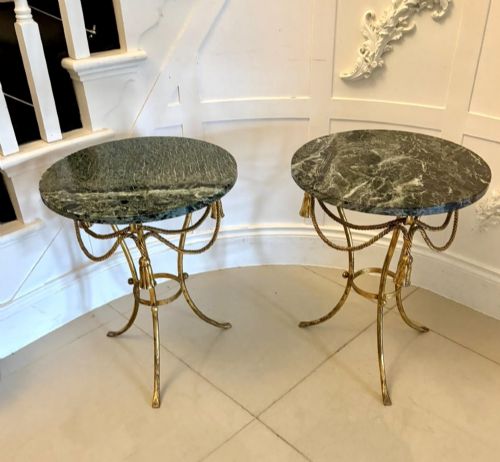
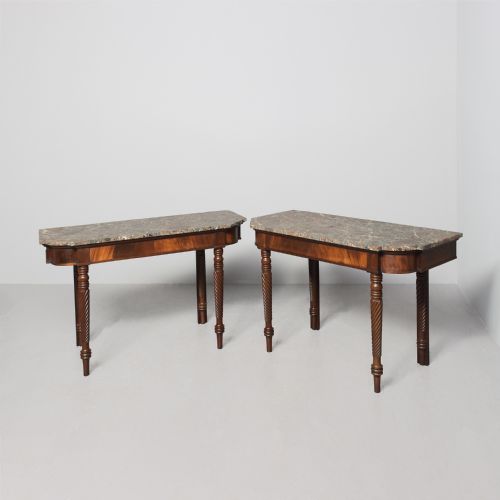
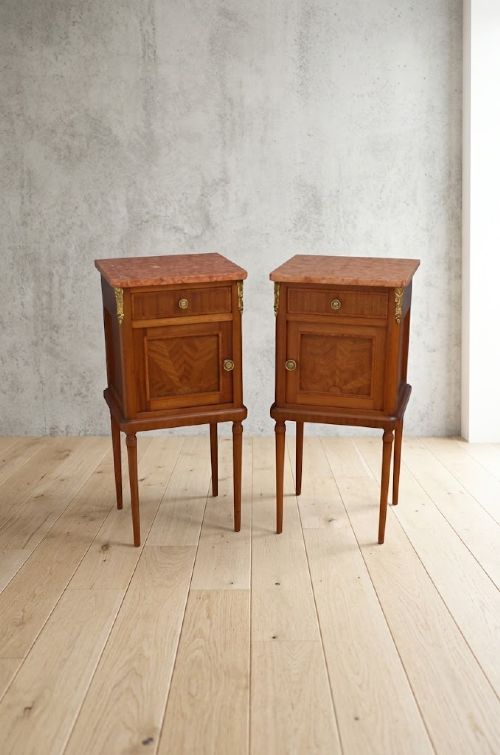
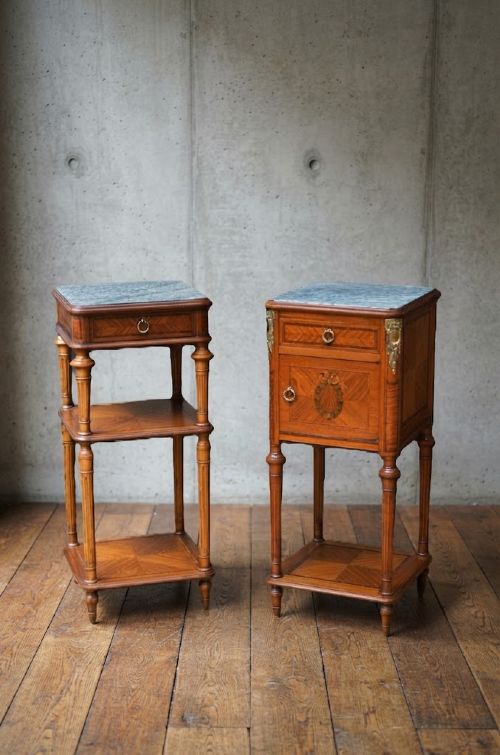
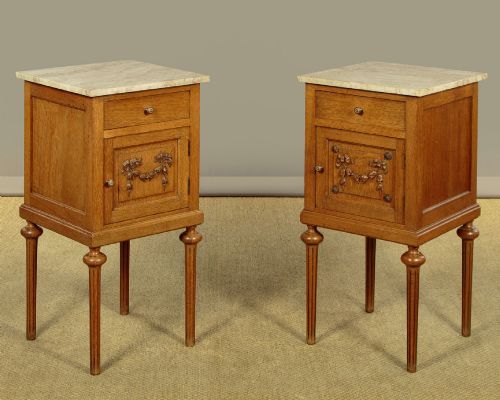
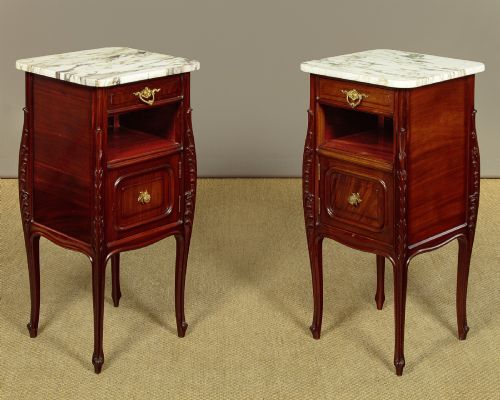
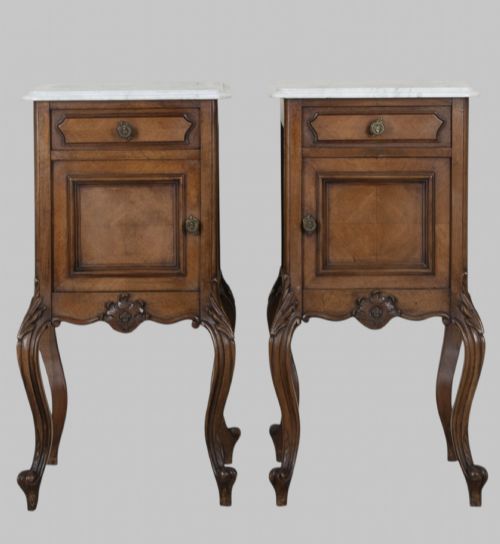
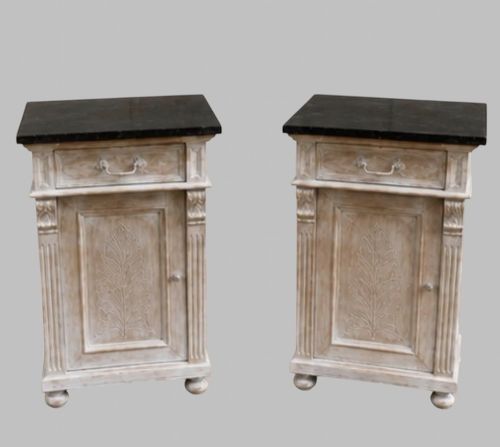
When searching for pair marble top tables, buyers encounter a diverse selection of matching furniture designed for domestic utility and display. The inventory spans compact bedside cabinets and commodes alongside grand console tables, plant stands, and occasional lamp tables.
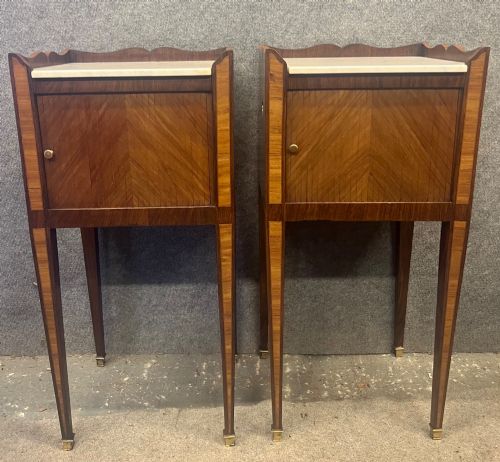
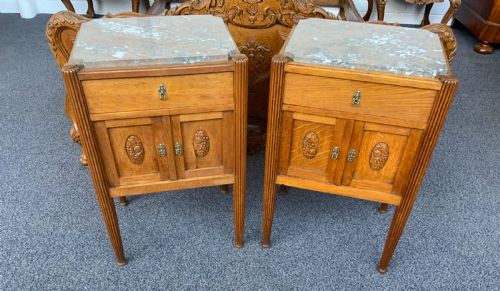
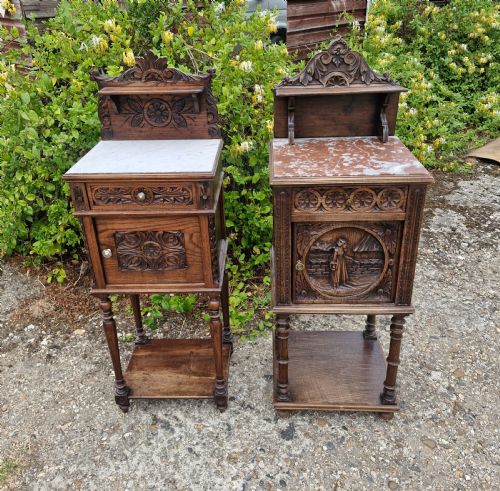
Most examples originate from nineteenth and early twentieth-century European workshops, with French Louis revival styles and simpler oak or walnut bedside chests appearing frequently. Alongside these European pieces, carved hardwood Chinese stands inset with marble panels recur across the records.
How They Were Made
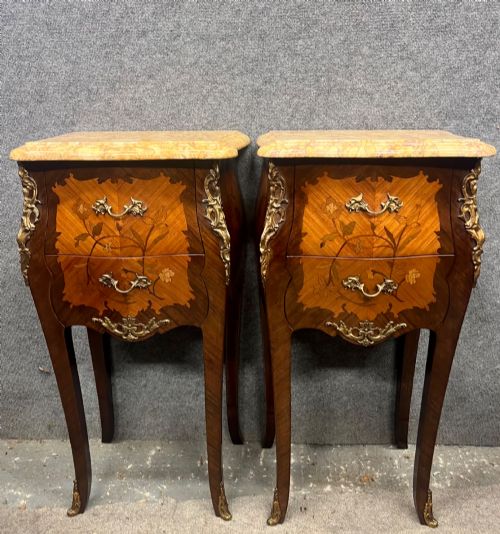
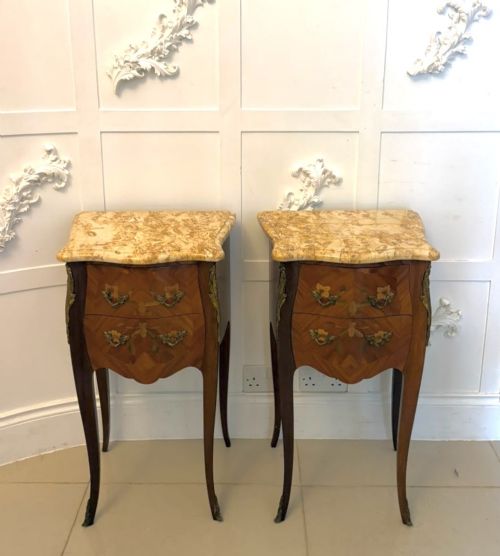
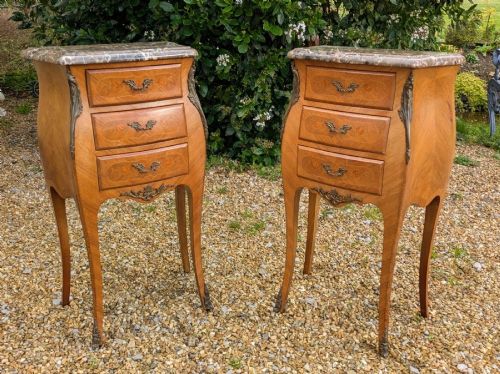
Cabinet makers utilised dense hardwoods including mahogany, walnut, kingwood, satinwood, and oak for the structural frames, often employing intricate marquetry or parquetry veneers to embellish drawer fronts and sides.
The defining characteristic is the fitted stone surface, typically carved from Carrara, verde, or breccia marble, occasionally paired with cast or chased ormolu mounts, gilt metal details, and bronze accents.
Materials recorded across the archive include Carrara, verde, and breccia marble paired with ormolu, satinwood, and hand-carved Chinese hardwoods.
What Varies in Quality
Quality rests heavily on the harmony of the matching pair, the selection of timber veneers, and the fineness of the hand-carved or cast metal mounts. Superior pieces display crisp joinery, balanced proportions, and well-figured marble slabs that sit flush against the wooden moulding.
Workshop provenance elevates standing, demonstrated by maker stamps on bronze mounts or timber carcases, alongside sophisticated marquetry work rather than simple painted decoration.
Krieger Paris·E. Kahn
The Pair Marble Top Tables Glossary
- Ormolu
- Gilt bronze mounted onto furniture. This decorative technique involves applying a gold-mercury amalgam to bronze, common in French Empire and Louis revival designs.
- Marquetry
- Inlaid patterns formed from pieces of veneer. Craftsmen assemble diverse woods to create pictorial or geometric designs across the surface of a table or cabinet.
- Console table
- A wall-mounted or freestanding table designed for placement against a vertical surface. These often feature elaborate carved frames and heavy marble slabs.
- Gueridon
- A small occasional or lamp table supported by a central column or legs. These tables frequently incorporate circular marble tops.
- Bombe
- An outward-swelling curved contour typical of advanced cabinet-making. The profile curves smoothly from the waist to the feet on commodes and bedside chests.
Pair Marble Top Tables: Frequently Asked Questions
Where should I place a pair of console tables?
Console tables suit entrance hallways, living room walls, or flanking a fireplace where their decorative stone tops provide a stable surface for lamps and objects.
Because many historical examples were designed to anchor against a wall, ensure the placement accommodates the specific footprint of the frame.
How do I clean antique marble tops?
Wipe the stone surface using a soft, damp cloth with mild, pH-neutral soap to preserve the polish and prevent scratching.
Avoid acidic cleaning agents or abrasive pads, which permanently etch and dull natural marble.
Are bedside cabinets handed in pairs?
Bedside pairs are frequently constructed as mirror images of one another, with door hinges and curved drawers oriented to face opposite directions.
This deliberate mirroring creates visual symmetry when positioned on either side of a bed.
How can I distinguish French revival styles?
Louis XV revival pieces tend to feature flowing serpentine lines, cabriole legs, and organic floral ormolu mounts, reflecting eighteenth-century aesthetics.
Louis XVI revival pieces lean towards neoclassical restraint, displaying straight tapered legs, fluting, and geometric symmetry.