



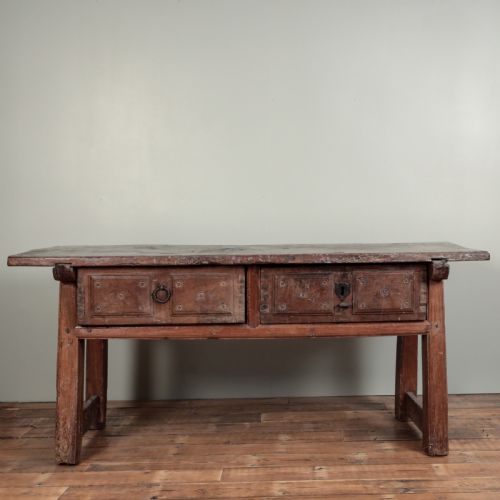


Carved Timber Console Table
A carved timber console table brings architectural presence and surface utility to a hallway or reception room.
Carved Timber Console Table
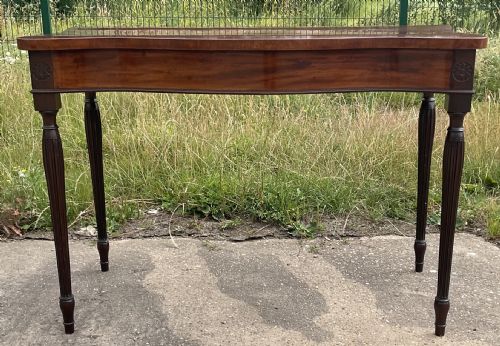
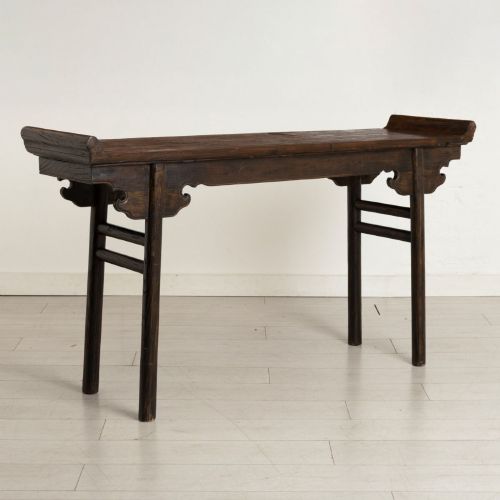
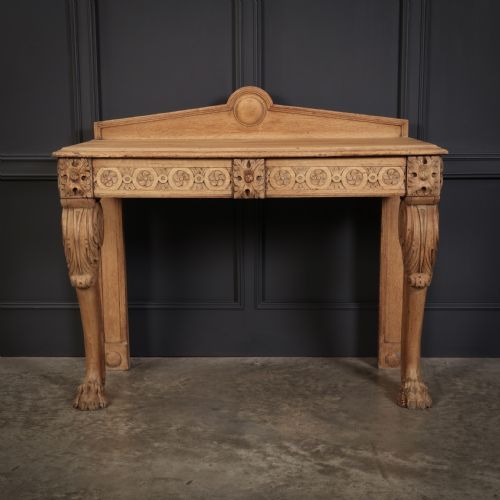
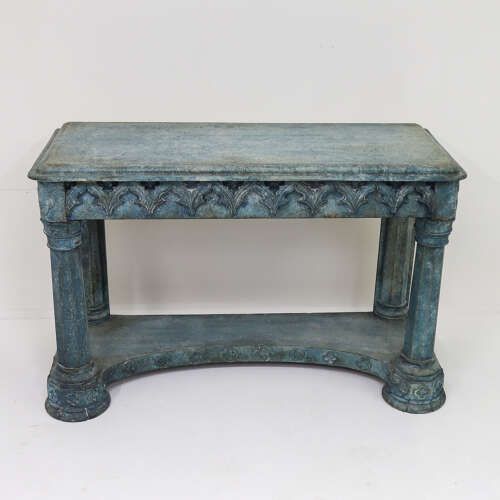
A carved timber console table is a wall-fixed or freestanding surface designed for narrow spaces, reception halls and principal rooms. The pieces gathered here span from the seventeenth century through the Victorian era and early twentieth century, taking forms such as serpentine front tables, lowboys, pier tables and altar tables.
The versions most commonly met on this page date from the nineteenth century and utilise timbers including mahogany, walnut, rosewood, elm and fruitwood. Makers drew on diverse idioms, ranging from Georgian and Regency formal design to Gothic revival, Adams styling and Chinese Qing Dynasty aesthetics.
These tables function practically as display surfaces or serving tables while anchoring a room's decorative scheme through carved ornamentation and distinct regional proportions. Buyers encounter everything from British country house prep tables to elaborately painted continental and Anglo-Indian examples.
How they were made
Cabinetmakers constructed these tables using dense hardwoods and regional timbers such as mahogany, oak, walnut, pitch pine and fruitwood, often incorporating structural elements of brass. Surfaces were shaped through hand carving, with some pieces receiving painted finishes, lacquer, or bleached treatments.
Joinery techniques relied on traditional framing and assembly suited to each period's structural demands, from seventeenth-century Spanish construction methods to nineteenth-century British and continental carcase work. Carved details were executed directly into the solid timber or applied as decorative mouldings.
Several tables harbour hidden history, from Chinese altar forms to Spanish seventeenth-century frames and Gothic revival side tables.
What varies in quality
Quality in these tables rests upon the crispness and depth of the timber carving, the selection of figured wood such as burr walnut or flame mahogany, and the integrity of the original structure. Superior examples demonstrate confident proportions and harmonious detailing that reflect the stylistic ambitions of their period.
The treatment of secondary timbers, the retention of original surface finishes like paint or polish, and the sophistication of regional or maker attribution further separate standard pieces from those of exceptional character.
The Carved Timber Console Table Glossary
- Console table
- A wall-mounted or freestanding table designed for placement against a vertical surface in a hallway or reception room.
- Altar table
- A traditional Chinese form featuring elongated proportions and upturned ends, utilised historically for ceremonial placement or domestic display.
- Lowboy
- A small seventeenth or eighteenth-century table featuring one or more tiers of drawers beneath the working surface.
- Demi-lune
- A half-moon shape characteristic of side and console tables produced during the Georgian, Adams and Regency periods.
- Serpentine front
- A horizontally curving furniture front that swells outward at the centre and recesses toward the ends.
Carved Timber Console Table: Frequently Asked Questions
Where should I place a console table?
These tables suit narrow entrance halls, corridors, and living spaces where surface area is required without blocking foot traffic. Their shallow depths allow them to sit flat against walls while supporting lamps, mirrors, or decorative objects.
Freestanding or wall-fixed versions also function effectively in dining rooms as serving surfaces or beneath large windows where light can catch the polished timber.
How do I date an antique timber table?
Dating relies on observing the combination of timber species, construction joinery, and stylistic vocabulary. Seventeenth and eighteenth-century pieces often display hand-sawn markings and simpler framing, while Victorian and later nineteenth-century tables frequently incorporate revival motifs and machine-assisted preparation alongside traditional hand finishing.
Comparing the decorative carving and hardware against documented period styles helps narrow the origin and decade of manufacture.
Are these tables designed to be freestanding?
Many console tables require securing to a wall for complete stability, particularly traditional pier tables and architectural wall-mounted forms. Other variants, such as centre tables, lowboys, and certain nineteenth-century side tables, are fully freestanding and feature finished backs.
Checking the finish on the rear edge of the table indicates whether the piece was originally intended to stand away from a wall.
How do I care for antique wood surfaces?
Maintenance involves dusting with a soft, dry cloth and avoiding direct exposure to strong sunlight or sudden temperature fluctuations that can dry out old timber. Natural beeswax polishes applied sparingly help nourish older polished and waxed surfaces.
Moisture and heat should be kept away from the timber by utilising coasters and mats beneath any objects placed upon the top.