





French Walnut Pier Table
These french walnut pier table pieces bring classical proportion and rich timber to a drawing room wall.

French Walnut Pier Table
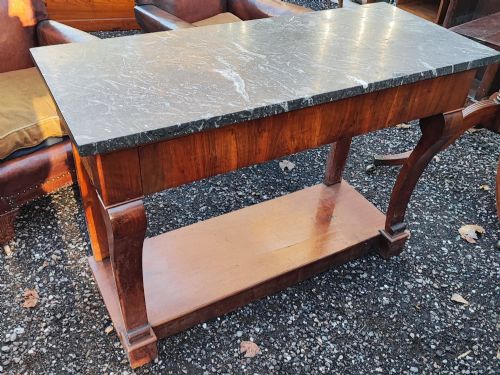
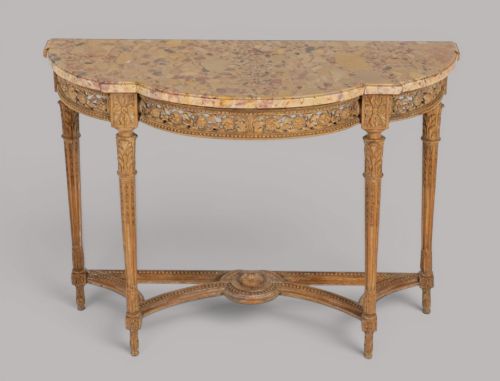
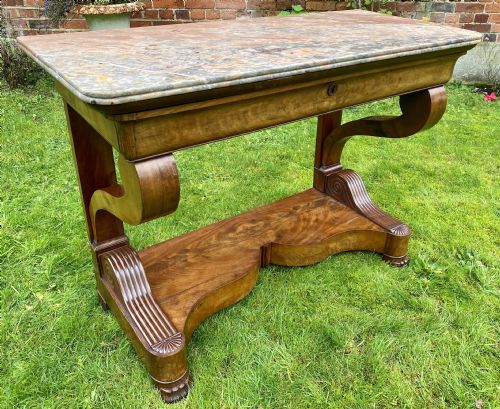
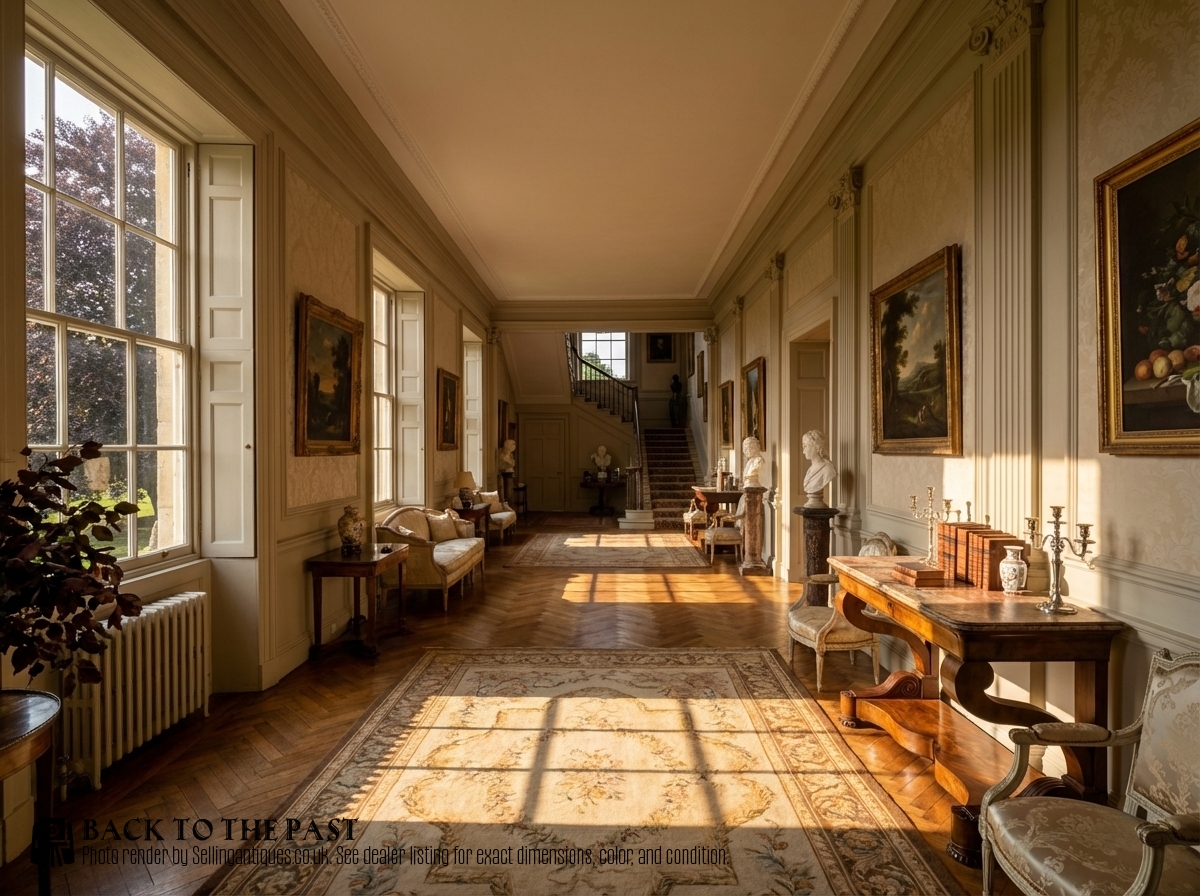
A french walnut pier table stands against the wall between windows, carrying heavy stone tops and standing on carved legs.
The pieces seen here range from the eighteenth century through the nineteenth century, taking forms such as console tables, side cabinets, and side tables.
Makers drew on Louis XV, Louis XVI, Louis Philippe, and French Empire styles, alongside revival movements that mirrored earlier court furniture.
Materials and Construction
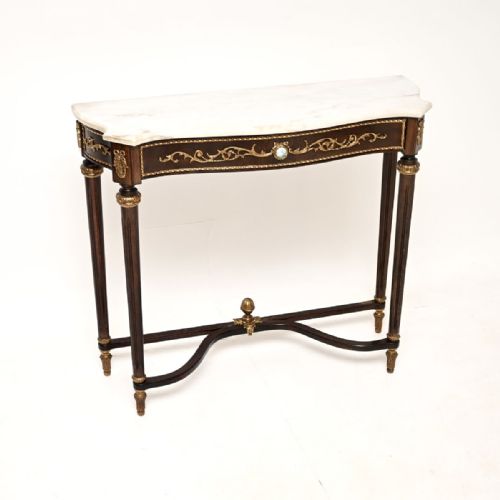
Workshops built these tables using solid walnut and burr walnut veneer over supportive carcases, often adding marquetry details.
Tops consist of heavy marble slabs fitted directly to the timber frame, paired with glass, brass, or ormolu mounts and parcel gilt highlights.
French Walnut Pier Table Retail Price Guide 2026
Typical asking prices for french walnut pier table among the pieces listed under this phrase on Sellingantiques today, from the lower quarter to the upper quarter. They describe what is for sale here now, not the wider market.
Materials across these listings include solid walnut, burr walnut veneer, marble, glass, ormolu, brass, and parcel gilt.
Evaluating Quality
Quality rests on the selection of figured timber veneers, the crispness of carved walnut details, and the integration of marble tops.
Finer examples maintain proportion across larger scales, combining bronze or ormolu mounts with balanced marquetry patterns.
The French Walnut Pier Table Glossary
- Pier table
- A table designed to stand against the wall between two windows, frequently paired with a matching wall mirror above.
- Console table
- A table supported by wall brackets or console legs, often topped with marble.
- Burr walnut
- Timber taken from walnut tree growths, producing swirling figure patterns prized for cabinet veneers.
- Ormolu
- Gilded bronze mounts applied to furniture for decorative enrichment.
French Walnut Pier Table: Frequently Asked Questions
Where should I place a pier table?
These tables suit narrow wall spaces, traditionally positioned in drawing rooms between tall windows beneath a mirror.
Their shallow depth allows them to sit comfortably in hallways and reception rooms without obstructing movement.
How do I identify a Louis XV style table?
Louis XV pieces display characteristic curving lines, cabriole legs, and naturalistic carved ornamentation without symmetry.
Walnut surfaces often feature subtle shaping along the apron and edges to soften the overall silhouette.
Are the marble tops original?
Marble slabs were standard additions to these tables during the eighteenth and nineteenth centuries to provide durable surfaces.
Slabs match the exact proportions of the timber frames beneath them.
How do I care for walnut and marble?
Walnut benefits from occasional polishing with suitable waxes to maintain the depth of the grain and protect the timber.
Marble requires simple wiping with a damp cloth, avoiding acidic cleaners that can etch the polished stone surface.