
French Marble Console
When you select french marble console pieces, you are choosing heavy stone slabs paired with carved wood or metal frames designed to sit against a wall.
French Marble Console
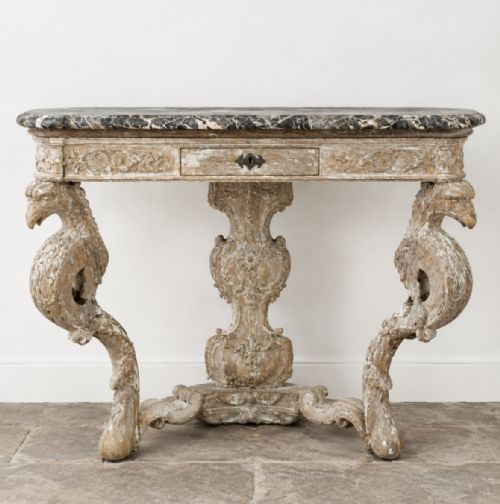
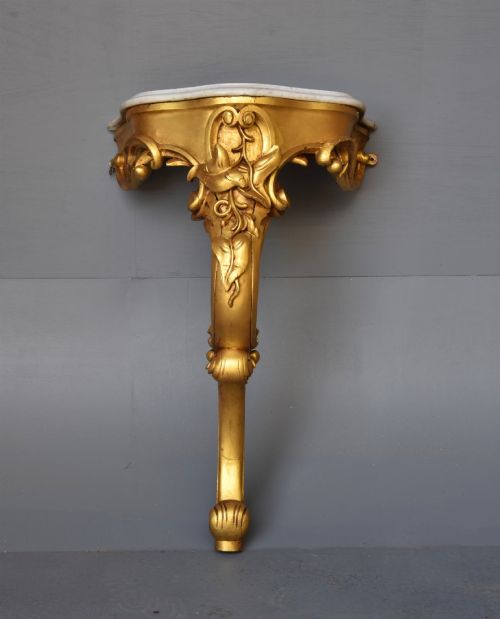
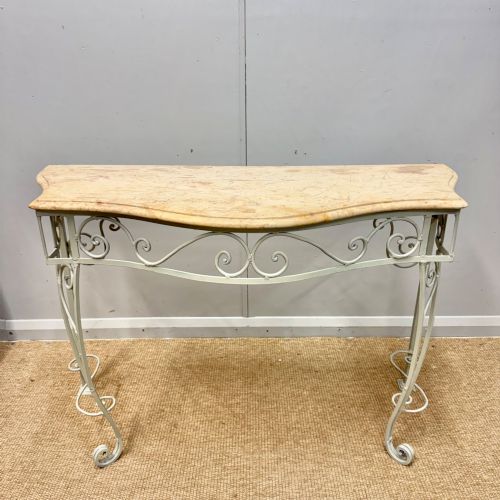
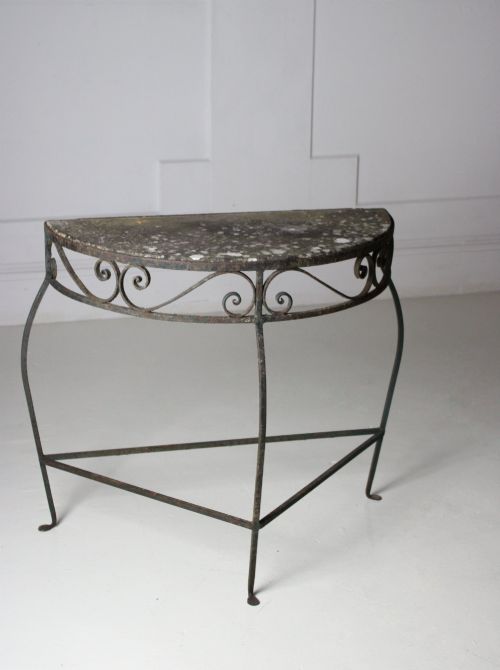
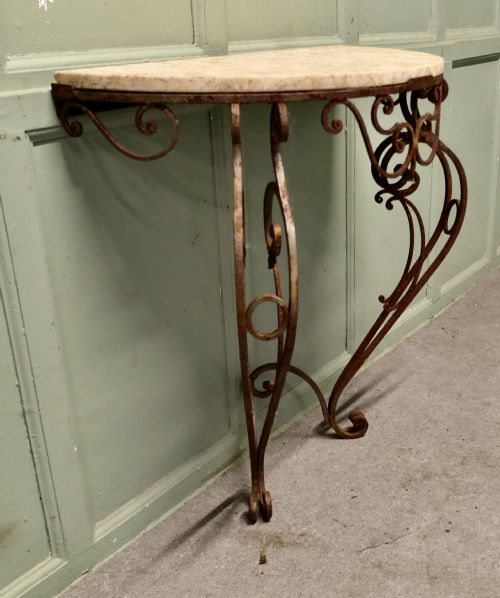
A french marble console brings together a substantial stone upper surface and a supporting frame of wood, iron, or brass. These tables appear in forms ranging from grand giltwood designs intended for formal rooms to simpler iron and oak versions built for utilitarian spaces.
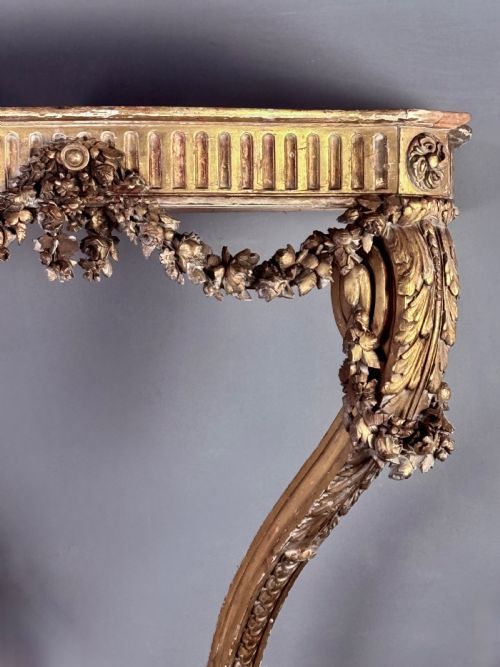
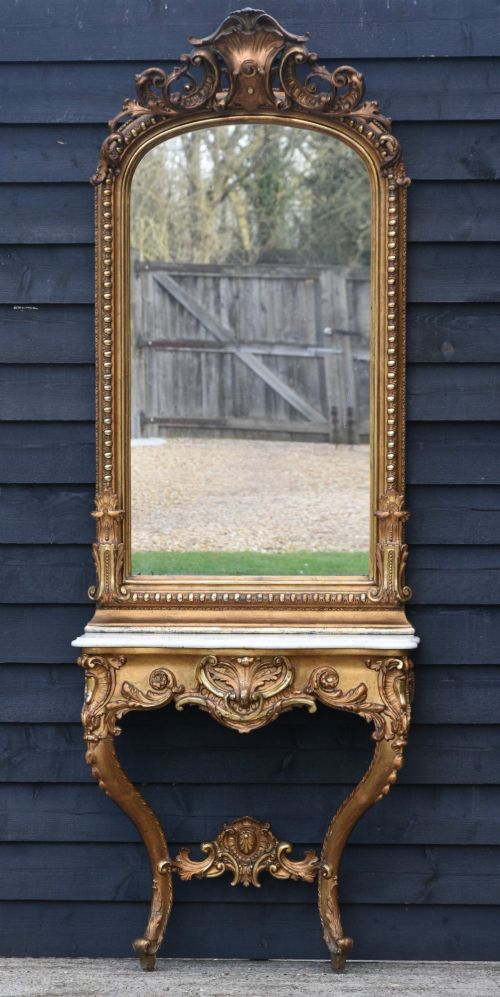
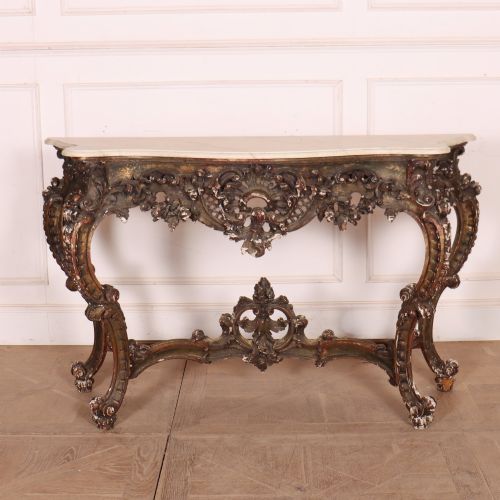
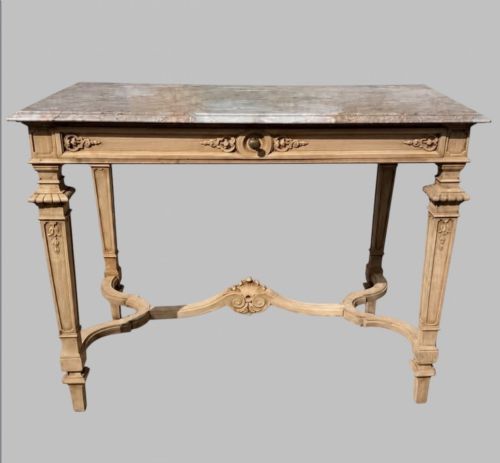
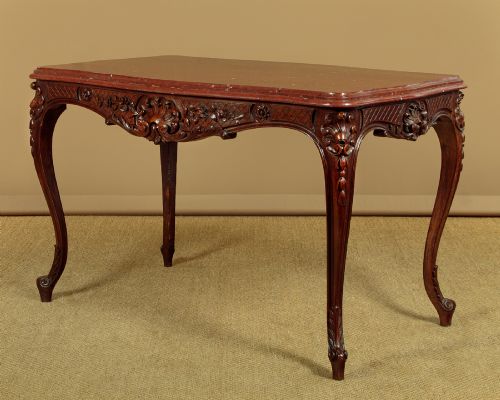
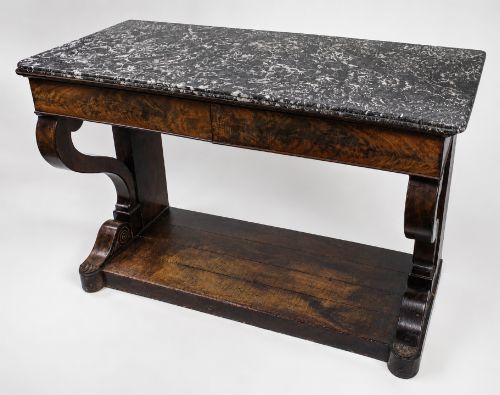
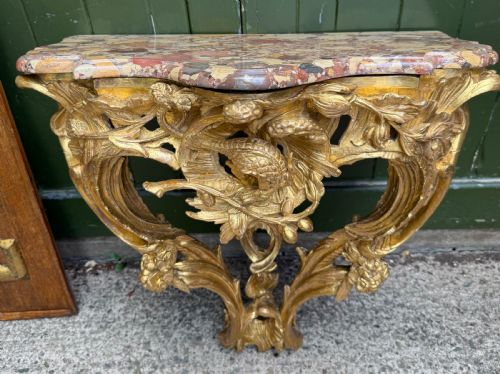
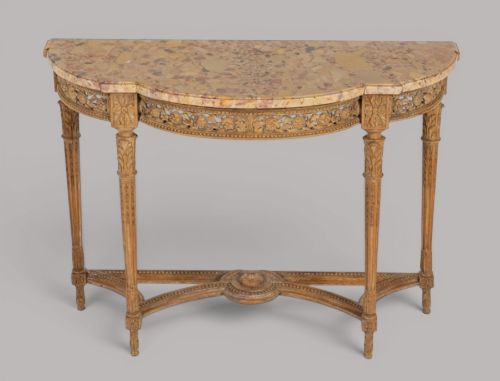
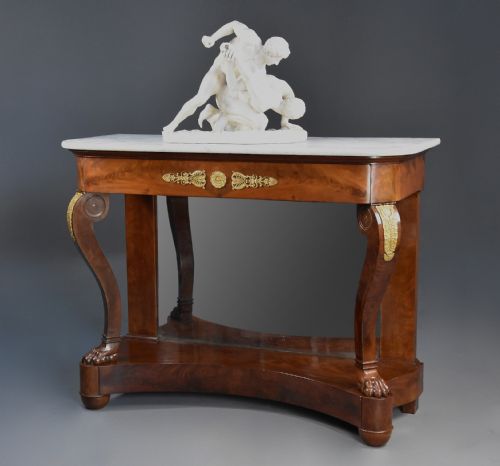
The most common examples on this page date from the nineteenth century, reflecting periods influenced by Louis XVI, Empire, and Rococo styles. Buyers encounter serpentine fronts, straight architectural lines, and combinations featuring matching pier mirrors.
Originating as wall-fixed or freestanding furniture pieces for salons, hallways, and dining spaces, they provide a flat display surface. Their versatility bridges decorative reception rooms and functional preparation areas.
Materials and Construction
Makers shaped frames from mahogany, walnut, oak, and wrought iron, applying gesso and gold leaf to create gilded surfaces. Joinery techniques relied on traditional hand-cut joints suited to heavy stone loads.
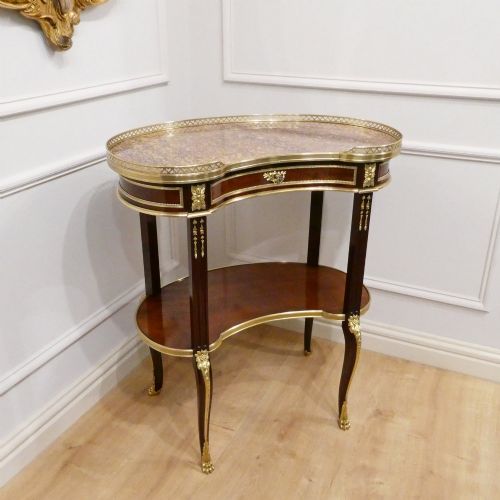
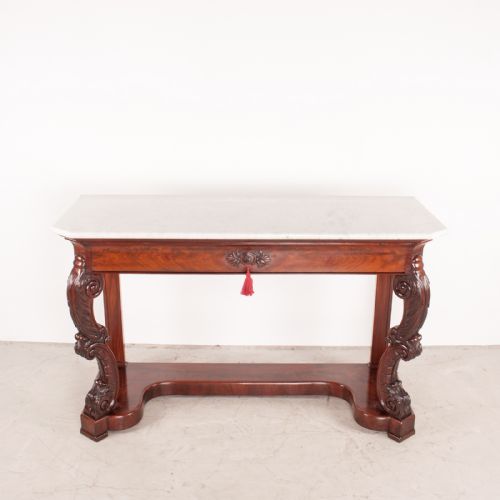
Marble slabs, including figured varieties like breche d'alep and white carrara, were cut and polished by hand to fit the contour of each base. Ormolu and brass mounts were cast and chased then fixed to enrich Empire and neoclassical designs.
A few surviving pieces started life as sturdy charcuterie or patisserie prep tables before finding retirement in domestic hallways.
Distinctions in Quality
Quality rests in the crispness of the wood carving, the depth of the gilding, and the integration between the marble top and the supporting frame. Superior pieces display finely chased ormolu mounts and dense, richly figured stone slabs that fit their rebates precisely.
Lesser examples show simpler timber construction with heavier, less refined decoration and replacement stone tops. The balance of proportions and the weight of the frame relative to the heavy marble determine the structural integrity of the piece.
Maison Millet·Krieger Paris·JACOB
The French Marble Console Glossary
- Ormolu
- Gilded bronze used for decorative mounts on furniture. It involves applying finely ground gold to a bronze base.
- Console table
- A table designed to stand against a wall, traditionally fixed with brackets. Many freestanding versions now retain this name.
- Giltwood
- Wood coated with a thin layer of gold leaf or gesso. This finish creates a bright, reflective surface popular in formal interiors.
- Serpentine
- A curved line with a convex centre flanked by concave sides. This shape appears frequently on nineteenth-century marble table fronts.
- Pier mirror
- A tall mirror designed to hang on the wall space between windows, often paired directly above a console table.
French Marble Console: Frequently Asked Questions
Were these tables fixed to walls?
Many early examples were secured directly to the wall for stability because heavy stone tops could tip a slender frame. Later nineteenth-century versions evolved into freestanding furniture.
Today, most sit independently on floors, though tall examples paired with mirrors still benefit from wall anchoring.
How do I care for the marble top?
Marble is a porous stone that absorbs liquids and etches easily when exposed to acidic substances like wine or lemon juice. Clean the surface using a damp cloth and mild soap, avoiding harsh chemical cleaners.
Applying a specialist stone sealer helps protect the polish from accidental spills during daily use.
Can these tables be used in hallways?
Their narrow profile makes them suitable for narrow circulation spaces, reception halls, and corridors. They provide a surface for keys and post without blocking walking routes.
Pairing a console with a matching mirror creates a functional focal point near an entryway.
How do I identify a Louis XVI style piece?
Louis XVI style pieces feature straight tapered legs, fluted columns, and geometric neoclassical motifs. These designs emphasise symmetry and restrained classical ornament rather than sweeping curves.
They often incorporate carved ribbon twists, bead reels, and gilt bronze mounts.