
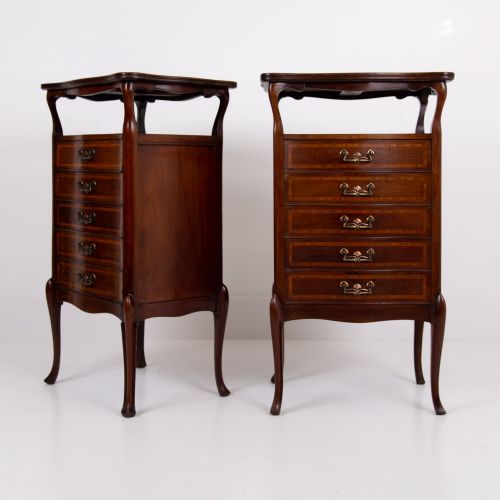
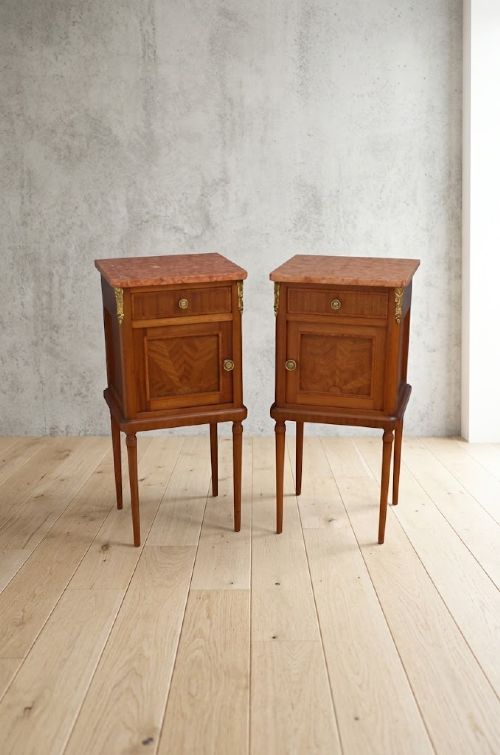

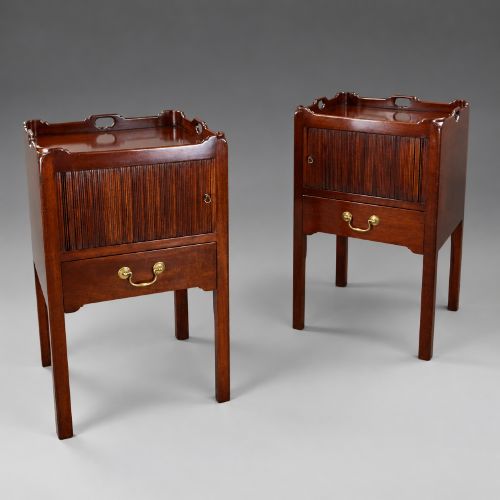
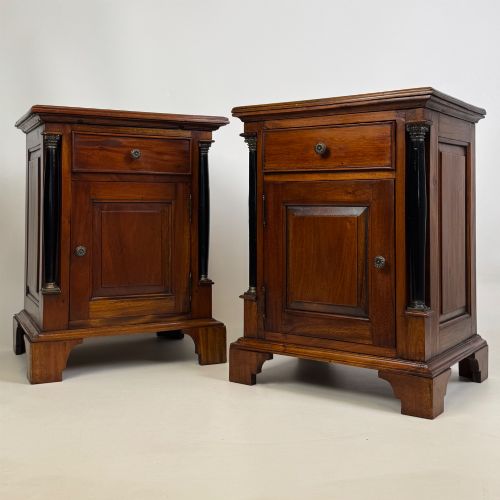
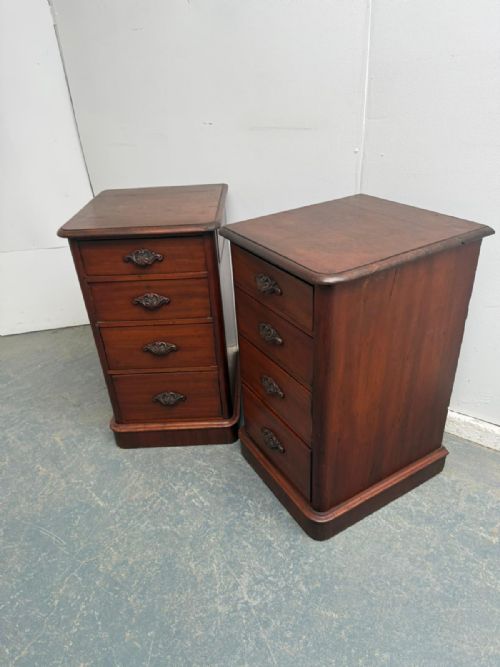
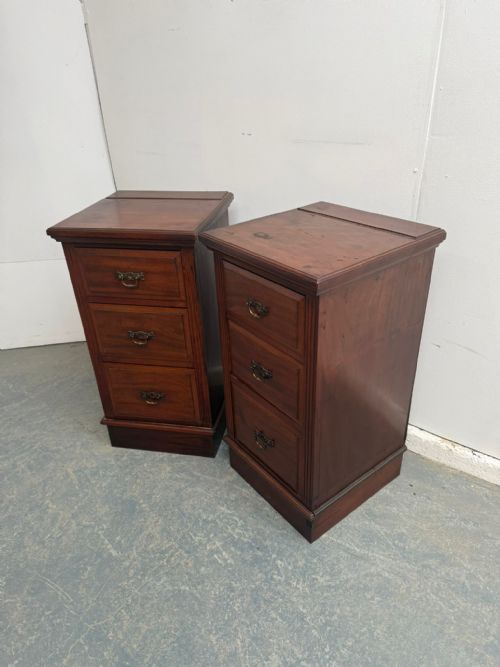
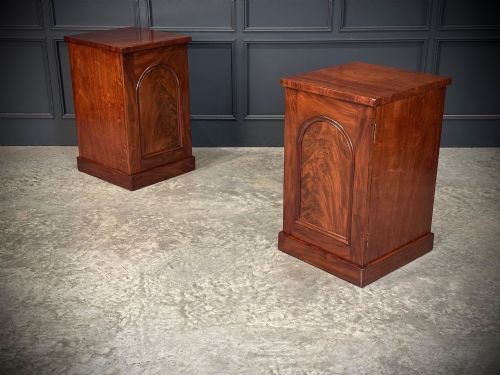
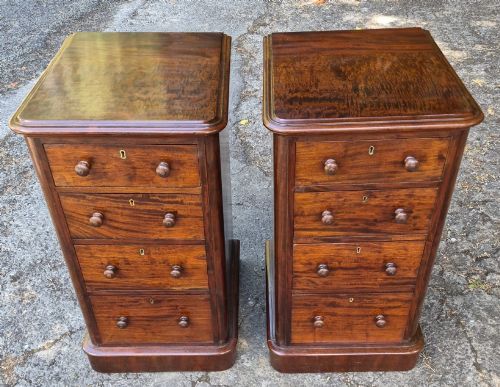
Pair Mahogany Bedside Cabinets
When you search for pair mahogany bedside cabinets, you look for matched timber furniture designed to sit beside a bed.
Pair Mahogany Bedside Cabinets
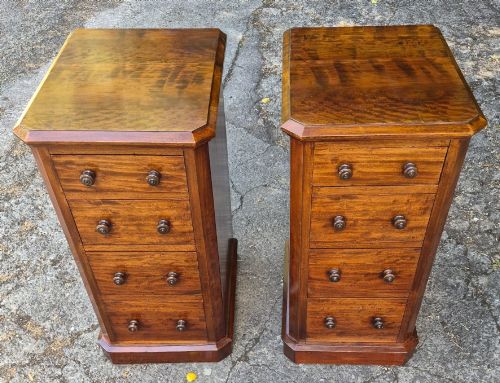
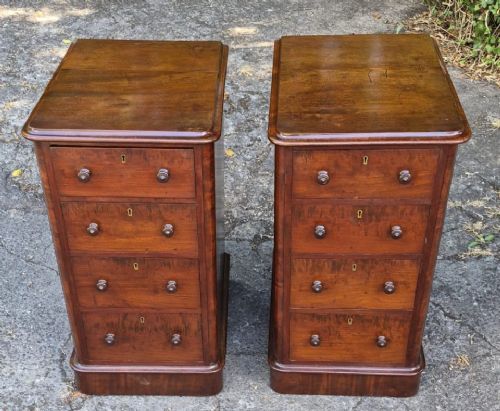
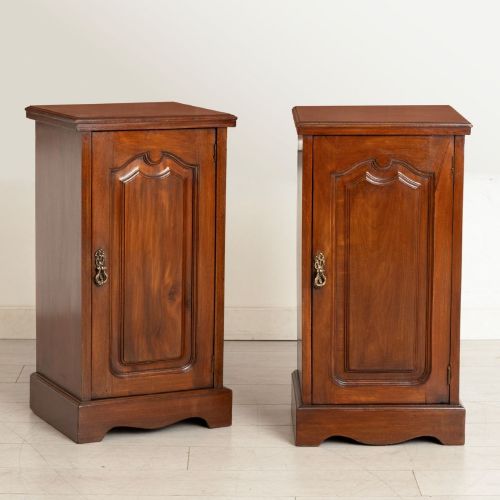
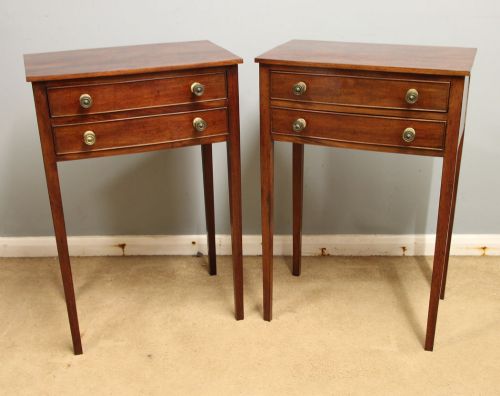
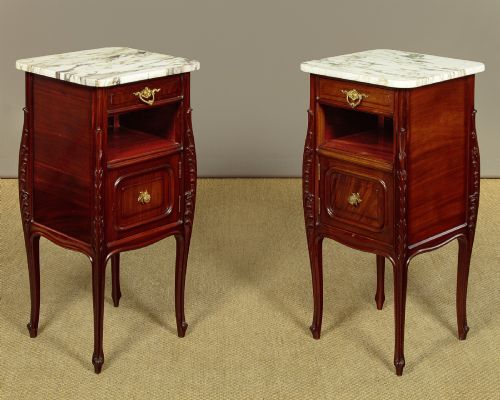
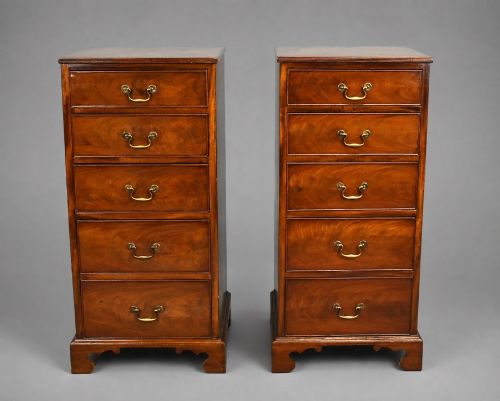
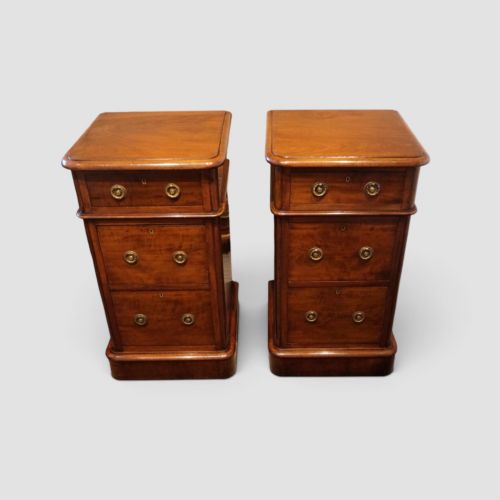
A pair mahogany bedside cabinets search uncovers coordinated pairs of small wooden storage units designed for use next to a bed. These objects range from enclosed cupboards and pot cupboards to multi-drawer chests, lamp tables, and commodes.
The selections span numerous eras including the Georgian, Victorian, and Edwardian periods, alongside later twentieth-century revivals. Buyers most frequently encounter nineteenth-century Victorian chests of drawers and early twentieth-century Edwardian cabinets on this page.
Makers often constructed these items in matched pairs, though near-pairs assembled from slightly differing pieces also appear. They serve practical bedroom storage needs while introducing period timber character to an interior.
How they were made
Cabinetmakers built these pieces using solid timber carcasses overlaid with mahogany or flame mahogany veneer, frequently highlighting decorative grain patterns. Secondary woods form interior drawer linings, while contrasting details incorporate boxwood, satinwood, and brass hardware.
Certain examples feature inset marble tops or intricate edge inlays reflecting Georgian, Regency, or Sheraton revival influences. Construction methods rely on traditional joinery techniques such as dovetailed drawer boxes and panelled doors.
Many a midnight reader has trusted a sturdy Victorian pot cupboard to hold both an oil lamp and a clandestine midnight novel.
What varies in quality
Quality separates through the selection of timber figures, where rich flame mahogany veneer and consistent grain matching elevate a piece above plain boards. Superior examples exhibit fine crispness in decorative inlays and mouldings executed in boxwood or satinwood.
Construction integrity defines the upper tier, seen in solid drawer linings, smooth running mechanism, and intact original brass handles or marble surfaces. Matching symmetry between the two pieces heavily influences the standing of a pair.
Warings Liverpool·Holland and Sons
The Pair Mahogany Bedside Cabinets Glossary
- Flame mahogany
- A veneer cut from the fork of the mahogany tree to create a dramatic, flickering flame pattern across the surface. This figuring is particularly prized on Victorian and Georgian furniture fronts.
- Pot cupboard
- A small bedside cabinet originally designed to enclose a chamber pot. They typically feature a single door above or beside a small compartment.
- Commode
- A decorative low cabinet containing drawers or shelves. In bedroom furniture, the term often overlaps with bedside chests and lamp tables.
- Serpentine
- A furniture front curving outward at the centre and inward at the sides in an undulating wave line. This shape demands high woodworking skill to execute properly.
- Pedestal cupboard
- A narrow, column-like cabinet standing on a plinth or feet. These tall units maximise vertical storage space beside the bed.
Pair Mahogany Bedside Cabinets: Frequently Asked Questions
Are these cabinets sold as identical matches?
Most listings feature true pairs constructed together in workshops using matching timber boards and identical proportions. Some entries describe near-pairs that share period, timber, and scale with minor variations.
Buyers should examine specific descriptions to confirm whether pieces originated together as a matched set or were united later.
How do I care for wax finished mahogany?
Maintain waxed mahogany surfaces by dusting regularly with a soft, dry cloth and applying natural beeswax periodically to nourish the timber. Avoid placing these items in direct sunlight or near heat sources to prevent timber splitting.
Use coasters under any cups or lamps placed on the top surface to protect the vintage finish from moisture rings.
What is the difference between a bedside chest and a cupboard?
Bedside chests feature multiple horizontal pull-out drawers stacked vertically for small item storage. Cupboards contain a panelled door opening to an internal shelf or open compartment.
Both forms served similar bedroom functions across the Georgian and Victorian eras, differing primarily in internal configuration.
Can I use these as general lamp tables?
These pieces function successfully as lamp tables, end tables, or small side tables in living rooms and hallways. Their compact proportions allow them to fit into tight spaces while providing surface area and enclosed storage.
Victorian and Edwardian examples adapt easily to modern interiors beyond the bedroom setting.