

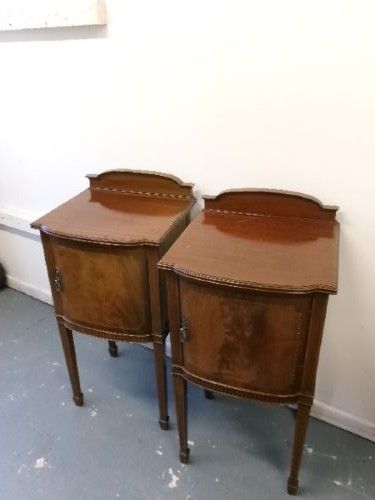
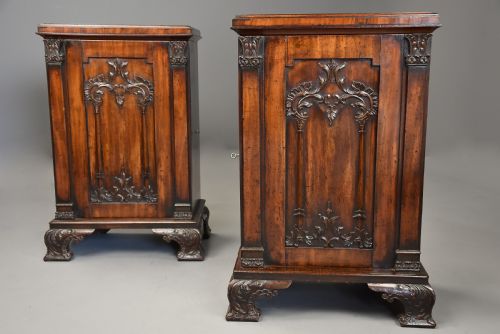
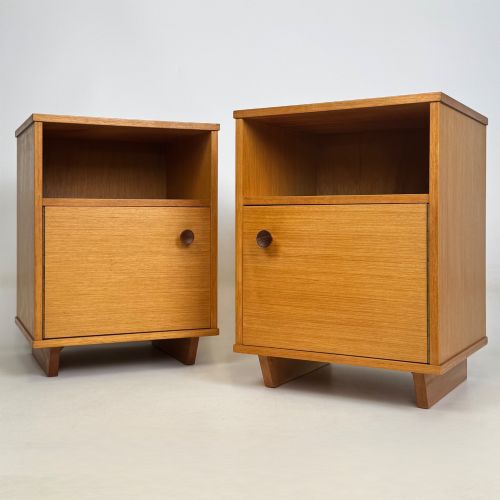
Pair Pedestal Cabinets
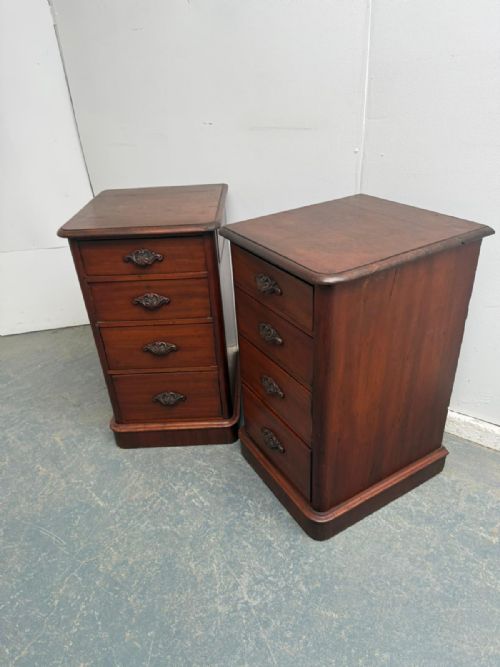
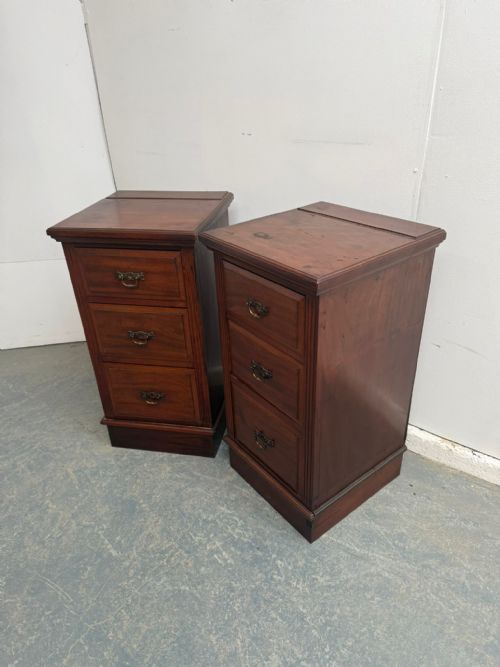
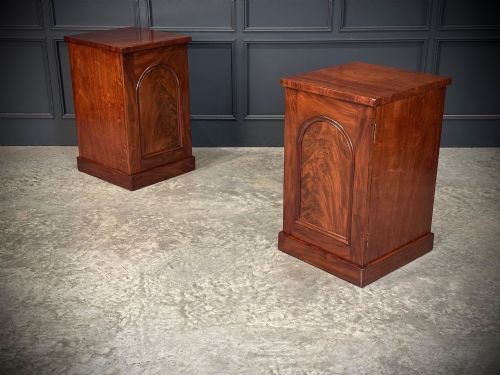
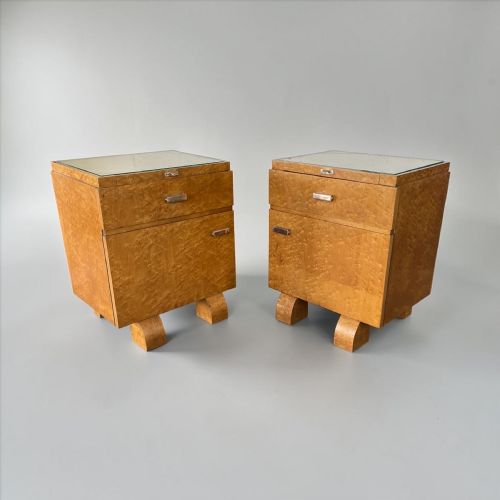
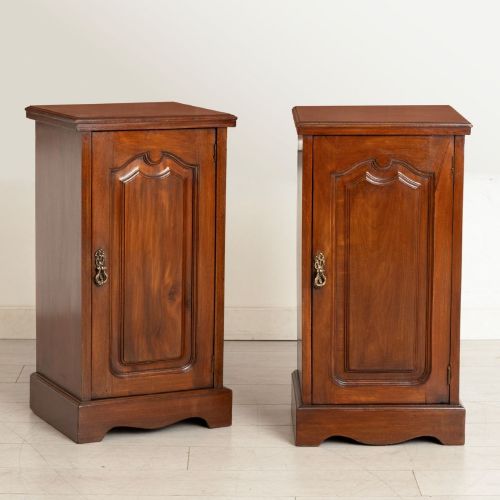
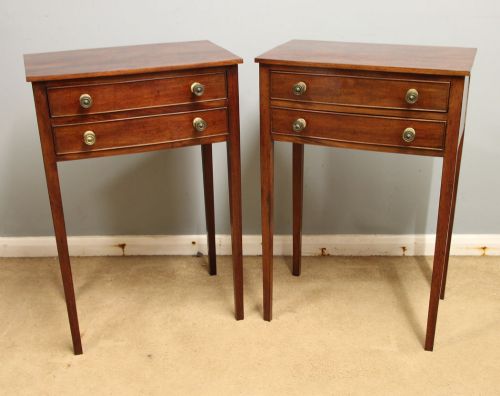
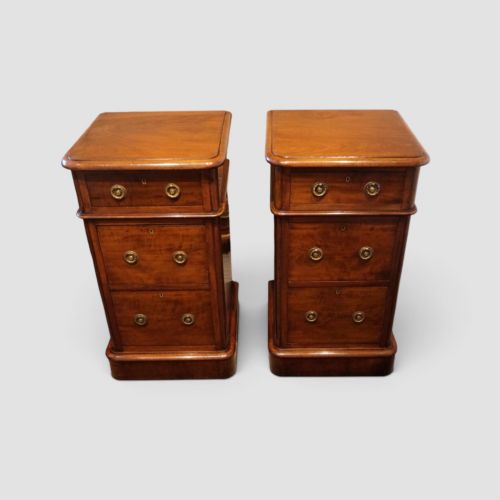
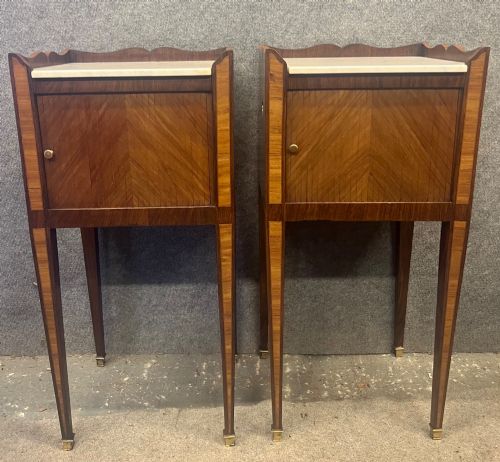
Pair antique pedestal cabinets bring symmetry and height to a room, offering enclosed storage beside a bed or seating area.
Pair Pedestal Cabinets
When you search for pair antique pedestal cabinets, you encounter matched sets designed to stand independently or serve as bedside storage. The selections span bedside tables, cabinets, and chests originating from the eighteenth century through to the art deco period.
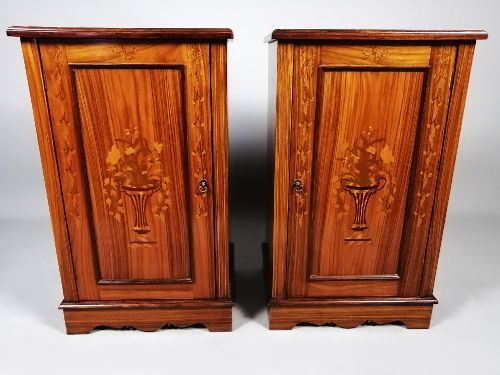
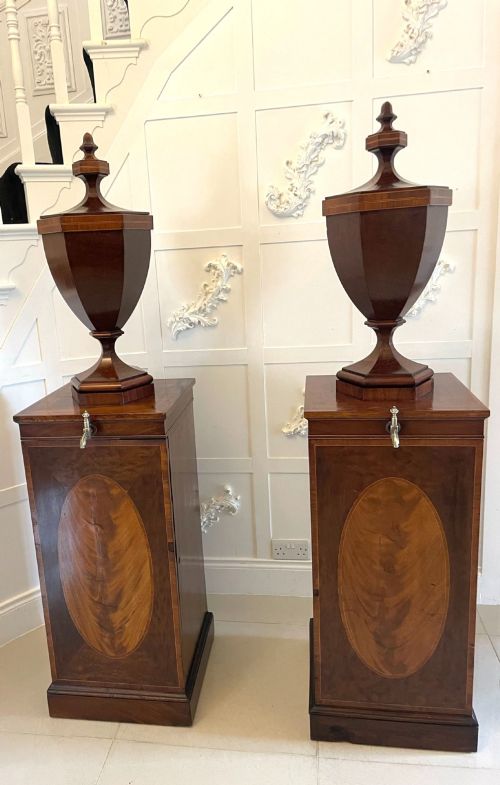
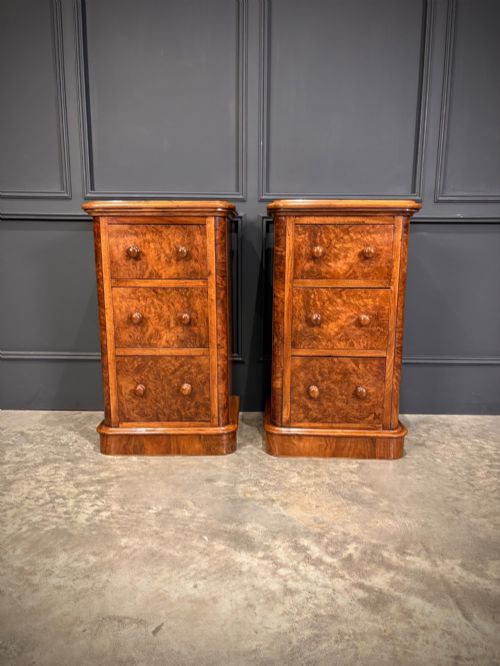
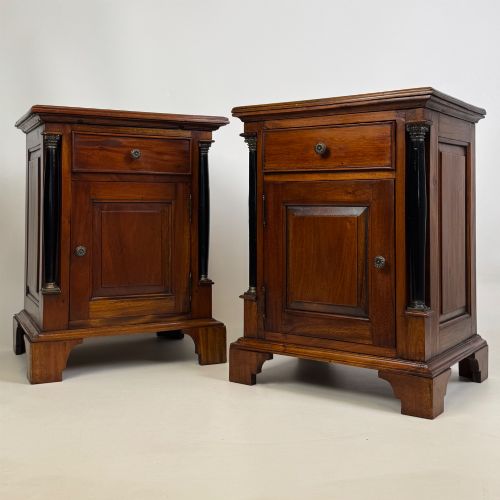
Victorian and Edwardian examples appear frequently alongside Georgian pieces, often taking the form of single-door cupboards, multi-drawer chests, or lamp tables. Many are configured as handed pairs, meaning the doors or drawer layouts mirror each other specifically for placement on opposite sides of a bed.
Materials and construction
Cabinet makers utilised solid timbers and decorative veneers, predominantly employing mahogany, walnut, and satinwood, occasionally augmented by burr walnut, rosewood, and amboyna. Surface enrichment involved marquetry, brass fittings, marble tops, and ormalu mounts.
Joinery techniques followed traditional carcase construction with panelled doors and fitted drawers, while decorative finishes relied on hand-waxing or French polishing to highlight the natural grain of the timber.
Listings feature pieces spanning from mid eighteenth-century Georgian designs through to nineteen-forties Art Deco cabinets.
Markers of quality
The standard of a pair antique pedestal cabinets depends on the selection of timber veneers, such as figured flame mahogany or burr walnut, matched symmetrically across both pieces. Superior examples exhibit refined inlay work, original brass hardware, and precise joinery that maintains structural integrity over centuries.
Proportion and execution distinguish cabinet work, where crisp mouldings, well-fitted drawers, and intact original marble tops or bronze mounts reflect the competence of the workshop that produced them.
Holland and Sons·Edwards and Roberts
The Pair Pedestal Cabinets Glossary
- Handed
- Made as a mirrored pair designed to sit symmetrically on opposite sides of a bed or piece of furniture.
- Pot cupboard
- A traditional name for a small bedside cabinet featuring a single door enclosing a shelf, historically used to house a chamber pot.
- Marquetry
- The art of applying decorative veneer pieces in wood, brass, or shell to form intricate geometric or floral patterns on a carcase.
- Ormolu
- Gilded bronze mounts cast and chased for decorative application on furniture, frequently seen on French Empire pieces.
- Flame mahogany
- Timber cut from the fork of the mahogany tree to produce a distinctive, flamy grain pattern highly prized in cabinet making.
Pair Pedestal Cabinets: Frequently Asked Questions
How are pair antique pedestal cabinets used today?
These cabinets function primarily as bedside storage units or lamp tables in a reception room. Their enclosed cupboards and drawers hold modern bedside essentials while maintaining a formal period appearance.
Matching pairs provide visual symmetry when placed flanking a bed or a fireplace. Their compact proportions allow them to fit into smaller spaces where surface area and enclosed storage are both required.
Are these cabinets always found as matching pairs?
Many sets are assembled as matched pairs rather than original companions made together in a workshop. Dealers often pair two similar single pieces that share identical timber, period, and dimensions.
True original pairs exhibit consistent hand-cut joinery and identical wear patterns across both items. Handed pairs are specifically constructed to mirror each other with reversed door openings.
How do I date a pair of pedestal cabinets?
Dating relies on identifying the prevailing style, timber choices, and construction methods visible in the carcase and drawer linings. Georgian pieces typically show oak or pine secondary woods with hand-cut dovetails, while Victorian examples often utilise mahogany throughout.
Later Edwardian and Art Deco pieces introduce satinwood, lighter veneers, and machine-assisted joinery alongside characteristic period inlay motifs.
What woods were used in antique pedestal cabinets?
Mahogany forms the majority of English cabinets across the Georgian and Victorian eras. Walnut and burr walnut gained popularity during the Victorian and Edwardian periods for their rich, figured grain patterns.
Exotic timbers such as rosewood, amboyna, and satinwood appear on higher-status pieces, often combined with marquetry or brass stringing.